
Creepshow Review: A Short, Twisted Love Letter to Anthology Horror That Almost Lands the Punchline
I grew up on the original 1982 Creepshow. The comic-book frames, the over-the-top kills, Stephen King’s cameo as the greedy bastard who gets buried under a tidal wave of cockroaches—it all stuck with me harder than most “serious” horror. When the Shudder series showed up years later with Greg Nicotero’s fingerprints all over it, I was right back in that same weirdly comforting place: equal parts camp and cruelty, where the universe has a nasty sense of humor and the punchline is usually someone’s demise. So when DreadXP and PHL Collective finally dropped the Creepshow game on August 13, 2026, I jumped in the same night. I wanted that feeling again, but interactive this time. What I got was… close. Frustratingly close.
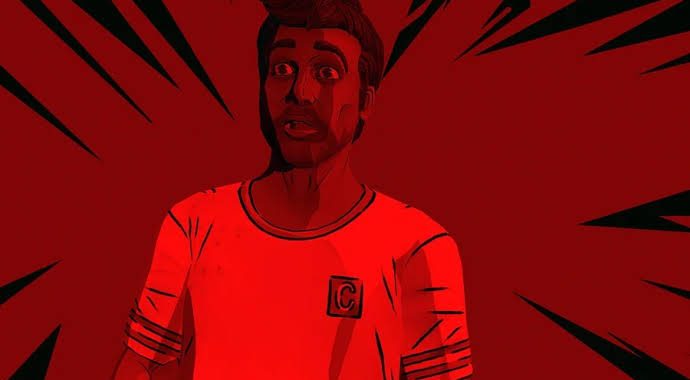
The setup is pure Creepshow. You follow Danny and his friends during what starts as a regular bad day at the mall. They’re digging into what happened to Danny’s father, and things go sideways fast. Fate (or the franchise’s signature spite) steers them toward The Reader, a mysterious fortune-teller who loves spinning treacherous tales. From there the game splits into its anthology structure: one overarching story that frames two self-contained nightmares. Each segment drops you into a new set of characters, a new flavor of dread, and an ending that refuses to play nice. The marketing promised pulp-inspired visuals, dark humor, comic-book environments, and horror mini-games. It delivers on most of that. Whether it delivers enough actual game is the real question.
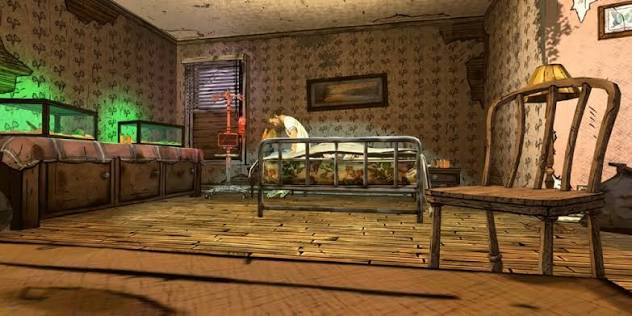
Visually, the thing nails the vibe harder than I expected. The art style leans hard into that graphic-novel look—bold lines, exaggerated expressions, panels that sometimes feel like they could have been torn out of an old EC comic. Environments have a stylized, almost theatrical quality that fits the source material perfectly. You’re not chasing photorealism or jump-scare fog; you’re walking through living comic pages where the color palette can shift from gaudy to grimy in a heartbeat. It looks cheap in the best possible way, the same way the original film’s practical effects looked cheap and somehow more alive because of it. Brian Clarke (the creative force behind The Mortuary Assistant) clearly understood the assignment. The presentation sells the tone even when the interactivity doesn’t always keep up.
Gameplay is classic point-and-click with some light adventure-game seasoning. You click around, talk to people, examine objects, and occasionally get tossed into short horror mini-games that break up the walking and talking. Think simple timing challenges, quick environmental puzzles, or moments where the screen itself starts messing with you. Nothing here is particularly difficult. The game never wants you stuck staring at a pixel for twenty minutes. It wants you moving through the stories at a deliberate, almost conversational pace. That works when the writing is sharp. It feels thin when the writing coasts.
And the writing is the heart of this whole thing. The best moments feel like they could have been episodes. Characters make dumb, selfish, or just plain human decisions, and the universe answers with gleeful cruelty. There’s moral comeuppance, black humor, and a few genuine “oh no” twists that land because the setup was patient enough. The mall story has a slow-burn dread that reminded me of the better Shudder episodes—ordinary places turning hostile, friendships fraying under pressure, secrets that were better left buried. The self-contained tales lean harder into the classic Creepshow formula: people who deserve what’s coming, or at least people the story decides deserve it. One of them had me laughing out loud at the sheer nastiness of the payoff. Another left a colder, quieter aftertaste. That range is the franchise’s strength, and the game understands it.
Where it stumbles is length and depth. The whole experience clocks in around three to four hours if you’re not racing. For some people that will be perfect—an evening’s worth of twisted bedtime stories. For others (and I’m in this camp more than I’d like to admit) it feels like the first half of a better game. Stories end just as they’re getting interesting. Characters you start to care about disappear into the next segment. The framing device with Danny and The Reader has potential that never fully pays off. Critics have already pointed this out, and the early Steam reviews sit at a mixed 62 percent for a reason. Some players called it unfinished. Others said it felt more like an interactive comic than a game. I get both takes. There are stretches where you’re mostly watching and clicking rather than playing in any meaningful sense. The mini-games help, but they’re short and rarely evolve beyond the first time you see them.
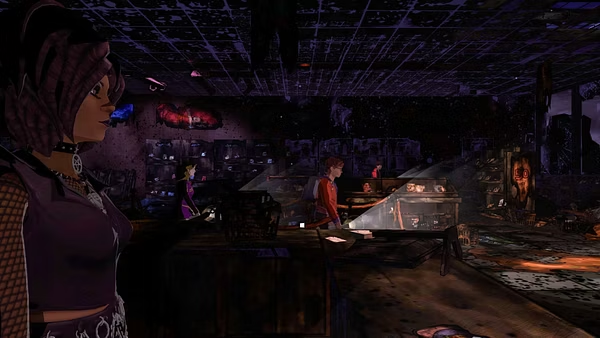
Animation is another soft spot. Characters move with a stiffness that sometimes undercuts the comic energy of the art. Conversations can feel a little stilted even when the dialogue itself is solid. Voice acting is generally good—there’s a proper cast doing the work—but a few line readings land flatter than they should. None of this is fatal. It just keeps the game from feeling as polished as the best modern indie horror adventures. Compared to something like The Mortuary Assistant, which used limited systems to create real tension and player agency, Creepshow plays it safer. It’s content to tell its stories at you more than with you.
Still, I kept playing. That’s the thing about good Creepshow. Even when the execution is uneven, the spirit is infectious. I found myself grinning at the darker jokes, flinching at a couple of well-timed visual gags, and genuinely curious about where the next tale would go. The game never pretends to be survival horror or a deep systems-driven experience. It knows exactly what it is: a digital anthology that wants you to enjoy the ride a little too much. When it hits that note, it’s a blast. When it misses, you feel the shortfall more sharply because the highs are right there.
Technical side is mostly clean. On PC it ran without major hitches for me. Load times are short, the comic style means it doesn’t demand a beast of a machine, and it’s verified for Steam Deck, which is a nice bonus for late-night couch sessions. Accessibility options are limited but present—no forced QTEs, which is appreciated. The content warning is honest: disturbing imagery, strong language, moments of mental anguish, and some animal violence. If you’re sensitive to that last one, know it’s there and it serves the stories rather than existing for shock alone.
I keep thinking about what this game could have been with more time or a bigger scope. Imagine a full season’s worth of stories, or branching paths that actually change the endings in meaningful ways, or mini-games that grow more inventive as the anthology progresses. The bones are strong. The tone is right. The love for the source material is obvious. Right now it feels like a promising pilot episode that got greenlit as a short film instead of a series. DreadXP has a track record of supporting interesting indie horror, and PHL Collective clearly has the right instincts. If they ever expand this—more chapters, more tales, maybe even a proper sequel season—I’d be first in line.
For what it is today, Creepshow is a mixed but memorable little package. Fans of the films and the Shudder series will get the most out of it. The references, the attitude, the willingness to be mean and funny at the same time—that’s all here. Casual players looking for a longer, meatier adventure might walk away wanting more. Horror fans who just want a few hours of twisted storytelling with style will probably have a good time. I did. I just wished the good time lasted longer and dug a little deeper.

In the end, the game understands the fundamental truth of Creepshow: the scares are better when you’re smiling through them, and the best endings are the ones that make you say “damn, that’s messed up” out loud. It gets there more often than not. It just doesn’t stay long enough to make the visit feel complete. Still, for a first interactive trip into the Creep’s tent, it’s a solid, if slightly undercooked, night at the show. I’ll take the twisted humor and the pulp dread over another generic jump-scare factory any day. Just… maybe bring a second episode next time, alright?
