
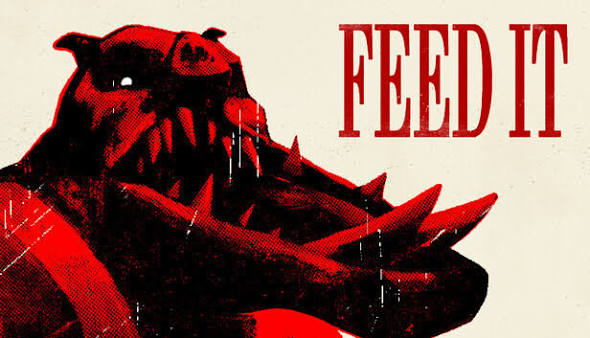
FEED IT review: A short, nasty little nightmare that sits in your stomach
I finished FEED IT a few nights ago and I’m still thinking about it in the worst way. Not the “that was cool, I should recommend it” way. More the “why did that feel so personal and why do I feel vaguely unclean” way. Games On A Chair’s debut, published by Pretty Soon and released on Steam on August 17, 2026, is a first-person PSX-style psychological horror game about living with a monster that needs to be fed. You also need to eat. Those two facts are constantly at war, and the game never lets you forget it.
It’s short. Most people will clear a first run in somewhere between 50 and 100 minutes. It’s cheap. It’s deliberately ugly in that grimy, low-poly, late-90s way that has become its own aesthetic again. And it is, without exaggeration, one of the more uncomfortable experiences I’ve had with a game in a while. Not because of jump scares (there aren’t many) or elaborate set pieces. Because it takes a simple, ugly premise and makes you sit inside it until the discomfort starts to feel normal.
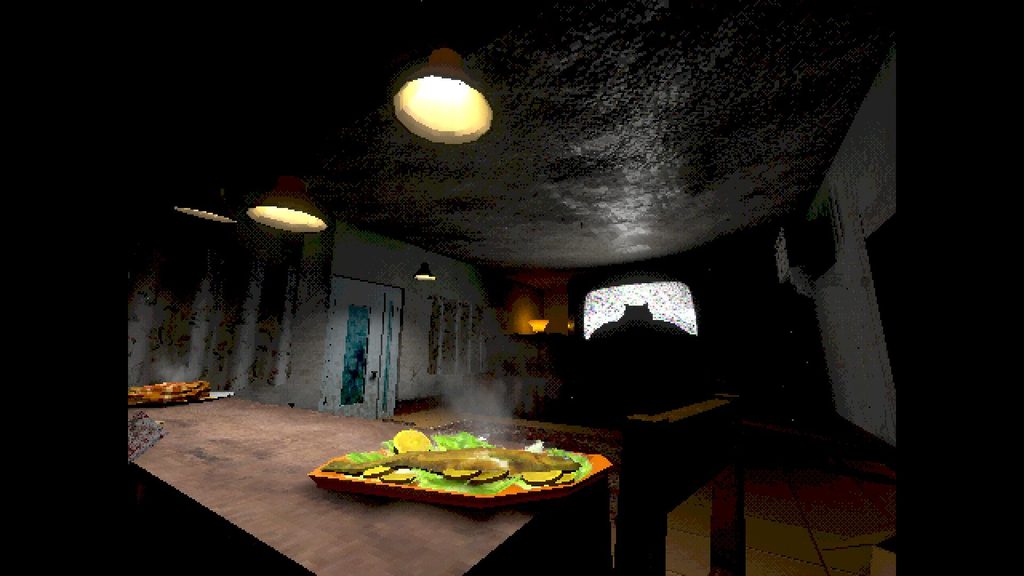
The setup is immediate and wrong
You wake up in a place that feels like an apartment, or maybe a house that has decided to stop behaving like one. There’s a creature. It looks a bit like a pig that got mixed up with something meaner, something that belongs more in a bad memory than a bestiary. It’s hungry. The TV is too loud. Something is knocking. You don’t know who you are, where you are, or how long this has been going on. The game is not interested in answering those questions cleanly. It just puts the problem in front of you: there is food, the monster wants it, and you are starting to feel the hollow ache of hunger yourself.
That central choice—feed it or feed yourself—sounds almost cartoonish when you write it down. In practice it is quietly vicious. Give the creature what it wants and you stay relatively safe for a little longer, but you get weaker. Keep the food and the creature’s mood sours. Aggression creeps in. The spaces you move through start to feel less reliable. Rooms shift. Layouts that made sense a minute ago stop making sense. The game is three acts of this slow, grinding negotiation with a presence that never stops demanding.
There are no elaborate puzzle systems. No inventory management that makes you feel clever. You explore, you pick things up (some of them deeply unappetizing), you interact with what’s in front of you, and you live with the consequences. The simplicity is the point. When the only real decision is whether to starve a little more or risk the thing that already owns the room, every small act of self-preservation starts to feel like a betrayal, and every act of compliance starts to feel like another step toward disappearing.
Atmosphere over everything
The PSX look is doing a lot of work here, and it works. The low resolution, the wobbly geometry, the muddy textures—it all contributes to that specific feeling of a memory that won’t resolve properly. Photorealism would have been the wrong call. This game needs the distance and the abstraction that the old hardware limitations provide. The creature itself is grotesque in a way that stays with you; the lo-fi style makes it feel less like a designed monster and more like something your brain half-invented and can’t quite unsee.
Sound design is stronger than the visuals in a lot of moments. Stomach growls. Distant knocking. The creature’s noises. Long stretches of relative quiet that make you tense up waiting for the next demand or the next shift in the environment. Play it with headphones in the dark if you can stand it. The game’s own content warnings basically recommend that, and they’re not wrong.
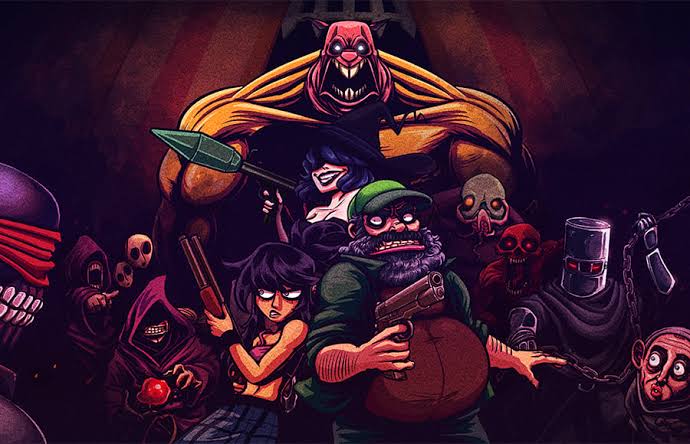
What FEED IT is actually about becomes clearer the longer you sit with it. Psychological abuse. Control. The way hunger and fear and routine can make someone start accepting the unacceptable. Dissociation. Derealization. The slow erosion of the self when the only way to stay safe is to keep feeding the thing that is hurting you. The director, Matteo Ucci, has said the game comes from a deeply personal place, and it is dedicated to his mother. You can feel that. This is not a game that treats trauma as set dressing or as a neat metaphor that resolves into a tidy lesson. It is messy and cruel and, at times, deliberately upsetting. The dialogue and imagery can be hard to sit with. If those themes are close to home for you, the content warnings at the start are there for a reason. Take them seriously.
I kept thinking of Mouthwashing and early Silent Hill while playing—not because FEED IT is trying to be either of those games, but because it understands the same kind of horror. The kind that lives in the ordinary made wrong, in the relationship that has become the cage, in the quiet knowledge that escape might not fix what has already been broken. There’s a moment near the end that offers a kind of release, and the game is smart enough to undercut it. You can leave the immediate threat behind. The body still keeps score. That final note felt more honest than a lot of bigger-budget horror I’ve played.
The good, the messy, and the short
Mechanically, this is a minimal game. That is both its strength and the place where some players will bounce off. Progression can feel unclear. The shifting spaces are thematically perfect—reality becoming unreliable is the point—but they can also leave you wandering and wondering whether you’re stuck or just missing the next small interaction. Act 3 in particular gets more direct and action-oriented, which is a shift that works for some and frustrates others. The developers have already posted about common sticking points and are patching issues; early on there were reports of occasional visual glitches and performance dips in the final section on some hardware.
Replayability is there if you want it. Multiple paths, different endings, secrets, and a couple of harder “secret ending” challenge runs that the team frames as more gameplay-focused than narrative. I finished my first run feeling no particular urge to dive straight back in. That is not a criticism. The game had done what it set out to do. It left a mark. Forcing more hours onto something this concentrated would have diluted it. Some experiences are better when they end while the feeling is still sharp.
At its current price (around six bucks, with a launch discount that made it even cheaper), the length is not a problem. This is not a $60 open-world commitment. It is a short, focused, unpleasant little object that knows exactly what it is trying to do and mostly succeeds. Steam’s early reception has been Mostly Positive, which tracks with what I’ve seen: people who connect with the atmosphere and themes are vocal about it; people looking for more traditional horror systems or longer runtime are less impressed.
Who this is for (and who should skip it)
If you like psychological horror that prioritizes mood, implication, and emotional pressure over combat or elaborate puzzles, FEED IT is worth your time. If the PSX aesthetic and short-form indie experiments appeal to you, even more so. If you have any sensitivity to depictions of psychological abuse, control, starvation, or dissociation, approach with caution or wait until you’re in a better headspace. The game is not subtle about those elements, and it is not interested in softening them.
I keep coming back to how ordinary the central dilemma feels once you accept the surreal frame. Feed the thing that hurts you so it doesn’t hurt you worse. Or take care of yourself and deal with the consequences. People live versions of that choice every day without a pig-monster and shifting hallways. FEED IT just makes the subtext into the text and forces you to press the button. That is a mean trick. It is also an effective one.
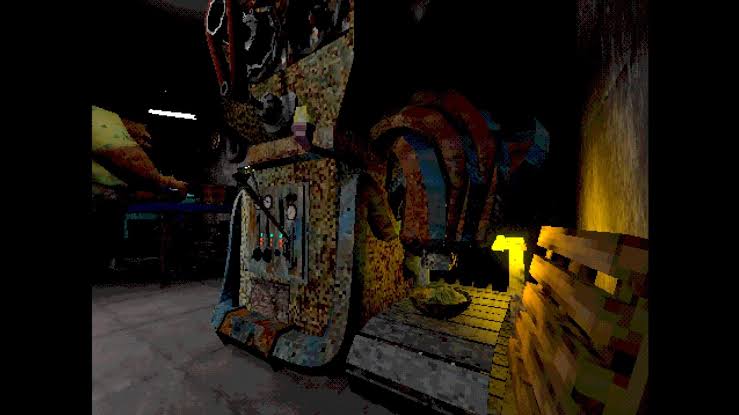
Games On A Chair’s first game is not perfect. The mechanics are deliberately thin, the length will frustrate anyone hoping for a longer stay, and the deliberate vagueness around progression can tip from atmospheric into frustrating. But the core experience—the grimy look, the heavy atmosphere, the way the themes land without winking or explaining themselves to death—lands hard. Short, nasty, and very uneasy. Sometimes that is exactly what horror needs to be.
I don’t know if I’ll replay it soon. I do know I’m glad I played it once, and I know the feeling it left behind has not quite faded yet. For a debut this small and this personal, that feels like success.
