
Shafali Verma’s Blazing 64 Sets Up India’s Dominant 94-Run Win Over Thailand in Women’s Asia Cup Opener
India Women powered their way to a commanding 94-run victory over Thailand Women in the third match of Group A at the Women’s Asia Cup in Dubai on Sunday night, setting an early marker in the tournament with a dominant all-round display at the Dubai International Cricket Stadium. The seven-time champions posted 159 for nine after being asked to bat and then dismantled the Thai side for just 65 in 16.1 overs, wrapping up the contest with clinical efficiency under the lights.
Thailand captain Thipatcha Putthawong won the toss and elected to field, a decision that looked promising early as her bowlers found some rhythm, but India’s openers had other ideas. Smriti Mandhana and Shafali Verma came out with clear intent. Mandhana was in a hurry, striking four boundaries in a brisk 19 off just 10 balls before a mix-up led to her run-out. The left-hander looked set for a bigger contribution, but a sharp piece of fielding from Aphisara Suwanchonrathi ended her stay. That brought debutant Pratika Rawal to the crease alongside the explosive Shafali, and the pair combined to give India a platform that seemed destined for a total well beyond 170 or 180.
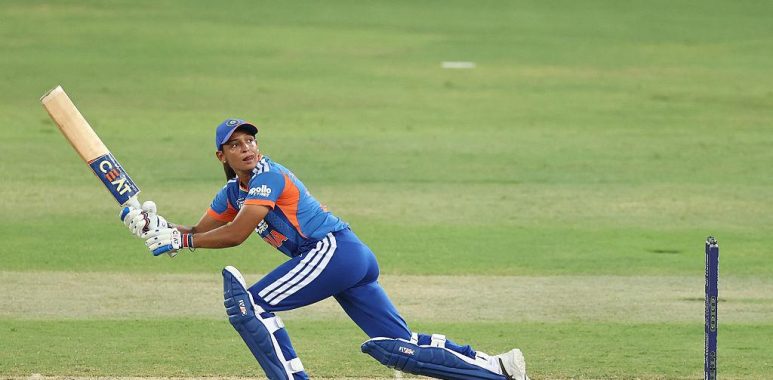
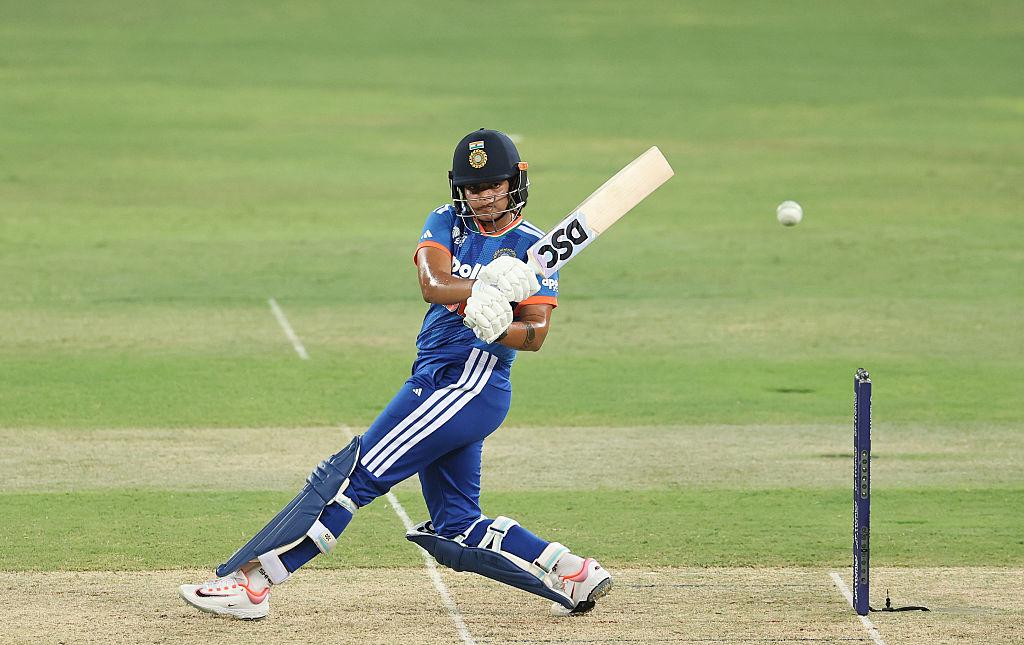
Shafali Verma was the standout. The aggressive right-hander played with characteristic freedom, clearing the boundary three times and finding the gaps with eight crisp fours. Her 64 came off only 36 deliveries at a strike rate of nearly 178. She dominated the powerplay and the middle overs, treating the Thai attack with disdain. Rawal, making her T20I debut, showed composure and clean striking of her own, contributing a useful 22 off 18 balls that included a six and a couple of boundaries. At 91 for one after around nine overs, India appeared firmly in control and on course for a massive score.
What followed was a dramatic collapse that reminded everyone that even the strongest sides can unravel quickly in the shortest format. Thailand’s spinners, particularly Suleeporn Laomi, dragged the game back. Laomi finished with three for 26 from her four overs and was the architect of India’s middle-order slide. Shafali eventually fell, caught and bowled by Laomi, and the floodgates opened. Harmanpreet Kaur, the experienced captain, managed only five off nine balls before being caught. Bharti Fulmali made 13, Richa Ghosh struggled to get going, and Deepti Sharma was run out for five after a direct hit from Laomi. India lost eight wickets for just 46 runs in a period of sustained pressure. From a position of strength they slipped to 137 for nine, and the total looked in danger of falling short of what the start had promised.
Kranti Gaud provided the late flourish that proved crucial. Coming in at a difficult stage, the young bowler showed she could bat too, smashing 15 off eight deliveries with a six and a four. Those runs lifted India to 159 for nine at the end of 20 overs. It was not the commanding total many expected after the early fireworks, but it was still a competitive one on a surface that offered assistance to the spinners later in the evening. Sunida Chaturongrattana supported Laomi with two wickets, and Putthawong herself claimed the key scalp of Harmanpreet. Thailand had done well to restrict India after the initial onslaught, yet the total still required a solid chase, something their batting line-up was unable to deliver.
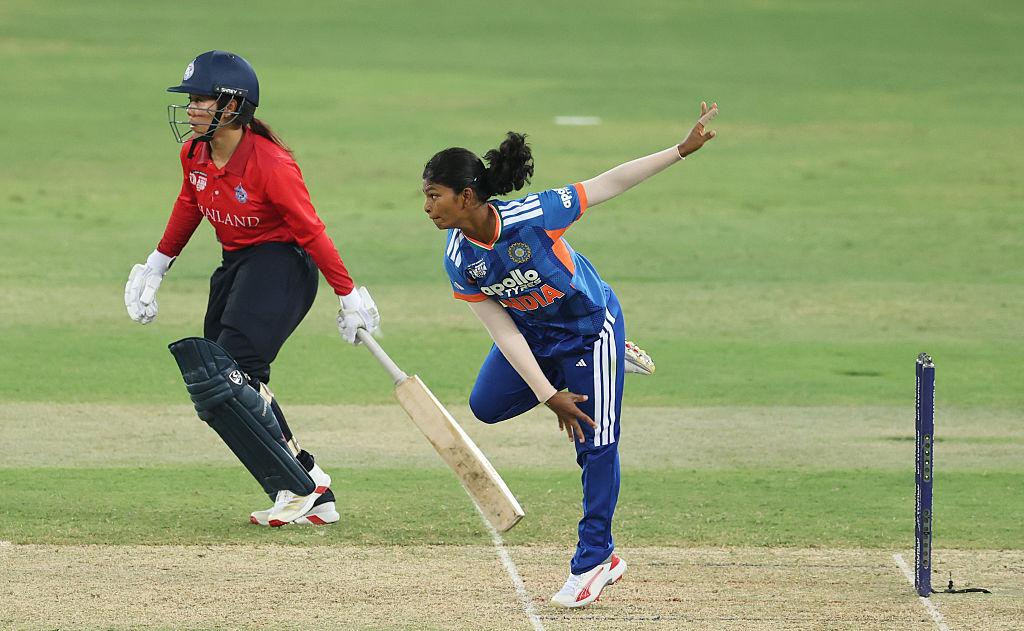
The second innings belonged entirely to India’s bowlers. Kranti Gaud and Nandani Sharma shared the new ball and struck early. Natthakan Chantham was bowled by Gaud for four in the first over, and Phannita Maya soon followed, caught for six off Nandani Sharma. Thailand were rocking at 16 for two inside the powerplay. The introduction of spin only made matters worse. Left-arm spinner Shree Charani and the ever-reliable Deepti Sharma applied the squeeze. Charani picked up two wickets for just 10 runs in her three overs, while Nandani Sharma continued her impressive spell to finish with three for 18 from four overs.
Deepti Sharma turned the match into a personal milestone night. Playing her 150th T20I, the all-rounder produced a spell of extraordinary control and skill. She claimed three wickets without conceding a single run in just 1.1 overs. Her victims included key middle-order batters, and the final delivery of the match saw her dismiss Nannapat Koncharoenkai, who had been the only Thai batter to show any resistance. Koncharoenkai scored 41 off 48 balls with five fours, accounting for nearly two-thirds of Thailand’s total. When she edged one to Richa Ghosh behind the stumps, diving to her right, the contest was over. Thailand were all out for 65. Deepti’s three wickets took her to 171 in women’s T20 internationals, moving her past Putthawong to become the leading wicket-taker in the format. It was a fitting way to mark a landmark appearance.
The contrast between the two innings was stark. India had shown both the brilliance of their top order and the fragility that can creep in under pressure. Thailand had bowled with discipline and intelligence to expose those cracks, yet their batting lacked the depth and application required against a high-quality attack. Only Koncharoenkai reached double figures. The rest of the line-up managed single-digit scores or failed to score at all. Partnerships never materialised, and the required rate climbed beyond reach long before the end.
This was India’s opening match of the tournament and a statement of intent. Group A also includes Pakistan and Hong Kong China, with the top two sides advancing to the semi-finals. India have a proud history in the Women’s Asia Cup, having lifted the trophy seven times, more than any other nation. They will next face Hong Kong China on 3 September at the same venue before taking on Pakistan on 5 September. A strong start like this builds confidence, yet the middle-order collapse will give the coaching staff something to address in the coming days. Consistency through the batting order remains a work in progress even for a side of this quality.
For Thailand the result was a reality check after their earlier win over Hong Kong China in the tournament. They possess skilled spinners who can trouble any batting line-up, as they showed against India, but converting those bowling efforts into competitive totals has been a challenge. Koncharoenkai’s gritty knock offered a template for the kind of application required, yet support was missing. They still have matches remaining in the group and will look to bounce back quickly if they are to stay in contention for a semi-final spot.
The Dubai International Cricket Stadium provided a solid surface and a lively atmosphere under the lights. The night match format added to the drama, with the floodlights illuminating Shafali’s early boundaries and the later collapse in equal measure. Umpires Nimali Perera and Rokeya Sultana oversaw proceedings fairly, with Shathira Jakir as the third umpire. The match referee was Supriya Das.
Looking beyond the scoreline, several individual stories stood out. Pratika Rawal’s debut was a positive one. She showed she belongs at this level with a composed innings under pressure. Shafali Verma continued her reputation as one of the most dangerous openers in the women’s game, her ability to clear the ropes and find gaps making her a constant threat. Deepti Sharma’s record-breaking night added another chapter to an already distinguished career. At a time when women’s cricket continues to grow in stature and professionalism across Asia, performances like these elevate the entire contest.
India’s bowling unit looked well balanced. The seamers made early inroads, the spinners controlled the middle and later stages, and the fielding was sharp enough to create run-out opportunities and take the catches that mattered. Richa Ghosh’s diving effort to end the match was a highlight of athleticism and concentration. Prema Rawat bowled a tidy spell of four overs for 11 runs without a wicket, maintaining pressure even when the wickets were falling elsewhere.
The victory margin of 94 runs was emphatic, yet the path to it was not entirely smooth. That is often the case in T20 cricket. One strong partnership can change the complexion of a game, and one collapse can undo good work. India managed both in the same match and still came out on top because their bowling was superior on the night. Thailand will analyse the batting failures and look for answers before their next outing. For India the focus shifts to refining the middle order so that totals of 180-plus become the norm rather than the exception when the top order fires.
As the Women’s Asia Cup progresses, this match will be remembered as a solid beginning for the defending force in the competition. Shafali Verma took home the Player of the Match award for her 64, a decision that few would argue with given the platform she provided. The tournament still has many chapters left to write, but India’s opening statement was loud and clear. They are here to compete hard, to correct imperfections along the way, and to chase another title. Thailand, competitive with the ball, will need to find greater consistency with the bat if they are to trouble the stronger sides consistently.
In the broader picture of Asian women’s cricket, nights like this in Dubai underline the growing depth and competitiveness of the region. Full member nations continue to set high standards while associate sides like Thailand show they can challenge and occasionally restrict the favourites. The gap is still there, as the 94-run margin demonstrated, but the process of closing it continues match by match. For the Indian team and their supporters the result was the ideal start. Two more group matches await, and the path to the knockouts looks promising if the lessons from this game are absorbed.
The final scoreline read India Women 159 for nine, Thailand Women 65 all out. India won by 94 runs. A night of fireworks from Shafali, a historic spell from Deepti, a debut of promise from Rawal, and a collective bowling effort that left little room for recovery. That is how India began their Women’s Asia Cup campaign in 2026, and it sets an intriguing platform for what comes next under the Dubai lights.
