

Thailand Women edge Hong Kong by six runs in tense Women’s Asia Cup opener in Dubai
The night sky over Dubai International Cricket Stadium held a familiar glow as the Women’s Asia Cup began on Friday, 28 August 2026. Floodlights cut through the warm evening air, the stands held a mix of local fans and travelling supporters, and the first ball of the tournament signalled that two Associate sides would open the show. Thailand Women and Hong Kong Women walked out for the Group A fixture knowing that every run and every wicket would carry weight in a competition that features India, Pakistan, Sri Lanka and Bangladesh among the stronger sides. What followed was a low-scoring, high-tension contest that finished with Thailand defending 120 and winning by six runs.
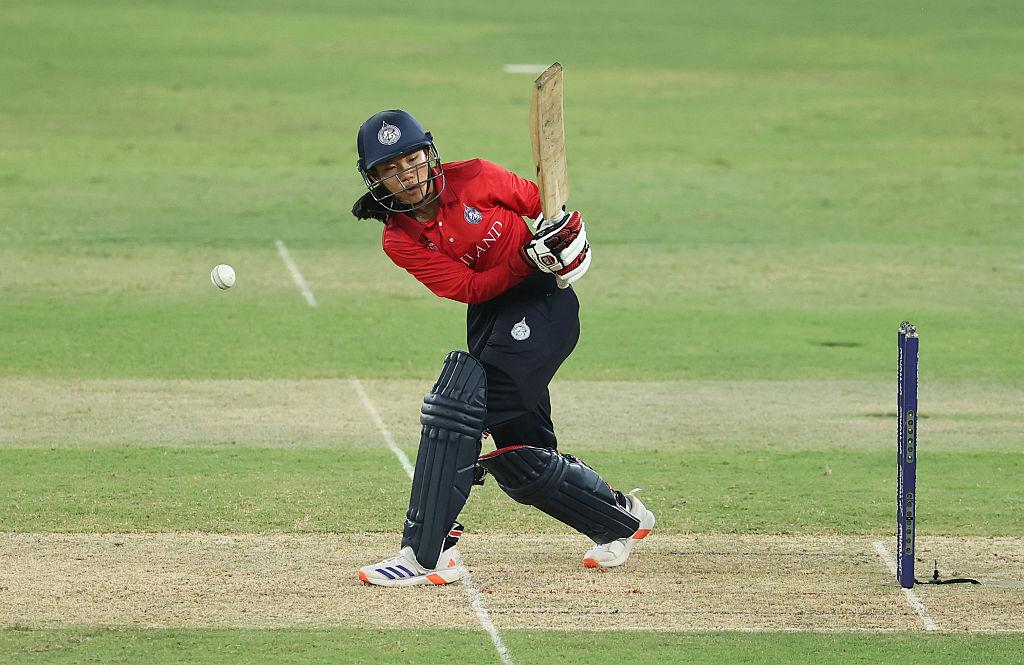
Hong Kong won the toss and chose to field. The decision looked sensible on a surface that offered something for the bowlers from the start. Thailand’s innings never quite settled into a free-flowing rhythm. Openers found the going tough early, and the middle order had to work for every scoring opportunity. Captain Naruemol Chaiwai provided the backbone of the total. She came in and immediately looked more comfortable than those who had gone before her. Her 43 runs from 31 balls included four boundaries and two sixes, the kind of calculated aggression that kept Thailand from collapsing completely. Chaiwai rotated the strike when needed and found the gaps when the fielders spread. Beside her, wicketkeeper-batter Nannapat Koncharoenkai played a more measured hand, finishing with 27 from 41 deliveries. The pair’s partnership gave the innings its only sustained period of stability.
Hong Kong’s bowlers made life difficult throughout. Marina Lamplough stood out with a superb spell of four overs that brought her four wickets for just 11 runs. She mixed pace and length cleverly, finding movement that troubled the Thai batters repeatedly. Alison Siu supported her well, taking three wickets for 37 runs in her four overs. The rest of the attack kept the pressure on, ensuring that Thailand never broke free. By the end of the twentieth over the scoreboard showed 120 for nine. It was a competitive total on a pitch that had already shown it would not yield easy runs, yet it left Thailand with work to do with the ball.
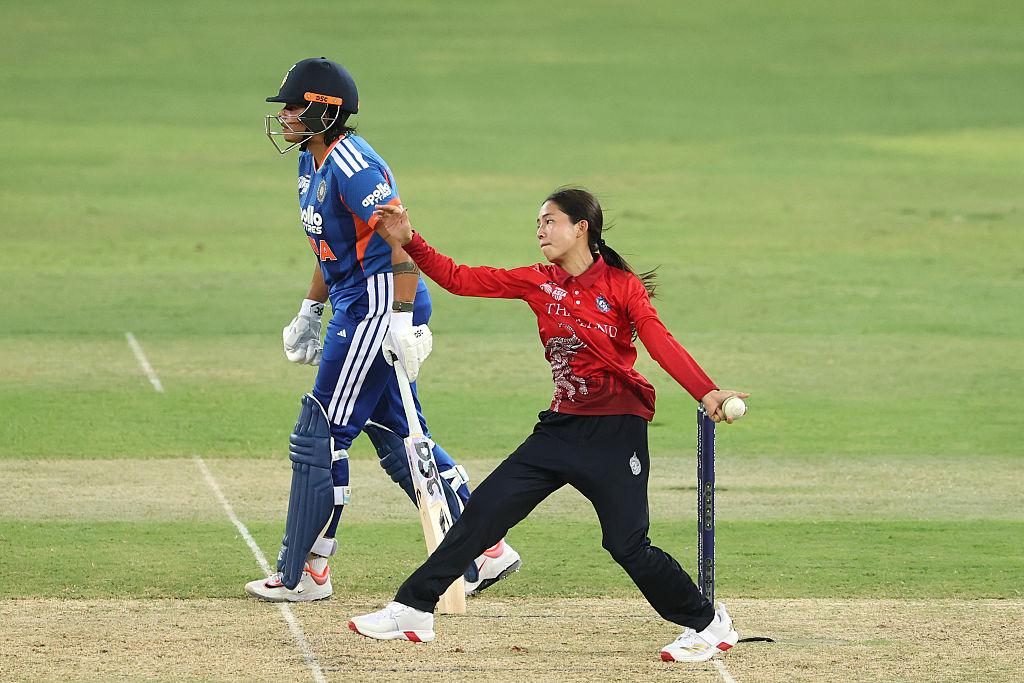
The chase began poorly for Hong Kong. Mariko Hill departed for a duck in the first over, caught behind off Phannita Maya. The early wicket forced the visitors to rebuild carefully. Kary Chan took on the responsibility of lifting the scoring rate. She struck four boundaries in a brisk 28 from 20 balls before Onnicha Kamchomphu removed her, caught in the field. Yasmin Daswani, the other main contributor, also made 28, though hers came from a more patient 41 deliveries. The two batters kept Hong Kong in touch with the required rate for a time, but the middle overs belonged to Thailand’s spin attack.
Kamchomphu proved the decisive bowler of the innings. The off-spinner claimed three wickets for 27 runs across her four overs. She dismissed Chan, then Daswani, and later the Hong Kong captain Maryam Bibi, who was stumped for 10. Those three wickets in the middle phase of the chase shifted the momentum firmly towards Thailand. Phannita Maya backed her up with two wickets for 22 runs, including the important early breakthrough and another later in the innings. Suleeporn Laomi chipped in with the wicket of Marina Lamplough, who had earlier bowled so well and then tried to accelerate with the bat, making a rapid 22 from just 11 balls with four boundaries.
As the overs ticked down, Hong Kong still needed 27 runs from the final three overs with wickets in hand. The required rate was manageable on paper, yet the execution proved beyond them. Thailand’s bowlers held their lines and lengths. Boundaries became rare. Only two fours came in the last 18 deliveries. Thipatcha Putthawong bowled the twentieth over with 14 runs still needed. She kept her composure, conceded only a handful of runs, and took the wicket of Shanzeen Shahzad along the way. That dismissal carried extra significance. It lifted Putthawong to 169 wickets in women’s T20 internationals, moving her past Deepti Sharma and into first place on the all-time list. The final ball of the match confirmed the result: Hong Kong finished on 114 for seven, six runs short of the target.
The victory gave Thailand two points and an early boost in Group A. For Hong Kong the defeat was hard to take after Lamplough’s outstanding bowling performance had restricted the opposition so effectively. Both sides showed fight and skill. The difference came down to Thailand’s ability to defend a modest total through disciplined bowling and sharp fielding in the closing stages.
Context mattered as much as the scoreline. This was the opening match of the 2026 Women’s Asia Cup, the tenth edition of the tournament and the sixth in T20 format. Eight teams were divided into two groups of four, with the top two from each group advancing to the semi-finals. Group A contained India, Pakistan, Thailand and Hong Kong. Group B featured defending champions Sri Lanka, Bangladesh, hosts United Arab Emirates and Indonesia. All matches were scheduled at the Dubai International Cricket Stadium under lights, creating a consistent atmosphere across the tournament.
Thailand arrived with a reputation for competitive performances against stronger sides in recent years. Their bowling attack has often punched above its weight, and the presence of experienced campaigners such as Putthawong, Kamchomphu and Maya gave them confidence. The debut of Naomi Hamilton added a fresh element to the side. Hong Kong, for their part, had shown they could compete with Associate opposition and occasionally trouble Full Member teams. Lamplough’s form with both bat and ball underlined the growing depth in their ranks.
The pitch at Dubai International Cricket Stadium played its part. It was never a high-scoring surface on the night. Bowlers who hit the right areas found assistance, while batters had to work for timing and placement. The total of 120 proved just enough once Thailand’s spinners settled into their work. Fielding standards remained high on both sides, with several sharp catches and a clean stumping contributing to the result.
Player of the Match went to Naruemol Chaiwai for her 43. The captain’s innings provided the platform that everything else was built upon. Without those runs Thailand would have struggled to post a defendable score. Kamchomphu’s three wickets and Maya’s all-round contribution also drew praise in the post-match analysis. For Hong Kong, Lamplough’s four-wicket haul stood as the clear highlight of their effort.
The result left Thailand with an early advantage in the group, though tougher tests against India and Pakistan still lay ahead. Hong Kong faced the challenge of recovering quickly and finding ways to convert strong bowling performances into victories. The tournament format allows little room for error once the stronger sides begin their campaigns in earnest.
Beyond the numbers, the match offered a reminder of the progress being made in women’s cricket across Asia. Associate nations continue to close the gap in skill and competitiveness. Nights such as this one, played under lights in a major venue, give players experience that cannot be replicated in smaller tournaments. The crowd, though not capacity, created enough noise to lift both sets of players at key moments.
As the players left the field, the conversation already turned towards the next fixtures. Thailand would prepare for their meeting with India, while Hong Kong looked ahead to further group games that would determine whether they could stay in contention. The six-run margin left both sides with plenty to analyse. Thailand could take satisfaction from the way they defended a total under pressure. Hong Kong could take heart from the quality of their bowling and the fight shown in the chase.
The opening night of the Women’s Asia Cup 2026 delivered exactly what organisers would have hoped for: a competitive contest, individual performances of note, and a result that kept the early narrative open. Thailand walked away with the two points. Hong Kong walked away knowing they had come close. In a tournament that will stretch across more than two weeks, both sides will have further opportunities to make their mark. For one night in Dubai, however, the edge belonged to the Thai women, who held their nerve when it mattered most and secured a hard-earned six-run victory.
The broader picture of the competition remains compelling. India enter as one of the favourites, carrying the weight of expectation that comes with consistent success in the format. Pakistan bring their own brand of competitive cricket. Sri Lanka, as defending champions, will look to retain the title they won previously. Bangladesh continue to develop, while the Associate sides Thailand, Hong Kong, UAE and Indonesia aim to produce results that surprise. The structure of the groups ensures that every match carries significance from the first ball to the last.
In the dressing rooms after the game, the mood would have reflected the result. Thailand could celebrate a job well done under lights, the captain’s contribution with the bat, and the collective effort of the bowling unit. Hong Kong would review the moments that slipped away in the final overs and look for ways to convert pressure into wickets and runs more consistently. Lamplough’s performance offered a template for the kind of impact individual players can have even in defeat.
Cricket at this level rewards those who adapt. The pitch conditions, the evening temperatures, the pressure of an opening fixture, and the knowledge that stronger opponents wait later in the schedule all combine to test preparation and temperament. Thailand passed that test on the night. Their ability to restrict Hong Kong after posting only 120 showed the value of experience in these conditions. The younger players in both squads will have learned valuable lessons about pacing an innings and maintaining intensity across twenty overs.
The record for Putthawong added a historical footnote to the evening. Reaching the top of the all-time women’s T20I wicket-taking list is no small achievement. It reflects years of consistent performance and the gradual rise of Thai cricket on the international stage. Such milestones rarely arrive in isolation. They come on nights when the team needs every contribution, and this was one of those nights.
As the tournament moves forward, attention will shift to the bigger names and the higher-profile clashes. Yet the memory of this opening match will remain for those who watched it unfold. A six-run victory in a low-scoring contest carries its own drama. The tension in the final overs, the discipline of the Thai bowlers, the near-miss for Hong Kong, and the individual efforts that defined the night all combined to produce a fitting start to the competition.
Thailand Women had begun their Asia Cup campaign with a win. Hong Kong Women had shown they belonged at this level. The Dubai night closed on a result that felt fair to both sides, even if only one could claim the points. In the days that followed, both teams would turn their focus to the next challenges. For now, the scoreboard stood as the final word: Thailand 120 for nine, Hong Kong 114 for seven. A six-run margin that told the story of a contest decided by the finest of margins under the lights in Dubai.
