
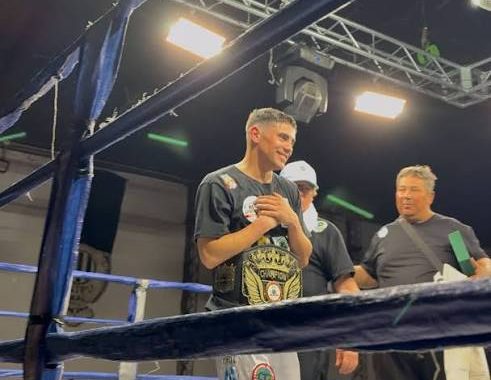
Irusta Claims Vacant WBA Fedelatin Cono Sur Super Lightweight Crown with Measured Masterclass
The lights in Club Jorge Newbery felt heavier than usual on a cool October night in the western suburbs of Buenos Aires. Local fans packed the venue early, the kind of crowd that knows its boxing and comes ready to roar for one of its own. Tomás Fermín Irusta, the quiet technician they call “El Ciclón,” walked to the ring with that familiar steady gait, shoulders loose, eyes already locked in. Across from him stood Dante Brayan Colque Fernández, “La Cobra” from El Alto, Bolivia, a pressure fighter with real knockout power and the kind of aggressive temperament that turns regional title fights into wars.
By the end of the night the vacant WBA Fedelatin Cono Sur super lightweight title belonged to Irusta. The Argentine outboxed, out-thought, and ultimately outlasted his more experienced opponent in a fight that lived up to every bit of the pre-fight hype while revealing the clear difference between raw pressure and refined ring craft.
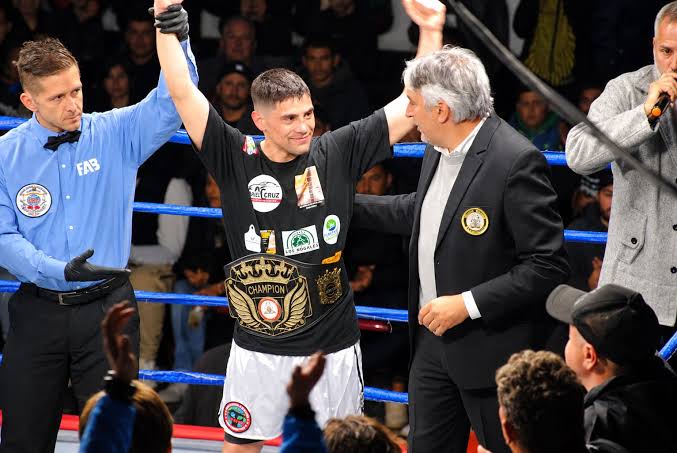
The Preview: Styles Set for Collision
In the days leading up to the bout the matchup looked perfect on paper. Irusta entered with a professional record that hovered around the 9-1-2 mark, built mostly on home soil at venues like this very club. He is not the flashiest fighter in Argentina’s deep 140-pound ranks, but he is one of the most disciplined. Orthodox stance, solid jab, good lateral movement, and a habit of keeping his defensive shape even when the other man is trying to turn the fight into a street brawl. Trainers and local observers had long said he needed a real test against a true aggressor to show whether the technical base could hold under sustained heat.
Colque brought the heat. The Bolivian arrived with a harder edge to his résumé—roughly 16 wins against four losses, eleven of those wins by knockout. He does not box at range for long. His game is to close distance, cut the ring, dig to the body, and force exchanges where superior technique often gets neutralized by sheer volume and physicality. He had already tasted the upper levels of regional competition and carried the kind of rugged experience that makes veterans dangerous even on the road.
The title itself carried weight. The WBA Fedelatin Cono Sur belt is a legitimate stepping-stone in the South American circuit, a piece of hardware that puts a fighter on the broader Fedelatin radar and can open doors toward continental rankings. For Irusta it represented validation at home. For Colque it was a chance to claim silverware on Argentine soil and silence any talk that his best nights came against softer opposition.
Local promoters billed it as a classic clash: the measured home technician versus the visiting pressure merchant. Weigh-ins the day before stayed professional. Both men made the 140-pound limit without drama. Irusta looked sharp and composed in the stare-down. Colque looked hungry. The undercard filled out a solid local card, but everyone knew the main event would decide the night’s real story.
Early Rounds: Irusta Sets the Terms
From the opening bell Irusta did exactly what the pre-fight analysis suggested he needed to do. He established the jab immediately, not as a range-finder but as a real weapon that kept Colque from walking straight in. The Argentine moved laterally, pivoted, and refused to plant his feet long enough for the Bolivian to load up. Colque, true to form, came forward hard, looking to smother and work the body. In the first two rounds the exchanges were competitive but clearly tilted toward the man controlling distance.
By the third round the pattern had set. Irusta’s straight right hands started finding the mark through Colque’s high guard. The Bolivian’s early body work was effective in spots, but he was paying a price every time he overcommitted. Irusta’s defense—tight elbows, good head movement, and that constant lateral step—made Colque’s pressure look more laborious than overwhelming. The home crowd sensed it and responded with growing confidence.
Rounds four and five belonged more clearly to Irusta. He began mixing the jab with sharp one-twos and the occasional left hook upstairs after Colque lunged in. A clean right hand in the fifth snapped Colque’s head back and drew the loudest roar of the night to that point. The visitor still pressed, still dug to the body when he got inside, but the cumulative effect of Irusta’s cleaner punching was starting to show. Colque’s face reddened. His forward marches carried a little less snap.
Middle Rounds: The Fight Finds Its Edge
The middle rounds were where the bout earned its stripes. Colque made his best adjustment around the sixth, cutting the ring more effectively and forcing Irusta toward the ropes for stretches. Those were the moments when the fight got physical. Body shots landed with real thud. Irusta absorbed them, tied up when necessary, and still managed to fire back with short, accurate counters. It was not pretty boxing. It was effective boxing.
In the seventh Irusta produced one of the night’s clearest highlights. After absorbing a flurry along the ropes he spun off, reset in the center, and immediately answered with a sharp combination that forced Colque to take a backward step—the first time the Bolivian had given ground voluntarily. The crowd erupted. For a few seconds the entire venue felt like it was pushing the local man forward.
Colque refused to fold. He came out for the eighth with renewed aggression, landing a heavy left hook to the body that made Irusta wince and clinch. For a moment the pressure looked like it might swing the momentum. Irusta weathered it the way good technicians do: he stayed composed, picked his spots, and slowly reasserted the jab. By the end of the round the Argentine was back in the driver’s seat, though the cost of the physical exchanges was visible on both men.
Championship Rounds: Irusta Closes Strong
The ninth and tenth rounds separated the fighters more clearly. Irusta’s superior conditioning and cleaner technique took over. He boxed in spurts, moved when he needed to, and landed the more eye-catching shots. Colque still pressed and still landed, but the volume slowed and the accuracy dipped. A crisp right hand late in the ninth opened a small cut near Colque’s left eye. Blood mixed with sweat under the lights.
In the final round Irusta did not coast. He stayed busy enough to keep the judges honest, circled away from Colque’s remaining power shots, and finished with a sharp combination that had the home fans on their feet. When the final bell sounded both men raised their arms, but the body language told different stories. Irusta looked spent but satisfied. Colque looked like a man who had given everything and come up short against a style that simply matched up poorly against him on the night.
The Decision and Immediate Aftermath
The scorecards were never really in doubt once the fight settled into its pattern. The judges rewarded Irusta’s cleaner work, ring generalship, and effective defense. Exact numbers varied slightly between cards, but the decision was unanimous and comfortable enough that no serious controversy followed. Irusta improved his record and claimed the vacant WBA Fedelatin Cono Sur super lightweight title in front of the people who had watched him develop. Colque dropped to the loss column but left the ring with his reputation as a tough, game opponent intact.
In the post-fight interviews Irusta was characteristically measured. He thanked the crowd, credited his corner for the game plan, and acknowledged Colque’s pressure. “He makes you work every second,” Irusta said. “You cannot relax. Tonight we stuck to the plan and it worked.” Colque was gracious in defeat, noting the difficulty of fighting on the road against a skilled local man who refused to play his game. Both men left the door open for future opportunities within the Fedelatin structure.
Analysis: Why the Styles Played Out This Way
The fight confirmed several things that smart observers had suspected. Irusta’s technical foundation is real. Against a pure pressure fighter who wants to turn the contest into a physical war, that foundation held. The jab was consistent. The footwork was purposeful rather than panicked. The defense stayed organized even when Colque’s body work landed. Those are not small achievements against a man who has stopped a significant percentage of his opponents.
Colque’s strengths were also on full display. He never stopped coming forward. He forced Irusta to work harder than he wanted to in stretches. The body attack was legitimate and will trouble more stationary fighters. On another night, against a different style, those same tools might have produced a different result. Against a disciplined boxer who refused to stand still and trade, the pressure became more taxing than decisive.
The venue and the crowd mattered too. Club Jorge Newbery is not a neutral site. The energy in the building lifted Irusta in the harder moments and made Colque’s job of closing distance feel even more laborious. Regional title fights often swing on those intangibles as much as pure skill.
Looking ahead, the win should move Irusta higher in the broader Fedelatin picture. The Cono Sur title is a solid credential. Whether he can translate it into bigger opportunities against ranked opposition remains the next test. For Colque the loss is a setback but not a career-defining one. Pressure fighters of his type usually remain dangerous as long as the power and the chin hold up. A return home and a carefully chosen next fight could put him right back in the regional conversation.
Top Highlights That Defined the Night
Several moments stood out and will travel in the local boxing conversation for weeks:
- Irusta’s early jab work that consistently disrupted Colque’s entries and set the tactical tone from the first round.
- The clean right hand in the fifth that visibly staggered Colque and brought the crowd fully alive.
- Irusta’s escape and counter combination in the seventh that forced Colque backward for the first time and shifted the psychological balance.
- Colque’s heavy left hook to the body in the eighth that briefly put Irusta in survival mode and reminded everyone the visitor still carried real threat.
- The late-round accumulation of clean punches from Irusta, capped by the combination in the final round that sealed the visual impression for the judges.
- The disciplined ring generalship throughout—Irusta rarely wasted motion, rarely got drawn into prolonged exchanges on Colque’s terms, and still produced enough offense to win rounds clearly.
Those sequences, more than any single knockout blow, told the story of the fight. It was a contest decided by cumulative effectiveness rather than one dramatic moment.
Summary: A Title Change That Felt Earned
On a Friday night in Maipú, Tomás Fermín Irusta did what good regional prospects are supposed to do when the opportunity arrives. He faced a dangerous, aggressive opponent with real power and a proven willingness to mix it up. He stuck to a clear plan built around distance, the jab, and defensive responsibility. He absorbed the necessary pressure without panicking. And when the final scores were read he stood as the new WBA Fedelatin Cono Sur super lightweight champion.
The victory was not flashy. It was professional. In a sport that often rewards chaos, Irusta’s measured approach felt refreshing and effective. For the local boxing community it was a satisfying night—one of their own stepping up, delivering under pressure, and leaving the ring with hardware that carries real regional meaning.
Colque will be back. Pressure fighters with his engine and power usually are. Irusta now carries the responsibility that comes with a title. The next tests will be harder. Bigger names will study the tape of this fight and look for ways to close the distance more effectively than Colque managed. For one night in October, though, the technician from Maipú had the answers. The vacant belt is vacant no longer. El Ciclón is the champion.
The crowd filed out into the Buenos Aires night still talking about the jab, the counters, and the way their man had refused to be bullied. In regional boxing those conversations are the real currency. Irusta earned them the hard way—round by round, adjustment by adjustment, until the judges made it official. That is how titles are supposed to change hands.