
EMOTHERED: RED NUN’S LEGACY
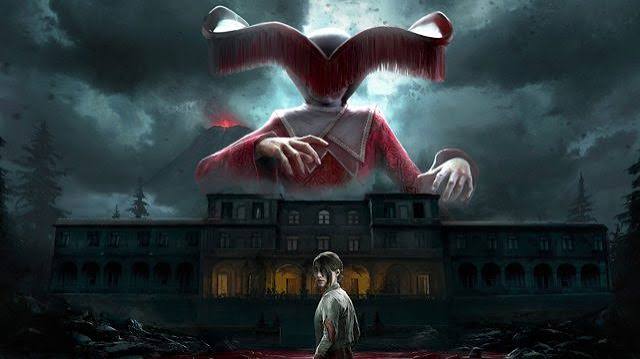
Remothered: Red Nun’s Legacy arrives on October 27, 2026, as the third and final chapter in Stormind Games’ survival-horror trilogy. After the long gap following Broken Porcelain, the studio has delivered a game that feels like a deliberate closing of the book—messy family secrets, moths, mirrors, and all.
I went in as someone who played the earlier games years ago and still remembered the particular brand of unease they specialized in: the slow dread of being hunted through decaying Italian villas by human stalkers who felt more personal than typical horror monsters. Red Nun’s Legacy keeps that core intact while adding a few new tools and a clearer sense of resolution. It is not a reinvention. It is a focused, sometimes frustrating, frequently effective ending.
The Setup
Thirteen months after six young girls vanished in Sicily, Susan receives a grainy recording that suggests her daughter Agata might still be alive. Against every rational piece of advice, she heads to a crumbling noble residence on the slopes of Mount Etna, once belonging to the Ashmann family. What she finds there is not a simple rescue. The place is crawling with stalkers—brainwashed, half-dressed, relentless figures who patrol the halls with a single-minded focus that never quite becomes cartoonish. Beneath the immediate threat sits the longer shadow of the Red Nun and the Cristo Morente convent, the place where the myth began.
The story works on two levels. On the surface it is a mother’s desperate search. Underneath it digs into the Ashmann family’s history of buried guilt, forbidden rituals, and generational rot. If you have played Tormented Fathers and Broken Porcelain, the returning faces and lingering plot threads hit harder. Newcomers can follow the main through-line without too much confusion, but the denser revelations land with more weight if you already know the earlier chapters. The writing is not always elegant—some of the dialogue tips into melodrama—but the emotional stakes feel sincere. Cissy Jones gives Susan a grounded, exhausted urgency that sells the maternal panic without turning her into a screaming archetype. Maggie Robertson, as the Red Nun, brings a controlled menace that benefits from her previous work as Lady Dimitrescu; the voice is familiar enough to feel intentional without being a simple rehash.
Atmosphere and World
The game’s greatest strength is its sense of place. The villa and the surrounding grounds feel properly lived-in and then abandoned. Wallpaper peels in specific patterns. Furniture sits at slightly wrong angles. Light falls through cracked shutters in ways that make you second-guess every shadow. The Italian neo-giallo influence is clear in the stylized lighting, the sudden bursts of saturated color against muted decay, and the way violence is framed as both intimate and theatrical. Stormind never lets the environments become pure set dressing. You are constantly encouraged to look closer—open drawers, read documents, examine objects that might trigger a memory or open a new path.
Akira Yamaoka’s score does a lot of the heavy lifting. It is not a pure Silent Hill pastiche, but it carries the same talent for making ordinary spaces feel wrong. Low drones sit under exploration. Sharper, more abrasive textures rise when stalkers are near. The music rarely tells you exactly when to be afraid; it just keeps the air thick. Combined with the sound design—creaking floorboards, distant footsteps, the soft flutter of moths—the audio design is frequently more effective than any jump scare.
Gameplay: Classic Tools, New Tricks
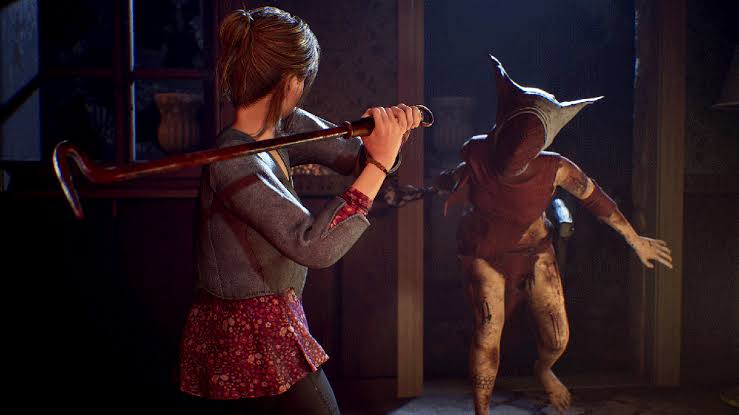
At its core this is still a classic third-person stalker horror game in the lineage of Clock Tower and Haunting Ground. You explore, hide, evade, and occasionally fight when cornered. Stealth remains the primary survival tool. Hiding spots work as expected; the AI for the stalkers is competent enough that you cannot simply stand in the open and expect to be ignored. Combat is limited and resource-conscious. You can throw objects or use limited defensive items, but standing and trading blows is rarely the smart choice. Running is often the better option, and Susan is fast enough that pure evasion feels viable more often than in some earlier entries.
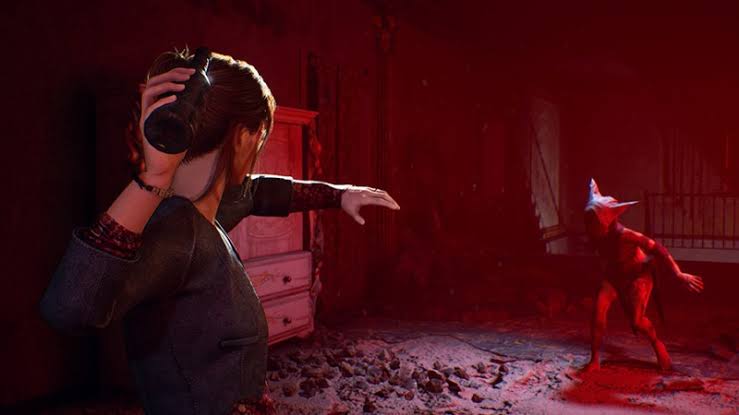
The new systems revolve around “hypnosis powers.” Retrocognition lets Susan focus on certain objects and hear echoes of the past, often revealing clues or opening narrative context. Mirror abilities allow her to see and sometimes interact with hidden or alternate versions of the environment. Moth manipulation is the most mechanical of the three: you can gather moths and use them to destroy cocoons that block certain doors or paths. These abilities never turn Susan into a superhero. They feel like natural extensions of the game’s obsession with memory, perception, and the porous boundary between past and present. They also give the puzzles a distinct flavor. Many of the better sequences require you to combine environmental observation with one of these powers rather than simply finding a key and matching it to a lock.
Exploration is generous. There are a large number of documents and environmental details to find, and the game rewards careful looking. Puzzles range from straightforward to moderately layered; none of them feel like pure pixel-hunting, though a few later ones lean on the new abilities in ways that can feel slightly tutorial-like. The overall structure is linear with some optional rooms and collectibles. You will not get lost for long, but the denser areas still create the pleasant tension of knowing a stalker could be around the next corner while you try to piece together another fragment of the Ashmann story.
The Shortcomings
The game is short. Most players will finish the main story in five to six hours. That brevity is both a strength and a weakness. It never overstays its welcome or pads itself with empty backtracking, but it also means the new systems do not get as much time to develop as they might. Once you understand the power set, the remaining challenges become more about execution than discovery. Replay value is limited. There are trophies and some collectibles, but the narrative is tightly directed and does not offer major branching paths or radically different endings that would justify a second full run for most people.
Stalker variety is thinner than ideal. The designs are unsettling and the pursuit sequences can be tense, but after a few hours you start to recognize the patterns. Some technical roughness remains—occasional texture pop-in, a few awkward animations, and moments where the camera or collision feels slightly off. None of these are game-breaking, but they remind you that this is still a mid-budget production from a studio that has had a turbulent few years.
The story itself, while satisfying as a conclusion for series fans, can feel convoluted if you are coming in cold. Certain revelations rely on knowledge from the previous games or on documents that are easy to miss. The final act lands hard for those who have followed the whole trilogy; for others it may feel like a lot of dense lore arriving at once.
Closing the Circle
What Red Nun’s Legacy does well is commit to its own identity. It does not chase the current trends of cinematic action-horror or pure walking simulators. It stays in the older tradition of vulnerability, environmental storytelling, and the particular dread that comes from being hunted by something that looks human enough to feel personal. The addition of the hypnosis powers gives the investigation a distinct texture without breaking the power fantasy (or lack thereof) that defines the genre. The voice performances and Yamaoka’s score elevate material that could have felt dry on paper. And the decision to keep the runtime tight means the game ends while the atmosphere is still working rather than after it has worn thin.
Is it the best game in the trilogy? Probably not—the first still holds a special place for many fans. Is it a worthwhile conclusion? Yes. It answers the questions it needed to answer, deepens the mythology of the Red Nun and the Ashmann family, and leaves the series in a place that feels complete rather than abandoned. For players who have waited years for this final chapter, it delivers the sense of closure the earlier games promised. For newcomers willing to accept a shorter, more focused experience that prioritizes mood and mystery over spectacle, it offers a solid entry point into a distinctive Italian-flavored corner of survival horror.
The villa on the slopes of Etna is still standing when the credits roll. The moths still move through the dark. And the Red Nun’s legacy, for better or worse, finally has an ending.
