
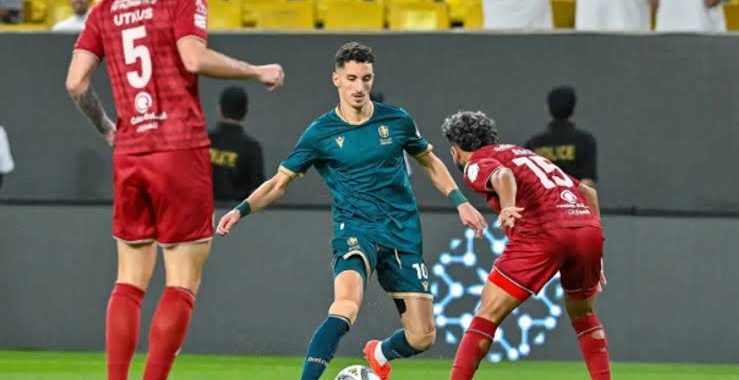
Al Diriyah 1-1 Al Kholood: A Gritty Draw That Said More Than the Scoreline
Monday night in Riyadh belonged to neither side completely, yet both left Al-Awwal Park (Prince Turki bin Abdul Aziz Stadium) with something they could point to. Al Diriyah, the ambitious newcomers stacked with big-name recruits, and Al Kholood, the resilient side from the north, played out a 1-1 draw that felt like a proper early-season scrap rather than a polished showcase. Abdulaziz Al-Aliwa put the visitors ahead in the 71st minute. Meshari Al Nemer equalised twelve minutes later. That was the scoreboard story. The real one ran deeper.
Preview: What the Night Was Supposed to Be
Coming into this one, the narrative was already loaded. Al Diriyah had arrived in the top flight with serious money and even more serious names. Darwin Núñez, Enzo Millot, Hattan Bahebri, Idrissa Gueye, Chancel Mbemba, Berat Djimsiti — the kind of squad that makes you raise an eyebrow when you see them listed for a newly promoted or heavily backed side. The expectation, fair or not, was that they would steamroll most mid-table or lower opposition at home. Fans turned up expecting dominance, possession, and probably a comfortable win.
Al Kholood arrived with a different brief. Under Des Buckingham they had shown they could be awkward, organised, and capable of punishing mistakes. They were not there to make up the numbers. Their recent form had been mixed but never passive. They knew how to sit in, absorb pressure, and hit on the break or from set pieces. The smart money still leaned toward the home side, but anyone who had watched Kholood knew a clean sheet or a smash-and-grab was never out of the question.
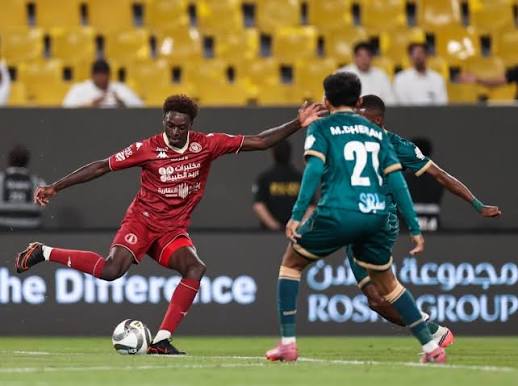
The weather was typical Riyadh evening — warm, dry, the kind of night where the pitch holds up and legs can still move late. Attendance sat just under 3,000, which for an early-season midweek or early-week fixture felt about right. The home crowd was expectant rather than electric. They wanted a statement. Al Kholood’s travelling support was smaller but loud enough when their team started the second half with purpose.
Pre-match, the tactical contrast was clear. Bruno Lage’s Al Diriyah lined up in a shape that prioritised control through midfield and width from the full-backs and wide attackers. Núñez was the focal point, with Millot and Bahebri looking to create overloads. Al Kholood sat in a compact 4-1-4-1 or similar variation, looking to deny space between the lines and use Iker Kortajarena and the wide players as outlets. The referee, Mohammed Sami Taher Al Ismail, was expected to let the game flow — and mostly he did.
On paper it looked like a home win. On the pitch it became something messier and more interesting.
Analysis: Control Without the Killer Edge
The first half was a study in frustration for Al Diriyah. They had more of the ball — the final possession figure would settle at 58-42 — and they pushed higher, forcing Al Kholood deeper. Yet the visitors’ defensive shape held. Mbemba and Djimsiti were solid enough at the back for the home side, but the final ball kept letting them down. Núñez dropped deep to link, Millot tried to find pockets, Bahebri looked dangerous in flashes, but the cutting edge was missing. Al Kholood’s midfield, anchored by Seydouba Cissé and John Buckley among others, worked hard to close the channels.
Kholood were content to wait. They did not flood forward in the first period. Their threat came in transitions and the occasional set-piece delivery. Goalkeeper Hamed Al-Shanqiti was rarely tested with clear chances. At the other end Nikola Vasilj stayed alert without being overworked. Half-time arrived at 0-0 and it felt like the game was still waiting for someone to make a decisive move.
The second half opened with more of the same until the hour mark. Then the game tilted. Al Kholood began to find more joy on the counter and from wide areas. A corner in the 71st minute proved the catalyst. Iker Kortajarena delivered or combined, and Abdulaziz Al-Aliwa finished with a right-footed shot from the right side of the box into the centre of the goal. 0-1. Suddenly the visitors had something concrete to defend, and the home crowd’s mood shifted from expectant to anxious.
Al Diriyah responded the way a side with quality should. They pushed higher, committed more numbers forward, and started to overload the flanks. The equaliser, when it came in the 83rd minute, was pure second-ball and delivery quality. Abdulaziz Al-Faraj got the cross in, and Meshari Al Nemer, who had only just been introduced, rose to head it home. 1-1. The stadium exhaled. For a few minutes it felt like the home side might go on and win it.
They did not. Al Kholood stayed organised. Yellow cards began to appear — Ramzi Solan, Seydouba Cissé, and late on Hamed Al-Shanqiti — as the visitors protected their point with increasing physicality. Al Diriyah had the corners (eight to one) and the territorial dominance, but the shot on target count told a different story: only one for the home side against four for Kholood. That statistic alone explains why the visitors left happier. They had been more clinical with fewer opportunities.
Tactically, Al Diriyah controlled large stretches without ever looking completely in charge of the outcome. Their midfield could recycle possession, but the final third lacked the ruthlessness required against a side happy to defend deep and spring forward. Al Kholood’s game plan was executed well. They absorbed, stayed compact, and took their moment. The late substitutions — including the introduction of Al Nemer for the hosts and changes for the visitors — kept the contest alive until the final whistle, but neither side could find a winner.
The draw was fair on the balance of play. Al Diriyah will look at the possession and corners and feel they should have taken more. Al Kholood will look at the scoreboard and the away point against a star-studded side and feel satisfied.
Top Highlights
The match did not explode with end-to-end chaos, but several moments defined it.
First, the 71st-minute goal. After a period of sustained home pressure that never quite produced a clear chance, Al Kholood won a corner or transitioned effectively. Kortajarena’s involvement created the opening, and Al-Aliwa finished cleanly. It was the classic sucker-punch goal — clinical, well-timed, and against the run of general possession. For a side that had defended for long spells, it was the perfect reward.
Second, the equaliser in the 83rd minute. Al Diriyah had thrown on Meshari Al Nemer, and the change paid off almost immediately. Al-Faraj’s delivery was accurate, Al Nemer’s header was well-directed, and the stadium finally had something to roar about. It was the kind of set-piece or cross-and-header response that shows character. From 0-1 down with little time left, they found a way back.
Third, the VAR intervention around the 68th minute. A potential penalty for Al Kholood involving Iker Kortajarena was checked and cancelled. In a tight game, that decision mattered. Had it been given and converted, the complexion of the final twenty minutes would have been completely different. The fact that the referee and VAR got it right (or at least arrived at no-penalty) kept the contest balanced.
Fourth, the late discipline from Al Kholood. Three yellow cards in the final stages, including one for the goalkeeper Al-Shanqiti in stoppage time, showed how hard they were working to protect the point. It was not always pretty, but it was effective. Al Diriyah kept pushing for a winner through corners and crosses, yet the visitors’ back line and midfield held firm.
Individual performances stood out in pockets. For Al Diriyah, Al-Faraj’s assist and overall contribution from the right, Al Nemer’s impact off the bench, and the defensive solidity of Mbemba and Djimsiti were positives. For Al Kholood, Al-Aliwa’s goal, Kortajarena’s creativity, and the collective work rate of the midfield and defence were the foundations of the result. Vasilj made important saves when required; Al-Shanqiti was largely untroubled until the late pressure.
The shot map told its own story. Al Diriyah had volume but lacked precision. Al Kholood had fewer attempts but better quality. In a league where efficiency often decides points, that difference was decisive in producing a draw rather than a home win.
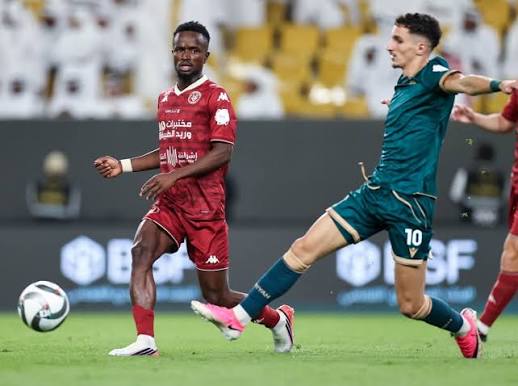
Summary: A Point Each, and Lessons for Both
In the end it finished Al Diriyah 1, Al Kholood 1. The home side will feel they controlled enough of the match to have taken all three points. The visitors will feel they earned their share through organisation, timing, and clinical finishing when the chance arrived. Both are right.
For Al Diriyah the result is a reminder that talent alone does not automatically translate into wins, especially against sides that refuse to open up. Possession and corners are useful, but the final action still has to be sharp. Introducing Al Nemer late produced the equaliser; starting him or finding earlier ways to stretch the defence might have changed the outcome. Still, a home draw against a competitive Al Kholood side is not a disaster early in the campaign. The squad quality remains high, and nights like this can serve as calibration rather than crisis.
For Al Kholood the point is valuable. Travelling to face a side with Núñez, Millot, Gueye and company and coming away with a result requires structure, discipline, and a bit of quality in the final third. They showed all three. Al-Aliwa’s goal and the defensive resilience will give them confidence for the harder fixtures still to come. The yellow cards and the late stress are things to tidy up, but the overall performance was coherent.
The broader context of the Saudi Pro League continues to reward sides that can mix control with ruthlessness and organisation with moments of quality. This match offered both. Al Diriyah had the control for long periods. Al Kholood had the organisation and the decisive moment. Neither could fully impose their preferred version of the game for the full ninety-plus minutes, which is why the points were shared.
As the players left the pitch, the home fans offered polite applause rather than full celebration. The away contingent celebrated a hard-earned point. In the stands and in the dressing rooms the conversations would have been similar: we could have had more, but we did not let the other side have it all either. That is often the mark of a competitive draw.
Monday 26 October 2026 will not live long in the memory as a classic, but it will be remembered as a night when two different approaches cancelled each other out and produced a fair, hard-fought 1-1. Al Diriyah keep searching for the consistency their squad suggests is possible. Al Kholood continue to prove they belong in these contests. Both leave with a point and plenty still to prove. That, more than any single moment of quality, may be the most accurate summary of the evening.
