
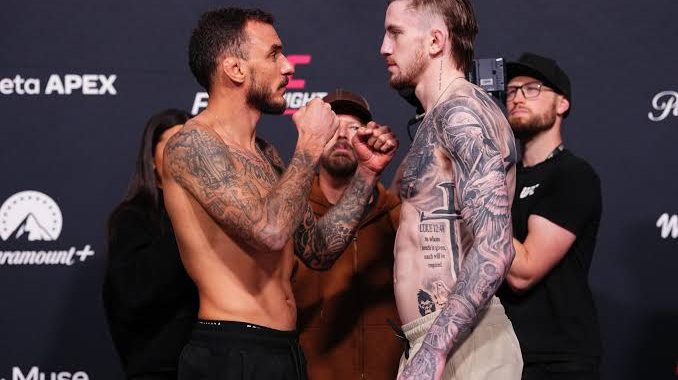
Tom Nolan’s Ground-and-Pound Statement: How the Aussie Climbed Over Renato Moicano in a Controversial UFC Vegas 123 Main Event
Las Vegas still carries that peculiar Halloween energy even when the calendar flips past October 31. On a Saturday night at the Meta APEX, the Octagon smelled of sweat, liniment, and the faint metallic tang that always hangs in the air when two lightweights who actually want to fight share the same cage. Renato “Money” Moicano, the battle-tested Brazilian veteran and former title challenger, walked in as the more established name. Tom Nolan, the 26-year-old Australian nicknamed “Big Train,” walked in as the rising contender on a five-fight winning streak looking for his first UFC main-event scalp. By the time the third round hit 1:28, Nolan had it—via TKO (punches and elbows)—and the conversation immediately shifted from the finish itself to the referee’s decision that helped create the opening.
This was not a clean, clinical masterclass. It was messy, contested, and layered with the kind of controversy that keeps fight fans arguing for days. Moicano controlled long stretches on the ground with body triangles and rear-naked choke attempts. Nolan survived them with remarkable composure, then capitalized when the fight returned to the feet and later when he reversed a takedown. The result advances Nolan’s stock dramatically while leaving Moicano, at 37, facing harder questions about the next chapter of a long career.
Preview: Styles, Stakes, and the Setup

Coming into the fight, the matchup carried classic veteran-versus-prospect tension. Moicano entered with a professional record around 21-7-1 (exact pre-fight numbers varied slightly by source depending on how draws and no-contests were tallied in earlier reporting) and a UFC ledger that included a short-notice title shot against Islam Makhachev in early 2025. He lost that one by D’Arce choke in the first round after stepping in when Arman Tsarukyan withdrew. He had mixed results afterward, including a submission win over Chris Duncan earlier in 2026 that put him back in the win column and kept him ranked in the lightweight top 15. Moicano’s game has always revolved around aggressive grappling, relentless back-takes, and a willingness to mix it up on the feet when necessary. He is durable, experienced, and carries the kind of fight IQ that comes from more than a decade inside the UFC.
Nolan represented the other side of the equation. Born in Toowoomba, Queensland, he grew up playing rugby league before shifting fully to mixed martial arts in his mid-teens. He turned pro, built an impressive regional record, and earned a UFC contract via Dana White’s Contender Series. His Octagon debut ended in a loss, but he rebounded with a string of victories that pushed him into the rankings and eventually into this main event. Standing taller with a reach advantage and a striking-heavy approach, Nolan trains with power and pressure. Ahead of this fight he made a significant camp change, relocating from Australia to Auckland to join Eugene Bareman’s City Kickboxing. The move put him in a high-level environment full of UFC talent and experienced coaches—the kind of upgrade many prospects chase when the lights get brighter.
The betting lines were relatively close. Moicano was a modest favorite, reflecting his experience and grappling threat. Nolan carried the underdog energy of a young fighter with finishing ability and momentum. The card itself was a typical APEX Fight Night: solid undercard action leading into a lightweight main event that felt like a genuine ranking eliminator. Moicano needed the win to stay relevant near the top of a stacked division. Nolan needed it to prove he belonged in that conversation for real.
Pre-fight talk centered on whether Nolan’s striking and athleticism could keep the fight standing long enough to avoid Moicano’s back control, and whether the veteran still had the gas tank and sharpness to impose his will over five rounds. Few predicted the specific sequence that decided it, but the stylistic contrast was clear: grappler’s pressure versus striker’s timing and power.
Analysis: Patience, Survival, and a Costly Stand-Up
What unfolded was a fight of two distinct phases. Early, Moicano dictated. He secured takedowns, immediately transitioned to the back, and locked body triangles. From there he fished for the rear-naked choke while Nolan hand-fought, stayed calm, and refused to panic. Multiple observers noted that Nolan appeared willing to lose rounds if it meant surviving the position without giving up the submission. That composure was not accidental. Nolan later explained he had trained specifically for Moicano’s body triangle and had a contingency plan: stay composed, avoid the silly movements that open the neck, and wait for opportunities on the feet.
In Round 1 Moicano spent significant time on the back. Nolan survived the round largely intact. Round 2 followed a similar pattern after an early exchange of kicks and strikes. Moicano again got the body lock, took the fight down, and locked the triangle. The action slowed. The crowd began to boo. Then referee Dan Miragliotta stood the fighters up—a decision that immediately drew heavy criticism. Moicano had clear control and was actively working, even if the pace of damage was measured. Standing them up under those circumstances is rare and, according to many veterans and analysts, incorrect. The moment the fight returned to the feet, Nolan landed clean. A knee dropped Moicano. Nolan poured on strikes and nearly finished before the round ended. That sequence flipped the energy of the entire fight.
Critics, including fighters and longtime referees like “Big” John McCarthy in post-fight commentary, called the stand-up a mistake that altered the trajectory. Supporters of the call pointed to the lack of high-damage output and the crowd’s restlessness. Regardless of the debate, the practical effect was undeniable: Nolan regained the initiative and carried real momentum into the third round.
In Round 3 Nolan pressed the striking advantage. High kicks, left-handed combinations, and another heavy knee kept Moicano on the defensive. When Moicano eventually forced a clinch and takedown, the Brazilian looked slower and more fatigued. Nolan reversed the position, landed in top control, and unleashed sustained ground-and-pound—punches and elbows that forced the stoppage at 1:28. The finish was decisive. Moicano was taking significant damage and no longer defending effectively.
Statistically the disparity in significant strikes told the story of the later rounds. Nolan out-landed Moicano heavily overall, scored a knockdown, and showed improved grappling defense and reversal ability under pressure. Moicano’s early control time was real, but it did not produce the finish or the sustained damage needed to keep the fight in his preferred range once the stand-up occurred.
The controversy does not erase Nolan’s performance. He survived elite back control against a specialist, stayed composed, and finished when the opportunity presented itself. At the same time, the stand-up remains a legitimate talking point. Fights are decided by the rules as applied in the moment, and this one was shaped by a rare and highly scrutinized application of those rules.
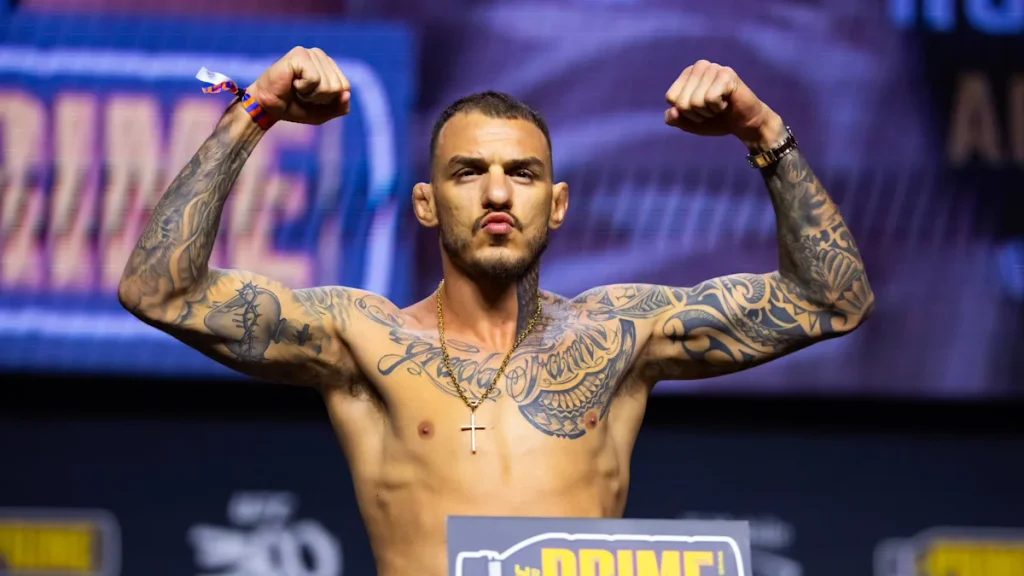
Top Highlights and Key Moments
Several sequences defined the night:
- Moicano’s early takedowns and immediate back-takes established the expected grappling dominance. The body triangle looked tight, and the submission attempts forced Nolan into pure survival mode. Nolan’s hand-fighting and posture management kept him conscious and in the fight.
- The Round 2 stand-up. Whether you view it as correct or not, the visual of Moicano in dominant position being forced to restart on the feet changed everything. Seconds later Nolan’s knee landed clean and Moicano was in real trouble.
- Nolan’s near-finish at the end of Round 2. The combination of the knee and follow-up strikes nearly ended the fight early. Moicano’s toughness kept him alive to the bell.
- The Round 3 reversal and ground-and-pound. After Moicano got another takedown, Nolan scrambled, ended up on top, and simply did not stop throwing. The elbows and punches accumulated until Miragliotta had no choice but to intervene. The finish was violent and conclusive.
- Post-fight. Nolan was composed and grateful, crediting his coaches, his faith, and the City Kickboxing environment. He expressed openness to whatever the UFC wanted next. Moicano’s camp and the broader community focused heavily on the refereeing decision in the immediate aftermath.
The undercard provided supporting action, but the main event absorbed the majority of the attention—exactly as a main event should.
Summary: What It Means Going Forward
Tom Nolan left Las Vegas with the biggest win of his career, a six-fight UFC winning streak, and a clear statement that he belongs in the upper half of the lightweight division. The finish, the composure under submission pressure, and the ability to capitalize when the fight opened up all point to a fighter still ascending. Moving to City Kickboxing appears to have paid immediate dividends in preparation and confidence. At 26 he has time, physical tools, and now a signature victory over a ranked veteran.
Renato Moicano walks away with another hard night and questions about his place in a deep, young, and talented lightweight field. The early control showed the old skills are still there. The inability to finish and the late-round fatigue raised concerns about durability and recovery at this stage of his career. He remains a dangerous, experienced opponent capable of beating most people in the division on the right night, but the margin for error continues to shrink.
The refereeing debate will linger. Calls like the Round 2 stand-up fuel ongoing conversations about consistency, criteria for standing fighters, and the balance between action and legitimate control. Those discussions matter because they affect outcomes and, by extension, careers and rankings.
In the broader picture, UFC Vegas 123 delivered a main event that was compelling precisely because it was imperfect. Nolan’s patience and finishing power met Moicano’s grappling pressure, a referee decision intervened, and the result left one fighter elevated and another searching for answers. That is fight night in its purest form—messy, consequential, and impossible to look away from.
Nolan now waits for the next name on the list. Moicano will evaluate options, whether inside the UFC or beyond. The lightweight division keeps moving. On this particular Halloween night in the APEX, the Big Train kept rolling.