
England’s New Beginning Starts at Lord’s as Black Caps Fall by 115 Runs
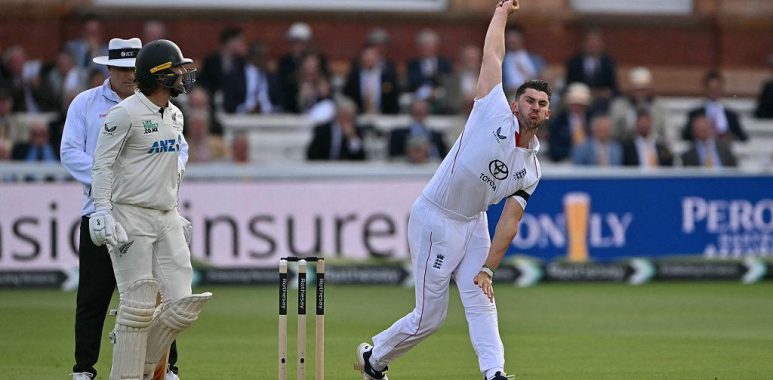
England secured a commanding 115-run victory over New Zealand in the first Test of the series at Lord’s, a result that underlined their dominance on home soil and set an early tone for what promises to be a compelling summer of cricket. Played from June 4 to 7, 2026, the match saw England capitalise on excellent batting conditions early on before their bowlers dismantled the visitors’ second innings with clinical precision. The win marked England’s first victory at the home of cricket in over two years and gave them a 1-0 lead in the three-match series.
The atmosphere at Lord’s was electric from the outset. A near-capacity crowd filled the stands each day, drawn by the traditional rivalry between these two sides and the promise of high-quality red-ball cricket. New Zealand arrived in England with a solid reputation for fighting spirit, especially in overseas conditions, but they found themselves outplayed in almost every department. Captain Tom Latham won the toss and elected to bowl first, hoping to exploit any early moisture in the pitch, but that decision would later be questioned as England’s top order built a formidable platform.
Day one belonged firmly to England’s batsmen. Openers Zak Crawley and Ben Duckett came out with positive intent, putting on 87 runs for the first wicket before Duckett edged one behind off Tim Southee. Crawley, looking in sublime touch, continued to dominate, reaching his century shortly after lunch with a crisp drive through the covers. His 138 off 212 balls was a masterclass in controlled aggression, blending elegant strokes with smart running between the wickets. Ollie Pope joined him at the crease and the pair added 156 for the second wicket, frustrating the New Zealand bowlers who struggled for consistency on a pitch that offered little assistance.
By stumps on day one, England had reached 378 for 3, with Pope unbeaten on 92 and Joe Root on 45. The crowd roared as Root, the maestro of English batting, looked set for another big score at his favourite venue. New Zealand’s bowlers, led by Southee and Matt Henry, toiled hard but lacked the penetration needed to break the partnerships. William O’Rourke, the young fast bowler making his debut in England, showed promise with a couple of sharp spells but was expensive overall.
Day two dawned with clear skies and England resumed their innings with purpose. Pope brought up his hundred early in the morning session, a composed knock that featured several exquisite drives and deft glances. He eventually fell for 124, caught in the slips off Henry, but not before England had pushed past 450. Root then took centre stage, crafting a patient 167 that included 22 boundaries. His innings was a lesson in concentration, especially against the spin of Mitchell Santner, who was New Zealand’s most economical bowler but still conceded over 100 runs without taking a wicket on the first two days.
Harry Brook came in at number five and played with characteristic flair, smashing 78 off 89 balls before a momentary lapse saw him stumped off Santner. The lower order contributed useful runs, with Chris Woakes adding 42 and the tail wagging to push England to a mammoth total of 612 all out late on day two. New Zealand’s fielding, usually a strength, let them down with a couple of dropped catches that proved costly.
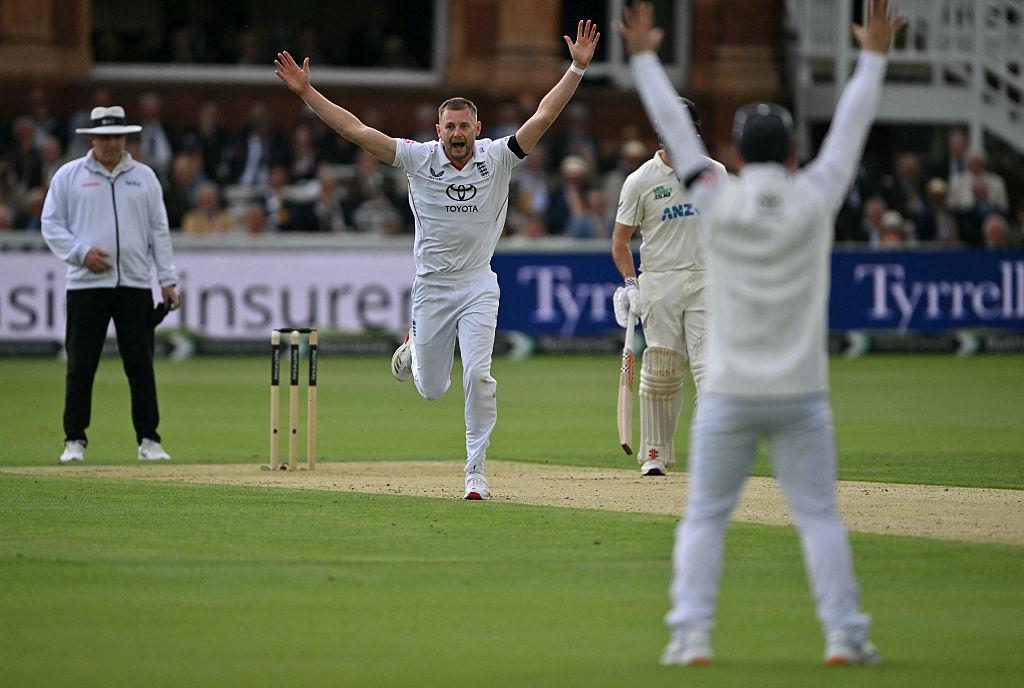
The visitors’ reply began cautiously. Latham and Devon Conway opened with a solid 68-run stand, but the introduction of England’s seamers turned the tide. James Anderson, in what many speculated might be one of his final appearances at Lord’s, struck early, dismissing Conway with a classic outswinger. Stuart Broad, bowling with renewed vigour, removed Latham for 34, and suddenly New Zealand were 112 for 3 at stumps on day two. Kane Williamson, the talismanic number four, was left unbeaten on 41, but the pressure was mounting.
Day three was pivotal. Williamson and Daryl Mitchell built a promising partnership of 112 runs, with Williamson reaching his 32nd Test century in stylish fashion. His 118 was a reminder of why he remains one of the world’s finest batsmen, full of elegant drives and soft hands. Mitchell supported him well with 67 before falling to a brilliant catch by Brook in the gully off Woakes. At 278 for 5, New Zealand still trailed by a significant margin, but hopes of avoiding the follow-on were alive.
That hope was extinguished when England’s spinners and seamers combined effectively after lunch. Shoaib Bashir, the young off-spinner, took three wickets in a spell that included the prized scalp of Williamson, caught at short leg. Mark Wood, generating serious pace, rattled the lower order with short-pitched bowling that had the New Zealand tail hopping. The visitors were eventually bowled out for 387, still 225 runs behind. Anderson finished with 4 for 68, while Woakes claimed 3 for 52. England enforced the follow-on immediately, a bold but justified decision given the match situation.
New Zealand’s second innings began disastrously. Conway was dismissed for a duck by Anderson in the very first over, and Latham soon followed, trapped lbw by Broad. At 28 for 3 with Williamson and Mitchell back at the crease, the writing was on the wall. Williamson fought valiantly again, scoring 76, but lacked support as England’s bowlers maintained a relentless line and length. Wood’s pace proved too much for several batsmen, while Bashir’s variations created problems on a wearing pitch.
By the end of day three, New Zealand were 156 for 6, still needing another 69 runs just to make England bat again. The crowd sensed the inevitable and cheered every English wicket. Day four saw a brief resistance from the lower order, with Santner and Henry adding 48 for the eighth wicket, but it was never going to be enough. England wrapped up the innings shortly after lunch, bowling New Zealand out for 310. Broad took 3 for 45 in the second innings, finishing with match figures of 6 for 98, while Anderson claimed 5 wickets across both innings in a fitting display at his beloved Lord’s.
The victory by 115 runs was comprehensive. England’s batting depth and bowling variety proved decisive. Crawley’s opening century set the tone, Root’s double contribution anchored the innings, and the seam attack, led by the veterans Anderson and Broad, exploited conditions perfectly. For New Zealand, Williamson’s two half-centuries and some gritty lower-order efforts were bright spots, but the lack of substantial partnerships and the inability to take early wickets in England’s first innings cost them dearly.
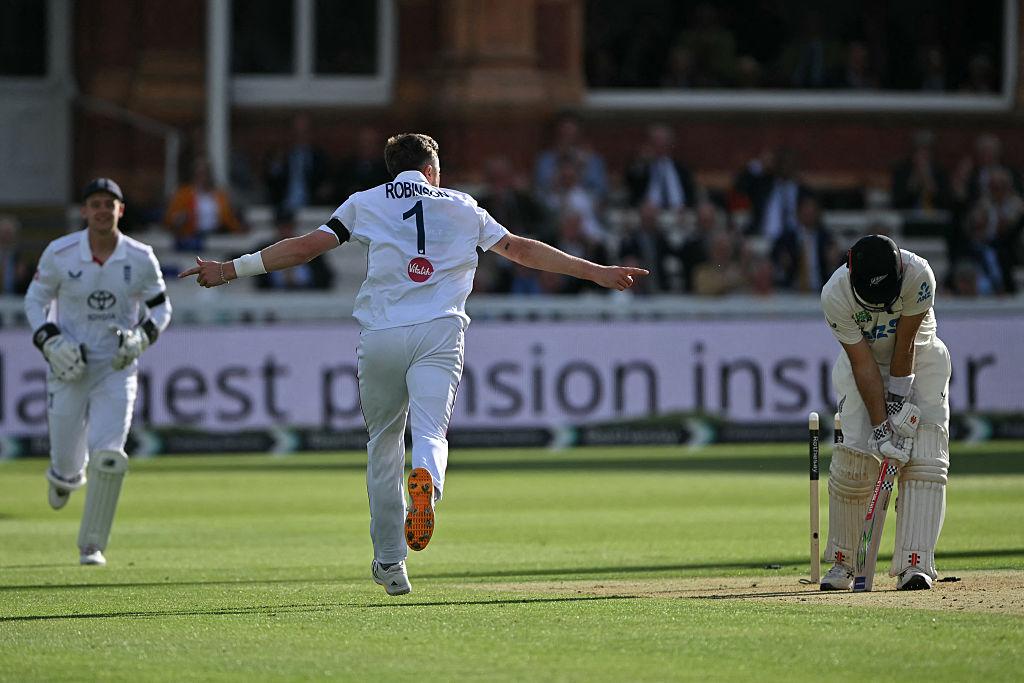
Post-match, England captain Ben Stokes, who had bowled a few overs despite a minor niggle, praised his team’s all-round performance. “It was a complete effort from the boys,” he said. “We knew the conditions would suit us as the match went on, and the way Zak and Ollie started set us up nicely. Jimmy and Broady were outstanding as always. This is a great start to the series, but we know New Zealand will come back hard.”
New Zealand skipper Latham was gracious in defeat. “England played really well, especially with the bat in the first innings,” he admitted. “We need to regroup, look at where we can improve our execution, and come back stronger for the second Test. Kane showed his class again, and there were positives, but we were outplayed overall.”
The match also highlighted several individual milestones. Anderson moved closer to 700 Test wickets with his performance, while Root surpassed another batting landmark, further cementing his legacy. For the younger players on both sides, the experience at Lord’s provided valuable lessons in the rigours of Test cricket.
Looking ahead, this result puts pressure on New Zealand to respond in the second Test at Trent Bridge, where they have historically performed better. England, buoyed by the win, will look to build momentum and potentially wrap up the series early. The pitch at Lord’s offered something for everyone as the game progressed – true bounce initially, then some assistance for seamers and spinners later – which made for an engaging contest despite the one-sided result.
Beyond the scorecard, the match was a celebration of Test cricket’s enduring appeal. The traditional setting of Lord’s, with its famous slope and historic pavilion, provided the perfect backdrop. Spectators enjoyed four days of fluctuating fortunes, though England always held the upper hand. The balance between bat and ball was evident, with big scores possible but wickets falling regularly enough to keep the game alive.
England’s coaching staff, led by Brendon McCullum, deserves credit for fostering an aggressive yet disciplined mindset. Their approach has transformed the team into a formidable unit capable of dominating at home. New Zealand, under coach Gary Stead, will be analysing their bowling plans and batting collapses, seeking adjustments for the remainder of the tour.
As the players left the field to applause, the focus shifted to recovery and preparation. For England, it was a job well done. For New Zealand, the challenge now is to bounce back and salvage pride in what remains a highly anticipated series. Cricket fans around the world will be eagerly awaiting the next chapter at Nottingham, where the visitors will hope to level the scores and reignite the contest.
In the broader context of international cricket, this Test reinforced the importance of adapting to conditions and maintaining consistency over five days. England’s total of 612 was their highest against New Zealand at Lord’s in recent memory, and their ability to enforce the follow-on demonstrated tactical acumen. New Zealand’s total of 387 in the first innings was respectable but ultimately insufficient against such a strong home side.
Individual performances warrant deeper appreciation. Crawley’s 138 not only earned him player of the match consideration but also silenced any lingering doubts about his opening credentials. His footwork against the pacers and composure against spin were impressive. Pope’s 124 continued his rich vein of form, while Root’s 167 was vintage stuff – patient, technically sound, and devastatingly effective.
On the bowling front, Anderson’s swing and accuracy remain world-class even at this stage of his career. Broad complemented him perfectly with his height and ability to extract bounce. Wood’s raw pace added a different dimension, unsettling the New Zealand batsmen repeatedly. Bashir’s spin provided the necessary control in the middle overs, proving that England’s attack has genuine variety.
For New Zealand, Southee and Henry bowled long spells without much luck, while Santner’s containment was notable but lacked wickets. The batting relied too heavily on Williamson, a familiar story in recent tours. The middle order needs to step up if they are to challenge England seriously.
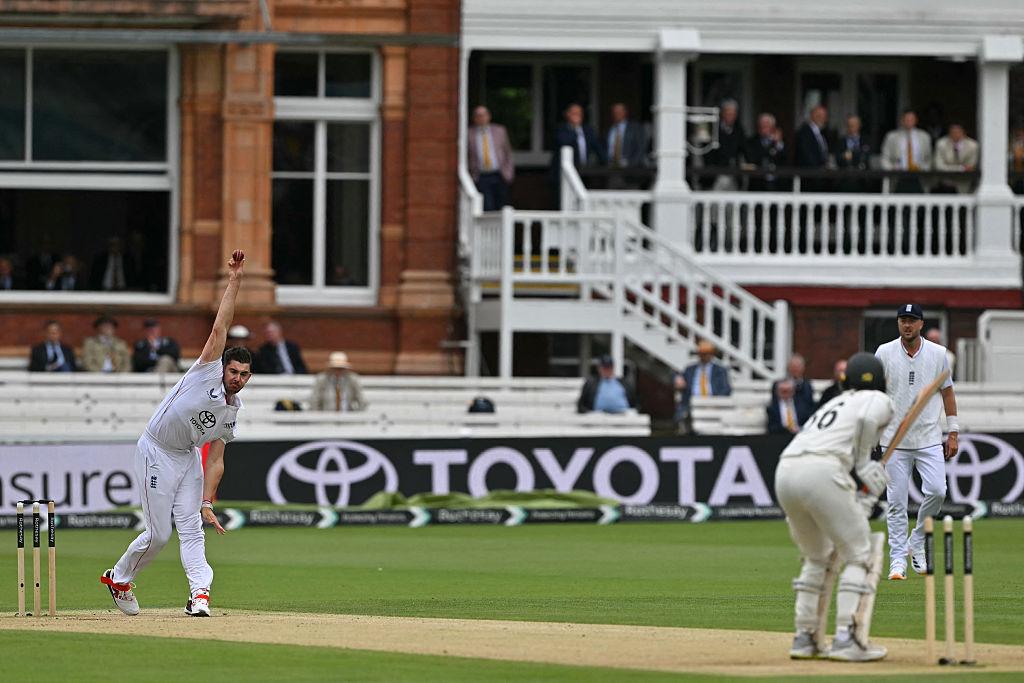
The crowd’s engagement added to the occasion. Cheers for milestones, Mexican waves during lulls, and respectful applause for good cricket from both sides embodied the spirit of the game at its best. Ground staff worked tirelessly to maintain the pitch, and the umpires handled proceedings with fairness.
As the sun set on day four, England’s players gathered for a team huddle, reflecting on a job well executed. This victory was not just about the 115-run margin; it was about the manner in which it was achieved – with depth, skill, and determination. The series now moves forward with England holding the initiative, but cricket’s unpredictability ensures that New Zealand will be plotting their comeback.
In summary, the first Test at Lord’s in June 2026 will be remembered as a statement win for England. They out-batted, out-bowled, and out-thought their opponents across four days of high-quality action. For the players, it was a chance to shine on one of cricket’s grandest stages. For the fans, it was a reminder of why Test cricket remains the ultimate format. The summer of 2026 is off to a thrilling start, and with two more Tests to come, the excitement is only building. England lead the way, but the battle is far from over.
