

South Africa Rewrite History in Guwahati with Crushing 408-Run Victory Over India
South Africa have pulled off one of the most stunning upsets in recent Test cricket history, dismantling India by a massive 408 runs in the second Test at Guwahati to complete a 2-0 series whitewash. This victory marks South Africa’s first Test series win on Indian soil in 25 years, a feat that will be remembered for generations as a turning point in Proteas cricket. What unfolded at the Barsapara Cricket Stadium from November 22 to 26, 2025, was not just a triumph of skill but a masterclass in resilience, strategy, and execution under pressure.
The match began under overcast skies typical of the region in late November, with the pitch offering a bit of assistance to seamers early on but promising to turn as the days progressed. South Africa captain Temba Bavuma won the toss and elected to bat first, a decision that would prove pivotal. India’s bowlers, led by the ever-reliable Jasprit Bumrah, started strongly, claiming early wickets. Aiden Markram fell for 38, castled by a beauty from Bumrah, and Ryan Rickelton followed soon after for 35. At 82 for two, South Africa looked shaky, but the middle order stabilized the innings.
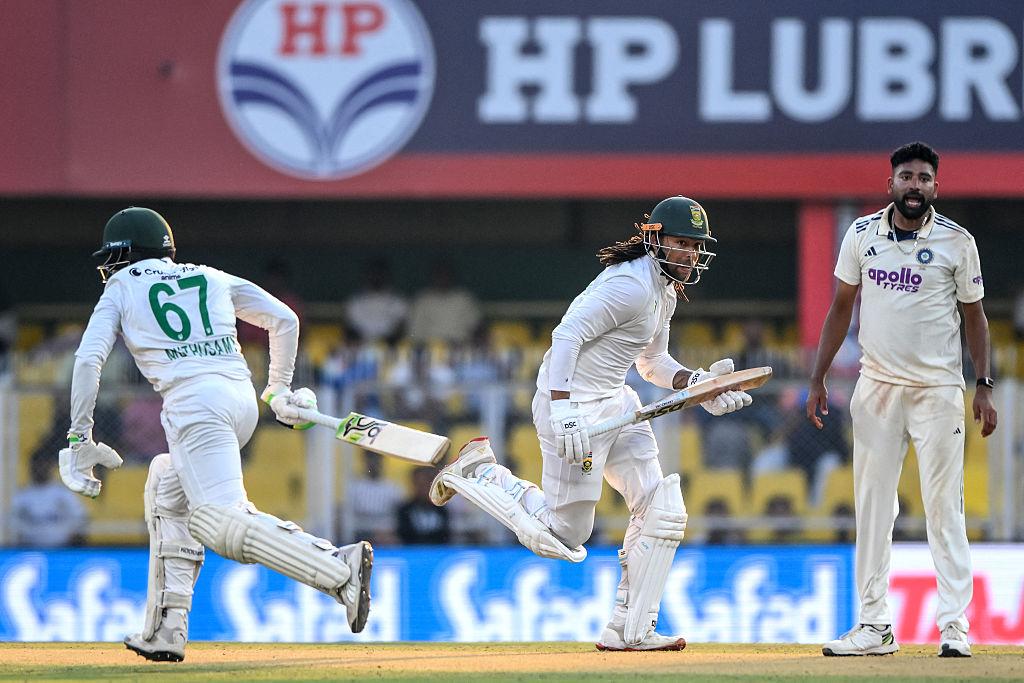
Tristan Stubbs contributed a gritty 49, and Bavuma himself added 41 before falling to Ravindra Jadeja. But the real heroes of the first innings emerged lower down the order. Senuran Muthusamy, batting at number seven, played with remarkable composure to score a maiden Test century of 109 off 206 balls. His innings was a blend of solid defense and timely aggression, punishing anything loose from the Indian spinners. Muthusamy’s knock not only anchored the innings but also silenced any doubts about his place in the side. Coming from Indian origins but firmly representing South Africa, his performance carried extra emotional weight.
Even more spectacular was Marco Jansen’s contribution. The towering left-arm seamer, standing at over two meters tall, smashed a career-best 93 off just 91 balls, including six fours and seven sixes. His aggressive approach in the lower order turned the momentum decisively. When Jansen walked in, South Africa were building steadily, but his fireworks propelled them to a commanding total of 489 all out in 151.1 overs. Kuldeep Yadav was the pick of the Indian bowlers with four wickets, but the damage was already done.
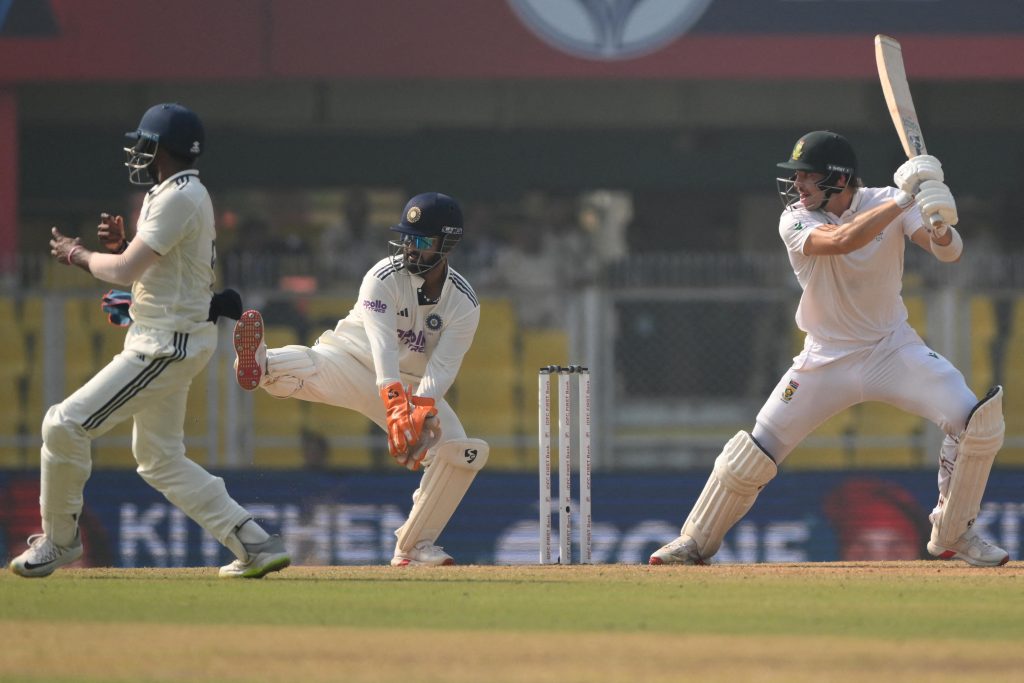
India’s reply was a tale of collapse. Starting their first innings trailing by a significant margin, they managed only 201 in 83.5 overs. Yashasvi Jaiswal top-scored with 58, showing glimpses of his class, while Washington Sundar fought hard for 48. However, the South African bowling attack was relentless. Jansen starred with a devastating six-wicket haul for 48 runs, using his height to extract steep bounce and troubling the Indian batters with short-pitched deliveries. His spell dismantled the middle order, including key dismissals of Rishabh Pant, Jadeja, and others. Simon Harmer provided excellent support with three wickets, exploiting the turning conditions.
By the end of the third day, South Africa held a massive lead and chose not to enforce the follow-on, opting instead to bat again and set an even more daunting target. In their second innings, they declared at 260 for five after 78.3 overs. Tristan Stubbs shone once more with 94, while Tony de Zorzi added 49. Ravindra Jadeja claimed four wickets for India in this innings, but it was too little too late. The declaration left India needing 549 runs to win, a target that looked insurmountable on a wearing pitch.
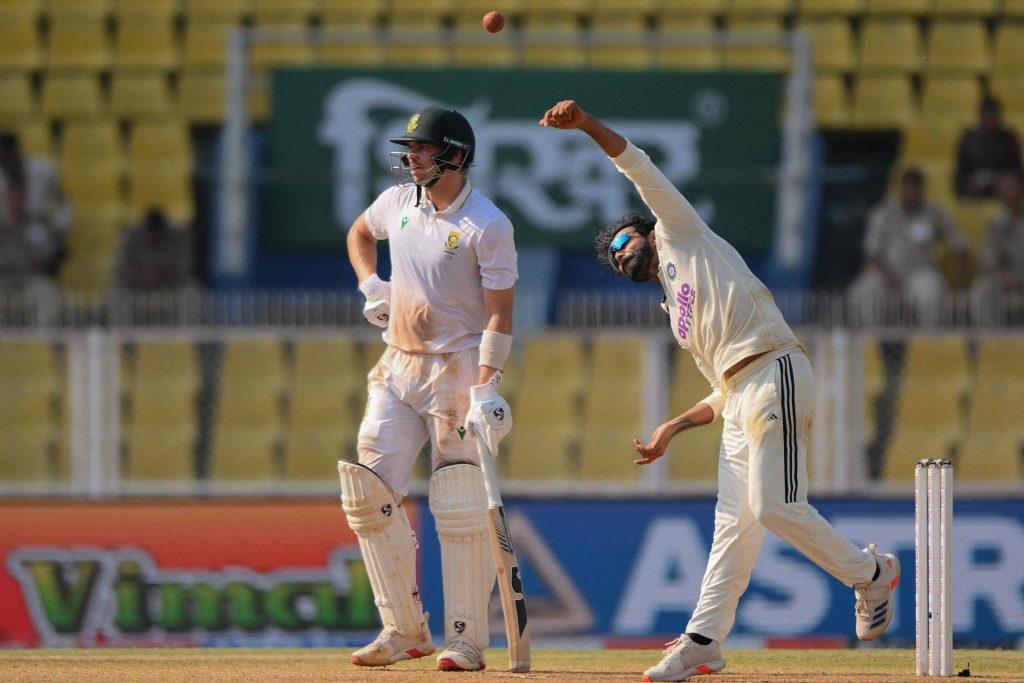
The fourth and fifth days saw India battling valiantly but ultimately crumbling under the pressure. Their second innings folded for just 140 in 63.5 overs. Jadeja top-scored with a fighting 54, but the rest of the lineup had no answers to the spin of Harmer and the pace of Jansen. Harmer was the destroyer-in-chief in the final innings, taking six wickets for 37 runs in a spell that showcased his variations, drift, and ability to bowl long spells with control. His off-breaks and topspinners bamboozled the Indian batters, leading to several edges and bowled dismissals. Jansen capped his match with another wicket and a sensational one-handed catch running back to seal the victory.
This 408-run margin is India’s heaviest defeat in Test cricket history by runs, highlighting the depth of the crisis in Indian red-ball cricket. For years, India had been almost unbeatable at home, but this series exposed vulnerabilities in their batting lineup and questioned their transition phase after the retirements of stalwarts like Virat Kohli and Rohit Sharma. Coach Gautam Gambhir later described it as part of a necessary rebuilding process, but the immediate pain was evident on the faces of the players and fans.
South Africa’s triumph was built on several standout performances. Beyond Jansen and Harmer, the entire unit contributed. Bavuma’s leadership was calm and tactical, Muthusamy’s century provided the glue, and the fielding was electric, with Aiden Markram taking multiple sharp catches. This was a team effort that combined traditional South African pace and bounce with spin bowling excellence tailored for subcontinental conditions. Simon Harmer, in particular, emerged as the Player of the Series with 17 wickets at an astonishing average, flipping the narrative of how spinners perform in India.
The Guwahati pitch, prepared at the Assam Cricket Association Stadium, played a crucial role. It offered early seam movement, then variable bounce and turn, rewarding disciplined batting and intelligent bowling. Crowds were enthusiastic despite some empty stands on certain days, creating an electric atmosphere that both teams fed off. Local support for India was passionate, but they witnessed history being made against their side.
Reflecting on the broader context, this series victory for South Africa comes hot on the heels of their World Test Championship success. Under Bavuma, they have transformed from perennial underachievers to a formidable force capable of winning anywhere. Their ability to adapt, with players like Jansen embodying the new generation of all-round talent, bodes well for future challenges. For India, this whitewash serves as a wake-up call. Questions will be asked about selection, preparation, and the balance between attack and defense in home conditions. Players like Pant showed fight, but consistency across the lineup was lacking.
Day by day, the match unfolded like a thriller. On day one, South Africa reached a solid 250-odd for six or seven wickets, with Muthusamy and Verreynne building partnerships. Bumrah and Siraj kept it tight, but India’s inability to break the lower order proved costly. Day two belonged to Jansen and Muthusamy, who took the score past 450. India’s openers faced a tricky period but survived to stumps.
Day three was the turning point. Jansen’s six-for reduced India to ruins, and South Africa’s decision to bat again showed confidence. By day four, the target was set, and Harmer began his work. The fifth day was a formality, with South Africa wrapping up the win in the afternoon session. Each session told a story of South African dominance and Indian struggles.
This result has massive implications for the World Test Championship standings. South Africa collected crucial points, boosting their qualification hopes, while India dropped to a more precarious position. Fans worldwide celebrated the Proteas’ achievement, with social media buzzing about Jansen’s all-round brilliance and Harmer’s wizardry.
Looking ahead, South Africa will carry this momentum into future tours, proving they can compete and win in the toughest conditions. India, meanwhile, must regroup, perhaps investing more in domestic first-class cricket and nurturing young talents to rebuild their aura at home. The 2025 series will be etched in cricket lore as the one where the visitors conquered the fortress.
In the end, cricket was the winner. Matches like this remind us why Test cricket is the ultimate format, testing character over five days. South Africa’s players hugged and celebrated wildly on the field, while Indian fans applauded the effort despite the loss. Marco Jansen, fittingly named Player of the Match, stood tall as the symbol of this victory, his 93 and six-for defining the contest.
As the sun set over Guwahati, one could not help but marvel at the shift in power dynamics. South Africa, once struggling in Asia, have now rewritten their script. For Indian cricket, it’s a moment for introspection and renewal. The beautiful game continues, full of surprises and lessons for all.
