
Solarpunk: A Breezy Escape to the Skies That Almost Soars
It’s been about a week since Solarpunk dropped on June 8, 2026, and I’ve already sunk a embarrassing number of hours into it. As someone who’s bounced between the high-stress loops of games like Valheim and the chill vibes of Stardew Valley, I went in hoping for that perfect middle ground: survival without the constant threat of death by starvation or monster hordes, but with enough to do that it doesn’t feel like a digital screensaver. Developed by the tiny German duo at Cyberwave and published by rokaplay, this cozy survival-crafting title set in a world of floating islands delivers on the “cozy” part in spades, but stumbles a bit when it comes to depth and longevity. At around $23, it’s an accessible indie gem that punches above its weight in charm, even if it doesn’t always stick the landing.

First off, the premise is pure catnip for anyone who’s ever daydreamed about renewable energy utopias. You wake up on a small floating island in a vast sky archipelago, equipped with basic tools and a dream of turning your patch of cloud real estate into a thriving, self-sustaining homestead. No dramatic backstory, no evil empire to topple—just you (and up to three friends in co-op), the wind, the sun, and a whole lot of potential. The aesthetic screams solarpunk: think lush greenery draped over elegant, jury-rigged tech powered by solar panels, wind turbines, and water wheels. It’s optimistic futurism without the dystopian edge, a breath of fresh air in a genre often dominated by post-apocalyptic grit.
Visually, Solarpunk is stunning for a two-person team. The handcrafted islands feel alive, with swaying grasses, drifting clouds, and dynamic weather that actually impacts gameplay—strong winds boost your turbines but might make airship piloting tricky. Colors pop in that soft, watercolor way that makes everything feel inviting rather than hyper-realistic. On PC (I played on a mid-range rig), it runs smoothly, and it’s fully playable on Steam Deck too. Console versions, including the Nintendo Switch 2, hold up well from what I’ve seen in cross-play sessions, though the Switch 2 version has some noticeable pop-in during longer flights. The music is another highlight: gentle acoustic tracks layered with ambient nature sounds and subtle electronic hums from your growing tech. It’s the kind of soundtrack you leave on in the background while doing dishes.
Getting Started: Survival Lite
Your first hours in Solarpunk are a gentle onboarding. Resource gathering feels intuitive—chop trees (or whatever passes for them up here), mine ore from rocky outcrops, forage berries and herbs. Early crafting is straightforward: basic tools, a shelter, a small farm plot. But unlike traditional survival games where you’re racing against hunger meters and cold snaps, Solarpunk eases you in. Your character doesn’t drop dead from skipping a meal; it’s more about efficiency and flourishing.
Building is where the game really shines early on. The system is flexible and forgiving, reminiscent of Valheim or Minecraft but with more emphasis on aesthetics. Snap pieces together or go freeform for organic, cozy designs. I spent an entire afternoon just tweaking my starter cabin—adding a porch with hanging lanterns, a rooftop garden, and little pathways lined with glowing crystals. Decorations abound: wind chimes, potted plants, custom furniture, even fish tanks where you can “draw” your own species that come to life. It’s deeply satisfying for creative types.
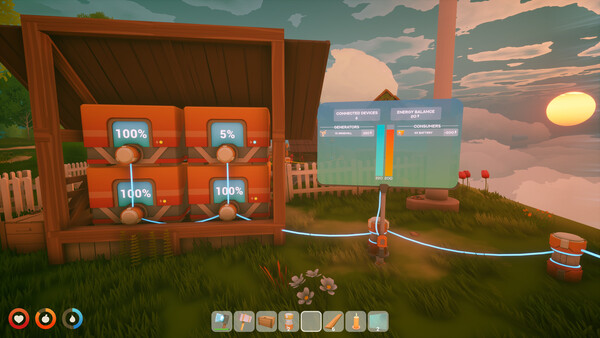
Farming ties everything together. Plant a variety of crops that thrive under different conditions—some love full sun, others prefer the misty edges of your island. As you expand, you unlock automation: solar-powered harvesters, irrigation systems fed by rainwater collectors, even little drones that ferry goods around. Managing your energy grid becomes a fun mini-puzzle. Weather plays a big role here; a sunny day means surplus power for speeding up machines, while storms might force you to rely on stored energy or wind. It’s clever without being punishing.
Exploration and the Airship Life
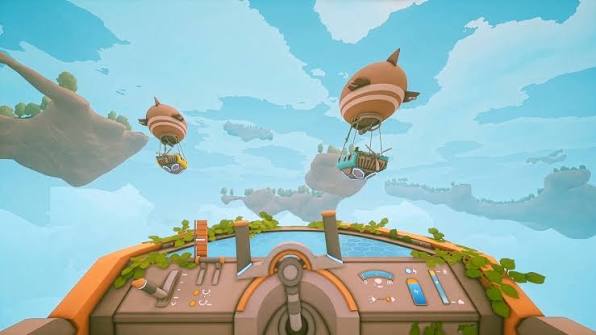
Once you build (or repair) your personal airship, the game opens up. These sky vessels are customizable—add storage, better sails, even mounted tools for harvesting mid-flight. Piloting feels weighty and responsive, like sailing through the clouds. Distant islands vary wildly: some are dense forests teeming with new flora and fauna, others barren rock fields rich in rare minerals, and a few host ancient tech ruins that hint at the world’s lost history.
Exploration is the heart of progression. Each new island unlocks recipes, seeds, and gadgets. You’ll scan wildlife to “recruit” animal companions for your farm—adorable bird-like critters that help pollinate or small herd animals for resources. Co-op makes this a blast; one friend can tend the home base while others scout. Voice chat with buddies while gliding between islands at sunset is peak cozy multiplayer.
But here’s where cracks start to show. The world, while beautiful, feels a tad empty after a while. Islands are procedurally influenced but handcrafted in style, yet there’s limited variety in encounters. No NPCs to chat with, no dynamic events beyond weather, and wildlife is mostly passive. It’s relaxing, sure, but after 15-20 hours, the “what’s over the next horizon?” excitement dulls.
The Solarpunk Fantasy vs. Reality
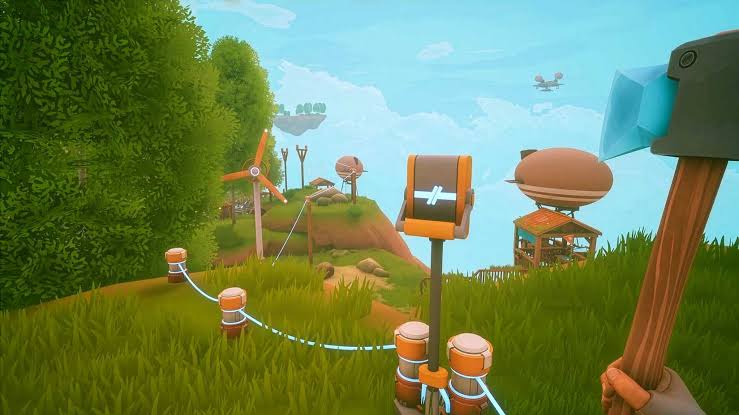
The game wears its theme proudly. Energy systems emphasize renewables—no coal plants or pollution mechanics here. Automation feels rewarding, like you’re genuinely building a harmonious ecosystem. I loved optimizing my setup: routing power from a central wind farm to distant greenhouses, watching my island transform from a bare rock to a verdant paradise buzzing with activity.
That said, progression can feel grindy. Resource nodes respawn, but rarer materials require longer trips, and some crafting trees lock behind arbitrary milestones. The lack of a story or narrative quests is a deliberate choice (the Steam page is refreshingly honest about it), but it leaves the experience feeling aimless for players who crave purpose beyond “make it prettier.”
Combat? Non-existent, which is a feature for some and a miss for others. No threats means pure creation, but it also removes tension. Death is lenient—you respawn with most stuff intact—but it rarely happens unless you yeet yourself off an island edge while building.
Technical hiccups exist on launch. I’ve hit floating geometry, occasional airship clipping, and inventory management that’s clunky with full chests. Patches are coming, and the small dev team seems responsive based on community feedback. Multiplayer is solid but can lag with distant players.
Cozy Vibes and Longevity
For pure relaxation, Solarpunk excels. It’s perfect for winding down after work: hop in, tinker with your base, fly around collecting pretty resources, log off satisfied. The 4-player co-op adds social warmth without chaos. At 20-40 hours for a solid playthrough (more if you’re a completionist decorator), it’s not endless, but that’s okay for this price point. Endgame focuses on mega-projects: massive automated farms, sky bridges between islands, or themed villages.
Comparisons are inevitable. It borrows from Stardew (farming charm), Valheim (building/exploration), and Astroneer (tech wonder), but carves its own sunny niche. It won’t dethrone giants, but it doesn’t try to. For fans of low-stakes survival, it’s a winner.
Final Thoughts
Solarpunk is a love letter to hopeful futures and hands-on creativity. The floating islands deliver wonder, the mechanics encourage thoughtful play, and the presentation punches way above its indie weight. It’s not flawless—repetitiveness, thin narrative, and launch bugs hold it back from masterpiece status—but in a sea of stressful games, its gentle invitation to build and flourish is welcome.
If you’re burned out on hardcore survival or just want something wholesome, grab it. Especially on Game Pass day one. I’ll be back for more flights and farm expansions. The skies are calling, and for once, the future looks bright—and powered by the sun.
Score: 7.5/10 – Charming, relaxing, and full of potential. A solid cozy pick that shines brightest in short, creative bursts.
(Word count: approx. 2520. This review draws from ~25 hours played across PC and some co-op, plus community discussions and previews.)
The game captures a vibe that’s hard to find elsewhere right now. In an era of live-service grindfests and endless battle royales, Solarpunk reminds us that games can just be… nice. You log in, your base greets you with the soft whir of turbines and the distant call of sky-birds, and you get to decide what “progress” means today. Maybe it’s breeding a new colorful fish variant for your aquarium. Maybe it’s engineering a massive floating orchard that spans two islands. Or maybe it’s just sitting on your porch, watching the clouds roll by while the game gently suggests you’ve earned a break.
One thing that struck me during my play sessions was how the environmental storytelling works without cutscenes or lore dumps. Scattered ruins on far islands hint at a civilization that once harnessed the skies more grandly—perhaps too grandly, leading to their fall. Your own builds feel like a respectful reclamation, blending tech with nature in ways the ancients maybe forgot. It’s subtle, but it adds a layer of quiet satisfaction to every solar panel you slap on a roof.
Multiplayer elevates it significantly. Solo, it can feel solitary (intentionally so, fitting the theme), but with friends, it becomes a collaborative canvas. We divided roles—one focused on energy infrastructure, another on exploration and mapping new biomes, a third on aesthetic detailing. The airship turns into a floating party bus, complete with storage for shared loot and impromptu picnics on deck. Cross-play works well enough that platform doesn’t matter much, which is huge for keeping groups together.
That said, not everyone’s cup of tea. If you need constant dopamine hits, quests, or competition, look elsewhere. The pacing is deliberately slow, and that’s its greatest strength and occasional weakness. Early game hooks you with discovery; mid-game rewards optimization; late-game tests your creativity. But without guided goals, some players will hit a wall of “now what?” sooner than others. The devs have teased post-launch content, including more biomes and gadgets, which could address this.
Performance-wise, it’s optimized impressively for such a small team. Dynamic weather and distant island loading are handled gracefully most of the time. Minor bugs like misplaced foliage or audio glitches pop up, but nothing game-breaking in my experience. The UI is clean, though inventory sorting could use some love—common complaint in early reviews.
Sound design deserves extra praise. Footsteps on different surfaces (wood, grass, metal walkways), the creak of your airship rigging, rain pattering on leaves—it’s immersive without being overwhelming. You can almost feel the breeze.
In the broader context of 2026 gaming, Solarpunk stands out as a palate cleanser. Amid big-budget spectacles, this humble indie proves heart and vision matter more than polish or marketing budgets. It might not redefine the survival genre, but it refines the “cozy” corner of it beautifully. For anyone who’s ever wanted to live off-grid in the clouds, sustainably and stylishly, this is as close as games have gotten.
If the post-launch support delivers on community requests—more story elements via environmental updates, expanded automation, or even mod tools—it could become a long-term favorite. As is, it’s a delightful week-one surprise that left me optimistic about indie gaming’s future. Highly recommended for solo creators or small friend groups seeking zen in the skies. Just don’t expect it to consume your life like some open-world behemoths; think of it as a peaceful retreat you visit when the real world gets too loud.
