
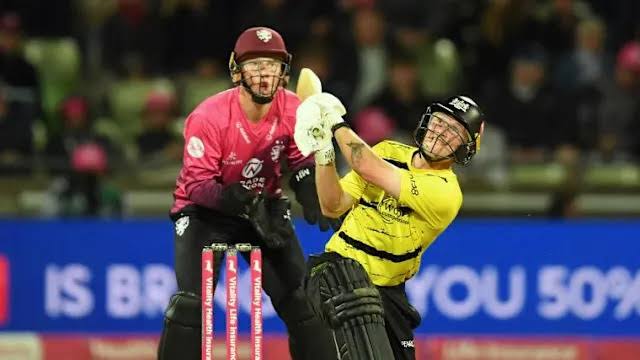
Durham Secure Dramatic Six-Run Victory Over Derbyshire in Vitality Blast Thriller
North Group Clash Delivers High Drama at Derby as Durham Keep Playoff Hopes Alive
Durham edged out Derbyshire in a nail-biting Vitality Blast clash at Derby on Friday, 22 May 2026, securing a six-run victory that showcased the very best of T20 cricket. The North Group encounter lived up to its billing as a high-stakes affair, with both sides trading blows in front of a passionate crowd that filled the stands and created an electric atmosphere under the lights. Durham’s win keeps their playoff hopes firmly alive, while Derbyshire will rue missed opportunities in what was ultimately a game decided by fine margins.
The match had all the ingredients of a classic T20 contest: explosive batting, tight bowling spells, and dramatic twists right until the final delivery. Durham posted a challenging total of 178 for 7 in their 20 overs, a score built on gritty middle-order resilience and some big hitting from their top order. Derbyshire fell agonizingly short, finishing on 172 for 8, as the chase unraveled in the closing stages despite a valiant effort from their middle order.
Durham captain Alex Lees won the toss and elected to bat first on a pitch that offered decent carry for the seamers earlyDurham edged out Derbyshire in a nail-biting Vitality Blast clash at Derby on Friday, 22 May 2026, securing a six-run victory that showcased the very best of T20 cricket. The North Group encounter lived up to its billing as a high-stakes affair, with both sides trading blows in front of a passionate crowd that filled the stands and created an electric atmosphere under the lights. Durham’s win keeps their playoff hopes firmly alive, while Derbyshire will rue missed opportunities in what was ultimately a game decided by fine margins.
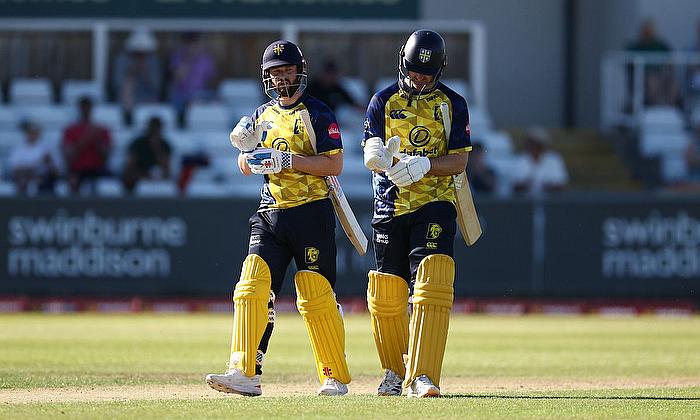
The match had all the ingredients of a classic T20 contest: explosive batting, tight bowling spells, and dramatic twists right until the final delivery. Durham posted a challenging total of 178 for 7 in their 20 overs, a score built on gritty middle-order resilience and some big hitting from their top order. Derbyshire fell agonizingly short, finishing on 172 for 8, as the chase unraveled in the closing stages despite a valiant effort from their middle order.
Durham captain Alex Lees won the toss and elected to bat first on a pitch that offered decent carry for the seamers early on but flattened out nicely as the evening progressed. The surface at Derby has a reputation for rewarding positive cricket, and both teams embraced that approach from the outset. Lees himself led from the front, though his innings was cut short. The decision to bat first proved wise as the dew factor later made gripping the ball slightly trickier for the bowlers, but the home side’s attack still posed plenty of questions.
Opening the batting for Durham were Lees and the in-form Graham Clark. Clark, who has been one of the most consistent performers in the competition this season, got the visitors off to a flying start. He dispatched the first ball of the match from Derbyshire’s pace spearhead Samit Patel for a crisp boundary through the covers, setting an aggressive tone. The pair added 42 runs in the powerplay, with Clark particularly severe on anything short or wide. His dismissal in the sixth over, caught at deep midwicket off the bowling of Zak Chappell for 28 off 18 balls, brought a momentary lull, but it also brought Matthew Potts to the crease earlier than expected.
Potts, better known for his seam bowling, surprised everyone with a quickfire 19 that included a towering six over long-on. Lees, batting with typical composure, anchored the innings with 41 off 32 deliveries, rotating the strike effectively and punishing loose deliveries. The middle phase belonged to Durham’s lower middle order, where Ben Raine and Bas de Leede combined for a crucial 45-run partnership that pushed the score past 150. De Leede, the Dutch all-rounder, played with remarkable maturity, striking three sixes in a fluent 38 off 24 balls. His ability to clear the ropes while maintaining a healthy strike rate has been a revelation for Durham this campaign.
Derbyshire’s bowling was led admirably by their overseas star, the Australian left-armer Matthew Kuhnemann, who returned figures of 2 for 28 in his four overs. Kuhnemann’s variations in flight and pace kept the Durham batters guessing, and he picked up the vital wickets of Clark and later Raine. Chappell and George Scrimshaw provided the necessary pace threat, with Scrimshaw claiming 2 for 35, including the dismissal of Lees caught behind. However, the home side’s fielding let them down at crucial junctures, with a couple of dropped catches and some sloppy ground fielding costing valuable runs. In T20 cricket, those small errors often prove decisive, and this match was no exception.
As Durham’s innings drew to a close, the crowd sensed the game was finely balanced. The final overs saw Durham lose a few wickets in search of quick runs, with Raine holing out to long-off for 22. Nathan Sowter, the leg-spinner, was economical in the death overs, conceding just 19 runs while taking one wicket. Durham’s total of 178 felt defendable but by no means impregnable on a good batting track. The visitors’ lower order had provided just enough acceleration to set a target that required Derbyshire to play with positive intent.
The chase began in dramatic fashion. Derbyshire’s openers, Luis Reece and Harry Came, came out firing. Reece, the experienced left-hander, smashed the first over from Durham’s pace bowler Potts for 14 runs, including two boundaries and a six. Came complemented him perfectly, and the pair raced to 55 without loss inside six overs. Their aggressive approach put immediate pressure on Durham’s bowling unit, forcing captain Lees to turn to his spinners earlier than planned.
Matthew Potts responded strongly, removing Came for 24 with a clever slower ball that induced a top edge. That breakthrough brought Wayne Madsen to the crease, and the veteran immediately settled into his rhythm. Madsen has been Derbyshire’s rock in limited-overs cricket for years, and he did not disappoint here. His 52 off 38 balls was the cornerstone of the chase, featuring some exquisite drives through the off-side and a couple of muscular pulls. Reece continued to blaze away until he was dismissed for 41 off 29, caught brilliantly in the deep by de Leede.
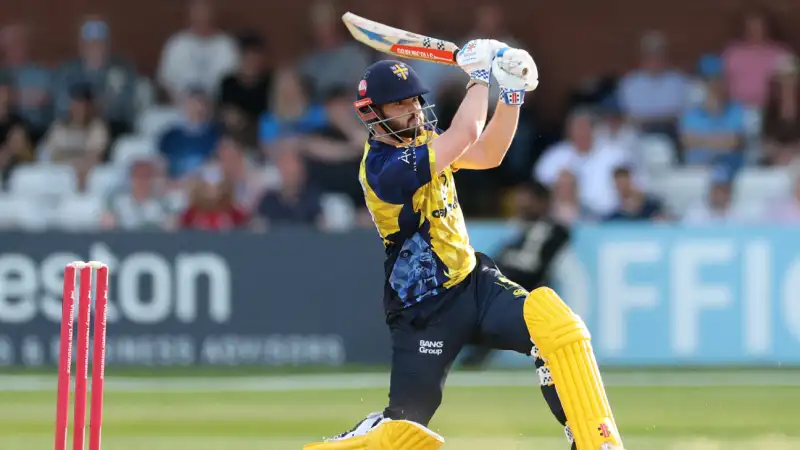
At the halfway mark, Derbyshire were cruising at 92 for 2, well ahead of the required rate. The required run rate hovered around 8.7, which seemed achievable given the firepower still to come in their batting lineup. However, Durham’s bowlers, led by the experienced Raine and the impressive young spinner Sowter, began to tighten the screws. Raine’s variations proved particularly effective, and he claimed the key wicket of Madsen in the 14th over, caught at long-on for 52. That moment shifted the momentum noticeably in Durham’s favor.
The middle overs became a tense battle of wits. Derbyshire’s captain Leus du Plooy tried to accelerate but found the boundaries hard to come by as Durham’s fielders patrolled the ropes with precision. Du Plooy made a gritty 28 before falling to a brilliant caught-and-bowled effort from de Leede. The Dutchman was turning the match with both bat and ball, his economy and wicket-taking ability proving invaluable. By the end of the 16th over, the equation had become 48 runs needed off 24 balls, with Derbyshire still having four wickets in hand.
What followed was pure T20 theater. Ross Whiteley, known for his power-hitting, smashed a couple of massive sixes off Potts, bringing the crowd to its feet. The required rate climbed, but Whiteley and his partner Brooke Guest kept the scoreboard ticking. Guest played a sensible anchor role, rotating the strike and picking off the occasional boundary. However, the pressure told in the 18th over when Whiteley attempted one big shot too many and was caught in the deep for 31. That dismissal left Derbyshire needing 22 off the final two overs with three wickets remaining.
Sowter was entrusted with the 19th over, and he delivered a masterful spell of bowling under pressure. Conceding just seven runs and taking the wicket of Guest, who was stumped attempting a risky charge down the track. The final over, bowled by Potts with Derbyshire requiring 15 runs, was edge-of-the-seat stuff. A boundary off the first ball raised hopes, but two dots and a single followed. The penultimate delivery saw a huge swing from the new batsman that resulted in a catch at midwicket, leaving the last man with the impossible task of hitting a six off the final ball. Potts kept his composure, delivering a yorker that the batsman could only squeeze for a single, sealing Durham’s victory by six runs.
The celebrations in the Durham camp were jubilant. Players hugged on the field, with Lees praising the collective effort in his post-match interview. “It was a complete team performance,” he said. “We set a competitive total and then our bowlers showed real character in the death overs. Games like this are why we love T20 cricket.” Special mention must go to de Leede, who earned player of the match honors for his all-round contribution: 38 runs and two wickets. His composure under pressure was the difference between the sides.
For Derbyshire, there was obvious disappointment. Coach Mickey Arthur acknowledged the near-miss. “We were in a great position at halfway but credit to Durham for the way they fought back. Small margins in this format, and we need to learn from those fielding lapses and the way we lost wickets at key times.” Madsen was the standout for the home side, but the collective failure to close out the chase will sting.
This result has significant implications for the North Group standings. Durham move up to fourth place with this win, keeping their qualification hopes intact as the group stage enters its decisive phase. Derbyshire, meanwhile, remain in the lower half of the table and will need to string together a series of victories to keep their playoff dreams alive. The Vitality Blast is renowned for its unpredictability, and this match exemplified why it remains one of the most exciting domestic competitions in world cricket.
Looking back at the broader context, both teams entered the fixture with contrasting recent form. Durham had won two of their previous three matches, showing improved consistency after an indifferent start to the campaign. Their squad depth, particularly in the bowling department with the likes of Raine, Potts, and Sowter, gives them a balanced look that many rivals envy. Derbyshire, on the other hand, have relied heavily on individual brilliance from players like Madsen and Kuhnemann, but have struggled with consistency across the lineup.
The historical rivalry between these two counties added an extra layer of intensity to the occasion. While not as storied as some other derbies, matches between Durham and Derbyshire in recent years have often produced close finishes and memorable performances. This latest chapter will be remembered for the high-quality cricket on display and the way Durham refused to yield even when the game seemed to be slipping away.
Tactically, both captains made interesting choices. Lees’s decision to bat first was vindicated, while du Plooy’s use of spin in the middle overs was an attempt to stem the flow of runs that nearly paid dividends. Fielding placements evolved as the game progressed, with both sides adjusting to the changing conditions under the lights. The role of the spinners was particularly noteworthy, as the slower bowlers on both sides exerted significant control during the middle phases.
Individual player spotlights reveal much about the depth in English domestic cricket. For Durham, young talents like Clark and de Leede represent the future, blending seamlessly with experienced campaigners such as Lees and Raine. Potts’s dual contribution with bat and ball highlighted his growing all-round credentials. Derbyshire’s strength lies in their overseas contingent and homegrown stalwarts like Madsen, whose experience remains a vital asset. Kuhnemann’s control with the ball was impressive, though he lacked support at times from the rest of the attack.
The crowd at Derby played its part, creating a vibrant atmosphere that enhanced the spectacle. Families, cricket enthusiasts, and locals turned out in good numbers, cheering every boundary and applauding good fielding regardless of which side produced it. Such support underscores the popularity of the Vitality Blast and its importance in the English summer sporting calendar.
As the tournament progresses, both teams will reflect on this encounter and look to build on the positives. Durham will aim to maintain their momentum with consistent performances, while Derbyshire must address their finishing abilities if they are to challenge for a top-four spot. The six-run margin tells only part of the story. It was a contest full of skill, courage, and fluctuating fortunes that will linger long in the memory of those who witnessed it.
Further analysis of the statistics reveals interesting trends. Durham’s strike rate in the powerplay was superior, allowing them to set a platform. Their ability to take wickets at regular intervals during the chase disrupted Derbyshire’s momentum. Partnership values also favored Durham, with their third-wicket stand proving decisive. For Derbyshire, the opening partnership was their strongest asset, but the collapse in the latter stages highlighted vulnerabilities under pressure.
Coaching staff on both sides will pore over video footage in the coming days, identifying areas for improvement. For Durham, the focus will be on converting more close games into wins to solidify their position. Derbyshire will work on death bowling and chasing strategies, elements that have cost them dearly in recent outings.
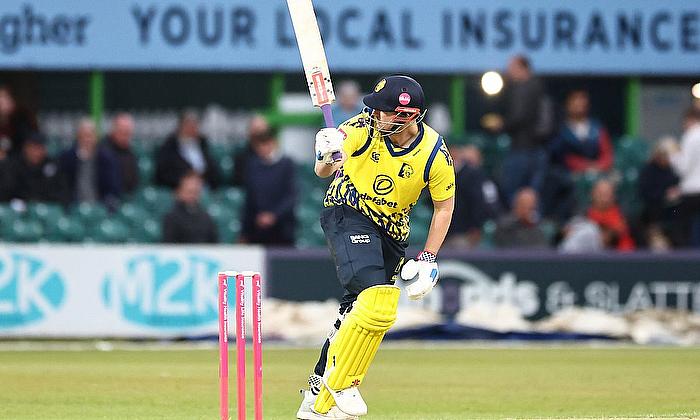
The Vitality Blast continues to evolve, with teams adapting to rule changes and the demands of a condensed schedule. This match at Derby served as a perfect microcosm of the competition’s appeal: fast-paced, skill-driven, and endlessly entertaining. Durham’s narrow victory not only earns them two crucial points but also sends a message to their North Group rivals that they are a force to be reckoned with when they click as a unit.
In the dressing room afterward, the mood was one of relief mixed with satisfaction for the winners. Players shared stories of key moments, replaying the final overs in animated conversation. For the losers, there was quiet determination to bounce back in their next fixture. Such is the nature of professional sport, where one game flows quickly into the next and lessons learned become fuel for future success.
As the sun set over the Derby ground and fans made their way home, they could reflect on a thoroughly enjoyable evening of cricket. Durham had triumphed by the smallest of margins, but the real winners were the spectators who experienced another unforgettable chapter in the Vitality Blast story. With several matches still to play in the group stage, the race for qualification promises more drama, more heroics, and plenty more nights like this one. Durham’s six-run win stands as a testament to resilience, tactical acumen, and the sheer unpredictability that makes T20 cricket so captivating.
