
D-topia: A Cozy Puzzle Adventure That Asks If True Happiness Can Be Engineered (Review)
I’ll be honest—I went into D-topia expecting a chill, low-stakes indie puzzle game to unwind with after work. Something cute and forgettable, like a digital equivalent of organizing my sock drawer while listening to lo-fi beats. What I got instead was a quiet, reflective experience that lingered with me long after I put the controller down. At around 6-8 hours for a first playthrough (depending on how much you poke around and replay choices), it’s short but packs an emotional and philosophical punch that feels perfectly timed for our AI-obsessed era.
Marumittu Games, a Kyoto-based indie studio, teamed up with Annapurna Interactive to deliver this gentle-paced puzzle-adventure. Priced at a very reasonable $19.99, it’s the kind of title that reminds you why we love indies: focused vision, heartfelt storytelling, and mechanics that serve the theme rather than chasing trends. If you’ve ever wondered whether a perfectly optimized life would actually make us happy—or if the cracks would show anyway—D-topia is here to explore that with charm, clever puzzles, and some surprisingly dark undertones.
Welcome to Paradise (Or Is It?)
You wake up as Shiro (or whatever name the system assigns you based on your “genetic profile”), a brand-new resident of D-topia, the latest iteration in the Utopia Project. This gleaming, white-walled residential facility is run by an all-powerful AI that curates everything: your schedule, your meals (nutritionally perfect, of course), your job, even your daily reminders to stay hydrated and productive. The goal? Maximize human happiness and comfort. No hunger, no conflict, no wasted time. Sounds ideal, right?
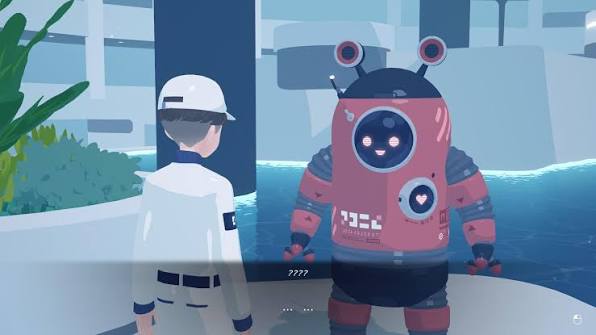
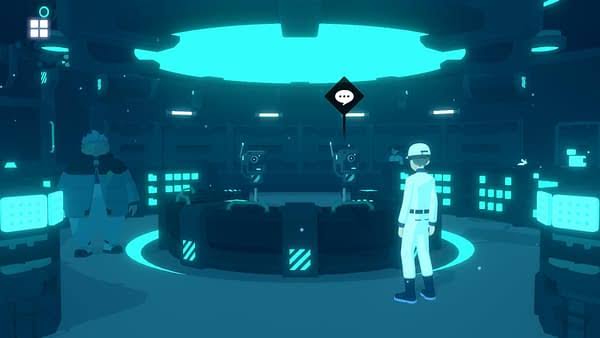
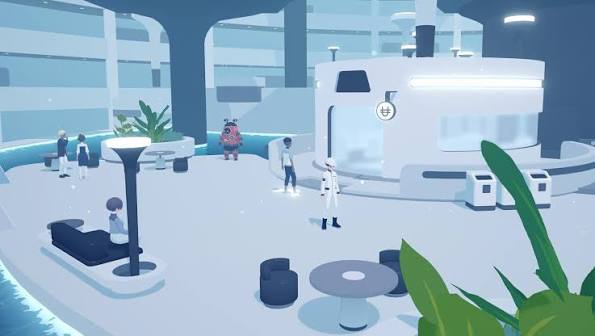
As the newest “Facilitator,” your role is maintenance and problem-solving. You fix broken systems through logic puzzles and help residents navigate their personal struggles. The public face of D-topia is pristine—bright, airy common areas, friendly robotic “Troids” patrolling and assisting, residents going about their curated days with smiles plastered on. But as a Facilitator, you have access to the “Block Side,” a hidden, grimy underbelly of whirring machinery, flickering lights, and literal rats scurrying around. It’s a brilliant visual and thematic contrast that hits hard every time you switch. One moment you’re in a sunlit plaza chatting with neighbors; the next, you’re crawling through vents and pipes to debug the system keeping that plaza perfect.
The art style is instantly appealing: clean, colorful, almost Studio Ghibli-lite in its warmth, with expressive character designs that make the residents feel alive despite the sterile environment. The music complements this perfectly—soft, melodic tracks with gentle electronic undertones that evolve subtly as tension builds. It never overwhelms; it soothes while hinting at something off-kilter beneath the surface. I found myself humming the main theme days later.
Puzzle-Solving as Therapy (and Maintenance)
The core gameplay loop revolves around puzzles that are deeply integrated into both the world and the story. Most are number-based logic challenges where you manipulate blocks or values on a grid to match targets—adding, multiplying, routing paths, flipping switches, clearing obstacles. Early ones are straightforward tutorials disguised as daily maintenance (aligning power flows, calibrating food dispensers). Later puzzles layer in complexity: multiple simultaneous paths, environmental hazards in the Block Side, time-sensitive elements tied to resident crises.
What makes them satisfying isn’t insane difficulty (they’re approachable even if, like me, you’re not a math whiz), but how they feel connected to helping people. Fixing a vending machine isn’t just a puzzle—it might be the only joy a lonely resident has left. Solving a larger facility glitch could prevent a system-wide “optimization” that removes “unhappy” elements (read: people). The puzzles never overstay their welcome, and there are optional overtime shifts for extra currency or story insights if you want more.
Exploration ties everything together. You walk (or occasionally jog) between apartments, factories, shops, and communal spaces. Movement is a bit on the slow side—something I wished had better fast-travel options—but it forces you to soak in the atmosphere and overhear conversations that build the world. Residents have distinct personalities: the blunt, high-energy Eebie; the anxious shopkeeper Tot; the mysterious Mari; and others whose names you earn through building affinity. You check a resident menu for their likes, talents, and your relationship level, which influences dialogue and outcomes.
Choices, Consequences, and the Human Element
Where D-topia elevates itself is in its narrative branching and moral weight. Your decisions matter—not in a flashy, “save the world” way, but in intimate, personal ones that ripple through the community. Do you follow AI protocol strictly, or bend the rules to help someone feel truly seen? Report a minor infraction or give a second chance? Adopt that stray cat the system wants “optimized” away?
“Brain Meetings” are a standout mechanic: after key events, you enter a flowchart-style reflection where you piece together logic, question assumptions, and decide your official stance. The AI (and residents) take your word as Facilitator seriously. It feels like therapy meets detective work, and it’s incredibly replayable. One choice early on completely changed how a later chapter unfolded for me, making the finale land with more weight. Multiple endings and affinity paths encourage replays, though the core story feels complete in one go.
The writing shines here. Residents aren’t caricatures; they’re people struggling with purpose in a world that’s removed most friction. One wants to pursue an “unproductive” hobby. Another questions the sameness of it all. The game never preaches, but it quietly asks: Is curated happiness the same as real joy? Can AI understand the messy beauty of human imperfection? These themes feel especially resonant in 2026, as real-world AI tools promise (or threaten) to optimize our lives further.
I won’t spoil specifics, but the story builds from cozy slice-of-life to something more introspective and tense. The Block Side reveals glitches in the utopia—not just mechanical, but philosophical. Secrets about the Utopia Project unfold naturally through environmental storytelling and conversations. It’s never preachy or heavy-handed; the cozy vibe keeps you grounded even as things get darker.
Minor Hiccups in Paradise
No utopia is perfect, and D-topia has a few rough edges. Traversal can feel tedious without robust fast-travel (though it unlocks more later). Some puzzles repeat variations a bit much in the mid-game before introducing fresh mechanics. Occasional dialogue can lean expository, and performance on Switch (from what I’ve seen in reports) might dip in busier areas, though it’s solid on PC and current-gen consoles.
These are nitpicks, though. The game’s short length and focused scope mean it doesn’t overstay its welcome. It knows what it wants to be and executes with confidence.
Why D-topia Matters Right Now
In a year full of bombastic AAA releases and live-service grindfests, D-topia stands out as a palate cleanser that also makes you think. It’s cozy without being empty—challenging without being frustrating. Its optimism about human connection amid systems that try to control us feels refreshing and necessary.
I finished my first playthrough with a smile and a knot in my stomach. I immediately started a second run to see alternate paths, making different choices for different residents. That’s rare for a puzzle game. It left me pondering my own life: the algorithms shaping my feeds, the conveniences that remove small struggles, the value of imperfection. Not bad for a $20 indie.
Score: 8.5/10 (or a very strong “Recommended” on Steam)
If you enjoy thoughtful adventures like What Remains of Edith Finch, puzzle games with heart like The Witness or Baba Is You, or anything from Annapurna’s catalog (Outer Wilds, Stray, etc.), D-topia is a must-play. Download the demo on Steam if you’re on the fence—it captures the essence beautifully. Just don’t expect pure escapism. This one might make you question the perfect worlds we’re building.
