
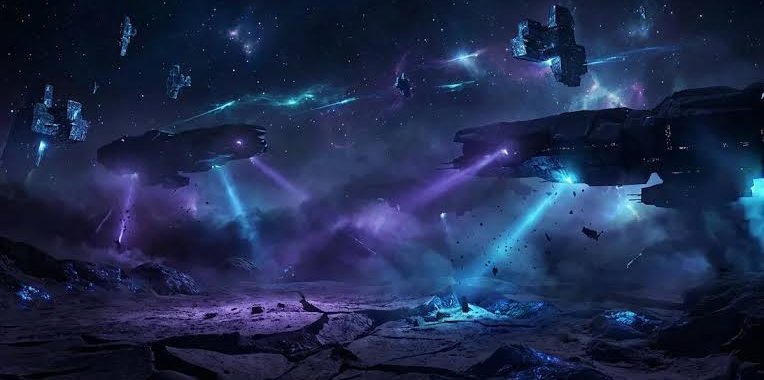
Truxton Extreme Review: A Long-Overdue Return That Hits Like a Skull Bomb
I still remember the first time I dropped a quarter into a Truxton cabinet. The skull bomb exploded across the screen in that unforgettable purple flash, the music kicked into overdrive, and for a few glorious minutes the world outside the arcade simply ceased to exist. That was a long time ago. The series went quiet after Truxton II in 1992. Thirty-four years of silence is a lifetime in gaming. When Tatsujin finally announced Truxton Extreme, part of me was excited and part of me was nervous. Modern 3D reboots of classic shooters have a mixed track record. Too many of them drown the pure arcade DNA in unnecessary spectacle or muddle the clarity that made those old games so readable under pressure.
I am happy to report that Truxton Extreme mostly gets it right. Released on July 30, 2026 for PlayStation 5, Xbox Series, Nintendo Switch 2, and PC, this is the first proper new entry in the series since the early nineties, and it feels like a careful, respectful evolution rather than a desperate reinvention. Developed by Tatsujin (the company that carries the Toaplan legacy) and published by Clear River Games, with original series creator and composer Masahiro Yuge heavily involved, the game walks a smart line between nostalgia and modernity. It looks and sounds current while still demanding the same focus, pattern recognition, and split-second decisions that defined the originals.
The setup is classic sci-fi invasion stuff, but the delivery is surprisingly thoughtful. In the year 2200, humanity has spread across seven planets and is living large. Then the Geranium invaders show up and start wiping everything out. Earth’s AI president green-lights a special tactical fighter program called TATSUJIN, and three pilots step forward: Ash, a public safety officer turned ace; Bergamot, a pardoned convict with a complicated past; and Cyrilla, a genius kid hacker. You fly a Javelion fighter through eight stages (spread across 18 chapters in Story mode) of vertical scrolling mayhem, collecting power-ups, dodging dense bullet patterns, and facing down bosses that fill the screen with tentacles, insect faces, mechanical serpents, and glowing eyes.
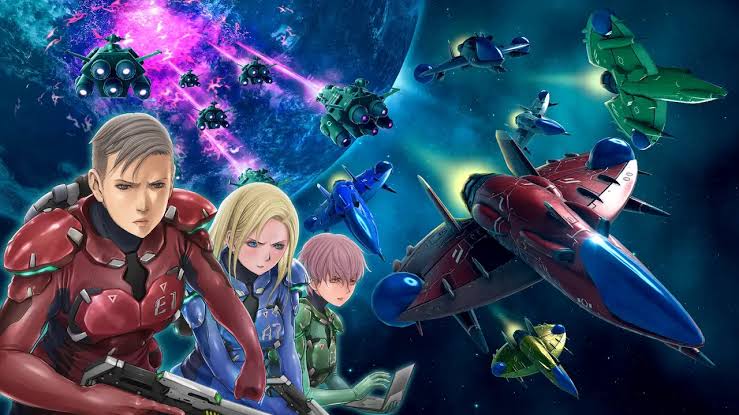
What sets the presentation apart is the Story mode’s animated digital comic by manga artist Junya Inoue (Btooom!, Batsugun, and other Toaplan-adjacent work). Instead of dry text dumps or forgettable cutscenes, you unlock chapters of an interactive graphic novel as you progress with each pilot. The art has a European-manga hybrid feel, the panels move and react, and the writing actually has some weight. There are character moments, twists, and a sense that these three people are not interchangeable cardboard cutouts. I went in expecting pure arcade fluff and ended up caring about the next chapter. That is not something I usually say about a vertical shooter. The story never gets in the way of the shooting, but it gives the campaign a reason to exist beyond high-score chasing.
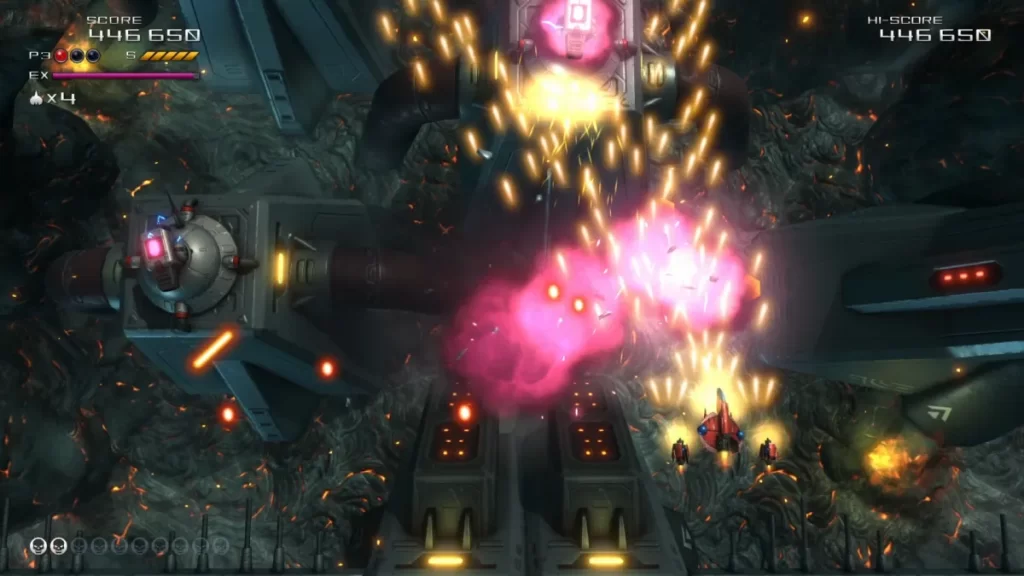
Gameplay is where Truxton Extreme earns its keep. The core loop is pure Toaplan: move your ship around a vertically scrolling playfield, collect colored power-ups to cycle through weapons, build up your shot power, and use limited screen-clearing skull bombs when things get hairy. The classic arsenal returns—Power Shot, Truxton Beam, Thunder Laser, Homing Shot—along with some new options. An EX gauge fills as you destroy enemies; dump it for a temporary supercharged version of your current weapon. Ships can level up across play sessions in certain modes, and there are destroyable environmental gimmicks that reward specific weapon choices. The 3D models are detailed enough to look good without cluttering the playfield. Explosions have weight. Debris scatters satisfyingly. Backgrounds shift and open up as you move left or right, giving the field more breathing room than the cramped original cabinets while still keeping the action readable.
Difficulty is tunable in a way older arcade ports rarely managed. Arcade mode is the hardcore experience—tight lives, pure score attack, memory and execution required. Story mode is a bit more approachable and spreads the same stages across the three characters with rising difficulty. Heart Starter mode is the real gift for newcomers or anyone who just wants to enjoy the spectacle without constant restarts; it is more forgiving without feeling like training wheels. There is a local simultaneous two-player Team mode (lives and score shared), a short Arena time-attack mode for quick score runs, a tutorial, and even a side activity where you rescue Pipiru aliens and raise them in a little village called Pipiruville. Online rankings exist for those who care about leaderboards. You can also tweak lives and bombs at the cost of ranking eligibility. The game never forces one style of play on you. That flexibility is welcome in a genre that can sometimes feel like it is only for the already initiated.
The soundtrack is a highlight. Masahiro Yuge returned and delivered a mix of newly arranged classic tracks and original compositions that blend orchestral punch with the frantic synth energy of the old FM chips. It never feels like a pure nostalgia cash-in; it feels like someone who understands the material updating it for modern speakers and bigger stages. Sound design is sharp—explosions land with authority, the skull bomb has that distinctive impact, and the overall mix stays clear even when the screen is packed.
On a technical level the game runs cleanly across platforms. On Switch 2 it holds a stable frame rate in both handheld and docked modes with no noticeable input lag. The 3D presentation benefits from modern hardware without becoming a muddy mess. Visuals are stylish rather than hyper-realistic: insectile alien faces, writhing metal, glowing eyes, and those signature spikes all read clearly at speed. The model viewer lets you inspect unlocked ships, enemies, and bosses in detail when you want a break from the action.
There are a few caveats. Checkpointing in Story and Arcade can occasionally drop you a little farther back than feels ideal, turning some boss approaches into repetition rather than pure learning. The 3D shift means the pure TATE (vertical monitor) charm of the arcade originals is gone; the playfield is wider and more modern. Some purest players will miss the pixel precision and cramped intensity of the 1988 and 1992 games. And while the story is a pleasant surprise, it is still a shoot-em-up story—do not expect literary depth on the level of a proper visual novel. Once you have seen the full comic and cleared the stages a few times, the long-term pull is classic high-score and mastery motivation. That is fine for the genre, but it means the campaign’s novelty has a natural endpoint.
Those are relatively minor complaints in the face of what the game gets right. Truxton Extreme understands that a good modern sequel to a cult arcade series does not need to reinvent the wheel or bury the original under layers of systems. It needs to preserve the feel—tight controls, readable patterns, satisfying weapon progression, memorable bosses—and then carefully expand the package so more people can enjoy it. The multiple modes, difficulty options, co-op, and story presentation do exactly that without diluting the core challenge. Veterans can chase scores and perfect runs. Newer players can learn the ropes in Heart Starter or enjoy the comic-driven campaign. The presentation is polished enough that the game does not feel like a museum piece.
Pricing is reasonable for what you get: around $25 for the standard digital edition, a bit more for deluxe, with physical versions available including a higher-end Thunder Master collector set that packs art books, soundtrack discs, and other extras. In a year full of big-budget releases, a focused, high-quality vertical shooter that respects its roots while updating the presentation feels like a small gift.
I finished my first serious Story mode run late at night, skull bomb still echoing in my ears, the last comic panels still fresh. I immediately started another run in Arcade mode because the muscle memory was already forming and the stages were still revealing new details. That is the sign of a good shooter. Truxton Extreme does not pretend the last three decades never happened, but it also refuses to forget what made the series special in the first place. It is loud, colorful, demanding, and strangely charming. For longtime fans it is a welcome reunion. For anyone who has never dropped a quarter into a Toaplan cabinet, it is an excellent place to start.
If you have even a mild interest in the genre, or if you simply want a pure, well-made action game that respects both skill and spectacle, Truxton Extreme is worth your time and money. It is not trying to be the biggest game of 2026. It is trying to be a great Truxton game for this decade, and on that measure it succeeds. Keep those skull bombs ready. You are going to need them.
