
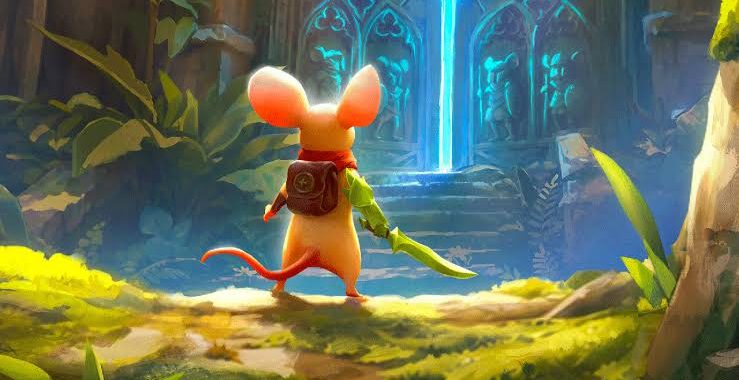
Moss: The Forgotten Relic – A Tiny Mouse, a Big Heart, and the Magic of Second Chances
I’ll be honest with you—I almost skipped Moss: The Forgotten Relic entirely. Another cute animal platformer in a world full of them? But then I booted it up on my PS5 last night, right after its July 16 release, and within ten minutes I was smiling like an idiot at a little white mouse in a red bandana scrambling up a vine. By the time the credits rolled some ten hours later, I was wiping away actual tears and wondering why it took the industry so long to bring this gem to flatscreen players.
Moss: The Forgotten Relic isn’t just a port. It’s a lovingly reimagined compilation of the original 2018 VR masterpiece Moss and its 2022 sequel Moss: Book II, plus the Twilight Garden DLC, all wrapped into one cohesive, non-VR adventure. Developed by Polyarc, it drops you into the pages of a living storybook as “the Reader”—a mysterious guiding presence watching over Quill, a plucky young mouse on a quest far bigger than her tiny frame. Released yesterday for PS5, Xbox Series X/S, Switch (and Switch 2), and PC, it’s priced at a very reasonable $19.99. And let me tell you, it feels like the definitive way to experience this story.
The Story: A Fairytale That Hits Harder Than Expected
You start in a quiet library (your library, in a way), opening an old book that pulls you into the world of Moss. Quill is introduced as this wide-eyed adventurer living in a peaceful mouse village. She stumbles upon a shard of magical Glass—a powerful relic—and suddenly her world is upended. Her uncle is taken by dark forces led by the serpentine tyrant Sarffog (or his lingering influence in the sequel portions), and it’s up to her—and you—to set things right.
The narrative unfolds through gorgeously illustrated storybook pages with narration by Morla Gorrondona, who voices everyone from the chipper Quill to gruff side characters. It’s classic high fantasy filtered through a bedtime story lens: fallen kingdoms reclaimed by nature, ancient magic, towering threats, and a hero’s journey of courage and connection.
What surprised me most is how emotionally resonant it gets. Quill isn’t just adorable—she grows. Early on, she’s eager but a bit naive. By the end of what used to be Book II, she’s a battle-hardened leader making heartbreaking choices. The bond between Quill and the Reader (you) is the emotional core. She looks right at you, offers high-fives after tough sections, gestures in what feels like American Sign Language touches, and even gets frustrated or sarcastic when you mess up (looking at you, Sahima, the temporary playable companion who claps sarcastically after you drop her in water one too many times).
I found myself talking to the screen more than once: “I’ve got you, little buddy.” When the story hits its later beats—loss, sacrifice, reunion—it lands with surprising weight. It’s not The Last of Us, but for a game starring a sword-wielding mouse, the quiet moments of reflection and the orchestral swells from Jason Graves hit different. The lore can feel a tad convoluted with all the Glass relics, Readers, Authors, and arcane forces, but you can let the pretty pictures and Quill’s charm carry you through.
Gameplay: Dual Control, Big Charm
Here’s where the VR roots show, but in the best way. You control Quill directly with the left stick—jumping, dodging, attacking with her sword or later weapons. Simultaneously, the right stick (or mouse on PC) controls your Reader “hand”—an ethereal cursor that lets you manipulate the environment. Push boxes, pull levers, grab and reposition enemies, heal Quill from afar, or charge up special attacks. It feels like playing two characters at once, and it clicks beautifully after the first hour.
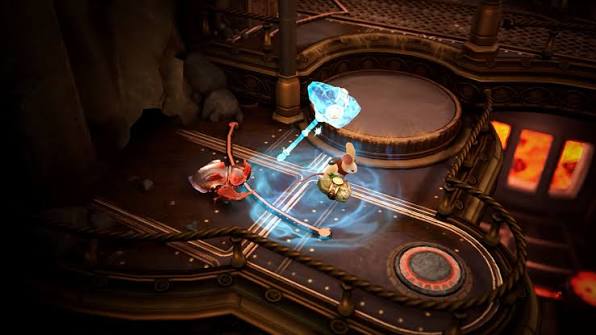
Platforming is light but satisfying. Quill scrambles up walls with her little claws, does cute somersaults over gaps, and reacts to the world in animated ways that never get old. Puzzles are the star: environmental head-scratchers where you might need to control a mechanical scarab enemy to weigh down a switch while Quill times a run across collapsing bridges. Later sections layer in the hammer weapon—swing it normally or charge a ghostly duplicate that you trigger with your Reader powers for delayed strikes on pressure plates. It creates these wonderful “aha!” moments of multitasking.
Combat is the weakest link, but it’s never bad. Early waves of beetle-like enemies feel repetitive—dodge, slash, repeat. But new weapons, abilities (like absorbing power from the Reader for ranged attacks), and boss fights ramp things up. There’s even a “Skip Combat” accessibility option for those who just want the puzzles and story, which is thoughtful. Difficulty is forgiving overall; falls or deaths just reset you to the last checkpoint with no real punishment, keeping the cozy vibe intact.
The “Smart Follow” camera system mostly works great, keeping the action cinematic and focused on Quill’s scale against massive environments. There are a few finicky platforming spots where the fixed angles make judging jumps annoying—especially one late-game section that had me retrying more than I’d like—but nothing game-breaking. On Switch it runs smoothly in handheld mode too, which feels perfect for this intimate adventure.
Worlds That Feel Alive (Even If a Bit Empty)
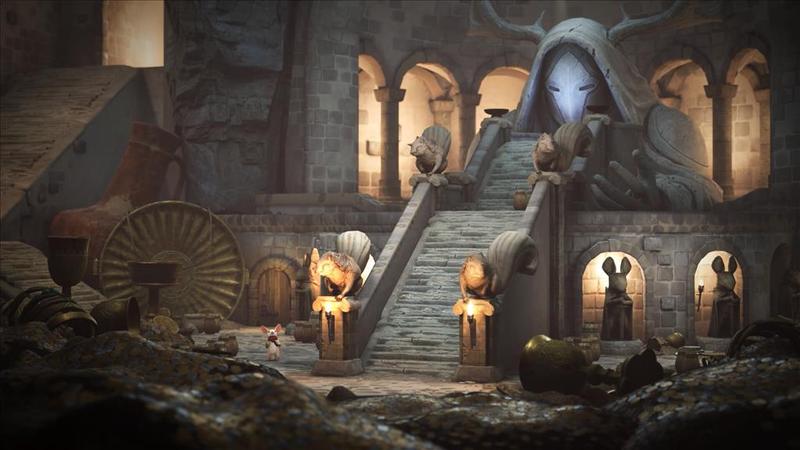
The diorama-like levels are stunning. Lush forests overtaken by ruins, gloomy castles, vibrant villages full of background mouse NPCs doing their thing. Scale is masterfully used—Quill feels tiny next to towering statues, waterfalls, or giant enemies. Enhanced visuals for this release (better lighting, anti-aliasing, 60fps targets) make it pop on modern hardware.
My one gripe: the worlds are mostly linear puzzle arenas rather than fully explorable hubs. You’ll find some collectibles (like lore pages or hats for Quill?), but backtracking or secret hunting isn’t as rewarding as in, say, a Zelda or Tunic. It’s very much a focused experience, which suits the storybook format but left me wanting just a bit more life in the villages.
Sound design is top-tier. Crickets, wind, water, Quill’s little footsteps and grunts—everything sells the immersion. Graves’ score swells at the right moments, blending wonder and tension.
Why This Release Matters
For VR owners, this might feel like a compromise compared to the original’s presence (literally reaching into the book). But for everyone else—me included, who never owned a PSVR—it’s a revelation. Polyarc nailed the transition. The dual-control scheme captures that sense of partnership without motion sickness or hardware barriers. New handcrafted cutscenes and refinements make it feel fresh.
At around 8-12 hours for the full combined story (depending on exploration), it’s the perfect length. Not overstayed, but substantial enough to feel epic. Replay value comes from higher difficulties, collectibles, or just revisiting Quill’s journey.
Final Verdict: 9/10 – Don’t Sleep on This Little Mouse
Moss: The Forgotten Relic is proof that charm, heart, and clever design beat graphical fidelity or open-world bloat any day. It’s cozy without being shallow, challenging without being punishing, and emotional in ways bigger games often fumble. Quill isn’t just a mascot—she’s a hero you’ll root for, protect, and high-five (literally).
If you love puzzle-platformers, environmental storytelling, or just need a break from shooters and battle royales, this is essential. It remedied one of my own gaming regrets (missing the VR originals) and reminded me why I love this medium. Polyarc has created something timeless here.
Go play it. Introduce yourself to Quill. She’s waiting in the pages, sword ready, eyes bright, trusting you to have her back. You won’t regret it.
