

The Incident at Galley House: A Haunting Deduction Masterpiece That Remembers What We Forget
Three days ago, on July 14, 2026, The Incident at Galley House slipped quietly onto Steam like an uninvited guest arriving at a storm-lashed manor. Developed by William Rous in collaboration with Evil Trout Inc. (the team behind the excellent The Roottrees Are Dead remake), it’s a full visual and auditory remaster of Rous’s 2025 free browser game Type Help. If you haven’t heard of the original, you’re not alone—Type Help was one of those cult itch.io gems that spread through word-of-mouth among puzzle enthusiasts, praised for its razor-sharp deduction mechanics but limited by its stark text-only presentation. This new version transforms it into something far more immersive while preserving every ounce of its cerebral, unsettling brilliance.

At around 8-12 hours for the main path (closer to 15-20 for full completion with every notebook entry and achievement), it’s not a massive game, but it lingers like the echo of distant thunder. I finished it late last night, notebook pages scattered across my desk, half-empty coffee mug cold beside me, and I still can’t stop turning its revelations over in my head. This isn’t just a review; it’s me processing what might be one of the most elegantly constructed mystery experiences of the decade.
Stepping Into the Fog
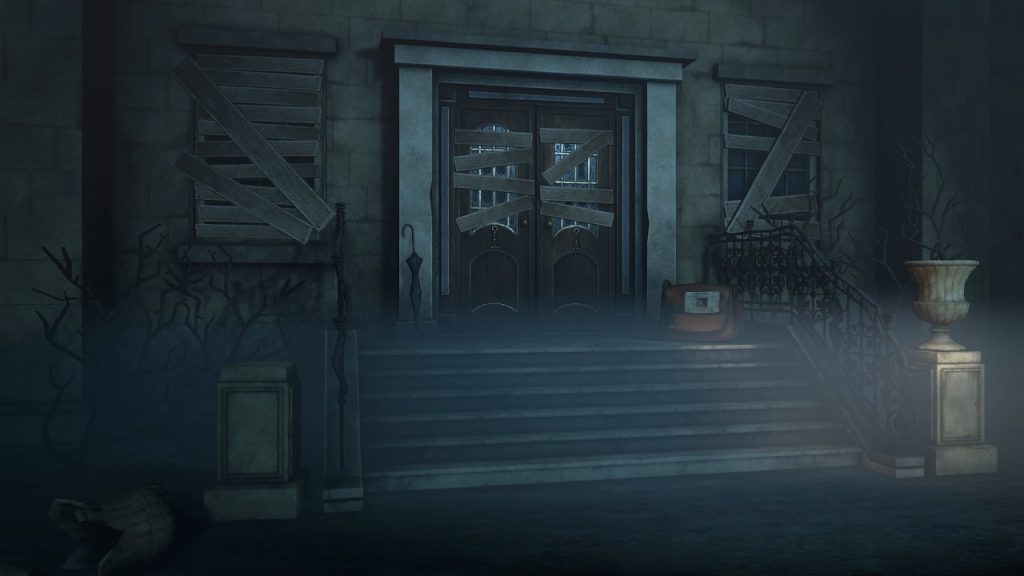
The setup is deceptively simple, classic British manor mystery territory. On Sunday, March 7, 1936, a group of locals trudges up a muddy track to Galley House, a place long thought abandoned. Inside, they find the bloody aftermath of horror: multiple bodies, most with no obvious cause of death. The authorities investigate, the press sensationalizes, but the case goes cold. Decades later, you—as junior engineer Reya Beckon at a shadowy company called D&M—gain access to the “Seance Machine,” a peculiar contraption that lets you reconstruct echoes of the past through audio transcripts tied to specific scenes.
Your interface isn’t some sterile database. It’s this wonderfully tactile, almost steampunk-ish machine with switches, dials, and a 3D navigation hub for memories. Scenes unlock via cryptic codes like 01-QU-1-11 (time period-room-number of people-victim indicator). You listen to snippets of conversation, note who says what, where they claim to be heading, physical descriptions, relationships hinted at in passing remarks. Then you deduce the next filename to input, pulling more fragments from the ether. It’s Return of the Obra Dinn meets Her Story, with a heavy dose of Unheard‘s overlapping timelines and the intimate, personal stakes of The Roottrees Are Dead.
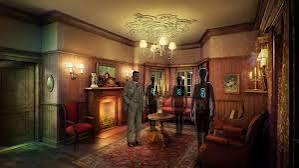
The new presentation elevates everything. Henning Ludvigsen’s hand-drawn visuals give Galley House a lived-in, gothic weight—dusty portraits staring down from paneled walls, flickering candlelight in the chapel, rain-lashed windows that make you feel the isolation. Professional voice acting (including standout turns that add real emotional texture) brings the characters to life. The original’s text was haunting in its sparsity; now you hear the panic creeping into voices, the awkward pauses as people realize something is terribly wrong but can’t quite name it. An original soundtrack of eerie strings and subtle, building tension underscores it all without ever overpowering the deduction.
I booted it up expecting a polished remake. What I got was a game that feels freshly terrifying.
The Mechanics of Memory (and Forgetting)
The core loop is pure deduction, and it’s addictive. Early on, characters are just numbers. You piece together identities through cross-references: “The tall man with the limp mentioned fixing the piano” leads you to confirm Harry Thornton as Person X. Room codes (EN for Entrance, LI for Living Room, CH for Chapel, etc.) and the manor’s layout become crucial—impossible movements rule out bad guesses. The non-linear structure is a stroke of genius. Scenes jump around the timeline, forcing you to build a mental (or notebook) model of overlapping events. A throwaway line at dinner might illuminate a death hours earlier.
The in-game notebook is a godsend. You can highlight, tag, and organize clues without breaking immersion. There’s a smart hint system that costs “resources” but never feels like cheating—it nudges when you’re stuck without solving it for you. New content in the remaster expands pathways, adds puzzles, and deepens lore, making it feel substantial even for Type Help veterans.
What makes it special, though, is how it weaponizes forgetting. Without spoiling the central twist (and you really should experience it raw), the “incident” isn’t a straightforward murder spree. It’s something insidious, tied to memory, family secrets, and a curse-like force that punishes remembrance. As deaths occur, survivors forget the deceased—looking at a body and seeing a stranger, rationalizing gaps in their own histories. Documentation and photos resist this erasure, but living memory does not. You, the player, become the only one who can hold the full truth.
This mechanic turns every conversation into a minefield. People contradict themselves not because they’re lying (mostly), but because their reality is literally rewriting itself. Deductions aren’t just “who killed whom”—they’re about reconstructing erased lives. It’s heartbreaking and brilliant. I found myself muttering “no, wait, you knew her” at the screen more than once.
The house itself feels like a character. Its fourteen (or sixteen, depending on how you count) rooms connect in ways that reward exploration of the map. The attic dolls, the repaired piano in the study, the off-site Wintercote references—every detail pays off. The storm outside traps everyone, heightening the claustrophobia as the body count rises.
Characters That Haunt You
The ensemble is small but richly drawn. Rupert Galley, the host; his wife Martha; son Eddie; brother Oswald. Guests include childhood friends, fiancés, exes, a local piano tuner John Hobbes, and others drawn into the web. Their dialogues reveal layered histories—old grudges, hidden affections, class tensions, buried family trauma involving a long-forgotten sister named Eleanor.
Voice acting makes them feel real. One character’s resigned melancholy as they piece together the pattern; another’s desperate attempt to break the cycle. The performances avoid melodrama, grounding the supernatural in human frailty. By the end, these aren’t puzzle pieces—they’re people you mourn.
Reya Beckon, your avatar, adds a meta layer. Her notebook entries and interactions with the machine frame the investigation, and the present-day elements (keycard swaps unlocking modern echoes) tie the 1936 events to broader implications. The game smartly explores the ethics of digging up the past: what do we gain by remembering what was meant to be forgotten?
Pacing, Twists, and That Ending
Pacing is masterful. Early confusion gives way to “aha!” moments that chain into larger epiphanies. The non-linearity means your path might differ from mine, but the core truth converges satisfyingly. New puzzles in the remaster integrate seamlessly, using the visual interface for clever environmental deductions.
The ending… it’s devastating in a quiet way. It lands the thematic punches about memory, legacy, and the cost of knowledge without cheap shocks. Some reviewers noted it lacks the visceral punch of certain peers, but I found its restraint more powerful. It respects the player’s intelligence, leaving threads for interpretation while delivering closure. Post-credits (and true ending pursuits) reward thoroughness.
Minor gripes: The machine interface, while atmospheric, can feel fiddly in a few spots if you’re rushing. A couple of later deductions rely on very precise observations that might frustrate casual players, though hints mitigate this. And at full price (currently discounted), it’s a premium experience—worth it, but not endless replay value beyond achievement hunting and alternate paths.
Why It Matters
In a year full of flashy action and open-world bloat, The Incident at Galley House reminds us why thoughtful, player-driven mysteries endure. It trusts you. No hand-holding tutorials beyond the essentials, no action sequences—just you, the clues, and the creeping dread.
It builds on inspirations like Obra Dinn‘s autopsy-style deduction and Her Story‘s database diving but carves its own identity through the memory/curse conceit. The remaster doesn’t just add polish; it makes the original’s genius accessible and more emotionally resonant. Evil Trout and Rous have crafted something special—accessible enough for newcomers, deep enough for veterans.
Playing it felt like conducting a séance. I was exhausted, exhilarated, and a little unnerved. Days later, random details still surface: the creak of a floorboard, a misremembered name, the weight of unspoken history in an old house.
If you love puzzles that respect your brain, stories that burrow under your skin, or simply atmospheric detective fiction, buy this. Wishlist turned purchase for me, and I’m already eyeing a second playthrough to chase missed details.
The Incident at Galley House isn’t perfect, but its imperfections feel human—much like the flawed, forgetful souls who once walked its halls. In remembering them, we confront our own fragile grasp on truth. Highly recommended. 9.5/10.
