
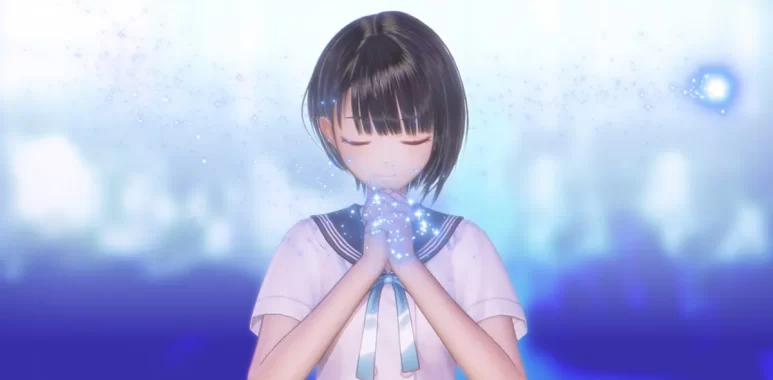
Blue Reflection Quartet Review
The kind of collection that feels like someone finally decided the series deserved a proper home. Released July 30, 2026, for PlayStation 5, Nintendo Switch 2, Switch, and PC via Steam, it gathers the two main console games, a condensed playable take on the Blue Reflection Ray anime, and a rebuilt version of the short-lived mobile title Blue Reflection Sun. Gust and Koei Tecmo didn’t just slap the existing releases together. They cleaned them up, added quality-of-life tools, and tried to make the whole saga feel connected for the first time.
The series has always occupied a strange, quiet corner of the magical-girl genre. It isn’t pure power fantasy or pure tragedy. It’s about high-school girls dealing with loneliness, injury, memory, and the weight of other people’s feelings, then transforming into Reflectors to fight manifestations of those same emotions in a place called the Common. Character designs and supervision come from Mel Kishida, whose soft, expressive art style remains the series’ strongest visual signature. The tone stays closer to grounded emotional drama than flashy transformation sequences, even when the girls are swinging swords or casting light-based attacks.
The Original and Its Sequel Still Carry the Weight
The 2017 Blue Reflection remains the foundation. Hinako Shirai, a former ballet dancer sidelined by a knee injury, receives Reflector powers from the twins Yuzuki and Lime. Days alternate between ordinary school life—talking to classmates, building bonds that unlock support abilities—and expeditions into the Common, where turn-based battles against emotional monsters take place. The combat is straightforward and never particularly demanding. You form a party of three, manage timing and support skills, and watch the girls transform. What lands is the atmosphere: quiet piano and strings, the way conversations linger on small regrets and tentative friendships, the sense that the real stakes are internal.
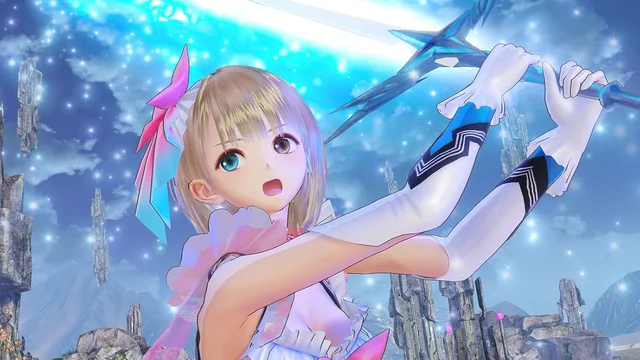
In this collection the original receives higher-resolution textures, updated character models in places, glistening water effects, autosave, and faster movement options. It still shows its age in camera behavior and some environmental repetition, but the improvements make it the clearest way to experience the game now. The school sequences and the gradual opening-up of Hinako’s world still feel sincere.
Blue Reflection: Second Light (2021) is the stronger of the two full games. Ao finds herself in an academy surrounded by water with fragmented memories and a group of girls who must recover their own pasts while confronting the nature of the world they inhabit. The Gear system adds a layer to combat: characters build toward full Reflector form over a few turns, creating a rhythm of preparation and payoff that feels more deliberate than the first game’s simpler exchanges. The story digs deeper into identity, belonging, and the cost of connection. In Quartet, eight additional characters from Ray and Sun become playable, battle and movement speeds are adjustable, and event skipping is available. Returning players will appreciate the convenience; newcomers get a smoother introduction to the systems that matured between the two titles.
Both games benefit from the shared Reference database that Quartet adds. Chronological flowcharts, relationship charts, and a gallery of Kishida’s art help orient players who jump around or simply need a refresher. It’s a practical inclusion that treats the series as one continuous conversation rather than isolated releases.
Ray and Sun: The Odd Pieces
The two new-to-console entries are more mixed. Blue Reflection Ray adapts the 24-episode anime into a shorter interactive scenario focused on Hiori and Ruka in the Common. New 3D (or stylized 2D-leaning) models appear, Memory Shards unlock story segments, and a prologue and epilogue attempt to stitch the anime’s events more tightly into the larger timeline. The problem is structural. Much of the narrative arrives as condensed recaps or slideshow-style presentations of key moments rather than fully dramatized scenes. Players who already watched the show will find the interactive framing thin; those who haven’t may feel they’re receiving a summary instead of an experience. It functions as a bridge, but it rarely matches the emotional density of the full games or the original anime.
Blue Reflection Sun receives a more thorough rebuild. The original mobile/PC live-service game shut down in 2024. Here its main story is reconstructed using Second Light’s battle system, the school setting becomes fully explorable in 3D for the first time in this context, and new character events expand relationships. Microtransactions are gone. The tone is a little different—there’s a male protagonist and a more post-apocalyptic edge to the world—yet the core concern with girls supporting one another under pressure remains. Combat feels familiar and functional. The story is shorter and more streamlined than either mainline entry, which is both a mercy (it avoids the original’s live-service padding) and a limitation (it never quite develops the same weight). Still, preserving a title that would otherwise have vanished is worthwhile, and the conversion is competent enough that fans of the series will want to play it.
Systems, Presentation, and the Feel of Playing
Across the collection the turn-based combat stays approachable. Second Light and the rebuilt Sun offer the most interesting layers thanks to the Gear system and party variety. The first game’s battles are simpler and can grow repetitive if you linger too long in the Common. None of the games demand heavy grinding if you keep pace with the story, though optional content and bond-building encourage exploration of school life and side conversations.
The day-cycle structure in the main games—morning school interactions, afternoon or evening expeditions—creates a gentle rhythm. Conversations matter. Building affinity with classmates unlocks support skills and deeper personal stories that often carry more emotional impact than the larger plot beats. Music is consistently strong: restrained, melodic, and well-matched to quiet scenes of reflection or sudden transformation. Voice acting is Japanese only with English text, which suits the tone.
Visually the collection is uneven by design. Second Light still looks the most polished. The original Blue Reflection benefits from the texture and effect upgrades but can’t fully escape its 2017 technical limits. Ray and Sun sit in between—serviceable and clearer than their original formats, yet never as distinctive as Kishida’s strongest key art. Performance is solid on PS5 and PC; Switch and Switch 2 versions are more constrained (locked 30 fps on Switch 2 in some reports), which is noticeable during exploration but rarely breaks the experience.
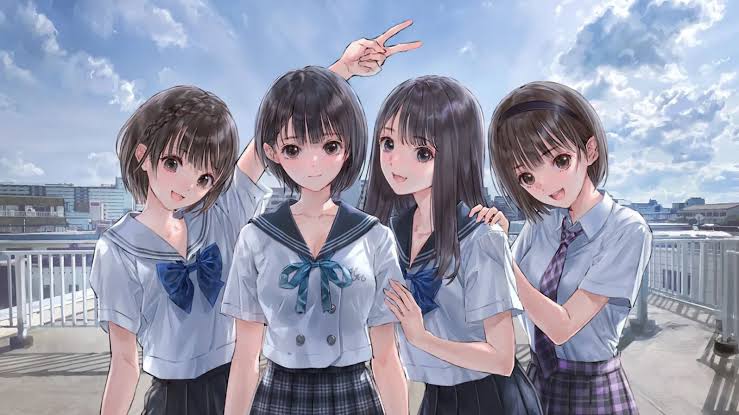
The Reference tools and photo mode additions (especially with the pre-order frames for Second Light) give the package a sense of curation. You can jump between titles, check timelines, and revisit artwork without feeling lost. That care matters for a series whose stories were previously scattered across console, anime, and mobile.
Who This Is For, and Where It Falls Short
Blue Reflection Quartet is strongest when it lets the two full games breathe. Their focus on small, human struggles—injury, isolation, the difficulty of trusting others, the fear of disappearing—still resonates. The magical-girl framing never overwhelms the character work; the Reflector battles feel like externalizations of internal states rather than pure spectacle. Players who enjoy slower JRPGs with school-life segments, emotional writing, and modest combat systems will find a lot to like. The collection is also the cheapest and most convenient way to experience the core duo, especially if you never owned the earlier releases or want the quality-of-life upgrades.
The weaker links are obvious. Ray feels more like an interactive summary than a proper game. Sun is a solid conversion of limited material rather than a revelation. Neither reaches the same level of narrative or systemic ambition as Second Light. Some camera quirks and dated presentation elements from the first game persist. And while the package tries hard to create a unified saga, the tonal and structural differences between the four pieces remain noticeable.
At roughly $50 digitally, the value is hard to argue with if you’re interested in the series at all. You’re getting two substantial JRPGs with meaningful improvements, plus two additional shorter experiences and useful archival tools. Newcomers can start with the original Blue Reflection or jump to Second Light and use the Reference database to fill gaps. Veterans get a polished revisit and the chance to experience Sun properly for the first time outside Japan.
Gust has always been better at atmosphere and character than at pure mechanical innovation. Blue Reflection Quartet leans into that strength. It doesn’t reinvent the series; it gathers it, smooths the edges, and presents the emotional core more accessibly than before. The result is imperfect—more like a solid trio with a couple of interesting side pieces than a perfectly balanced quartet—but the heart of it still works. The girls’ quiet struggles, the soft color palette, the unhurried pace, and the insistence that connection is both fragile and necessary remain the reasons to play. For fans of thoughtful magical-girl stories and understated JRPGs, this is the definitive place to meet them.
