
Bluey’s Quest for the Gold Pen: A Wholesome Adventure That Feels Like Playing in the Heeler Backyard
I’ll be honest—I wasn’t sure what to expect when I booted up Bluey’s Quest for the Gold Pen late last night, just hours after its big console and PC launch on May 28. As a dad in Mumbai who’s spent way too many evenings watching Bluey episodes with my kids (and secretly enjoying them myself), I’ve seen the previous Bluey games. They were cute, sure, but often felt like quick cash-ins—simple mini-game collections that my little ones got bored with after a weekend. This one, though? It’s different. It feels like the show’s creators finally got the budget and time to make something that actually captures that magical, imaginative spark that makes Bluey special.
Developed by Halfbrick Studios (yeah, the Fruit Ninja folks) in partnership with PM Studios, and with an original story penned by series creator Joe Brumm himself, Bluey’s Quest for the Gold Pen is a full-fledged adventure game. It launched first on mobile late last year (December 2025 on iOS, January 2026 on Android) with a free-to-try model, but yesterday’s console/PC release feels like the definitive version. Priced around $40 with a launch discount, it’s aimed squarely at families, but there’s enough charm here to keep grown-up fans smiling too. I played it on PC with a controller, but it handles beautifully across platforms. Let’s dive in.
The Story: Dad Being Cheeky, As Usual
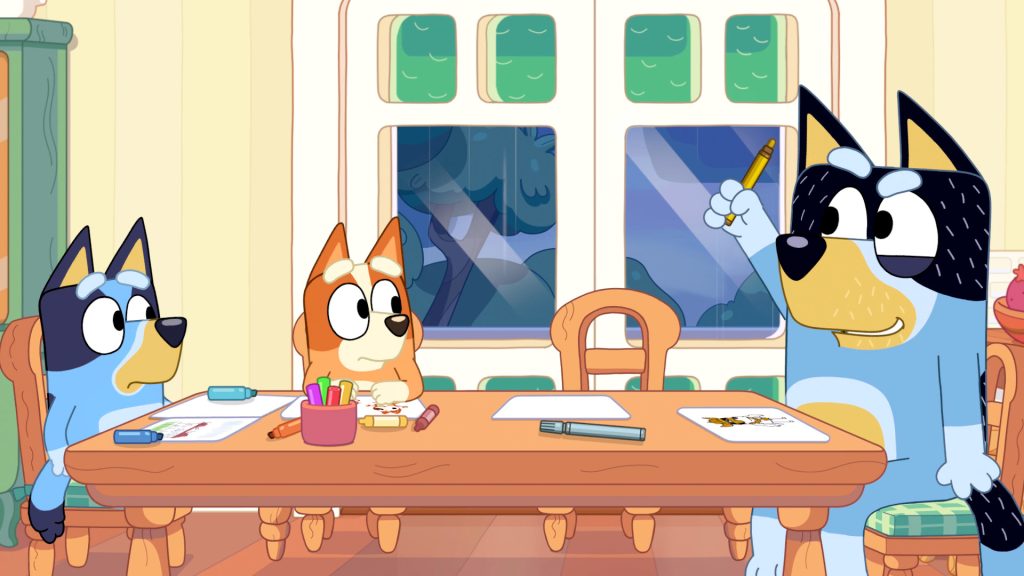
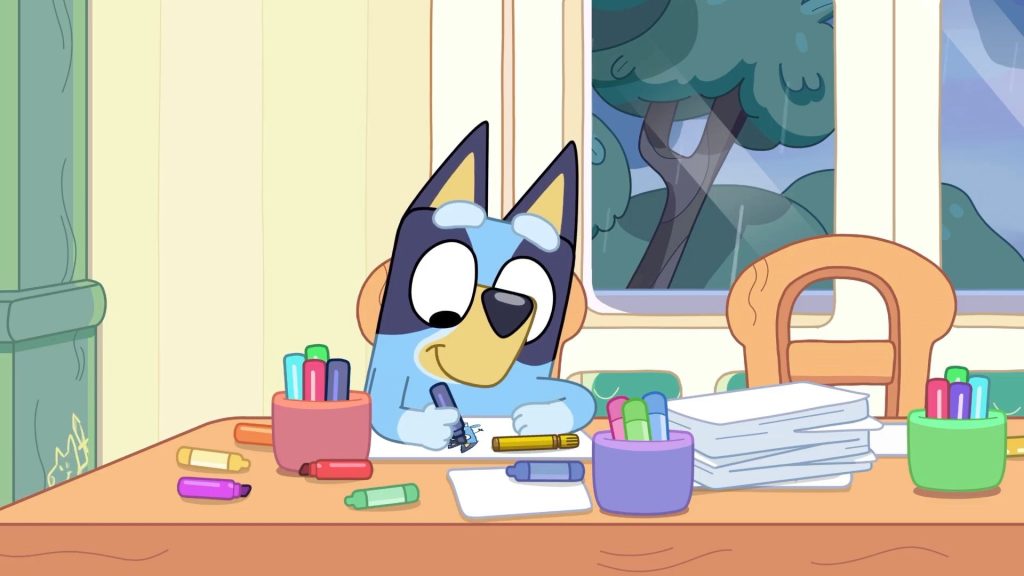
The premise is pure Bluey: playful, heartfelt, and a little chaotic. Bluey is deep into drawing an epic adventure when Dad (Bandit) swipes her Gold Pen to finish his own silly doodle. Before anyone knows it, the whole Heeler family gets sucked into the world of Bluey’s drawings. You play as Bluey, teaming up with sister Bingo—here hilariously reimagined as the legendary “Bingoose,” a goose who lays magical eggs when properly fed. Your goal? Track down Dad, now going by the villainous title “King Goldie Horns,” and retrieve the pen so Bluey can finish her masterpiece.
It’s not Shakespeare, but it doesn’t need to be. Brumm’s writing shines through in the dialogue. The voice acting is spot-on—same cast as the show, delivering those warm, witty lines that feel like they jumped straight from the TV. Bandit’s antics had me chuckling out loud more than once. There are nine main levels, each inspired by episodes like “Dragon” and “Escape,” but expanded into full explorable worlds: snowy mountains, golden beaches, lush forests, crumbling old mining towns, even a space-themed level that feels like a fever dream of Bluey’s imagination.
What I loved most is how the narrative ties into the gameplay. Every puzzle or collectible feels like part of the family’s make-believe play. You’re not just grinding for points; you’re helping Bluey and Bingo solve problems in their pretend world. Chilli shows up as the “Creator of Worlds,” offering gentle guidance. It’s meta in the best way—acknowledging that this is all drawn from a kid’s imagination while still delivering a cohesive story. My kids (ages 5 and 7) were hooked from the first cutscene, constantly asking, “Is that really what happens next in the show?” No spoilers, but the ending left us all with that fuzzy feeling Bluey does so well.
Gameplay: Cozy Exploration Done Right
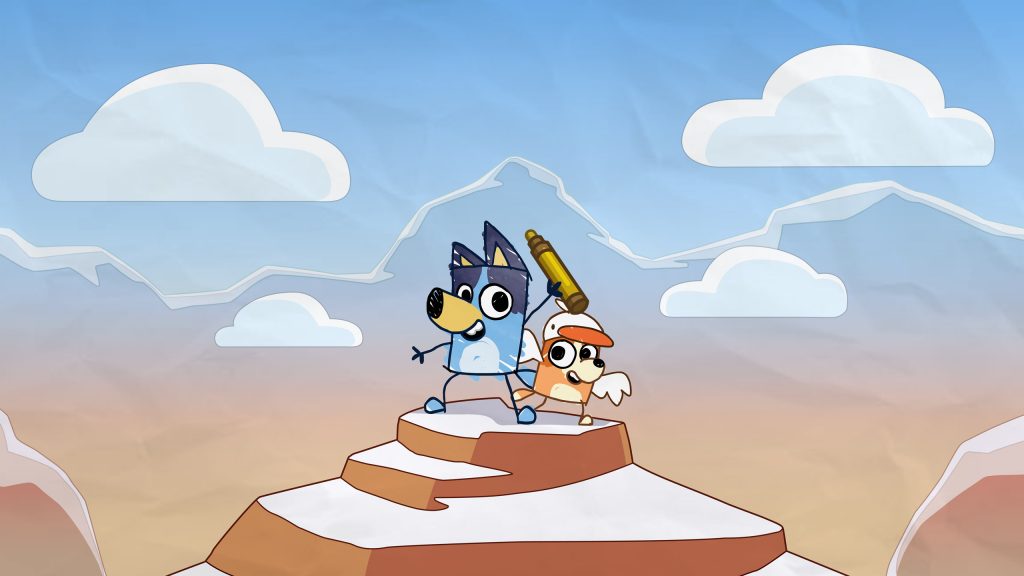
This isn’t a hardcore platformer or action game. It’s a cozy collectathon with light puzzle elements, very much in the vein of a simplified Zelda or A Hat in Time, but tuned for younger players (and tired parents). You control Bluey in third-person as she runs, jumps, and explores hand-drawn 2.5D/3D hybrid environments that look like they were sketched on paper and brought to life.
Core mechanics are straightforward but satisfying:
- The Magic Wand: Bluey’s trusty tool. It starts simple—grabbing stars to swing across gaps like a grapple hook—but evolves. You’ll use it to move heavy blocks, turn into a glider for soaring sections, or even a temporary rocket pack for vertical challenges. It never gets overly complicated, which is perfect.
- Bingoose and Eggs: Feed Bingo enough “goose food” (level-specific fruits, bugs, or treasures) and she lays a silver or gold egg. These hatch helpful items that solve bigger problems, like warming up a chilly penguin boss or fixing a broken bridge. No combat here—just kindness and creativity winning the day.
- Obstacle Courses and Vehicles: Each level introduces fun toys. Bikes for slaloms and ramps, boats for river sections, jetpacks, skates—you name it. These aren’t tacked-on mini-games; they integrate into the exploration. One beach level had me chaining bike jumps with wand swings to collect beads while racing against crumbling sand paths. It feels dynamic without being punishing.
- Collectibles: Beads, drawings, hidden toys, and episode callbacks galore. There are dozens per level, encouraging thorough exploration without feeling mandatory. My 7-year-old spent 45 minutes in the first forest level just hunting everything because “Bluey would want to find all her friends’ toys.”
The controls are forgiving. Auto-jump assists, generous checkpoints, and the ability to skip tough sections make it accessible for little ones. On harder difficulties (or for completionists), it adds some challenge with tighter timing on obstacle courses. No online multiplayer, which is a slight bummer for families wanting to play together on one screen, but local co-op elements let a second player jump in as Bingo for simple assist actions.
Pacing is excellent. Levels last 30-60 minutes each for a casual playthrough, but hunting 100% completion can double that. Total campaign is around 8-12 hours, with post-game challenges and New Game+ vibes unlocked by finding all the secret drawings. It never overstays its welcome—something mobile versions struggled with due to gating, but the full release feels generous.
Visuals and Audio: Pure Bluey Magic
The art style is the star. Hand-drawn worlds pop with vibrant colors and that signature sketchy look from the show. Transitions between “real” animated cutscenes and in-game drawn environments are seamless. Lighting in the snowy levels feels cozy, beaches sparkle, and the forest has that dappled sunlight that makes you want to just sit and explore. Performance is rock-solid on PC (I ran it at 1440p/60fps easily), and Switch 2 version looks great in handheld mode—perfect for travel.
Joff Bush’s soundtrack is another highlight. New original tracks mix with reimagined show themes. Upbeat adventure tunes for exploration, silly dad-joke motifs when Bandit appears, and tender family moments that hit the feels. Sound effects are spot-on—Bluey’s giggles, the whoosh of the wand, Bingo’s excited honks. Voice work is impeccable, with plenty of ad-libbed banter that feels fresh on repeat plays.
Who Is This For?
This is unapologetically a kids’ game first. If you’re a sweaty try-hard gamer looking for deep mechanics or challenging bosses, you might find it too gentle. The “bosses” are more like helpful problem-solving encounters—no fights, just creative resolutions that reinforce positive messages.
But for families? It’s fantastic. My kids played together, taking turns, discussing where to go next like they were planning a real adventure. It encourages imagination, kindness, and persistence without frustration. As a parent, I appreciated the lack of microtransactions in the full version (mobile has some optional stuff, but consoles/PC are clean) and the wholesome themes—no loot boxes, no battle passes, just pure fun.
Fans of the show will eat up the references. There are Easter eggs from dozens of episodes, character cameos, and even nods to Australian culture (bin chickens, cane toads—classic). It respects the source material deeply.
A Few Nitpicks
It’s not perfect. Some levels feel a bit repetitive in structure—explore, collect food for Bingo, solve a few wand puzzles, vehicle section, repeat. The challenges don’t evolve as wildly as I hoped by the end. Narrative ties to gameplay are light in places; you’re mostly just progressing because it’s fun, not because the story demands it urgently. And while single-player focused, true co-op is limited.
Load times are minimal on PC but a tad longer on Switch. Some puzzles might be too easy for older kids (10+), though the collectathon aspect keeps them engaged.
Final Verdict: 8.5/10 – A New Family Favorite
Bluey’s Quest for the Gold Pen is the best Bluey game yet by a wide margin. It’s not trying to be the next big open-world epic; it’s trying to bottle the joy of a kid’s backyard playtime, and it succeeds brilliantly. Joe Brumm’s touch makes it feel authentic, Halfbrick’s polish makes it smooth, and the whole package radiates warmth.
If you have young kids, or if you’re a grown-up who still gets a kick out of the show’s wholesome chaos, this is an easy recommendation. It’s the kind of game you’ll finish and then leave installed for rainy days or “just one more level” sessions. In a world of flashy battle royales and endless live-service grinds, Bluey’s Quest reminds us that games can still be simple, joyful, and about family.
My kids are already begging to play more tonight. And honestly? So am I. Grab it while the launch buzz is fresh—especially with that intro discount. Bluey would approve.
