
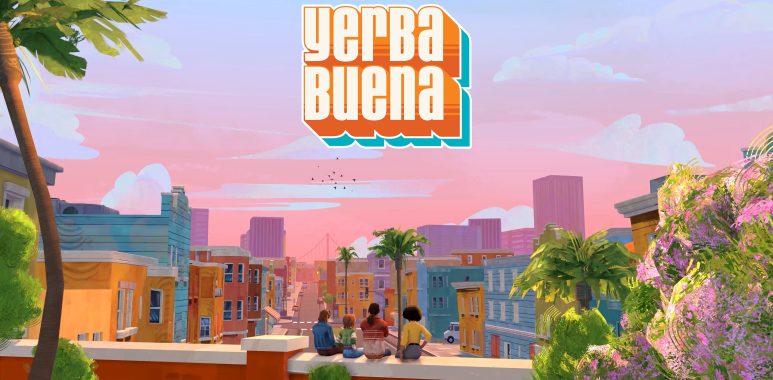
Yerba Buena: A Glitchy Love Letter to 1970s San Francisco That Actually Delivers
Three days ago, on May 26, 2026, Yerba Buena dropped on PS5, Xbox Series X/S, and PC, and I’ve barely put the controller down since. I went in expecting another quirky indie puzzle game riding the coattails of Portal’s legacy—cute concept, maybe a few clever moments, then forgettable. What I got instead was something weirder, warmer, and way more ambitious: a first-person puzzle-platformer that feels like it was designed by someone who actually lived through the Summer of Love but woke up one day realizing their whole reality was running on buggy code.
Developed by Mad About Pandas and published by Focus Entertainment, Yerba Buena isn’t trying to reinvent the wheel so much as make the wheel question its own existence. It’s short—maybe 8-12 hours depending on how much you poke at the secrets—but it packs a surprising emotional punch wrapped in some of the most satisfying “copy-paste reality” mechanics I’ve played in years. Let’s break it down.
Welcome to the Game, Barb
You play as Barb, a young woman scraping by in a lovingly recreated, slightly off-kilter 1970s San Francisco. At first, it feels like a chill narrative adventure. Barb’s between jobs, riding her bike through foggy streets, grabbing coffee, chatting with quirky locals. The vibe is pure analog warmth—wood-paneled rooms, cassette tapes, bell-bottoms, and that unmistakable haze of the era. But then the glitches start. And everything changes.
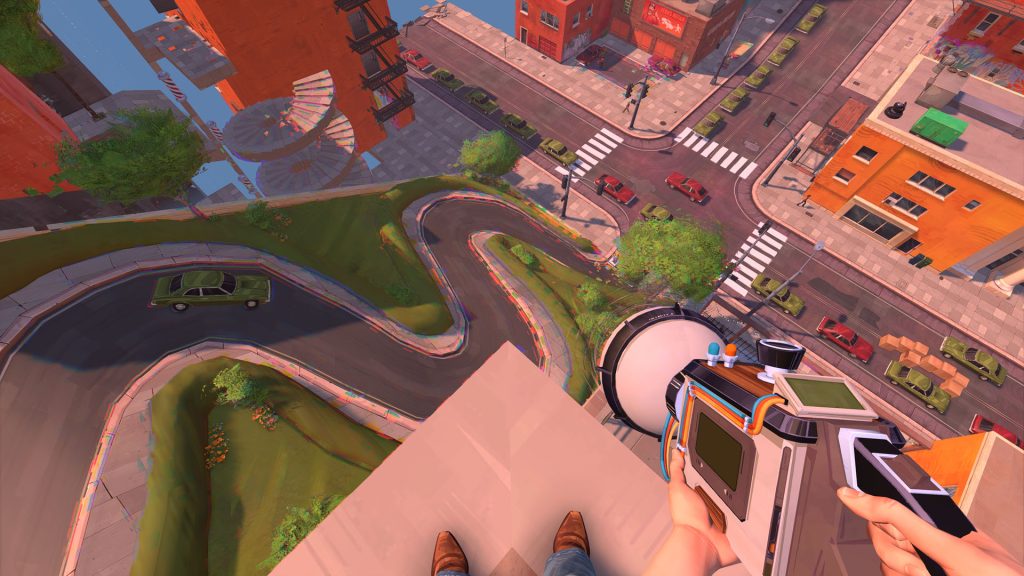
The central hook is that Barb is an NPC in an abandoned video game project. The world around her is literally a game that was never finished, left to rot on some forgotten server. A sinister plot involving a biker gang, corporate greed, and a mysterious TV tower threatens to delete the whole thing. To fight back, Barb picks up the Oscillator—a ridiculous, cassette-powered gadget that looks like a cross between a radar gun and a 70s sci-fi prop.
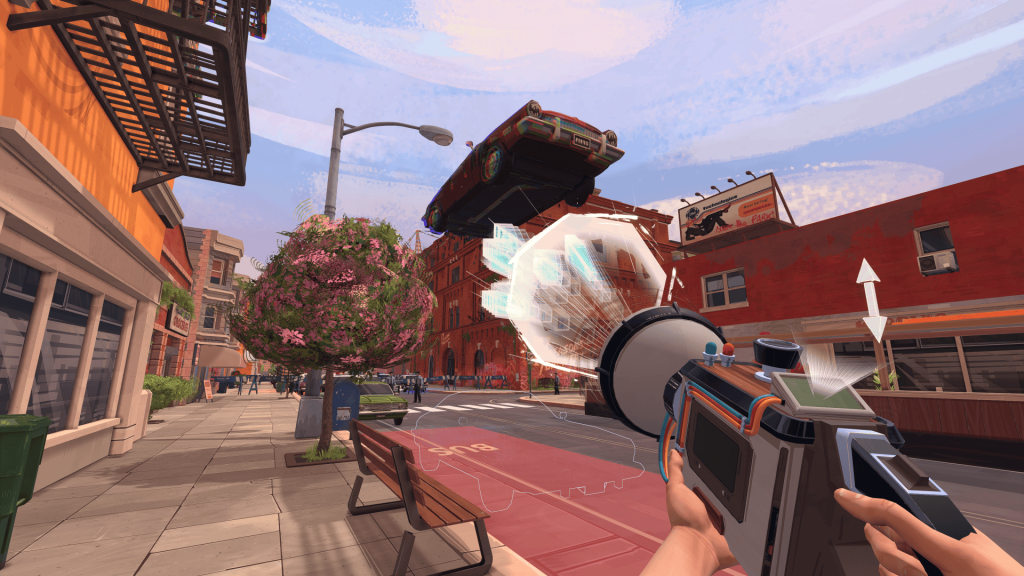
This device lets you scan objects and copy their physical properties, then paste them onto other things. Scan a speeding car? You can slap that horizontal momentum onto a building and ride it across the city like a derailed train. Scan a trampoline’s bounciness? Suddenly that concrete ledge becomes a launchpad. Copy steam venting from a pipe and you can turn solid walls into pass-through ghosts. Later abilities let you stack properties, reverse them, or get really creative. It never stops feeling magical.
The game leans hard into the “game within a game” meta without being obnoxious about it. Loading screens are styled like old CRT monitors with scanlines. Dialogue occasionally breaks the fourth wall in clever ways. One early chapter has you literally debugging code by rearranging physical objects that represent functions. It’s smart without pretension.
The Oscillator: Best Gadget Since the Portal Gun?
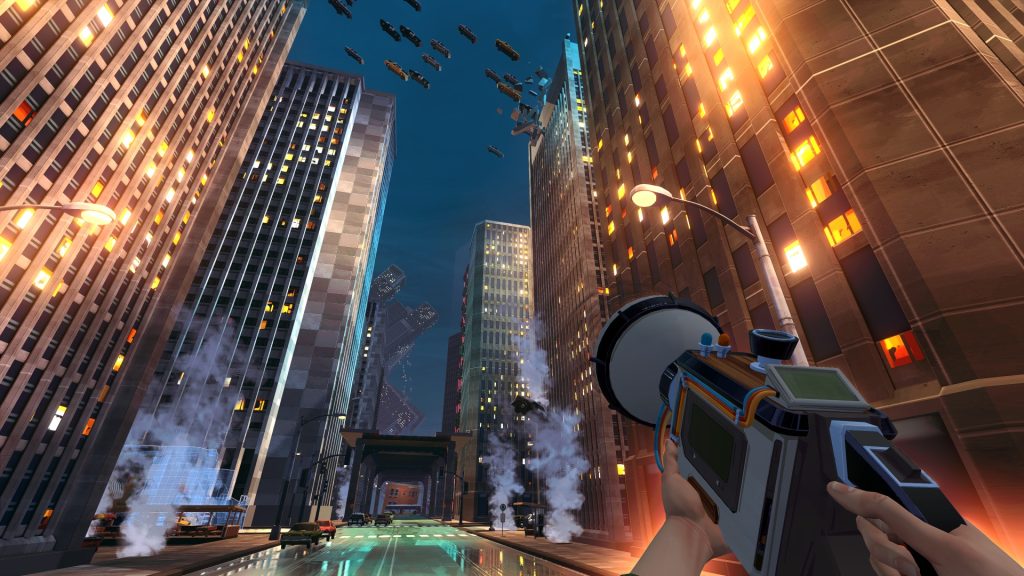
Let’s talk mechanics, because this is where Yerba Buena shines brightest. The Oscillator isn’t just a tool; it’s the star. Early puzzles are gentle tutorials—make this platform move so you can reach that ledge. By the midpoint, you’re orchestrating city-block-sized chaos: turning an entire row of Victorian houses into a moving conveyor belt, launching yourself across rooftops, or creating makeshift elevators out of floating debris.
What I love most is how physical it feels. The game has excellent momentum and weight simulation. When you paste high-speed movement onto something you’re standing on, you feel the acceleration. Jumping while something is bouncing underneath you requires real timing. There were multiple moments where I yelled “no way” out loud as a solution clicked.
The visual feedback is fantastic too. When you scan something, the world gets this neat overlay highlighting “yellow” objects (sources) and “blue” ones (receivers). Stacking properties creates these wild hybrid objects—a wall that spins and bounces, for instance. And yes, you can break things. The game encourages experimentation and has a generous reset button if you paint yourself into a corner.
Compared to Portal, it’s less about precise shooting and more about environmental orchestration. Portal is chess; Yerba Buena is more like conducting an orchestra where half the instruments are on fire. Some puzzles toward the end get brutally hard, especially when you’re managing multiple moving objects while dodging environmental hazards (falling debris, expanding glitch zones). I died a lot in Chapter 7, but never in a way that felt unfair—just “I’m an idiot for not seeing that.”
There are light platforming sections mixed in, but they never overstay their welcome. The game knows its strengths and sticks to them.
Story, Characters, and That 70s Soul
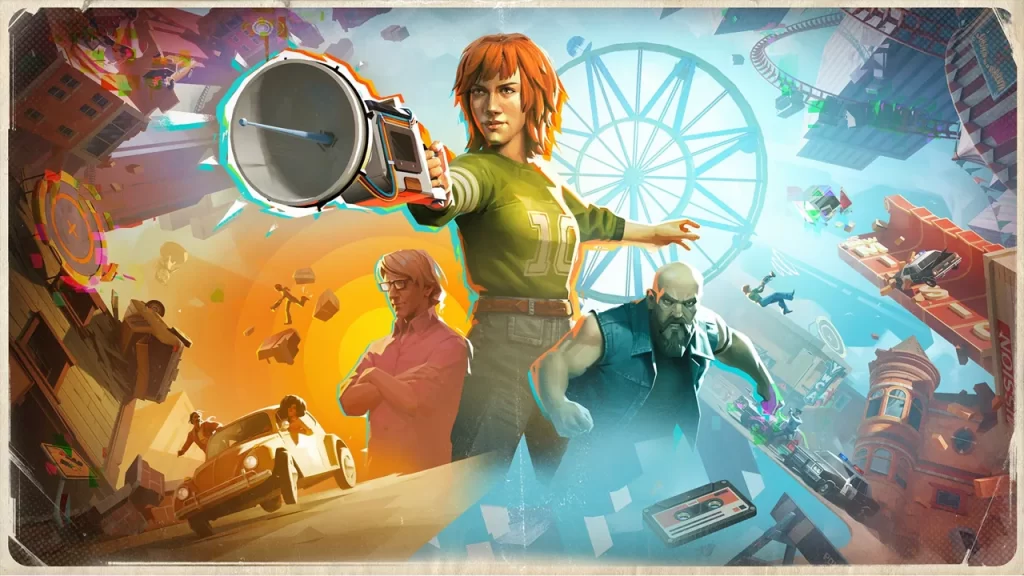
While the puzzles are the main course, the story is the seasoning that makes it special. Barb starts off aimless and a bit cynical, which feels very relatable. As she teams up with a ragtag group of fellow “glitched” NPCs—including a paranoid conspiracy theorist friend with a walkie-talkie, a wise old shopkeeper, and some surprisingly deep biker gang members—the narrative unfolds through environmental storytelling, cassette recordings, and natural dialogue.
The writing has real heart. There are moments of genuine humor (the game loves 70s slang and doesn’t overdo it), but it also tackles themes of identity, purpose, and what it means to exist when your whole world might be someone else’s abandoned project. The villain’s motivations tie beautifully into real-world issues of gentrification and corporate overreach in San Francisco, but it never feels preachy. It’s woven into the fabric of the puzzles themselves.
Side characters shine. I got genuinely attached to a few of them, especially one particular ally whose arc had me misty-eyed by the end. The game doesn’t over-explain its lore, which works in its favor. You piece things together as Barb does, and the reveals hit harder for it.
Visuals, Sound, and Technical Stuff
Art direction is outstanding. The 1970s San Francisco recreation is dripping with atmosphere—fog rolling over the Golden Gate, neon signs flickering during glitch events, detailed interiors full of period-accurate clutter. When the glitches intensify, the screen warps, colors desaturate then explode, and reality fractures in beautiful ways. It’s stylized rather than photorealistic, which helps performance and gives it a unique identity.
On PS5 (what I played on), it runs buttery smooth at 60fps with ray-traced reflections on puddles and windows that make the city feel alive. Load times are basically instant. I did notice occasional pop-in on distant buildings during big set pieces, but nothing game-breaking.
Sound design is another highlight. The soundtrack mixes original psychedelic folk-rock with glitchy electronic twists. When you’re deep in a puzzle, the music pulses and distorts in sync with the world’s instability. Voice acting is solid across the board—Barb’s performance especially grows on you as she gains confidence.
A Few Rough Edges
No game is perfect, especially a smaller-scale one like this. Some puzzles suffer from unclear objectives—you know what you need to do but not exactly how the game expects you to chain the properties. The backtracking can feel a bit tedious in larger hub areas, though fast travel unlocks later. And while the story is strong, the ending rushes a couple plot threads that I wish had more breathing room.
Combat is nonexistent, which is fine for the genre, but a few sections where you’re chased by glitch manifestations could have used more tension. The Oscillator is so fun that I sometimes wished there were more ways to use it aggressively.
Why It Matters
In a year full of massive AAA releases, Yerba Buena is a reminder that focused, creative mid-sized games can still punch way above their weight. It’s not trying to be the next big open-world epic. It’s trying to make you feel something while you solve clever puzzles in a world that feels alive and fragile. And it succeeds.
If you love Portal, The Witness, Control, or any game that respects your intelligence while wrapping its mechanics in strong atmosphere and story, this is a no-brainer. At its regular price, it’s a steal. Even at full price, I’d recommend it.
I finished the main story last night and immediately started a second playthrough hunting for collectibles and alternate solutions. That’s the highest praise I can give. Yerba Buena isn’t flawless, but it’s charming, inventive, and surprisingly moving. In a glitchy, imperfect digital world, it feels refreshingly human.
Score: 8.5/10 Go play it. Save San Francisco. Break the rules. And maybe think twice about what “reality” even means the next time you boot up a game.
