
South Africa’s Commanding March: Nine-Wicket Rout of West Indies in Super Eights Thriller at the 2026 ICC Men’s T20 World Cup
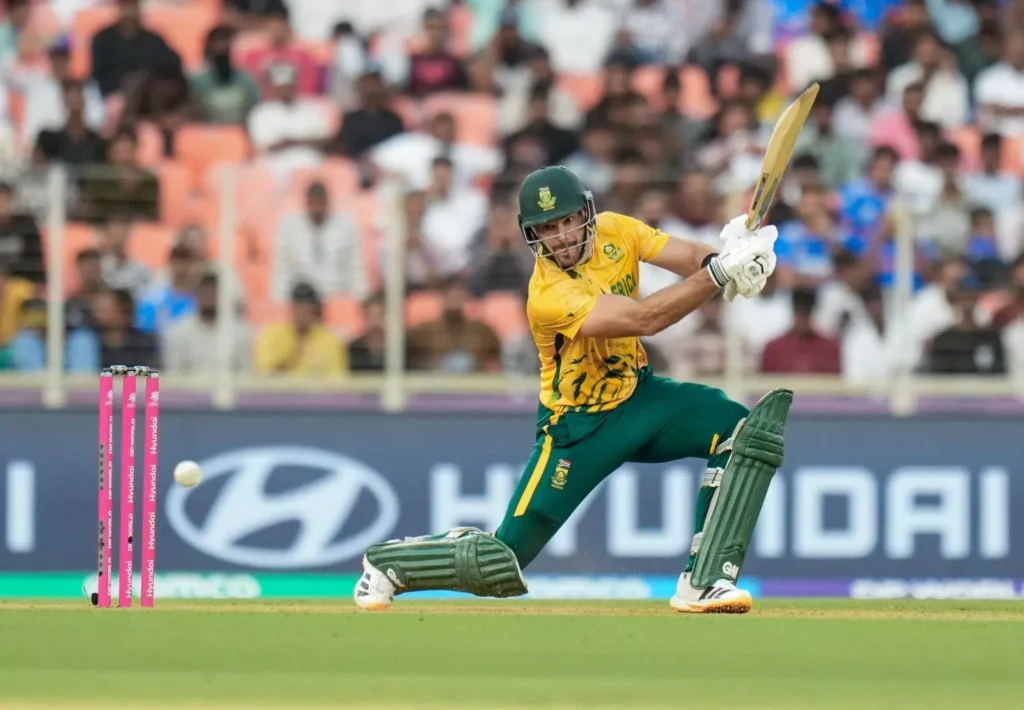
The Narendra Modi Stadium in Ahmedabad roared with anticipation on February 26, 2026, as South Africa delivered a clinical masterclass, dismantling West Indies by nine wickets with 23 balls to spare in the 47th match of the ICC Men’s T20 World Cup 2026. This Super Eights Group 1 showdown saw West Indies struggle to 176/8 after being inserted, before South Africa chased it down effortlessly at 177/1 in just 16.1 overs. Aiden Markram’s unbeaten 82 off 46 balls anchored the pursuit, powering the Proteas to their third consecutive Super Eights win and edging them closer to an unbeaten group stage and a guaranteed semi-final berth.
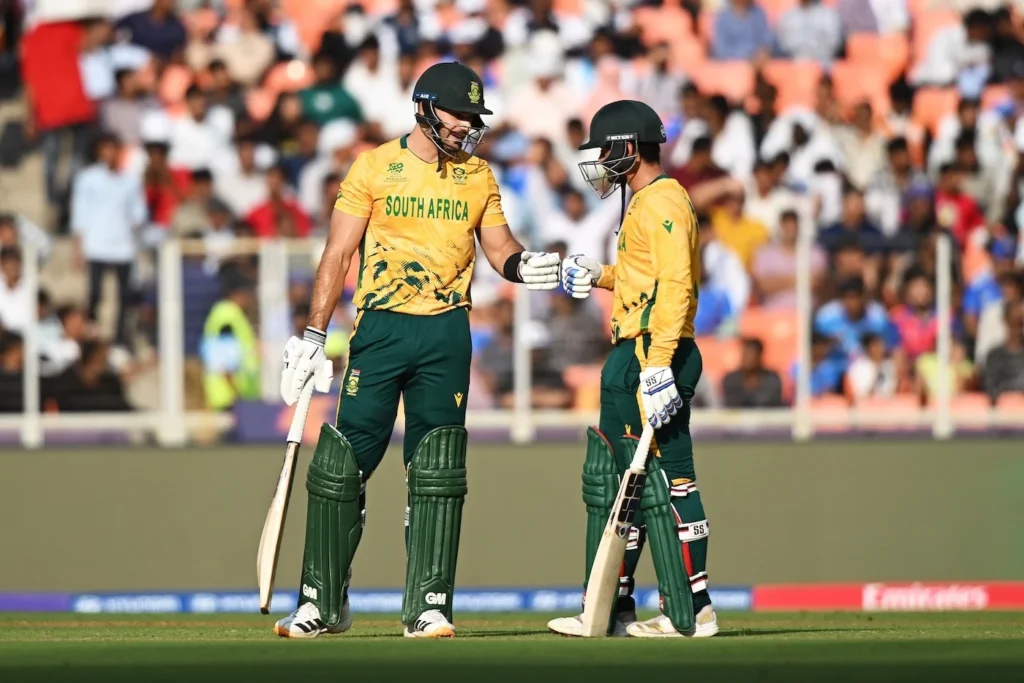
The 2026 tournament, co-hosted by India and Sri Lanka, expanded to 20 teams with a revamped format: initial groups feeding into two Super Eights pools of four, where each side played the others once. Group 1 featured heavyweights India (hosts and defending champions), South Africa (pre-tournament favorites), West Indies (2024 semi-finalists), and surprise package Zimbabwe. South Africa, under Aiden Markram’s captaincy following Temba Bavuma’s injury recovery phase, entered unbeaten—having thumped India by 76 runs in their opener and handled Zimbabwe convincingly. West Indies, led by Rovman Powell, had mixed results: a win over Zimbabwe but a heavy defeat to India, leaving them needing a strong showing to stay in contention.
Ahmedabad’s iconic venue, with its vast boundaries and pitch offering early seam movement before flattening out, typically rewards disciplined bowling first. South Africa won the toss and elected to field, banking on their pace attack to exploit any early assistance. West Indies made one change, bringing in Romario Shepherd for extra batting depth, while South Africa stuck with their winning combination featuring Kagiso Rabada, Lungi Ngidi, and spin options in Keshav Maharaj and Tabraiz Shamsi.
West Indies’ innings started disastrously. Openers Brandon King (21 off 11) and Shai Hope (16) provided brief resistance, but Rabada struck twice in the powerplay. He castled Hope with a searing yorker in the third over, then had Shimron Hetmyer (2) caught behind edging a lifter. Ngidi joined the party, dismissing King caught by Quinton de Kock off a leading edge. At 43/4 in the fifth over, after Roston Chase bizarrely ran himself out nicking onto his pads and stumps, West Indies were in deep trouble.
Nicholas Pooran (28 off 22) and Rovman Powell (19 off 15) attempted a rebuild, but Maharaj’s left-arm spin strangled them—Pooran stumped off a wide delivery he tried to sweep. Powell fell lbw to Rabada’s inswinger. At 83/7 in the 11th over, collapse seemed inevitable. Enter the lower-order fightback: Jason Holder and Romario Shepherd forged a crucial 93-run stand off 51 balls for the eighth wicket—the highest partnership of the innings.
Holder, batting aggressively, smashed sixes off Shamsi and Ngidi, finishing unbeaten on 45 off 28 (three fours, four sixes). Shepherd powered 48 off 23 (two fours, five sixes), including monstrous pulls over midwicket. Their counterpunch lifted West Indies from embarrassment to a respectable 176/8. Rabada led the bowling with 3/22 (including the prized scalps of Hope and Powell), while Ngidi took 2/28 and Maharaj 1/25 in economical spells. The total felt competitive on a pitch that slowed later, but South Africa’s batting depth loomed large.
The chase began explosively. Quinton de Kock (45 off 28) and Reeza Hendricks (38 off 24) laid a 95-run opening stand in just 58 balls. De Kock targeted Holder and Alzarri Joseph early, driving through covers and pulling short balls for boundaries. Hendricks complemented with crisp cuts and lofted drives. Joseph finally broke through in the 10th over, having Hendricks caught at mid-off attempting a big shot. But Markram arrived at No. 3 and never looked back.
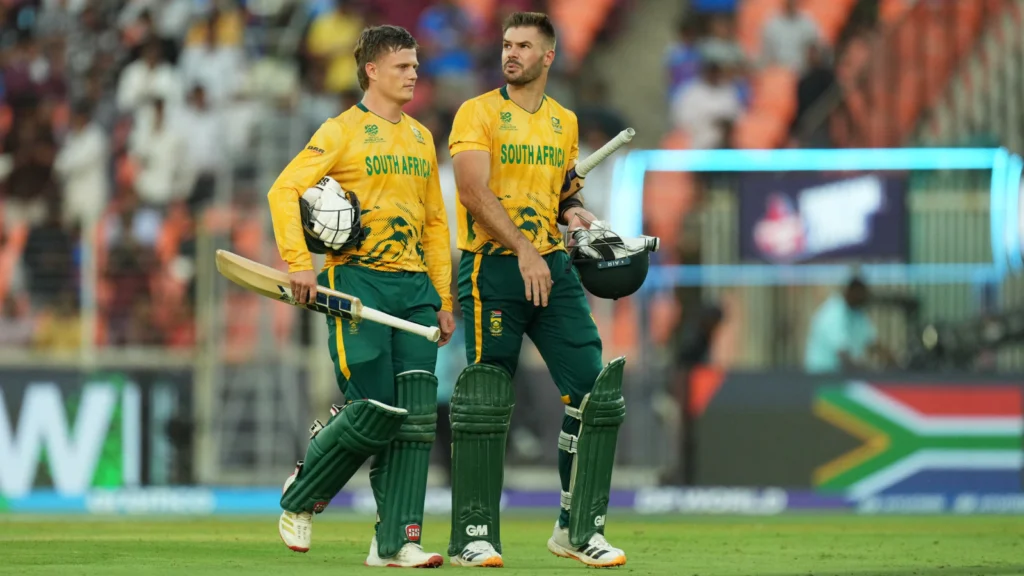
Markram’s innings was a clinic in controlled aggression. He rotated strike initially before unleashing—pulling Shepherd for six, driving Akeal Hosein inside-out over extra cover. De Kock fell caught at deep square leg off Holder, but Markram and Tristan Stubbs (12* off 9) saw it through. Markram reached his fifty off 32 balls with a six off Joseph, then accelerated: four sixes and seven fours in total. He sealed victory with a boundary off Holder’s full toss in the 17th over, finishing unbeaten on 82*.
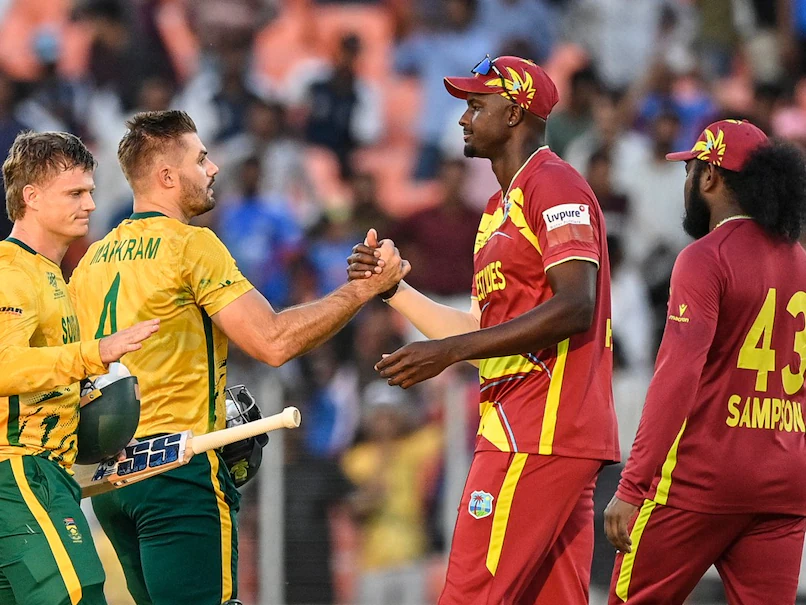
Player of the Match Markram reflected post-game: “It was about staying calm after the openers set the platform. We knew 177 was gettable if we didn’t lose early wickets. The bowlers set it up brilliantly—Rabada was outstanding.” Captain Markram praised the team: “This is a complete performance. We’re peaking at the right time.” Powell admitted: “We fought back with the bat, but 176 wasn’t enough against this South African side. Credit to them—they’re playing fearless cricket.”
Statistically, South Africa’s chase featured the second-fastest successful run-chase in Super Eights history for a 170+ target. Markram’s 82* was his highest in T20 World Cups, and the opening stand was the highest against West Indies in this edition. Rabada’s 3/22 marked his best figures of the tournament.
The result propelled South Africa to the top of Group 1 with six points and a superior NRR, all but confirming their semi-final spot (facing New Zealand in Kolkata on March 4). West Indies slipped to two points, needing miracles in remaining games to advance—ultimately exiting after losses to India and South Africa. The win highlighted South Africa’s evolution: clinical, fearless, and peaking under pressure, shedding past chokers’ tag.
This Ahmedabad demolition encapsulated T20’s essence—early dominance, lower-order resilience, and ruthless chasing. As the tournament headed to knockouts—South Africa vs New Zealand (Semi 1), England vs India (Semi 2)—the Proteas emerged as title frontrunners. West Indies reflected on missed opportunities, but their fightback through Holder and Shepherd offered hope for future campaigns.
In a World Cup of high drama, this match stood out for its one-sided brilliance. South Africa’s flawless run continued, setting the stage for a potential maiden T20 World Cup crown.