West Indies’ Dominant March Continues: Nine-Wicket Rout of Nepal Seals Super Eights Spot in 2026 T20 World Cup
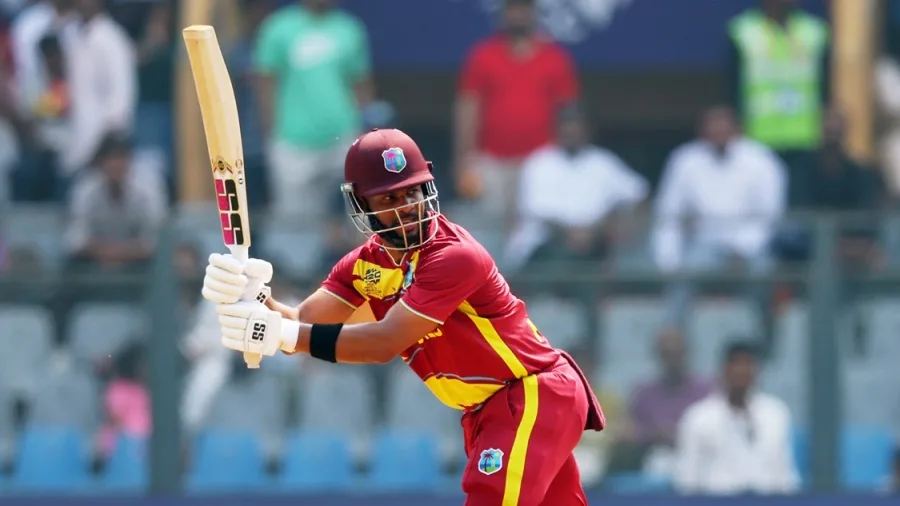
The Wankhede Stadium in Mumbai, one of cricket’s grandest cathedrals, witnessed a clinical and commanding performance from the West Indies on February 15, 2026, as they crushed Nepal by nine wickets with 28 balls remaining in the 25th match of the ICC Men’s T20 World Cup 2026. This Group C league-stage fixture saw Nepal struggle to a modest 133/8 after opting to bat first, before the Men in Maroon chased it down effortlessly at 134/1 in just 15.2 overs. Captain Shai Hope’s unbeaten 61 off 44 balls anchored the pursuit, supported by Shimron Hetmyer’s aggressive 46* off 32, while Jason Holder’s 4/27 with the ball earned him Player of the Match honors. The victory not only made West Indies the first team to qualify for the Super Eights but also eliminated Nepal from contention, capping a memorable but ultimately challenging campaign for the Himalayan nation.
The 2026 T20 World Cup, co-hosted by India and Sri Lanka, featured the format’s most ambitious expansion to 20 teams, with four groups of five in the initial stage advancing the top two to Super Eights pools. Group C was a mix of established powerhouses and emerging challengers: England (two-time champions and favorites), West Indies (2024 semi-finalists with explosive potential), Scotland (consistent performers), Nepal (inspirational underdogs who qualified through Asia qualifiers), and Italy (debutants). West Indies, led by Shai Hope in this phase, entered the match unbeaten after dominant wins over Scotland and Italy, needing a strong result to confirm their Super Eights berth and build momentum. Nepal, captained by Rohit Paudel, had shown grit—close losses to England and Scotland, plus a thrilling win over Italy—but were winless against full members and needed a miracle to stay alive.
Wankhede’s pitch, typically flat and batsman-friendly with short boundaries and evening dew aiding chases, promised a high-scoring affair. Nepal won the toss and elected to bat, hoping to post a defendable total on a surface that flattened out. West Indies fielded a balanced attack: pacers Matthew Forde, Jason Holder, and Alzarri Joseph, with spin options Gudakesh Motie and Akeal Hosein.
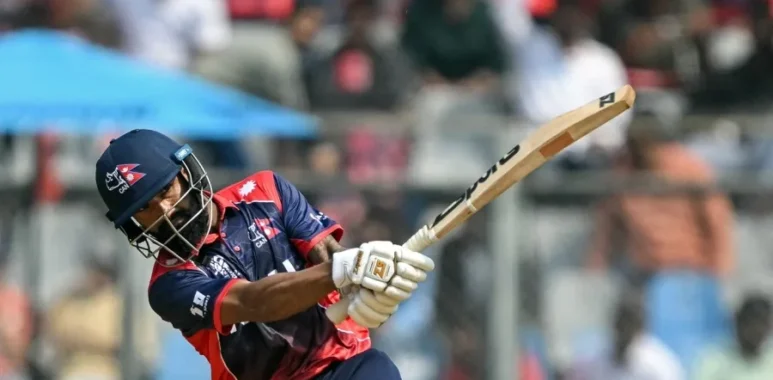
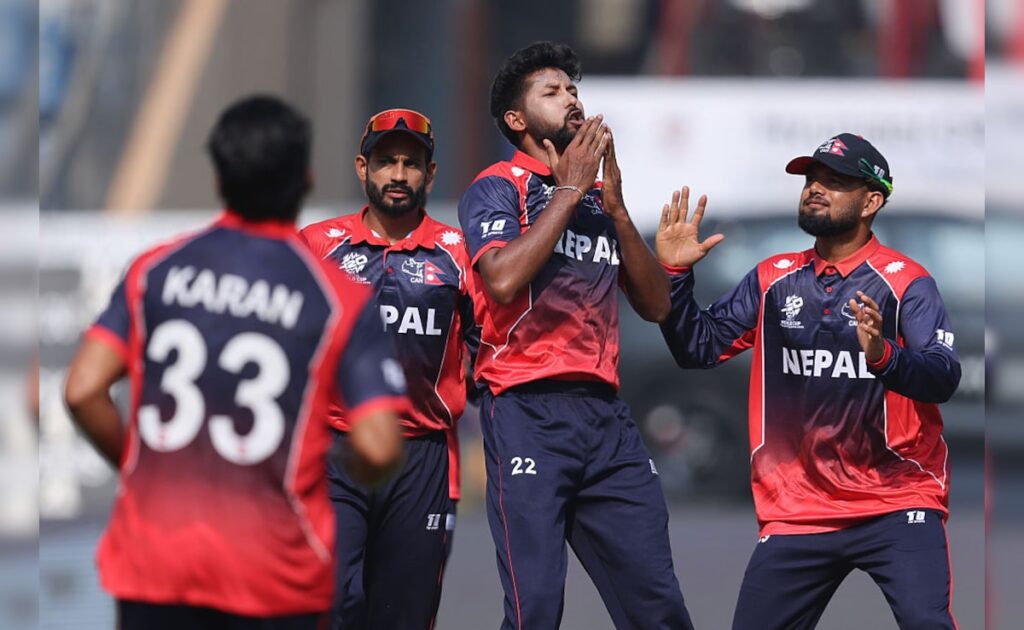
Nepal’s innings started cautiously against West Indies’ disciplined new-ball bowlers. Openers Kushal Bhurtel (quick start) and Aasif Sheikh fell early—Bhurtel caught at mid-off off Forde’s length ball, Sheikh lbw to Holder’s inswinger. At 44/2 after powerplay, Nepal risked a low total. Dipendra Singh Airee arrived and counterattacked brilliantly—his 58 off 45 balls (five fours, three sixes) featured aggressive pulls over midwicket and lofted drives off Motie. Airee added 70+ with Rohit Paudel (brief support) and lower-order cameos from Sompal Kami (26 off 15, quick runs in the death). But Jason Holder dominated—4/27 in four overs, including two early scalps and death-over yorkers that dismissed Airee (caught at long-on attempting acceleration) and others. Matthew Forde (1/10 in four overs) bowled economically, while Alzarri Joseph (tight spells) restricted boundaries. Nepal finished at 133/8—their lowest total against a full member in the tournament.

Post-innings, Airee reflected: “We started slow, but I tried to accelerate. Holder bhai bowled brilliantly—credit to West Indies. Proud of the fight, but we needed more.” Holder said: “The plan was to hit the deck and vary pace. The wicket assisted seam early, and we executed. Great to qualify first.”
West Indies’ chase was ruthless from the outset. Openers Brandon King (quick cameo) and Johnson Charles attacked Nepal’s seamers—Karan KC and Sompal Kami—racing to 45/0 in the powerplay. Charles fell caught at mid-off off Nandan Yadav attempting a big shot, but Hope and Hetmyer took over. Hope played with trademark elegance—drives through covers and flicks off his pads—reaching his fifty off 38 balls. Hetmyer provided fireworks—46* off 32 (four fours, three sixes)—with pulls over midwicket and lofted shots off Sandeep Lamichhane. The pair added 110+ for the second wicket, dismantling Nepal’s attack. Hope sealed victory with a single off Dipendra Singh Airee in the 15.2 over—West Indies home with 28 balls spare, nine wickets in hand.
Hope, reflecting post-match: “We wanted to finish the group strongly—clinical chase. Jason’s bowling set it up perfectly. Super Eights next—excited.” Hetmyer added: “The wicket was good—short boundaries helped. Proud to qualify first.”
Key statistics: West Indies’ 134/1 in 15.2 overs was one of the fastest successful chases of 130+ in the tournament. Holder’s 4/27 was his best figures in World Cups. Airee’s 58 was Nepal’s top score. The nine-wicket margin with 28 balls remaining highlighted West Indies’ efficiency.
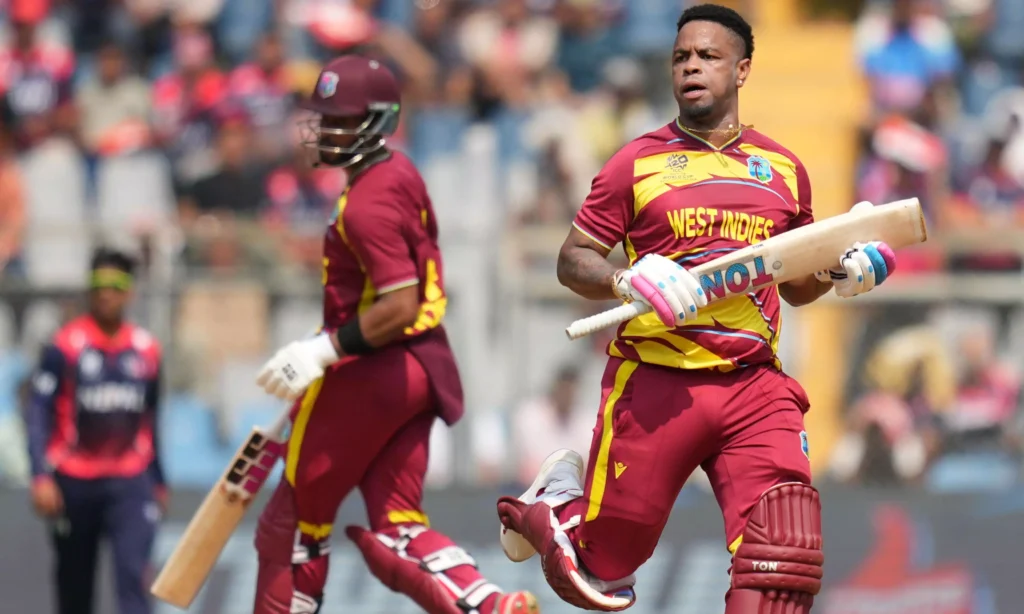
The result propelled West Indies to eight points, topping Group C unbeaten and advancing to Super Eights Group 1 (with India, South Africa, Zimbabwe). Nepal exited winless against full members but with pride—Airee’s knocks and fighting spirit inspired associates worldwide. Their campaign—qualifying for the expanded tournament, competitive showings—marked progress for Nepali cricket.
This Mumbai masterclass encapsulated West Indies’ resurgence: explosive batting, varied bowling, and team spirit. Jason Holder’s all-round display and Hope’s anchor role underscored their depth. As Super Eights beckoned (facing Zimbabwe in Mumbai next), West Indies carried momentum toward a potential deep run and a first T20 World Cup title since 2016.
Nepal’s journey, though ending here, inspired millions—proving smaller nations can compete on the biggest stage. In a tournament of expansion, upsets, and drama, West Indies’ nine-wicket rout stood as a benchmark of dominance: clinical, ruthless, and unstoppable.