
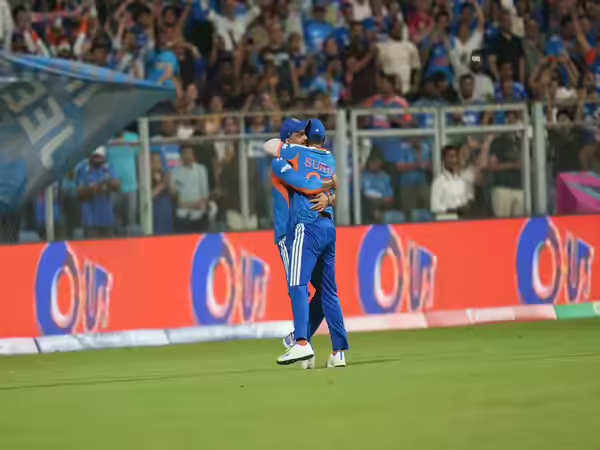
India Edge England in a Semi-Final Classic to Reach the World Cup Final
ICC Men’s T20 World Cup 2026 – 2nd Semi-Final
India won by 7 runs | 5 March 2026 | Wankhede Stadium, Mumbai
Some matches are entertaining.
Some are dramatic.
And then there are the games that feel bigger than sport itself—where every ball seems to carry the weight of an entire tournament.
The second semi-final of the ICC Men’s T20 World Cup 2026 between India and England was exactly that kind of contest. Played under the bright lights of Mumbai’s Wankhede Stadium on 5 March, the match delivered a gripping spectacle of fearless batting, relentless pressure, and a finish that kept fans on the edge of their seats until the final delivery.
When the dust finally settled, India had held their nerve to secure a narrow seven-run victory and book their place in the World Cup final.
But the scoreline only hints at the drama that unfolded.
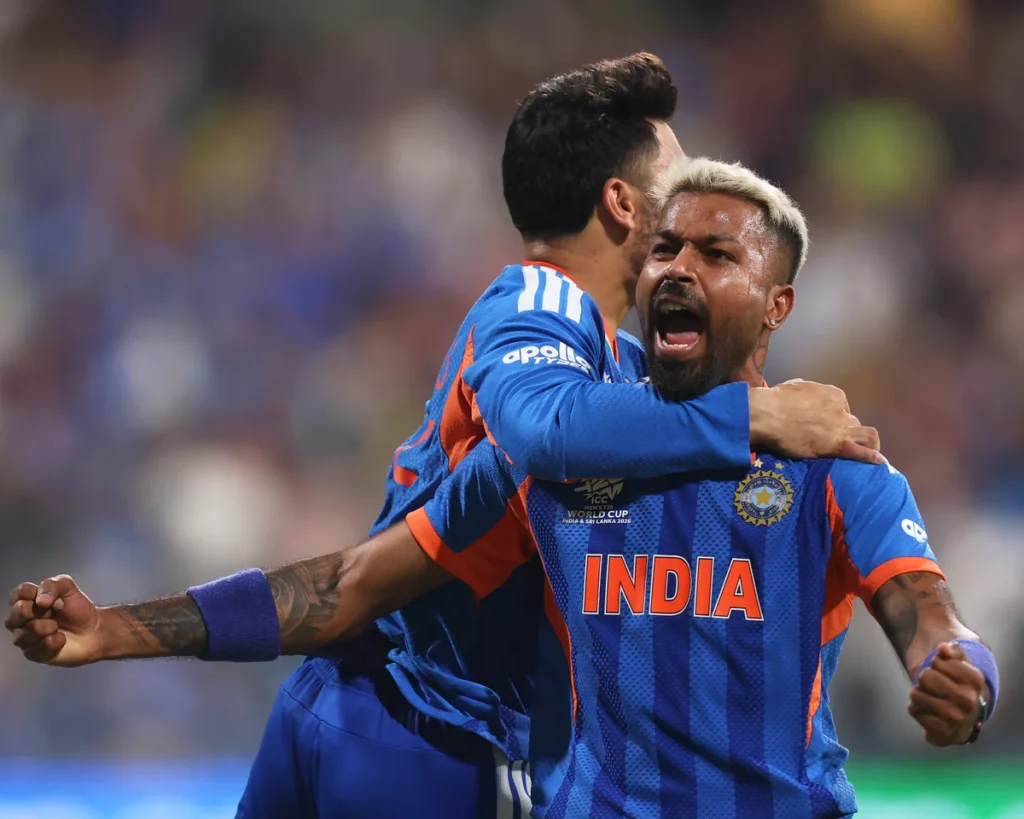
The Build-Up: A Rivalry Renewed
India vs England in a knockout game rarely lacks intensity.
Both teams arrived at the semi-final with strong campaigns behind them. England had looked dangerous throughout the tournament, boasting a batting lineup capable of chasing almost any total. India, meanwhile, had built momentum with balanced performances—solid bowling, explosive batting, and strong fielding.
The Wankhede crowd sensed the significance of the evening long before the first ball was bowled. Thousands of fans poured into the stadium hours in advance, creating an atmosphere closer to a festival than a sporting event.
Blue jerseys dominated the stands.
But England’s supporters were there too, confident their team could spoil the party.
India Opt to Bat
Winning the toss in a high-stakes T20 game can be crucial.
India chose to bat first, a decision influenced by the batting-friendly surface and the possibility that scoreboard pressure could play a role later in the evening.
The pitch looked excellent—hard, flat, and promising runs.
From the first over, it was clear both teams were ready for an attacking contest.
India’s Powerplay: Fast and Fearless
India’s opening pair started aggressively.
England’s bowlers tried to test them with swing and short balls, but the Indian batters responded with confidence. The powerplay quickly became a scoring opportunity rather than a cautious phase.
Boundaries flowed early.
A punch through cover.
A whip through midwicket.
Then a towering six that disappeared into the second tier.
The crowd roared after each stroke.
India’s message was clear—they were not going to play this semi-final conservatively.
Samson Anchors the Innings
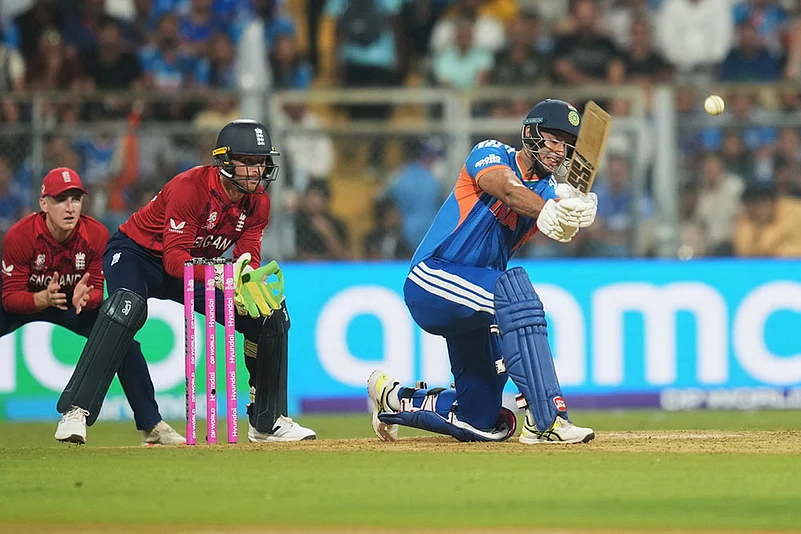
While the openers set the tone, Sanju Samson once again became the backbone of India’s innings.
Walking in during the powerplay, Samson showed remarkable composure. His approach combined elegance and aggression in equal measure.
He began with careful strokeplay—singles, quick twos, the occasional boundary.
Then, gradually, he accelerated.
His shot selection was impressive. England’s bowlers struggled to find consistent lines, and Samson capitalized whenever they erred.
One lofted cover drive drew gasps from the crowd. Another flick over fine leg sailed effortlessly for six.
The innings was taking shape.
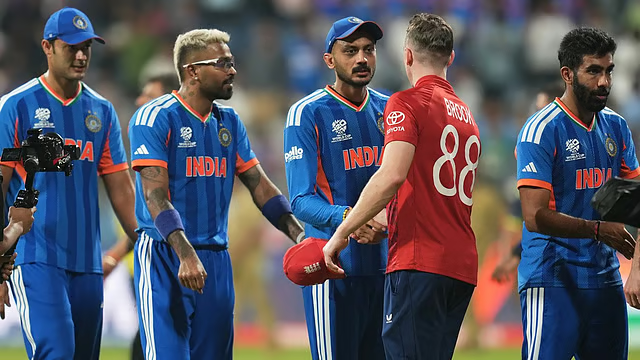
England Fight Back in the Middle Overs
Despite India’s strong start, England refused to lose control of the game.
Will Jacks delivered a crucial spell that slowed India’s momentum. His clever variations and tight lines forced the Indian batters to rethink their aggressive approach.
Two important wickets fell during this phase.
For a few overs, England regained balance.
The required acceleration that India hoped to maintain suddenly felt more difficult.
But in T20 cricket, momentum can change in seconds.
The Final Surge
As the innings entered its final overs, India shifted gears again.
Samson led the charge with fearless hitting. His ability to clear the boundary turned a good total into a formidable one.
Support from the lower middle order ensured that India maintained the tempo.
England’s bowlers attempted yorkers and slower balls, but the batters found ways to score.
By the time the innings ended, India had produced an imposing total of 253.
It was the kind of score that looked enormous even on a batting-friendly pitch.
Still, against England’s powerful batting lineup, the match was far from decided.
England Begin the Chase
Chasing more than 250 in a semi-final would intimidate most teams.
England, however, approached the target with confidence.
Their openers attacked from the start, taking advantage of the pace and bounce of the Wankhede pitch. Boundaries came quickly, and the required run rate stayed manageable during the early overs.
India’s bowlers suddenly found themselves under pressure.
The crowd grew quieter.
The chase was on.
The Bethell Blitz
Jacob Bethell produced one of the most remarkable innings of the tournament.
From the moment he settled at the crease, Bethell looked unstoppable. His aggressive approach dismantled India’s bowling plans and pushed England firmly into the contest.
Short balls were pulled for six.
Full deliveries were driven through the covers.
Even good balls were turned into scoring opportunities.
Within a short span, Bethell raced past fifty.
The Wankhede crowd—initially loud and confident—began to grow nervous.
England were chasing history.
India Strike at Crucial Moments
In a high-scoring game, breakthroughs can be more valuable than dot balls.
India found those breakthroughs just when they needed them.
Hardik Pandya delivered one of the defining spells of the match. Mixing pace cleverly and hitting difficult lengths, he claimed two crucial wickets that disrupted England’s momentum.
Still, Bethell remained.
And as long as he was at the crease, the game was alive.
A Century Under Pressure
Bethell’s innings eventually reached extraordinary heights.
He brought up a stunning century from just 48 balls, a knock filled with fearless strokeplay and remarkable composure.
Even Indian supporters in the crowd acknowledged the brilliance.
England now needed fewer than 50 runs from the final four overs.
The semi-final had transformed into a nail-biting thriller.
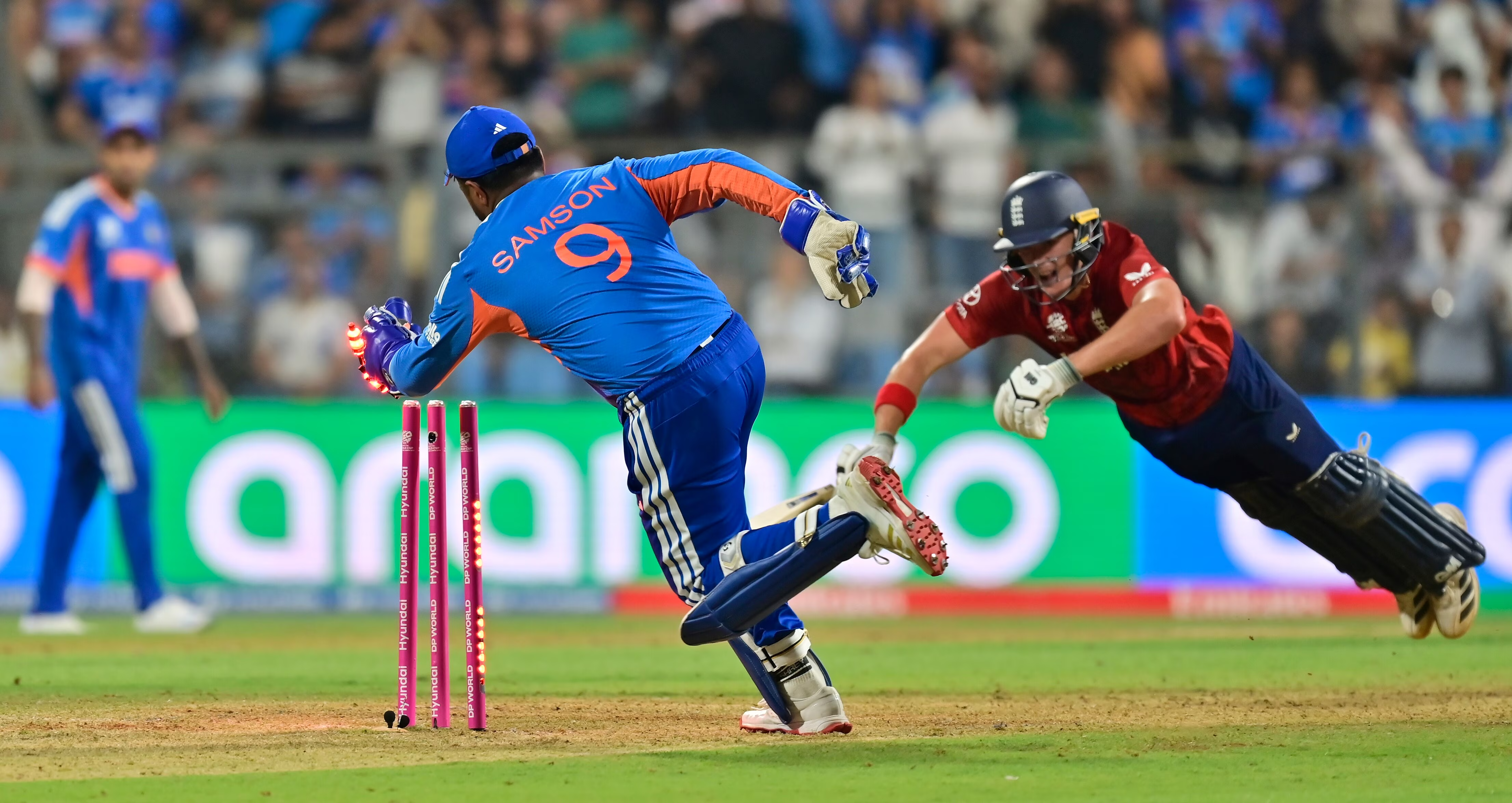
The Final Overs
With the required run rate climbing again, the tension inside the stadium became almost unbearable.
Every ball felt decisive.
India’s bowlers focused on execution—yorkers, slower balls, tight lines.
England’s batters attacked relentlessly.
The equation kept shifting.
Twenty runs required.
Then fifteen.
Then ten.
Each over felt like a miniature battle.
The Turning Point
The decisive moment came when Bethell was finally dismissed.
Attempting another big shot under immense pressure, he mistimed the delivery and was caught in the deep.
The dismissal sent the stadium into eruption.
England still had capable hitters remaining, but losing their key batter changed the atmosphere instantly.
Suddenly, India sensed victory.
A Tense Finish
The final over began with England still needing a handful of runs.
The field spread across the boundary. The bowler walked back slowly, aware that every delivery could define the match.
First ball—dot.
Second ball—single.
Third ball—two runs.
The pressure mounted.
By the final delivery, England needed an unlikely boundary to win.
The batter swung hard.
The ball flew toward deep midwicket.
But it fell short of the rope.
India had done it.
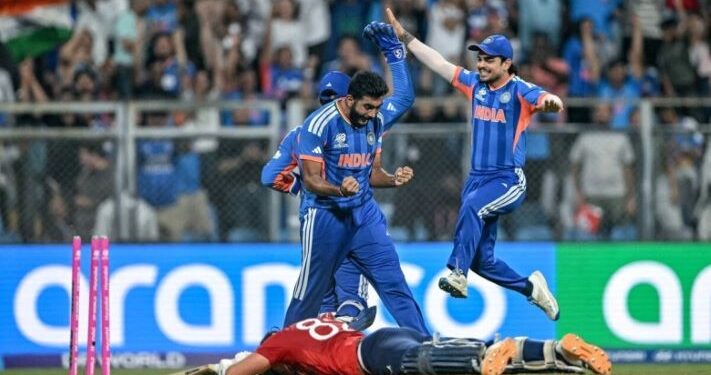
Celebration in Mumbai
As the final run was completed, Indian players erupted in celebration.
The crowd followed instantly—cheers, flags, fireworks of sound.
Reaching a World Cup final is never easy, and doing so in such a dramatic fashion made the moment even more special.
Players embraced on the field while the stadium buzzed with excitement.
The Heroes of the Night
Sanju Samson’s 89 provided the backbone of India’s massive total. His innings combined composure and aggression at exactly the right moments.
Hardik Pandya’s bowling spell proved equally crucial, delivering the breakthroughs that prevented England from completing the chase.
For England, Jacob Bethell’s brilliant 105 will be remembered as one of the finest innings of the tournament—even though it ultimately came in a losing cause.
A Final Awaits
With this victory, India advanced to the World Cup final where they would face New Zealand.
The stage was now set for an exciting showdown between two teams that had played outstanding cricket throughout the tournament.
Confidence within the Indian camp was high, but the players knew the job was not finished.
One more match remained.
Cricket at Its Best
The India–England semi-final delivered everything fans could hope for: massive totals, spectacular batting, brilliant bowling, and a finish that remained uncertain until the very last ball.
Matches like this remind us why knockout cricket is so compelling.
Pressure amplifies every moment.
Small margins decide huge outcomes.
And sometimes, just seven runs separate heartbreak from glory.
For India, those seven runs meant a place in the World Cup final.
For everyone watching, it meant witnessing one of the tournament’s most unforgettable games.
