
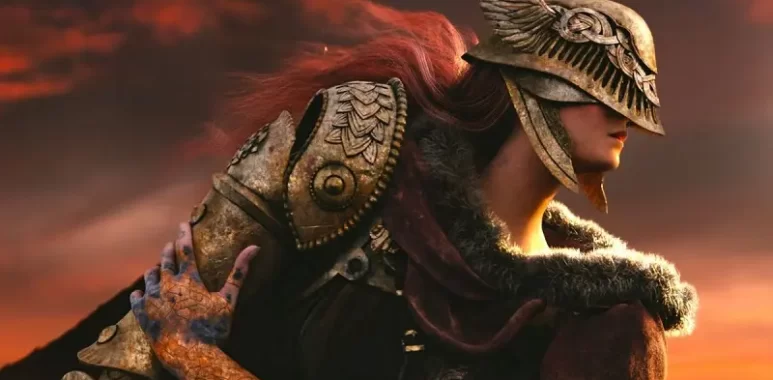
Elden Ring: A Tarnished’s Odyssey Through the Lands Between
When Elden Ring dropped on February 25, 2022, I wasn’t sure what to expect. I’d sunk hundreds of hours into the Dark Souls series, bled through Bloodborne‘s streets, and mastered the parry timing in Sekiro. FromSoftware had a reputation for brutal, punishing games wrapped in cryptic lore and unforgettable worlds. But an open-world Souls game? Collaborating with George R.R. Martin? It sounded ambitious, maybe even risky. Would the formula that made those linear masterpieces special dilute in a massive map?
Man, was I wrong. Elden Ring didn’t just meet expectations—it shattered them. It became my Game of the Year for 2022 without question, and years later, it still holds up as one of the finest gaming experiences I’ve ever had. This isn’t hyperbole. It’s a game that rewards curiosity, punishes hubris, and leaves you staring at the screen in awe long after the credits roll. At over 2500 words, this review dives deep into why Elden Ring is a landmark title, blending personal stories from my playthroughs with analysis of its design, strengths, flaws, and lasting impact.
Stepping into the Lands Between: First Impressions and World Design
From the moment you emerge from the tutorial cave as the Tarnished, Elden Ring grabs you. No hand-holding tutorials beyond the basics. No quest markers cluttering the screen. Just you, a spectral horse named Torrent, and the vast, fractured world of the Lands Between stretching out before you. Limgrave feels like a promise: golden fields, ruined churches, dense forests, and distant castles under an eternal, moody sky.
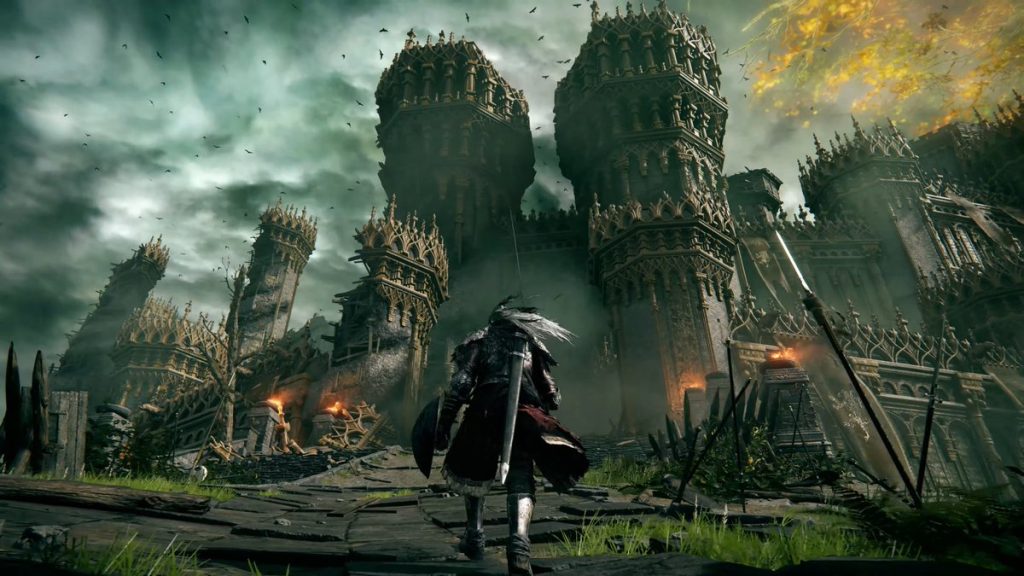
I remember my first ride on Torrent. I galloped toward a glowing site of grace, only to get absolutely demolished by a Tree Sentinel on horseback. That early lesson stuck—Elden Ring doesn’t scale difficulty to your level. It dares you to explore, learn, and come back stronger. This open-world approach revolutionized FromSoftware’s formula. Previous games funneled you through meticulously designed levels with occasional branching paths. Here, the “levels” are scattered across a seamless map that feels alive and dangerous.
The world design is masterful. Verticality plays a huge role—cliffs, underground catacombs, floating ruins, and hidden paths mean you’re constantly discovering new areas. I spent my first 20 hours just in Limgrave and Weeping Peninsula, uncovering caves filled with crystal miners, facing off against dragons on mountaintops, and stumbling into legacy dungeons like Stormveil Castle that recapture that tight, trap-filled Souls level design.
Exploration feels purposeful. Every ruin, every graveyard, every random shack often hides something worthwhile: a new weapon, a talisman that boosts your build, or a NPC with a tragic story. The map itself doesn’t reveal everything upfront—you fill it in by exploring, which encourages that sense of wonder. I still get chills thinking about cresting a hill in Liurnia and seeing the Academy of Raya Lucaria rising from the misty lake, or the first time I entered Caelid’s scarlet rot-infested badlands. The environmental storytelling is top-tier. You piece together the world’s history through architecture, enemy placements, and item descriptions rather than cutscenes.
One of my favorite aspects is how the game handles freedom. You can tackle the main story bosses in almost any order, or ignore them entirely and go wandering. I did a “peaceful explorer” run early on, avoiding major fights and just soaking in the atmosphere with a mage build. It worked until Mohg decided to ruin my day. This player agency makes every playthrough feel personal.
Combat: Fluid, Deep, and Addictively Challenging
At its core, Elden Ring is still a Souls game, and the combat is where it shines brightest. The core mechanics—stamina management, dodging, light/heavy attacks, jumping—feel refined from Dark Souls III and Sekiro. But the additions elevate it: Ashes of War let you customize weapon skills, giving even basic swords crazy utility. Summon spirits for help in tough fights. Dual-wield colossal weapons or mix sorceries, incantations, and physical attacks.
My first build was a classic strength warrior using the Lordsworn’s Greatsword. It felt great smashing through early enemies, but bosses demanded adaptation. I respecced multiple times at Rennala (after beating her, of course). The game encourages experimentation. One playthrough I went full bleed with Rivers of Blood katana—absolutely broken in PvE and PvP. Another was a faith/strength paladin calling down lightning and golden arcs. The build variety is insane, supported by hundreds of weapons, armor sets, and talismans.
Boss fights are the highlight. Elden Ring has some of the best in any game, period. Margit the Fell Omen serves as an early gatekeeper, teaching patience and pattern recognition. Godrick the Grafted is grotesque and memorable. But then you hit peaks like Starscourge Radahn—a festival battle with NPC summons against a meteor-hurling general on a giant horse. Pure spectacle. Malenia, Blade of Miquella, broke me for days with her Waterfowl Dance and healing on hits, but beating her felt like climbing Everest.
The final boss (no spoilers) ties everything together mechanically and thematically. Combat rewards mastery but offers tools for accessibility: spirit ashes like Mimic Tear can trivialize some encounters if you want, though purists can go solo. Multiplayer summons (with the right items) add a social layer, though invasions keep things tense.
I love how the game mixes epic set-piece bosses with field encounters. Those Erdtree Avatars or Night’s Cavalry that roam at night? They keep the world feeling alive and threatening even late-game.
Story and Lore: Cryptic Brilliance with Martin’s Touch
Elden Ring‘s narrative isn’t spoon-fed. You are a Tarnished, one of many exiled warriors called back to repair the shattered Elden Ring and become Elden Lord. Queen Marika’s demigod children warred after the Shattering, splintering the Golden Order. Outer gods, ancient dragons, and forgotten civilizations lurk in the background.
George R.R. Martin’s involvement provided the mythological backbone—family betrayals, political intrigue, and larger-than-life figures—while Miyazaki’s team layered on the ambiguity and environmental storytelling. It’s like A Song of Ice and Fire crashed into dark fantasy with Japanese folklore influences.
I pieced together the lore obsessively. Item descriptions, NPC dialogues, and boss arenas tell the tale of Radagon and Marika’s complicated relationship, the Night of Black Knives, and Ranni the Witch’s rebellion against the Greater Will. Side quests like Millicent’s or Ranni’s are heartbreaking and profound, often rivaling the main path. The Frenzied Flame ending? One of the most haunting in gaming.
It’s not perfect for everyone. If you want a linear, voiced narrative with clear motivations, you might bounce off. But for those who engage, it’s richly rewarding. The world feels like it existed long before you arrived, full of tragedy and faded glory.
Visuals, Audio, and Immersion
On PS5 (and PC with decent hardware), Elden Ring looks stunning. The art direction mixes gothic horror, high fantasy, and surrealism. Leyndell’s golden capital at sunset, the crystalline caves, the abyssal depths of the Subterranean Shunning-Grounds—each region has a distinct palette and mood. Performance mode keeps it smooth during chaotic fights.
Sound design is impeccable. Boss themes by composer Shoi Miyazawa and team hit hard—Radahn’s theme during the festival still gives me goosebumps. Voice acting (what little there is) is excellent, with characters like Blaidd and Melina sticking with you. The ambient sounds—wind in the grass, distant howls, the creak of ancient machinery—make the world immersive.
The Shadow of the Erdtree DLC: More of the Best
Released in 2024, Shadow of the Erdtree is one of the strongest expansions ever. It adds a massive new realm tied to Miquella’s story, new weapons, armor, bosses, and lore bombs. It’s tougher, more condensed, and refines the formula further. Bosses like Messmer and the final encounter are all-timers. If you loved the base game, the DLC is essential—it adds replayability and deepens the mythos without overstaying its welcome.
Criticisms: It’s Not Flawless
For all its genius, Elden Ring has rough edges. Some late-game areas feel bloated with recycled bosses or enemies. Certain field bosses, like those Erdtree Avatars, overstay their welcome through repetition. The open world can overwhelm new players, and the difficulty spikes can frustrate (though that’s the point for many).
Performance on base PS4/Xbox One was rough at launch, though patches helped. Online features are janky sometimes. And while the lack of hand-holding is refreshing, some questlines are so obscure you need a guide.
Balance-wise, some builds (bleed, certain summons) trivialize content, while others struggle. But FromSoftware has patched and balanced over time.
Legacy and Why It Matters
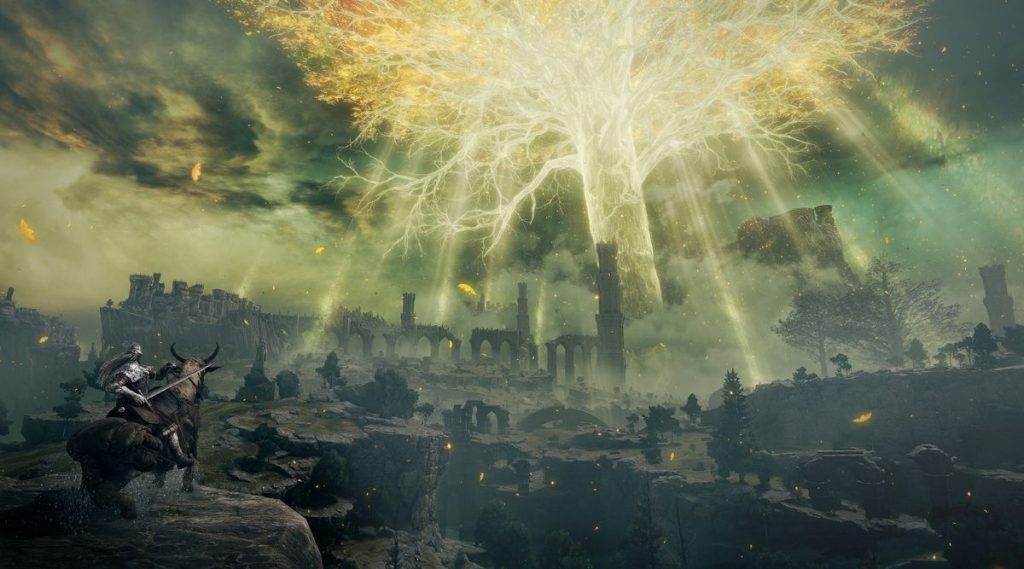
Elden Ring sold over 30 million copies and swept awards, including Game of the Year at The Game Awards. It proved open-world games could maintain soul and challenge without Ubisoft-style bloat. It influenced the industry—bigger worlds with better density, smarter exploration rewards.
Personally, it reignited my love for gaming during a rough period. The sense of accomplishment after beating Malenia solo, the joy of discovering hidden paths, the community discussions about lore—it’s special. It’s not just a game; it’s an experience that lingers.
If you’re on the fence, buy it. Start slow, embrace death as a teacher, and let the Lands Between consume you. Elden Ring isn’t perfect, but its ambition, beauty, and depth make it a modern classic. FromSoftware outdid themselves. As a Tarnished, I can’t wait to return again.
