
Bubsy 4D: The Bobcat Finally Gets His Dimension-Hopping Revenge
I’ll be honest with you—I never thought I’d be sitting here in late May 2026 writing a serious review of a new Bubsy game. The last mainline entry was… what, 1996? Sure, there was that disastrous 3D one on PS1 that we all try to forget, and a couple of mobile cash-grabs nobody asked for, but Bubsy 4D feels like the series rising from the grave wearing a fresh pair of sneakers and yelling “I’m back, woolies!” at the top of its lungs. Released on May 22, 2026, this is easily the most ambitious and unhinged Bubsy title ever made. Whether that’s a good thing depends on how much chaotic platforming nostalgia you can stomach.
I’ve spent the last six days glued to my PS5 (with occasional Switch 2 sessions) putting roughly 28 hours into the campaign, side modes, and the surprisingly deep “Dimensional Mayhem” multiplayer. Here’s my full, no-holds-barred take.
A Brief History Lesson (Because You Probably Need One)
For the uninitiated, Bubsy the Bobcat was Accolade’s answer to Sonic and Mario in the early 90s. He had the attitude of a stand-up comedian who just discovered caffeine, the voice of a game show host, and levels that felt like someone threw spaghetti at a wall and called it level design. The first two games were actually pretty good for their time—tight 2D platforming, catchy music, and that glorious “What could possibly go wrong?” energy. Then everything went off the rails. Bubsy 3D became a punchline for terrible 3D platformers. The franchise basically died.
Fast forward thirty years. A small but passionate team at a new studio called Dimensional Yarn (yes, that’s their real name) somehow convinced enough investors that the world needed Bubsy in full 4D glory. The marketing campaign was pure chaos: billboards with Bubsy wearing VR goggles, trailers set to remixed versions of the original theme, and one infamous live stream where the voice actor (still the legendary Rob Paulsen, by the way) ad-libbed for 45 minutes straight. It worked. The game launched to surprisingly strong opening weekend sales and a very online discourse.
What Even Is 4D Here?
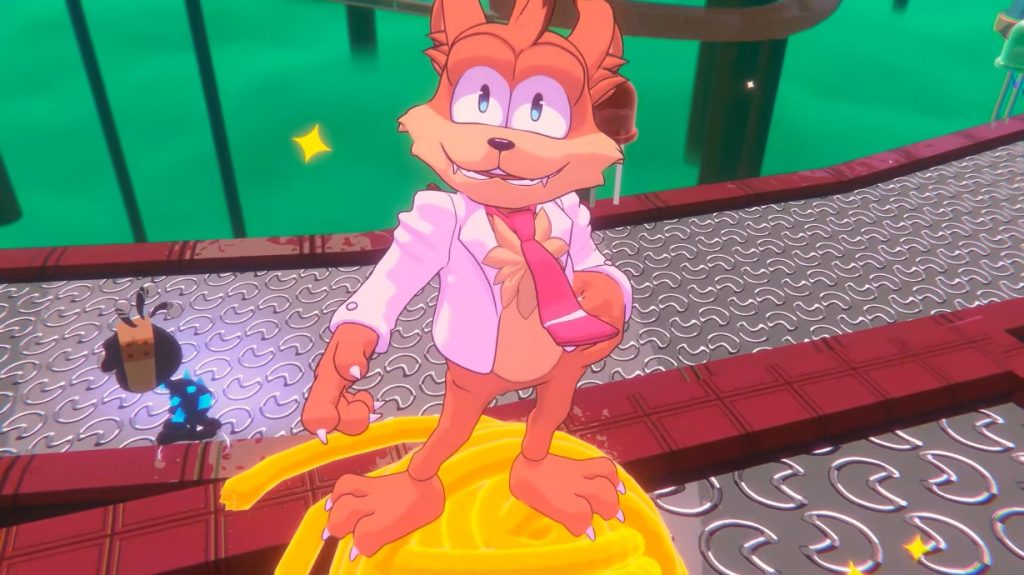
Let’s get this out of the way: “4D” isn’t just marketing fluff, though there’s plenty of that. The game uses a clever mix of traditional 3D platforming with dynamic time manipulation and limited reality-warping mechanics. Think Super Time Force meets Control meets pure Bubsy absurdity.
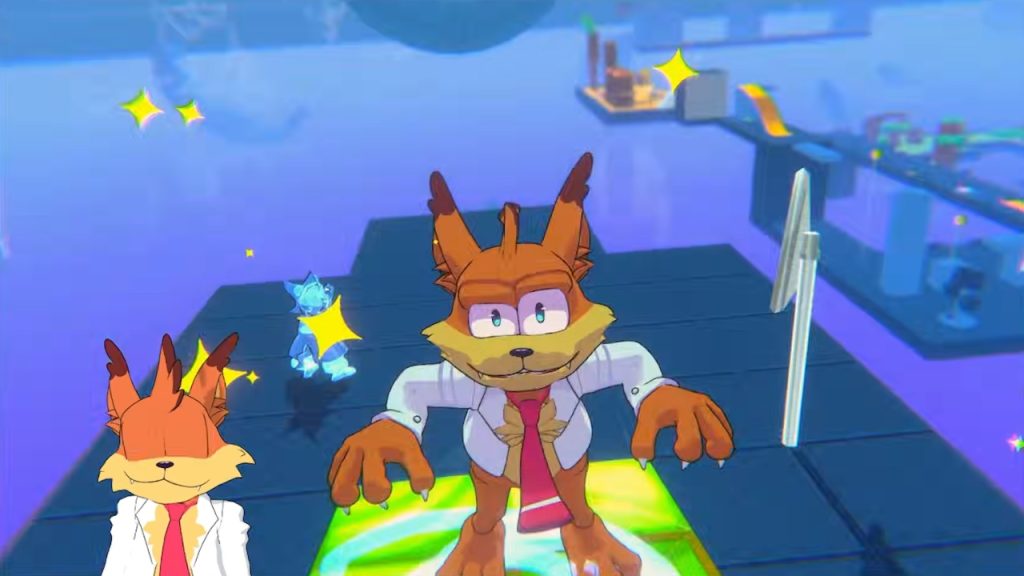
You play as Bubsy, obviously, but now you have access to “Yarn Shifts”—portable devices that let you rewind, fast-forward, or branch small sections of time within levels. Miss a jump? Rewind three seconds and try again without restarting the entire checkpoint. Want to cheese a section? Fast-forward enemy patrols or make moving platforms sync up differently. In certain “fracture zones,” you can create temporary duplicates of yourself that run on alternate timelines. It sounds complicated on paper, but in practice it’s ridiculously fun once you get the hang of it.
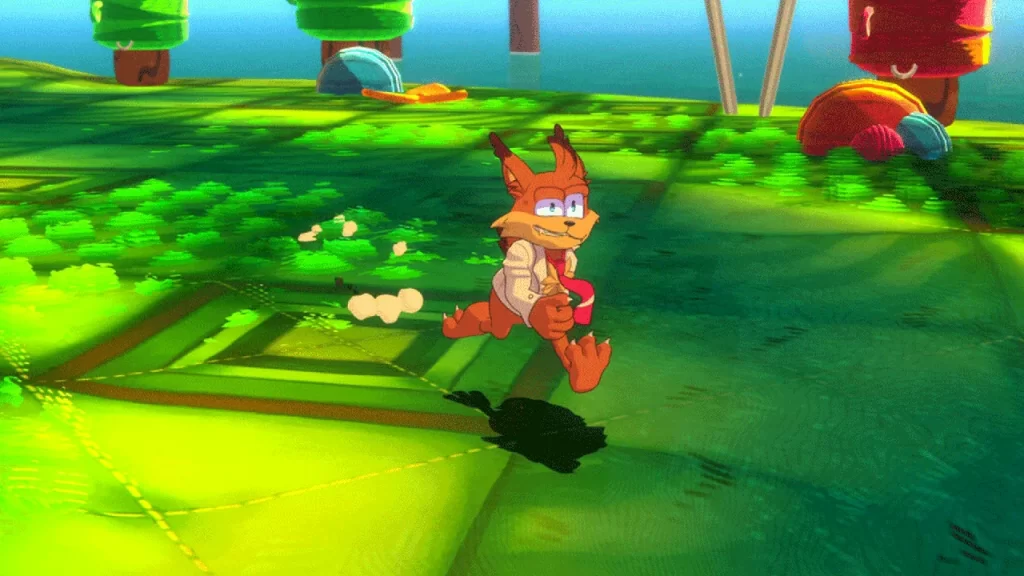
The levels themselves are massive. We’re talking open-ended hub worlds that connect to proper linear platforming challenges. The first world, “Woolly Woods Revisited,” is a loving (and sarcastic) callback to the original game, except everything is now rendered in gorgeous Unreal Engine 5 detail. Trees have individual leaves that react to your movement, rivers actually flow with physics, and the woolies (those weird sheep enemies) now have distinct personalities—some run away, some form conga lines, some straight-up unionize against you.
Gameplay: Chaotic, Demanding, Occasionally Brilliant
The core loop feels like classic Bubsy—fast, floaty jumps with that signature glide—but the 4D mechanics completely change how you approach it. You’re not just dodging enemies; you’re editing reality around them. One memorable level in the “Neon Nostalgia” world has you platforming across billboards in a cyberpunk city while rewinding time to avoid laser grids that activate on timers. Screw up and the lasers fry you. Get it right and you can ride the same laser beam like a surfboard using your duplicate. It’s the kind of moment that makes you laugh out loud.
Combat is light but satisfying. Bubsy still has his spin attack, but now you can “yarn-pull” enemies into different time states. Slow them down to dodge easier, speed them up until they glitch out and explode, or pull them into your timeline for a satisfying pounce. Boss fights are absolute spectacles. The first major boss, a giant woolie mech piloted by the series’ recurring villain, had me rewinding at least thirty times on my initial attempt. By the end I felt like a god.
That said, not everything lands perfectly. Some sections lean too hard into trial-and-error. There’s one infamous “Fractured Freeway” level where you have to manage three duplicates across parallel highways while avoiding 18-wheelers. It’s clever the first two times. By the tenth death it becomes frustrating. The game gives you infinite lives (a welcome change from the original games’ brutal continue system), but the checkpointing can be stingy in the back half.
Story: Surprisingly Heartfelt?
I did not expect Bubsy 4D to have emotional depth, yet here we are. The plot involves Bubsy discovering that the woolies have been stealing “dimensional yarn” to create their own perfect world without bobcats. This leads to a multiverse-spanning adventure where Bubsy meets alternate versions of himself—Depressed Bubsy, Evil Bubsy, and my personal favorite, 90s Sitcom Bubsy who constantly quotes his own old lines.
The writing is self-aware without being mean-spirited. There are multiple references to the franchise’s failures, including a whole level set inside a broken PS1 cartridge. But it also gives Bubsy a genuine arc about learning to evolve while staying true to his chaotic self. The voice acting is top-tier. Rob Paulsen sounds like he’s having the time of his life, delivering lines with perfect comedic timing. The supporting cast—including new characters like Dr. Yarnika, a sarcastic raccoon scientist—is excellent.
Graphics and Performance
On PS5 and PC, the game looks stunning. The art direction perfectly blends retro charm with modern polish. Character models are expressive, especially Bubsy’s eyebrows which deserve their own award. The 4D effects are handled with smart visual cues—screen distortions, timeline overlays, color shifts—so you never feel lost.
Performance is mostly solid at 60fps with ray tracing options, though I did notice occasional hitching during heavy timeline branching in the later worlds. The Switch 2 version runs at a respectable 30-45fps docked and looks surprisingly good in handheld mode, though obviously compromised on effects. Load times are basically nonexistent thanks to the new engine.
Sound Design and Music
The soundtrack is a banger. The main theme is a full orchestral remix of the original SNES tune that gave me legitimate chills. Each world has its own identity—jazzy 90s vibes in the city levels, dreamy synth in the dream dimensions, straight-up heavy metal in the “Woolie Warzone.” Sound effects are punchy and satisfying, especially the thwip of yarn shifting and Bubsy’s various yelps.
Multiplayer and Replayability
This is where Bubsy 4D might actually have legs beyond the single-player campaign. The “Dimensional Mayhem” mode lets up to four players (local or online) compete or cooperate across branching timelines. One player can focus on platforming while another rewinds hazards for the group. It gets gloriously messy in the best way. There’s also a level editor that’s shockingly robust—people are already making nightmare fuel levels online.
The post-game content includes “Perfect Timeline” challenges where you have to complete levels with zero deaths and optimal yarn usage. I’m still hunting for all the hidden collectibles (golden yarn balls, of course).
The Problems
No review would be honest without mentioning the flaws. The game occasionally feels like it has too many ideas. Some mechanics, like the “Echo Echoes” (basically ghost versions of your previous attempts), are underutilized after the tutorial worlds. The story, while charming, drags a bit in the middle. And yes, there’s still that signature Bubsy jank—occasional collision issues, a camera that sometimes fights you during big timeline shifts, and a few difficulty spikes that feel unfair rather than challenging.
Microtransactions exist but are purely cosmetic (different silly hats and outfits for Bubsy). No pay-to-win, thankfully.
Final Verdict
Bubsy 4D isn’t a flawless masterpiece. It’s a gloriously messy, deeply nostalgic, occasionally brilliant love letter to a character most people wrote off decades ago. For fans of the original games, this is the redemption arc we didn’t know we needed. For newcomers, it’s a wild, colorful platformer that doesn’t take itself too seriously while still delivering genuine innovation in the 4D space.
Is it worth $70? If you have any affection for 90s platformers or just want something genuinely fun and different in 2026, absolutely. I’m giving it a solid 8.5/10. Bubsy is back, baby—and this time he brought dimensions with him.
Now if you’ll excuse me, I need to go replay the first world for the 15th time. Those woolies aren’t going to yarn themselves.
