
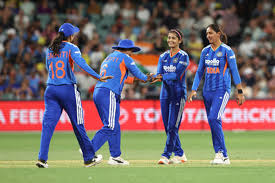
India Women Clinch Thrilling 17-Run Victory Over Australia in High-Intensity Contest
India Women tour of Australia 2026
India Women vs Australia Women
Date: Saturday, 21 February 2026
Result: India Women won by 17 runs
The rivalry between India Women and Australia Women has steadily grown into one of the most compelling storylines in modern women’s cricket. Every time these two teams meet, the match tends to carry a sense of unpredictability—moments of brilliance mixed with phases of tactical patience.
On Saturday, 21 February 2026, that rivalry produced yet another gripping contest during the India Women tour of Australia. Played in front of a lively crowd and under clear evening skies, the match delivered exactly what fans hoped for: a competitive game where momentum shifted repeatedly before India finally secured a memorable 17-run victory.
The result did more than add another win to India’s tour record. It demonstrated the team’s growing ability to challenge Australia on their own soil—a task that has historically proven difficult for visiting sides.
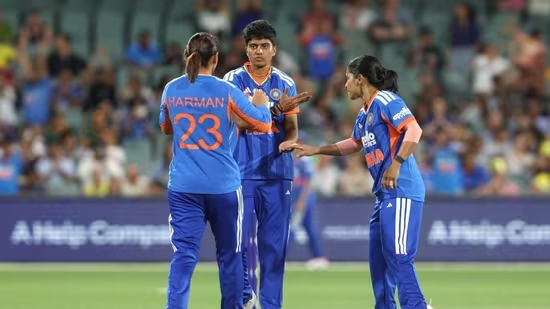
A Rivalry Built on Competitive Cricket
India and Australia have met frequently in recent years across formats and tournaments. Those encounters have helped shape a rivalry defined by high standards and intense competition.
Australia, long considered the benchmark in women’s cricket, entered this match determined to maintain their dominance at home. Their squad combined experienced internationals with talented young players capable of changing a game in a matter of overs.
India, however, arrived with increasing confidence. Earlier performances on the tour had shown their ability to adapt to Australian conditions, and the team appeared determined to continue that progress.
The crowd at the venue reflected the significance of the match. Australian supporters filled the stands in gold and green, while a vibrant section of Indian fans created a sea of blue banners and flags.
The stage was set.
India Win the Toss
India’s captain won the toss and elected to bat first.
The decision suggested a belief that the pitch would remain consistent throughout the game and that posting a competitive total might apply pressure on Australia during the chase.
The surface looked firm and well prepared—typical of Australian venues where bounce and pace remain consistent.
India’s openers walked to the crease aware that the early overs could define the shape of the innings.
A Steady Start
Australia’s bowlers began with impressive control.
The opening overs featured tight lines just outside off stump, forcing the Indian batters to focus on patience rather than aggression.
Runs came slowly at first.
India’s strategy appeared deliberate: rotate the strike, settle into the conditions, and wait for scoring opportunities.
Eventually, those opportunities arrived.
A crisp drive through extra cover brought the first boundary of the innings. Moments later, a flick through mid-wicket raced toward the rope.
The scoreboard began moving more freely.
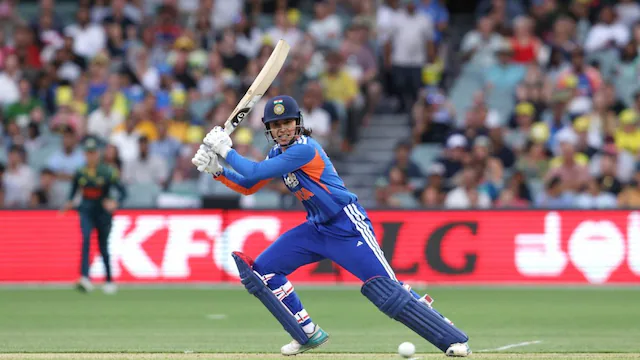
Mandhana’s Elegant Touch
Smriti Mandhana once again became the focal point of India’s batting effort.
Her style—smooth, confident, and precise—allowed her to control the tempo of the innings. She guided the ball through gaps with effortless timing and punished loose deliveries.
One particular shot captured the crowd’s attention.
A full delivery outside off stump was driven through cover with such elegance that even some Australian supporters applauded.
Mandhana’s innings gave India early stability.
Australia Strike Back
Just as India seemed ready to accelerate, Australia produced a breakthrough.
A delivery that bounced slightly more than expected induced a faint edge that carried safely to the wicketkeeper.
The dismissal ended the opening partnership and injected new energy into the Australian fielding side.
Soon after, another wicket followed when a batter misjudged a slower delivery.
India suddenly found themselves rebuilding.
Harmanpreet Leads the Recovery
The middle phase of the innings belonged largely to Harmanpreet Kaur.
India’s captain approached the situation with calm authority. Her innings balanced caution with aggression, ensuring the team maintained a steady scoring rate.
She rotated the strike efficiently and targeted boundaries whenever bowlers missed their length.
A powerful pull shot over mid-wicket brought the crowd to life and reminded everyone of her ability to dominate bowling attacks.
Together with Mandhana, she built a partnership that stabilized India’s innings.
A Key Partnership
The partnership between Mandhana and Harmanpreet gradually shifted the momentum.
Instead of attempting reckless big shots, both batters focused on intelligent placement. Singles and twos accumulated steadily, keeping the scoreboard ticking.
Whenever Australia attempted to tighten their lines, the pair responded with clever strokeplay.
By the time Mandhana reached her half-century, India had moved into a strong position.
Late Acceleration
As the innings entered its final overs, India began increasing the scoring rate.
Harmanpreet launched a towering six over long-on, while the lower middle order added valuable runs through aggressive batting.
Australia’s bowlers fought hard, mixing yorkers with slower balls, but India managed to maintain their momentum.
When the innings concluded, India had posted 168 for 7—a total that looked competitive but far from unassailable.
The real test would come when Australia began their chase.
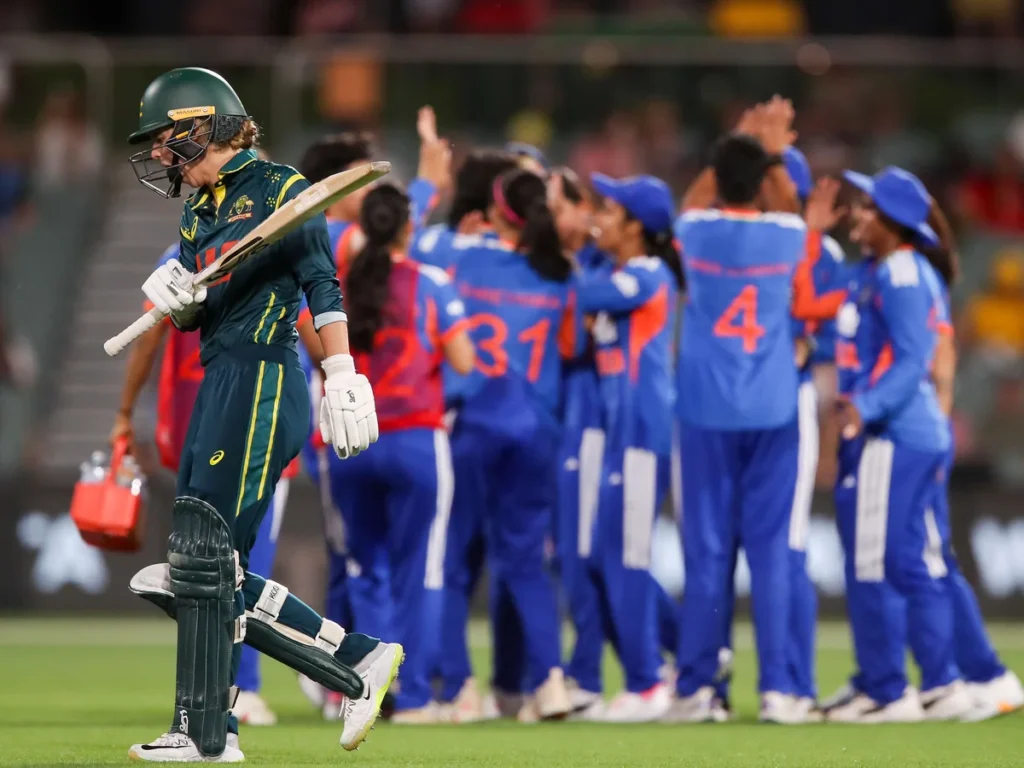
Australia’s Chase Begins
Australia’s opening pair walked out with confidence.
Chasing 169 required a controlled start, and the home team seemed prepared for the challenge.
The first few overs produced steady runs. Boundaries arrived through well-placed drives and cuts, and Australia quickly reduced the pressure of the required run rate.
India’s bowlers needed a breakthrough.
Early Wicket for India
The breakthrough finally arrived through disciplined bowling.
A delivery angled across the batter induced a mistimed shot that flew toward point, where a fielder completed a sharp catch.
The wicket slowed Australia’s progress.
India sensed an opportunity to apply pressure.
Middle-Overs Battle
The middle overs developed into a fascinating tactical battle.
Australia’s batters focused on rotating the strike and building partnerships. India’s bowlers responded with tight lines and clever variations.
Spin played an important role during this phase.
The slower deliveries disrupted Australia’s rhythm and forced them to take calculated risks.
Eventually, one of those risks resulted in a wicket.
A batter attempting to loft the ball over mid-wicket mistimed the shot, and the catch was taken comfortably near the boundary.
Momentum Shifts Again
Despite losing wickets, Australia remained in the contest.
Their middle order launched a counterattack, hitting several boundaries that brought the required run rate back under control.
For a brief period, the home crowd sensed a comeback.
India needed something special.
The Turning Point
That moment arrived when India’s bowlers produced two quick wickets.
First, a batter attempting a pull shot mistimed the ball into the deep. The fielder held the catch securely.
Moments later, another batter was deceived by a slower delivery and lost her stumps.
Australia suddenly faced a difficult equation.
Pressure in the Final Overs
With the required run rate climbing, Australia’s lower order had little choice but to attack.
India’s bowlers responded brilliantly.
Yorkers landed precisely at the base of the stumps. Slower balls forced mistimed shots. Fielders covered the boundaries with determination.
Every dot ball increased the pressure on Australia.
A Calm Finish
As the final over began, Australia still needed a series of boundaries to win.
India’s bowler approached the crease with visible focus.
The first ball produced a single. The next delivery resulted in a dot ball that triggered loud cheers from the Indian supporters.
By the final delivery, the outcome was clear.
Australia fell short of the target.
India Women had secured a 17-run victory.
Celebrations on the Field
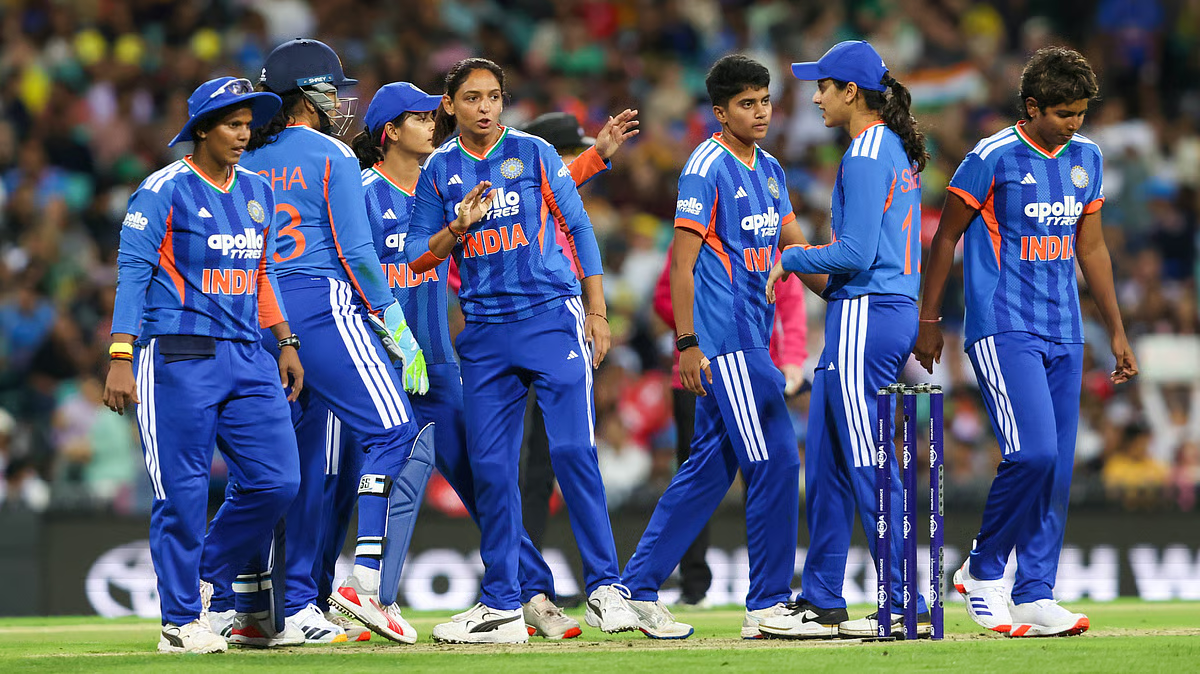
The Indian players gathered near the pitch, exchanging smiles and congratulating each other after a well-earned win.
For the team, the result represented more than just another victory on tour. It confirmed their ability to compete with Australia in conditions that often favor the home side.
The crowd applauded both teams for producing a match filled with competitive spirit.
Key Performances
Smriti Mandhana’s elegant half-century provided the foundation for India’s total.
Harmanpreet Kaur’s composed innings ensured that the team maintained momentum during the middle overs.
India’s bowlers shared responsibility during the defense of the target, delivering disciplined spells that kept Australia under pressure throughout the chase.
Lessons from the Match
Every international contest offers lessons for both teams.
India demonstrated their growing maturity as a side capable of defending totals under pressure.
Australia, despite the defeat, showed their resilience by keeping the chase alive until the final overs.
These qualities ensure that future encounters between the teams will remain fiercely competitive.
The Rivalry Continues
The match on 21 February 2026 added another memorable chapter to the India-Australia rivalry.
Fans witnessed a contest filled with elegant batting, disciplined bowling, and moments of tension that kept the outcome uncertain until late in the game.
In the end, India Women emerged victorious by 17 runs, continuing a tour that had already delivered several exciting matches.
And judging by the energy on display, the rivalry between these two teams shows no sign of slowing down.
