

Mina the Hollower: A Burrowing Masterpiece That Redefines Retro Revival
I’ll be honest—I went into Mina the Hollower expecting something good, but not this. Not a game that would have me up until 4 a.m. on release day, ignoring every notification, just burrowing through one more screen, chasing one more secret, telling myself “this boss is the last one tonight.” Yacht Club Games has done it again. After more than a decade of Shovel Knight expansions and spin-offs, they’ve delivered something wholly new that somehow feels both nostalgic and revolutionary. If you love clever 2D action-adventures, pixel art with soul, or games that respect your intelligence while still letting you have fun, stop reading this review and just buy it. It’s $20 and it might be the best thing you play all year.

Mina the Hollower released today, May 29, 2026, on PC, PlayStation 5, Xbox Series X|S, Nintendo Switch, and the new Switch 2. It’s already sitting at a staggering 93 on Metacritic, the highest-rated game of 2026 so far. That’s not hype from fans; that’s critics who’ve seen it all agreeing that this little indie title from the Shovel Knight team has something special. And after sinking about 25 hours into it (with plenty more to go for 100% completion), I’m here to tell you they’re right.
The Story: Gothic Whimsy with Real Bite
You play as Mina, a brilliant mouse inventor and member of the Hollowers—a guild of explorers and engineers dedicated to understanding the earth itself. The world is a charmingly grim Victorian Gothic island called Tenebrous Isle, full of haunted ruins, fog-shrouded forests, crumbling clockwork cities, and underground horrors. The tone walks this perfect line between cute anthropomorphic characters and genuine unease. Think Link’s Awakening meets Bloodborne, but filtered through a Game Boy Color lens.
The game opens with a bang—literally. Mina’s ship is wrecked by a monstrous beast, and she washes ashore with her trusty whip, the Nightstar. What starts as a rescue mission for a cursed friend quickly spirals into a larger conspiracy involving corrupted Hollowers, ancient Spark Technology (Mina’s own invention), and a rebellion brewing in the city of Ossex. The narrative has real weight. Characters feel alive; their dialogue is sharp, often funny, and sometimes heartbreaking. There are betrayals, moral gray areas, and quiet moments where Mina reflects on her hubris as an inventor. It’s not trying to be an epic saga, but it sticks with you.
What impressed me most was how the story integrates with the gameplay. Every major area ties into the lore. You’re not just lighting beacons or collecting MacGuffins—you’re restoring balance to a world Mina herself helped destabilize through her technological ambitions. The writing avoids exposition dumps by revealing bits through environmental storytelling, optional journals, and conversations with quirky NPCs. One side character, a cynical crow merchant named Grimbeak, had me laughing out loud with his dry commentary on the apocalypse.
By the end (no spoilers), I felt satisfied but also melancholic. The game knows when to pull back and let the atmosphere do the talking. It’s a short-but-dense story—maybe 12-15 hours for a first playthrough if you explore lightly, 20+ if you’re a completionist like me. And with multiple New Game+ modes and seven different modifier sets for replayability, the world feels worth revisiting.
Gameplay: Zelda Heart, Souls-Like Tension, and One Brilliant Mechanic
At its core, Mina the Hollower is a top-down action-adventure reminiscent of classic Game Boy Zelda titles like Link’s Awakening or the Oracle games. You explore interconnected areas, solve puzzles, fight enemies, and tackle big bosses. But Yacht Club has layered in modern sensibilities that make it feel fresh.
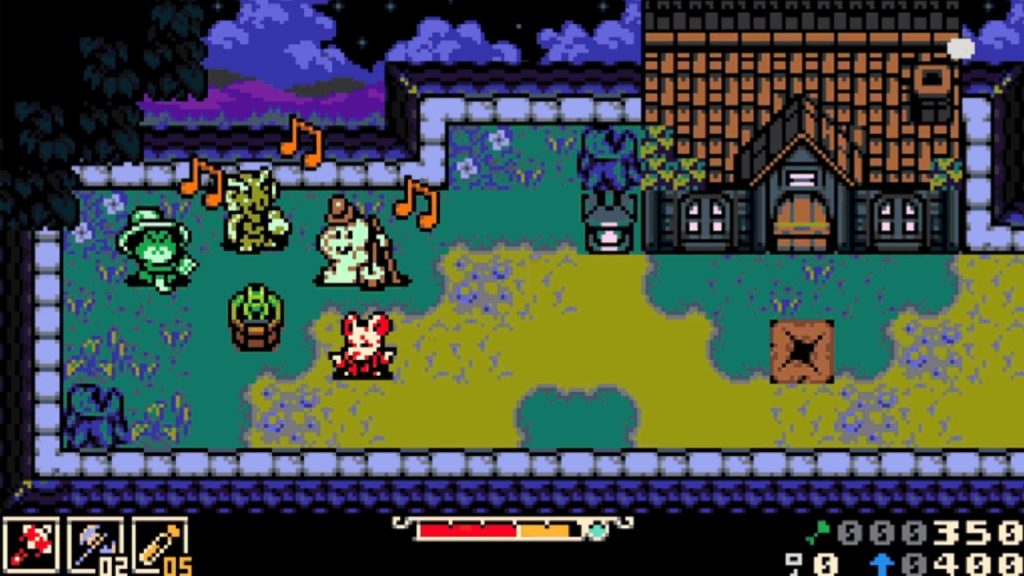
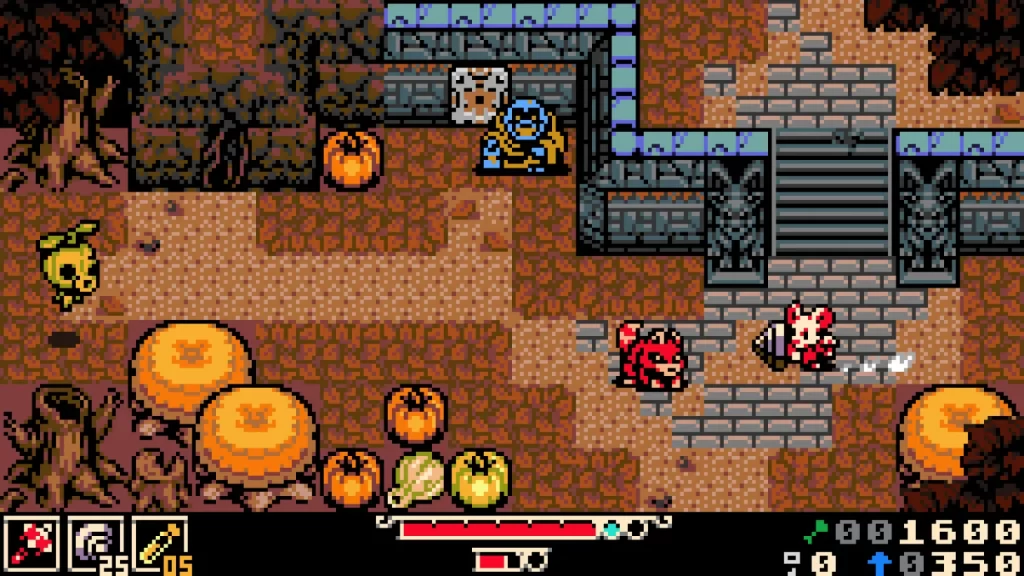
The star of the show is the burrowing mechanic. Instead of a traditional jump, Mina can dive underground at almost any time (with some restrictions). While burrowed, she moves faster, can pass under certain hazards, avoid many attacks, and even launch upward for surprise strikes or to reach high ledges. It’s not infinite—you have a meter that drains, and some enemies or environmental effects can force you out or damage you underground. Mastering this ability is the key to the game. Early on, it feels clunky. By the midpoint, it becomes second nature, like an extension of your own hands. Combat encounters turn into dances where you burrow to dodge, surface to whip, and dive again to reposition. It’s exhilarating.
Combat itself is precise and satisfying. The Nightstar whip attacks in four directions and can be upgraded with different elemental or utility effects. You’ll find other weapons and trinkets too—bombs, hooks, shields, even temporary transformations. Enemies are well-animated and have distinct patterns that reward observation. Bosses, all 28 of them across 17 areas, are creative highlights. One early standout is a giant mechanical owl that forces you to use burrowing to navigate shifting platforms while avoiding sonic blasts. Another late-game fight against a corrupted Hollower rival felt like a tragic duel.
The game has Souls-like DNA in its structure. Death sends you back to the last safe room (your “Underlab” checkpoint), but you don’t lose progress in the punishing way FromSoftware games do. Instead, you drop some currency (Bones) that you can recover. It’s challenging without being unfair, especially with the incredible modifier system.
Yacht Club went wild here. There are hundreds of modifiers. Want an easier experience? Turn on infinite burrowing, reduced damage, or extra health vials. Want it brutal? Increase enemy density, add permadeath elements, or limit your whip range. You can mix and match freely, even mid-run. This accessibility is genius—it lets veterans crank up the difficulty while letting newcomers enjoy the world without frustration. I played on a “balanced” setting first, then cranked it up for NG+ and loved every second.
Exploration is top-tier. The world is densely packed with secrets. Breakable walls, hidden tunnels, puzzle shrines, and optional challenges reward curiosity constantly. I can’t count how many times I thought I’d cleared an area only to spot something suspicious on the edge of the screen and spend the next 30 minutes uncovering a whole new path. The interconnected design is masterful—backtracking never feels like a chore because you’re always stronger or have new tools.
Puzzles range from simple block-pushing to head-scratchers involving Spark Technology circuits and timing-based burrowing sequences. None felt unfair; all felt earned when solved.
Visuals and Sound: Pixel Perfection
Visually, it’s a love letter to the Game Boy Color era but executed with modern polish. The sprite work is gorgeous—detailed animations, expressive character faces, and atmospheric lighting effects that make fog, rain, and underground glows pop. The color palette shifts beautifully between areas: sickly greens in the swamps, warm oranges in the clockwork districts, cold blues in the deep caves. It looks simple at first glance but reveals incredible detail the longer you look.
Performance is rock-solid across platforms. I played on PC and it ran buttery smooth at 4K/60fps with zero issues. The Steam Deck verification is a nice touch for portable play, perfect for this handheld-inspired game.
The soundtrack, composed by Jake Kaufman (Shovel Knight) with contributions from Yuzo Koshiro, is outstanding. There are nearly 90 tracks, each one memorable. The boss themes hit hard, the exploration music is hauntingly beautiful, and the quiet moments have this melancholic charm. Sound design is equally strong—whip cracks, burrow whooshes, enemy cries all feel weighty and satisfying.
A Few Nitpicks (Because Nothing’s Perfect)
I have to stretch to find complaints. The burrowing controls took me a couple hours to fully internalize, and there were a few frustrating deaths early on where I misjudged the meter. Some late-game areas feel a bit long if you’re not into backtracking. And while the story is great, it doesn’t quite reach the emotional heights of something like Hollow Knight (ironic name similarity, I know).
These are minor. The game’s strengths dwarf them completely.
Why It Matters
In 2026, with massive AAA titles still dominating headlines, Mina the Hollower is a reminder of what indie games can achieve. It’s polished to a mirror shine, packed with heart, and confident enough to innovate while honoring the past. Yacht Club Games bet on themselves after Shovel Knight’s success, and it paid off in spades. This feels like their magnum opus.
If you’re a fan of Zelda, Castlevania, Souls games, or just great 2D action-adventures, this is essential. It’s accessible, deep, replayable, and genuinely fun. I’ve already started my second playthrough with different modifiers, hunting for the secrets I missed.
Mina the Hollower isn’t just one of the best games of 2026—it’s a strong contender for one of the best indie titles of the decade. Go play it. Burrow deep. You won’t regret it.
Score: 9.5/10 (or a full 10 if you value pure joy over minor control hiccups)
