
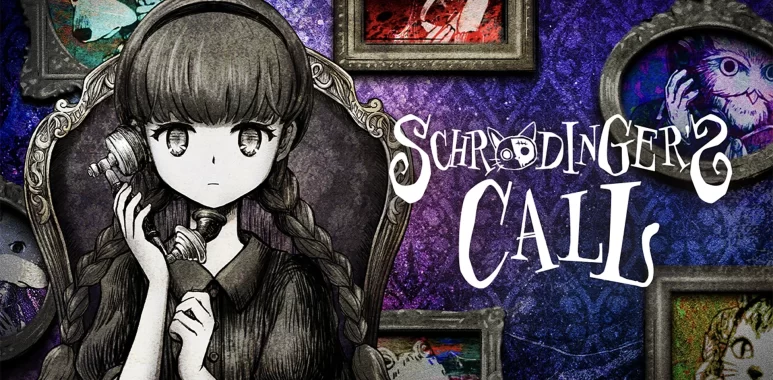
Schrödinger’s Call: A Haunting Farewell in the Last Moments of Everything
I booted up Schrödinger’s Call late last night, right after its May 28 release, with a cup of coffee going cold beside me. By the time the credits rolled a few hours later, that coffee was long forgotten, and I was sitting in the dark staring at my screen like it had personally betrayed me. This game doesn’t just pull at your heartstrings—it yanks them out, examines them under a weird gothic light, and then gently puts them back, a little bruised but somehow fuller. Developed by the tiny Japanese studio Acrobatic Chirimenjako and published by Shueisha Games, this visual novel-adventure hybrid is one of those rare indie titles that feels both intimately personal and universally resonant. At around $18, it’s a short but potent experience that lingered with me well into the early hours.
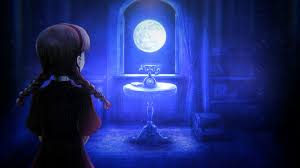
Let’s start with the premise, because it’s a doozy. You play as Mary, a young girl who wakes up in a sparse, dimly lit room with no memories. There’s a table, a notebook, and an old-fashioned telephone. A mysterious cat named Hamlet (yes, like the Shakespeare character—subtlety isn’t always the point here) tells you that the world is ending in the literal blink of an eye—something about 21 nanoseconds between life and death as a moon falls or whatever cosmic catastrophe is unfolding. Your role? You’re the “last confidant.” Souls trapped in limbo call you on that phone, pouring out their regrets, secrets, joys, and unfinished business. You listen, take notes, ask questions, and try to help them find peace before everything blinks out.
It’s a brilliant setup that leans hard into the Schrödinger’s cat paradox—things existing in multiple states until observed. Are these callers alive or dead? Is Mary real? Is any of this happening, or is it all in that final split-second of consciousness? The game never fully spells it out, and that’s part of its power. It trusts you to sit with the uncertainty.
Storybook Presentation and Atmosphere
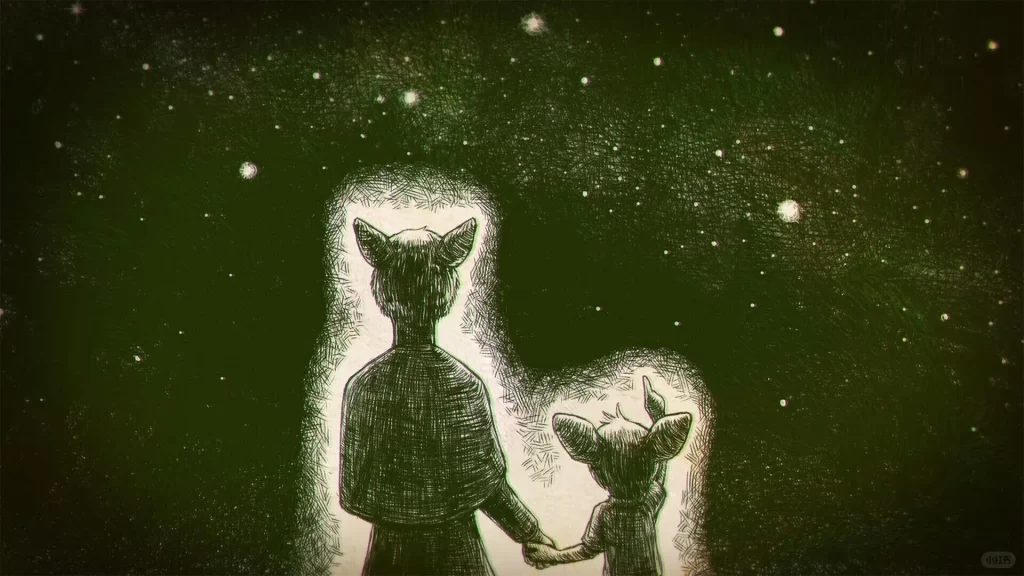
Visually, Schrödinger’s Call stands out immediately. It’s not your standard anime-style visual novel with big-eyed characters and glossy CGs. Instead, it adopts a hand-drawn, storybook aesthetic—think delicate sketches, muted watercolors, and ink-wash shadows that give everything a dreamlike, slightly unsettling quality. The room where Mary stays is minimalist: creaky floorboards suggested by line work, flickering candlelight, dust motes in the air. But when the phone rings and you answer, the visuals shift. Each caller gets their own illustrated vignettes, sometimes whimsical, often haunting. One sequence involving a forgotten amusement park still sticks with me; the way the colors desaturated as the conversation turned darker was masterful.
The gothic atmosphere is thick but never tips into cheap horror. There’s unease, sure—shadows that move wrong, whispers in the static—but it’s more melancholic than scary. The developer has said it’s “definitely emotional” and not scary at all, and I’d mostly agree, though a few moments made my skin crawl in that existential way. It’s like if Puella Magi Madoka Magica and a quiet Raymond Carver short story had a baby, filtered through Studio Ghibli’s softer edges but with sharper teeth.
I played it on PC via Steam, and the presentation shines there with crisp details, but I can imagine it feeling even more intimate on the Nintendo Switch in handheld mode, curled up on the couch like reading a physical book. The “turning pages” motif is literal in places, with beautiful transitions that sell the storybook illusion.
Gameplay: Listening as the Core Mechanic
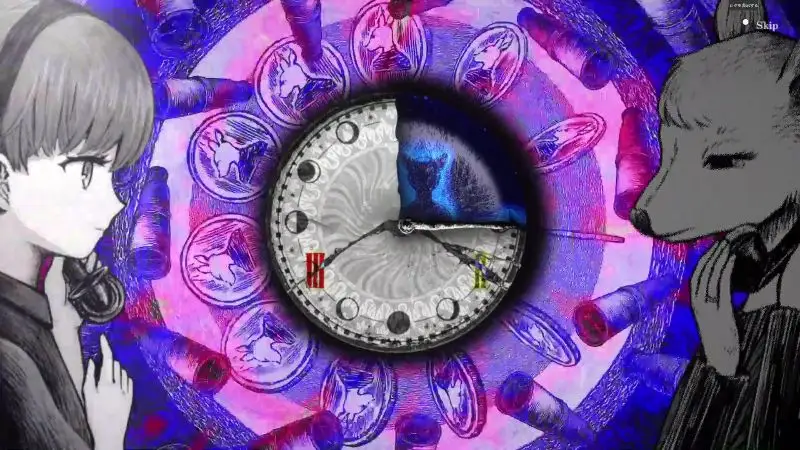
Gameplay is straightforward but deceptively deep. This isn’t a branching epic with multiple endings or romance routes. It’s a single, focused narrative path, which works perfectly for its themes. You answer calls, listen to monologues that range from heartbreaking to bizarre, and occasionally make choices about what to say or ask. Your notebook becomes crucial—you jot down details about each soul’s life, and those notes can influence later conversations or help “save” them by piecing together their emotional puzzles.
It’s not puzzle-heavy like a traditional adventure game. More like interactive therapy sessions with the dead (or dying). Some calls are short and poignant; others stretch out with layers of revelation. I found myself pausing frequently to really absorb what was being said. One caller, an elderly man regretting his distance from his family, had me reflecting on my own relationships in a way that felt uncomfortably personal. Another, a young artist lost in creative despair, hit different after a long day of staring at my own blank document.
The choices feel meaningful without being overwhelming. Say the wrong thing, and a caller might clam up or spiral, forcing you to adapt. Get it right, and there’s this quiet catharsis as they find closure. The game rewards attentive listening over trial-and-error, which fits its message about human connection. No combat, no timers (mostly), just you, the phone, and the weight of other people’s stories. It can feel slow if you’re used to action-packed games, but that’s the point. In a world ending, there’s time to really talk.
Length-wise, I clocked in around 6-8 hours for a thorough playthrough, including some backtracking to review notes. It’s short, but it doesn’t overstay its welcome. Every scene earns its place, building toward an ending that left me emotionally wrung out but satisfied. No filler, no padding—just concentrated storytelling.
The Characters and Emotional Core
Mary herself is a compelling protagonist. Amnesiac and bewildered at first, she grows through these conversations. Her voice (text, really—there are no full voiceovers, which keeps costs down but maintains intimacy) feels genuine. She’s not a blank slate; she has her own quiet frustrations and moments of doubt that make her relatable. Hamlet the cat provides cryptic guidance and occasional levity, acting as a Greek chorus with whiskers.
But the real stars are the callers. Each one feels fully realized in their brief screen time. There’s no generic “tragic backstory” template; these are messy, specific people. A salaryman haunted by a lie he told his wife. A child who doesn’t understand why the sky is falling. A musician clinging to one last melody. Their stories interweave subtly with Mary’s own emerging past, creating this tapestry of interconnected loneliness.
The game excels at exploring big themes—grief, isolation, the fear of being unheard, the beauty of being truly seen—without feeling preachy. It came out of reflections on pandemic-era disconnection, that feeling of being close yet impossibly far, and it shows. In 2026, post whatever fresh chaos the world has thrown at us, it hits especially hard. I caught myself thinking about old friends I haven’t called in years. Have I said the important things? Would they answer if the world was ending tomorrow?
Sound Design and Music
The audio is another standout. The soundtrack, a mix of delicate piano, ambient drones, and subtle static for the phone calls, is gorgeous. Tracks swell at emotional peaks without overpowering the dialogue. The phone static itself is a character—crackling with distortion that mirrors the callers’ emotional states. Sound effects are minimal but effective: the click of the receiver, the scratch of pencil on paper, distant wind outside the window.
No full voice acting, which might disappoint some, but I actually appreciated it. It lets you project your own emotional read onto the text, making it more personal. The writing is strong enough to carry the weight.
Strengths and a Few Nitpicks
What works brilliantly: The emotional payoff. By the end, I felt like I’d gone through something real. The art direction is unique and memorable. The themes are handled with sincerity and nuance. It’s accessible—anyone who enjoys a good story can jump in, no gaming skill required. And at launch, it’s already sitting pretty with strong reviews across the board, often 8-10/10 territory for its heartfelt execution.
Nitpicks? It’s short, which is both a strength and a mild frustration if you crave more time with these characters. Some might find the single-route structure limiting if they’re used to visual novels with heavy replayability. A couple of the more surreal sequences lean a bit abstract, which could confuse players expecting straightforward drama. And while the storybook style is lovely, on a big monitor it occasionally shows its indie budget in repeating assets. But these are minor quibbles in a package that otherwise feels complete.
Performance is solid on PC; I had zero crashes or bugs in my playthrough. Switch version should be great for portability, though I haven’t tested it yet.
Why It Matters in 2026
In an era of live-service games shouting for your attention and endless sequels, Schrödinger’s Call is a quiet rebellion. It’s small, focused, and deeply human. Acrobatic Chirimenjako is a debut studio, apparently a passionate three-person team, and you can feel that love in every sketched line and carefully chosen word. Shueisha Games taking a chance on it speaks to a welcome trend of bigger publishers supporting quirky narrative indies.
It reminded me why I fell in love with games in the first place—not for power fantasies or loot grinds, but for those moments where pixels and text reach out and touch something real inside you. The paradox at its heart—how can something so small feel so vast?—mirrors life itself. We exist in uncertainty until someone listens.
If you enjoy visual novels like What Remains of Edith Finch, To the Moon, or even quieter fare like Florence, this is essential. Fans of atmospheric horror-tinged narratives will find plenty to chew on too, even if it’s not outright terrifying.
Final Verdict
Schrödinger’s Call isn’t perfect, but it’s special. In its short runtime, it delivers more emotional resonance than many triple-A epics manage in 50 hours. It made me laugh (Hamlet’s dry wit), cry (more than once), and think long after I put the controller down. As the world ends in that frozen moment, Mary answers the call—and so should you.
Score: 9/10. Pick it up, turn off your phone (ironically), and let it ring in your soul for a while. You won’t regret answering.
