
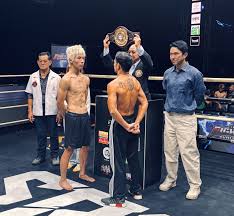
Tiger March Roars: 15-Year-Old Sirayakorn Chamjaiharn Stops Veteran Sukpasried Ponphitak to Claim WBA Asia South Super Lightweight Title
Bangkok, October 23, 2026 — The World Siam Stadium in the Tawan-na district pulsed with the usual mix of noise, smoke, and expectation that comes with a TL Boxing Promotion card. On paper it looked like one of those classic Thai mismatches that make outsiders raise an eyebrow: a 15-year-old prospect with limited professional experience against a 38- or 39-year-old journeyman who had already shared rings with world champions. In the ring it turned into something more interesting. Sirayakorn Chamjaiharn, better known as Tiger March, took the vacant WBA Asia South super lightweight title by TKO in the seventh round against Sukpasried Ponphitak, stopping the veteran at 2:52 after knockdowns in the sixth and seventh.
The night belonged to the kid with the blonde hair and the skeleton-patterned robe. What follows is a full look at how the fight was framed, how it unfolded, the moments that defined it, and what it might mean going forward.
Preview: Youth Versus Mileage at 140 Pounds
In the days leading up to the fight the narrative wrote itself. Chamjaiharn, still only 15, was stepping up for his first real title opportunity. His father is a former guitarist with the popular Thai rock band Potato, which gave the kid a slightly different public profile than the usual temple-gym prospect. He arrived with a short but flashy record — roughly half a dozen professional or pro-style bouts depending on which database you consulted, several of which BoxRec later marked as no-contests because of his age. The WBA, however, had no issue sanctioning the contest for its Asia South belt.
Ponphitak brought the opposite résumé. Born in 1987, he had been fighting professionally since 2009. The numbers floated around 33-27 or 33-28 depending on the source, with a high percentage of stoppages on both sides of the ledger. He had shared the ring with the likes of Jerwin Ancajas, Srisaket Sor Rungvisai, Yukinori Oguni and Lerato Dlamini. He was never a world-level fighter, but he was a legitimate gatekeeper who knew how to make life difficult inside the ropes. At the weigh-in he looked every bit the experienced campaigner — compact, scarred, and unimpressed by the youth across from him. He told local media that age did not mean he was soft, and that he intended to take the belt home as his fifth career title.

The card itself was typical TL Promotion fare under promoter Thawisin Laosuwanwat (“Sia Aiang”). The main event was scheduled for ten rounds at 140 pounds. Supporting bouts mixed young Thai talent with regional visitors and a few street-fight style attractions that kept the crowd engaged. Officials included WBA supervisor Chalerm Prayadsab and referee Armando Garcia. The judges were Arkom Wanasit, Worasak Pakdeekam and Wanchai Pongsri.
Most observers expected Chamjaiharn to have the speed and volume edge. The question was whether the veteran’s ring IQ, physical strength and willingness to rough it up on the inside would frustrate the teenager long enough to steal rounds or force a late surge. Thai fans love a good youth-versus-experience story, and the stadium was loud from the opening undercard.
Analysis: Styles, Adjustments and the Reality of the Ring
Chamjaiharn fights with a modern, aggressive amateur-influenced style — high guard, quick feet, straight punches and a willingness to throw combinations in the pocket. He likes to control distance with the jab and then step in with left hooks to the body and right hands upstairs. His timing looked sharp in the early rounds, and he established the jab cleanly from the opening bell. He also showed an ability to work the body effectively, something many young fighters neglect.
Ponphitak came forward with the classic veteran plan: close the distance, lean, hold, and dig to the body. He was content to take some shots in order to deliver his own. An accidental clash of heads in the second round opened a cut above his right eye, which only seemed to make him more determined. He forced the action into the phone booth, where experience often counts more than pure athleticism. Referee Garcia had to separate the fighters repeatedly as the veteran clinched and worked inside.
For a developing prospect this is exactly the kind of fight that teaches lessons no sparring session can replicate. Chamjaiharn stayed composed. He did not panic when the older man closed the gap. He continued to find openings with his speed and accuracy even while dealing with the holding and the physical pressure. As the fight moved past the halfway mark the physical toll became obvious. Ponphitak’s legs began to slow. The volume and pace that Chamjaiharn maintained started to tell.
By the fifth and sixth rounds the younger fighter was clearly in control. A well-timed right hand put Ponphitak down in the fifth. In the sixth the pressure produced two more knockdowns — both counted as eight-counts. The veteran rose each time and tried to stay in the fight, but the gap in energy and sharpness was now wide. Chamjaiharn sensed it and increased the tempo rather than coasting. That decision mattered. Many young fighters ease off once they have a big lead; this one kept coming.
The stoppage in the seventh was clean. Chamjaiharn continued to pour on accurate punches. Garcia stepped in at 2:52 when it was clear the veteran could no longer intelligently defend himself. The official scorecards at the time of the stoppage read 59-53, 60-52 and 59-53 — wide margins that reflected how thoroughly the teenager had taken over after the early feeling-out process.
From a pure boxing standpoint the fight confirmed several things. Chamjaiharn has real punching power for the division and the ability to sustain pressure over multiple rounds. His defense is still a work in progress — he absorbs more than ideal when forced into the clinch — but his recovery and composure under fire look advanced for his age. Ponphitak did what a veteran is supposed to do: make the young prospect uncomfortable, test his chin and heart, and force adjustments. He simply ran out of gas against a faster, fresher opponent who refused to be frustrated.
Top Highlights
The night produced several moments that will stick in the memory of those who were there or watched the broadcast.
The early body work from Chamjaiharn stood out. He repeatedly found the liver and the ribs with left hooks, softening the veteran for the later rounds. In a sport where young fighters often hunt for highlight-reel head shots, the disciplined body attack was a mature choice.
The cut from the second-round head clash gave the fight a different texture. Ponphitak’s face started to mark up, and the blood seemed to energize him rather than slow him down. For a few rounds the action became genuinely rough — holding, leaning, short punches on the inside. Garcia’s constant interventions kept it from boiling over completely.
The fifth-round knockdown was the first clear sign the tide had turned. A right hand that was perfectly timed sent Ponphitak to the canvas. He beat the count, but the momentum shift was visible to everyone in the building.
Round six delivered the two knockdowns that effectively ended the competitive phase of the fight. Chamjaiharn’s combinations were landing cleanly. The veteran’s legs looked heavy. Each time Ponphitak rose the crowd noise climbed another notch — half excitement for the prospect, half appreciation for the older man’s refusal to quit.
The final sequence in the seventh was clinical. Chamjaiharn did not swing wildly. He stayed behind the jab, stepped in with power shots, and forced the referee’s hand. When Garcia waved it off, the stadium erupted. Chamjaiharn’s mother, his trainers, and the Laosuwanwat brothers all climbed into the ring. The belt was strapped around the teenager’s waist amid confetti and the usual Thai boxing celebration.
Other undercard notes briefly: the opening bout saw Saw Thank Zin of Myanmar edge Daniel Hartwell by split decision over six rounds at 59 kg. In the co-feature, Australian heavyweight Hoang Vincent Tran stopped Apisit Sangmuang in the third round to claim the UBO Continental Asia heavyweight title. A series of single-round street-fight style matches rounded out the card and kept the energy high between the proper boxing bouts.
Summary: A Title, a Lesson, and a Long Road Ahead
Sirayakorn Chamjaiharn is now the WBA Asia South super lightweight champion at 15 years old. That sentence alone will generate conversation. Some will celebrate the precocious talent and the clear improvement. Others will question whether a teenager should be fighting ten-round title fights against experienced professionals, especially when certain record-keeping bodies treat his earlier wins as no-contests. The WBA’s willingness to sanction the bout settles the immediate regulatory question in Thailand, but the broader debate about age and development will continue.
What cannot be disputed is the quality of the performance. Chamjaiharn faced a legitimate step-up opponent who had shared the ring with elite names and who came to spoil the party. He handled the physicality, the rough tactics, and the late-round pressure without losing his composure. He finished the fight when the opportunity presented itself instead of settling for a decision. Those are encouraging signs for a prospect still years away from physical maturity.
For Ponphitak the night was another hard night’s work in a long career. He gave a game account of himself, forced the youngster to solve problems, and refused to fold early. Veterans like him keep the ecosystem honest. Without fighters willing to take these assignments, young talents never get properly tested.
Promoter Thawisin Laosuwanwat expressed satisfaction afterward and indicated that the camp would look for the right next step — one that continues Chamjaiharn’s development without rushing him into world-level waters too soon. That measured approach is the correct one. A regional title at 15 is an achievement, not a destination. The real tests will come when the opposition improves in skill rather than just experience, and when the physical gaps that currently favor the teenager begin to close as opponents get younger and stronger.
Thai boxing has produced its share of early phenoms. Some burn bright and fade. Others absorb the lessons, keep their feet on the ground, and eventually contend at the highest level. On this October night in Bangkok, Tiger March looked like a fighter who belongs in the second category. He won a title the hard way — by breaking down a tough, experienced opponent over the distance rather than relying on a lucky early shot. The belt is real. The performance was convincing. The road ahead is still long, and that is exactly how it should be.
For one night at least, the young tiger roared loudest in the Thai capital, and the WBA Asia South super lightweight division has a new, very young champion.