
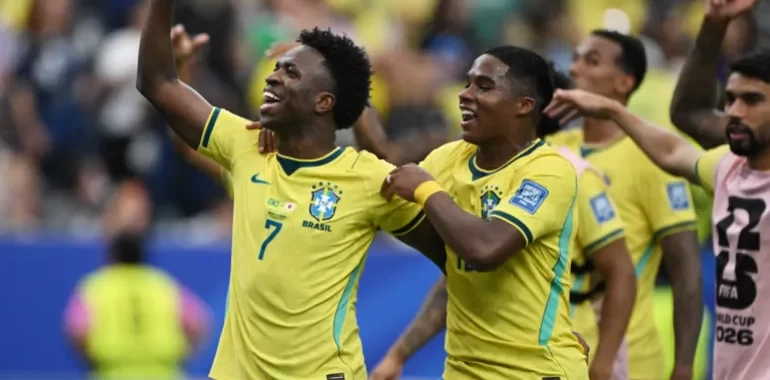
Brazil 2-1 Japan: Martinelli’s Stoppage-Time Heroics Save Seleção from World Cup Heartbreak in Houston
Houston, Texas – Monday, June 29, 2026. NRG Stadium was a cauldron of noise, a sea of yellow and green interspersed with pockets of brave blue Samurai flags. The air was thick with humidity and expectation. Brazil, five-time world champions, against a Japan side that had already punched above their weight in the group stage. On paper, it was a mismatch. On the pitch? A proper scrap that had everyone biting their nails until the dying seconds.
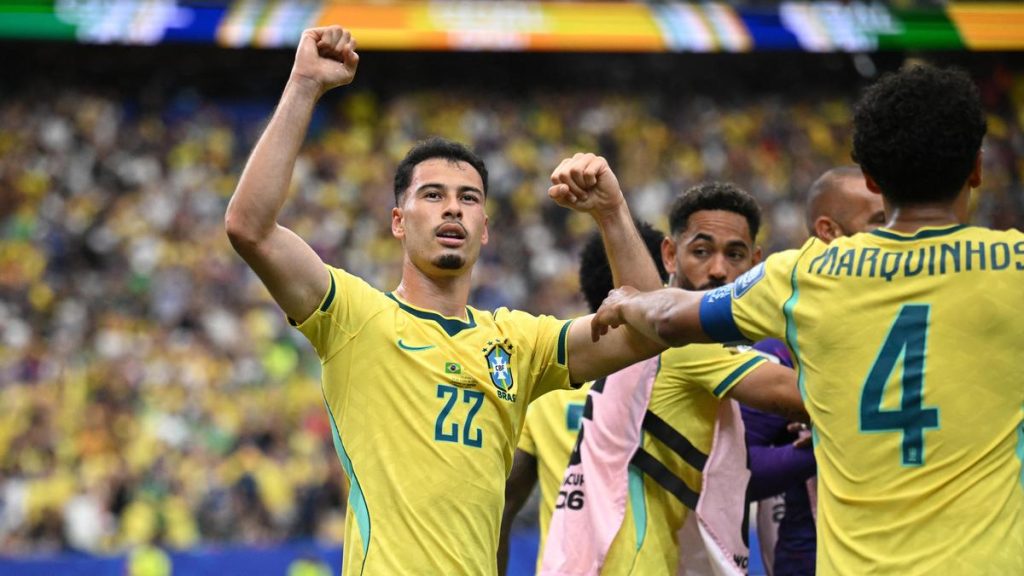
I was there in the press box, notebook in hand, heart rate climbing with every surge forward. This wasn’t just another Round of 32 tie; it felt like a statement game for Carlo Ancelotti’s aging Brazil squad. Could they shake off the cobwebs and the questions about their aura, or would Japan pull off one of the tournament’s biggest shocks? Let’s break it down properly – preview, the nitty-gritty of the match, those unforgettable highlights, and what it all means.
The Preview: Expectations, Form, and Tactical Chess
Heading into this one, Brazil were the clear favorites. They’d navigated the group stage with a mix of flair and frustration, showing glimpses of the old magic but also signs of vulnerability. Ancelotti had built his side around experience – think Casemiro anchoring midfield at 34, Marquinhos and Gabriel in defense, Alisson between the sticks. Vinícius Júnior was the talisman on the left, with Matheus Cunha and a young Rayan up top. Neymar was on the bench, still working his way back from injury issues that have plagued him in recent years.
The Seleção’s average age was pushing 29-and-a-half – one of the oldest sides in the tournament. Critics back home in Rio and São Paulo were whispering: too slow, too reliant on moments of individual brilliance rather than the fluid, relentless pressing of past great teams. Ancelotti, the master tactician, had them in a 4-3-3, looking to dominate possession and exploit width through Vini and the full-backs.
Japan, managed by Hajime Moriyasu, came in with confidence. They’d topped or pushed through a tough group, drawing with the Netherlands and beating Spain in impressive fashion earlier. Their style? High-energy, organized, with quick transitions and a fearless press. Players like Kaishu Sano, Daichi Kamada, Junya Ito, and Daizen Maeda brought pace and tactical discipline. Zion Suzuki in goal had been a revelation. Their 3-4-2-1 setup was designed to frustrate Brazil’s possession and hit on the break.
The atmosphere in Houston was electric. NRG Stadium, packed with 68,777 fans, many Brazilian expats and locals drawn to the spectacle. Kickoff at 1 PM local time under the Texas sun. Referee Maurizio Mariani had his work cut out. Predictions? Most had Brazil winning comfortably, maybe 2-0 or 3-1. But those who watched Japan knew better – this could be tricky.
I chatted with a few Brazilian fans pre-match. “We need the spirit of 2002,” one guy in a vintage Ronaldo shirt told me. Japanese supporters were quieter but optimistic: “We play our game, anything can happen.” They were right.
Match Analysis: From Shock to Surge to Drama
The first half was a reality check for Brazil. Japan started brightly, pressing high and forcing errors. Brazil looked a bit leggy, their midfield trio of Casemiro, Bruno Guimarães, and Lucas Paquetá struggling to find rhythm against Japan’s compact shape.
Then, the 29th minute. A sloppy pass from the Brazilian defense – Casemiro caught out of position – and Japan pounced. Sano, the dynamic midfielder, latched onto the loose ball, drove forward, and unleashed a crisp right-footed strike from just outside the box. Low and hard into the bottom corner. Alisson got a hand to it but couldn’t keep it out. 1-0 Japan. The stadium erupted in a mix of stunned silence from the yellow hordes and wild celebration from the blue.
You could feel the tension. Brazil had dominated possession early (they’d finish around 69%), but Japan were clinical on the counter. Sano’s goal was no fluke – it was well-deserved for their pressing intensity. Ancelotti’s side looked rattled. Vini was being doubled up, Cunha isolated. Paquetá picked up an injury and was subbed at halftime for Endrick, injecting some youthful legs.
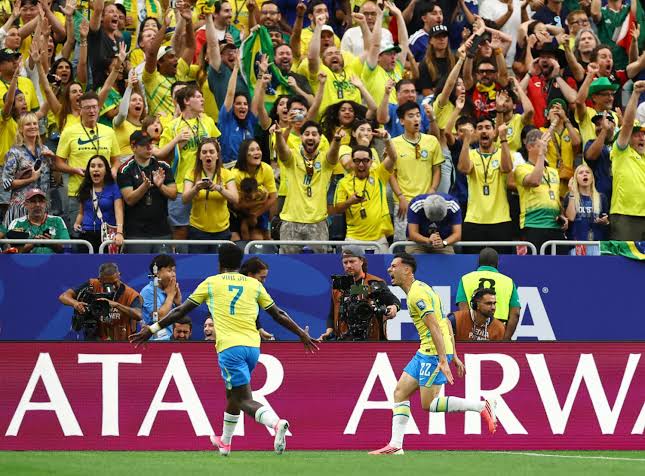
Half-time: 0-1. The Brazilian fans around me were grumbling. “Where’s the hunger?” one yelled. Ancelotti, cool as ever on the touchline, would have been drilling into them: more movement, better transitions, use the width.
Second half was a different story. Brazil came out with fire. They pinned Japan back, flooding forward. Casemiro, the veteran warrior, was everywhere – winning duels, spraying passes. In the 56th minute, the equalizer. A beautiful cross from Gabriel Magalhães on the left, and Casemiro rose like a salmon at the back post, powering a header into the net. 1-1. The relief was palpable. Brazil were back.
From there, it was wave after wave. Vinícius had a thunderous effort saved brilliantly by Suzuki, the ball cannoning off the post. Endrick and later Martinelli (on for Cunha around the 66th) brought fresh energy. Japan dropped deeper, defending heroically. Suzuki was a wall – multiple crucial stops, commanding his box. Their wing-backs and central defenders (Tomiyasu, Taniguchi, Ito) threw themselves into blocks.
Brazil’s xG told the story: around 1.7 to Japan’s 0.23. They created big chances but wasted a few. Japan sat in, hoping for penalties or a miracle counter. Fouls mounted – Sano and Kamada booked early for Japan, Casemiro and Danilo for Brazil. The game got scrappy, tempers flared, but no red cards.
Ancelotti’s subs were key. Martinelli’s pace stretched the tiring Japanese defense. Bruno Guimarães was pulling strings in midfield, his vision exceptional. Casemiro, despite his age, was the heartbeat until subbed late with a knock.
As the clock ticked into stoppage time – six minutes added, but it felt like more with injuries and celebrations – Brazil pushed desperately. Japan were hanging on by threads. Then, the 95th minute (or 96th depending on the clock). Guimarães, fresh in the pocket, slid a perfect pass through to Martinelli. The Arsenal man, composed as you like, curled it low past Suzuki into the bottom right. Bedlam. 2-1 Brazil. Pure pandemonium in the stands. Brazilian players piled on Martinelli. Japanese heads dropped.
Full time: Brazil 2, Japan 1. A classic comeback. Not pretty, but effective. Brazil advance to face the winner of Norway vs Ivory Coast in the last 16.
Top Highlights: Moments That Defined the Game
- Sano’s Stunner (29′): The goal that shocked the world. A lightning counter, precise finish. Japan led, and for 27 minutes, dreams of an upset were alive. Sano’s celebration – pure joy, sliding on his knees – was iconic.
- Casemiro’s Header (56′): The equalizer. Veteran leadership. That leap, the connection, the roar from the crowd. It shifted momentum entirely. Casemiro later called it one of his proudest moments in green and gold.
- Suzuki’s Heroics: The young keeper denied Vini a wonder goal, tipped away headers, and kept Japan in it deep into the second half. Man of the match contender despite the loss. His distribution was sharp too.
- Martinelli’s Winner (90’+5): Drama at its finest. The assist from Guimarães was silk, the finish clinical. Martinelli’s sprint away, shirt off (yellow card be damned in the emotion), summed up the relief. Rio parties late into the night, no doubt.
- The Brazilian Press in the Second Half: Not just one moment, but the sustained intensity. Cross after cross, shot after shot. Endrick’s introduction brought directness. It was the response fans wanted.
Honorable mentions: Marquinhos and Gabriel’s defensive solidity after the early wobble, Vini’s relentless dribbling despite frustration, and the Japanese fans who stayed loud till the end.
Tactical Breakdown and Player Performances
Ancelotti’s 4-3-3 evolved into more of a front-five attack in the second half. Width from Douglas Santos and Danilo was crucial, though Danilo had a shaky outing defensively. Midfield control improved post-halftime with Guimarães shining (Man of the Match for many, with an assist and tireless work). Casemiro: 7/10 – goal and leadership, but showed his years in transition.
Up front, Vini was dangerous but profligate at times. Martinelli’s impact off the bench was decisive – classic super-sub. Defensively, Brazil looked exposed on counters early but tightened up.
For Japan: Moriyasu’s setup was spot on for the first half. High press disrupted Brazil. Sano was excellent. Suzuki world-class. But fatigue and sitting too deep late on cost them. They can hold their heads high – another strong World Cup showing for Asian football.
Player ratings (out of 10, my take):
- Brazil: Alisson 6.5, Danilo 5.5, Marquinhos 7.5, Gabriel 7.5, Douglas Santos 6.5, Guimarães 8.5, Casemiro 7.5, Paquetá 5 (injured), Vini 7, Cunha 6, Rayan 6. Subs: Endrick 7, Martinelli 8.
- Japan: Suzuki 8, Defense solid around 7s, Sano 7.5, others battling 6-7.
Stats: Brazil 19 shots to 5, 7 on target to 2, 69% possession. Dominant but wasteful until the end.

Summary and Bigger Picture
This wasn’t Brazil at their vintage best. It was gritty, nervous, reliant on late magic. Questions remain about their depth and legs for a deep run – that aging core might struggle against sharper sides. But wins like this build character. Martinelli’s goal buys them time, keeps the dream alive. Ancelotti’s calm management was pivotal; he trusted the process.
For Japan, elimination hurts, but they’ve grown the game back home. Their organization and spirit impressed. Asian teams are no longer pushovers.
As I filed this from the mixed zone, players trickled out. Casemiro clapped fans, Martinelli beamed. Brazil march on. Next up: tougher tests await. Will this be the spark for a sixth star, or another reminder that glory demands more consistency?
The World Cup rolls on, and moments like this – the drama, the heartbreak, the ecstasy – are why we love it. From Houston to the final in… well, wherever it ends, this tie will be remembered as one where Brazil stared into the abyss and blinked first? No, they looked away and found a way. Classic Seleção.
