

South Africa’s Relentless Charge: Aiden Markram’s Masterclass Powers 7-Wicket Victory Over New Zealand in 2026 T20 World Cup Group D Clash
The Narendra Modi Stadium in Ahmedabad, India’s cricket fortress, bore witness to South Africa’s clinical dominance on February 14, 2026, as they defeated New Zealand by seven wickets with 17 balls remaining in the 24th match of the ICC Men’s T20 World Cup 2026. This pivotal Group D encounter saw New Zealand post 175/7 after being inserted, with Mark Chapman’s aggressive 48 off 26 providing the backbone, before South Africa chased it down at 178/3 in 17.1 overs. Captain Aiden Markram’s unbeaten 86 off 44 balls—his personal best in T20Is—anchored the pursuit, supported by contributions from Ryan Rickelton, Dewald Brevis, and David Miller. Marco Jansen’s 4/40 earned him Player of the Match as South Africa maintained their unbeaten record in the group, edging closer to the Super Eights with a statement win that extended their perfect T20 World Cup record against New Zealand to 5-0.
The 2026 T20 World Cup, co-hosted by India and Sri Lanka, expanded to 20 teams with four groups of five, the top two advancing to Super Eights pools. Group D featured South Africa (pre-tournament favorites), New Zealand (resilient contenders), Afghanistan (spin threats), United Arab Emirates, and Canada (debutants). Both sides entered unbeaten—South Africa with wins over Afghanistan and UAE, New Zealand after dominant performances against UAE and Canada—making this a virtual knockout for group supremacy and NRR advantage.
Ahmedabad’s iconic venue, with its vast boundaries but flat pitch under lights, offered early seam movement before flattening. Dew was minimal, influencing New Zealand captain Mitchell Santner’s decision to bat first after winning the toss. South Africa fielded their potent pace attack: Marco Jansen, Kagiso Rabada, Lungi Ngidi, with spin support from Keshav Maharaj and Tabraiz Shamsi.
New Zealand’s innings featured bursts of momentum disrupted by regular wickets. Openers Finn Allen (31 off 17, aggressive pulls) and Tim Seifert set a brisk platform, racing to 50 in the powerplay. Allen fell caught at mid-off off Jansen’s length ball. Glenn Phillips (quick cameo) and Daryl Mitchell (32 off 24) rebuilt, but Jansen struck twice—Phillips bowled by a yorker, Mitchell caught at deep midwicket off Maharaj. Mark Chapman arrived and counterattacked—48 off 26 (five fours, three sixes)—with pulls over midwicket and lofted drives off Shamsi. Chapman added 70+ with Jimmy Neesham (23* off 15), but Jansen returned for the death—4/40 overall, including two in the final overs with yorkers and slower balls. New Zealand finished at 175/7—a competitive total but 20 short on this belter.
Post-innings, Chapman said: “We got good starts, but Jansen was outstanding—his variations hurt us. 175 felt par, but credit to South Africa.” Jansen reflected: “The wicket assisted seam early—hit the right areas and varied pace. Proud to contribute.”
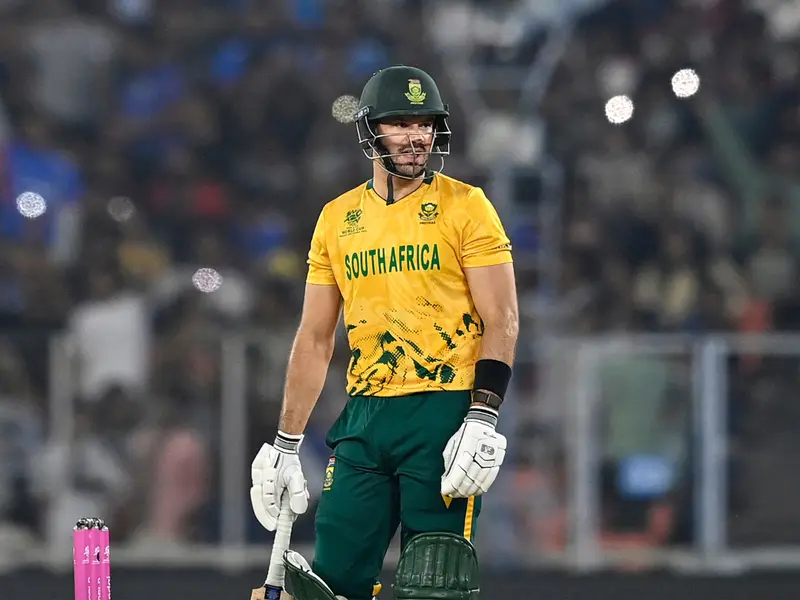
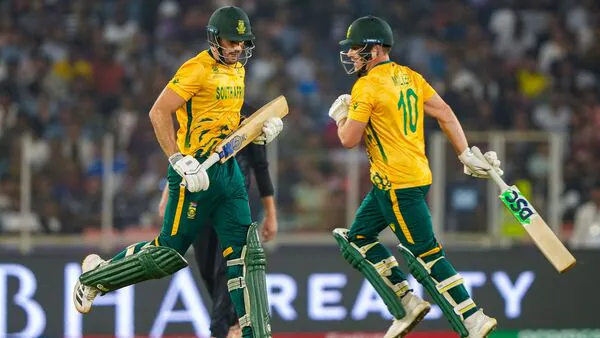
South Africa’s chase began steadily. Quinton de Kock (20 off 14) and Ryan Rickelton (21 off 11) provided a platform, but Ravindra (1/9) dismissed de Kock caught at slip. Dewald Brevis (21 off 17) added impetus—pulls and drives—before falling lbw to Ravindra. At 70/2 after eight overs, Markram arrived and took charge. The captain played a captain’s knock: 86* off 44 (eight fours, four sixes), reaching his fifty off 19 balls (joint-fastest of the tournament) with a straight six off Neesham. Markram targeted spinners Ravindra and Santner—lofted drives over long-on and pulls over midwicket—adding 80+ with David Miller (24* off 17, finishing with a massive pulled six off the first ball of the 18th over). The target was chased in 17.1 overs—seven wickets in hand, 17 balls spare.
Markram, post-match: “The plan was to stay calm and accelerate. The bowlers set it up—Marco was brilliant. This win puts us in a strong position.” Santner rued: “We needed 190-plus. Jansen’s spell broke us. Proud of the fight, but South Africa were clinical.”

Key stats: Markram’s 86* was his highest in T20Is and joint-fastest fifty (19 balls). Jansen’s 4/40 was his first four-wicket haul in T20Is. New Zealand’s 175/7 featured Chapman’s 48 (highest). The seven-wicket margin with 17 balls remaining boosted South Africa’s NRR, confirming their Super Eights spot (Group 1 with India, Zimbabwe, West Indies).
The result extended South Africa’s unbeaten run to three, topping Group D and avenging past choker tags with fearless cricket. New Zealand, despite the loss, qualified as runners-up (facing England in Super Eights). The win highlighted South Africa’s evolution—pace dominance (Jansen), batting depth (Markram), and composure under pressure.
This Ahmedabad masterclass embodied T20’s essence: early momentum overturned by disciplined bowling, individual brilliance (Markram’s knock, Jansen’s spell), and ruthless finishing. South Africa’s performance signaled title intent—peaking at the right time in their quest for a maiden T20 World Cup crown.
New Zealand reflected on missed opportunities—strong starts undone by middle-order collapses. As Super Eights progressed (South Africa facing West Indies next, won by 9 wickets), this victory stood as a benchmark: clinical, complete, and unstoppable.
In a tournament of expansion and drama, South Africa’s seven-wicket rout etched a chapter of dominance—reinforcing why the Proteas remain formidable contenders.

