
Nepal’s Historic Breakthrough: Dipendra Singh Airee’s Blitz Powers 7-Wicket Victory Over Scotland in Group Stage Thriller at 2026 T20 World Cup
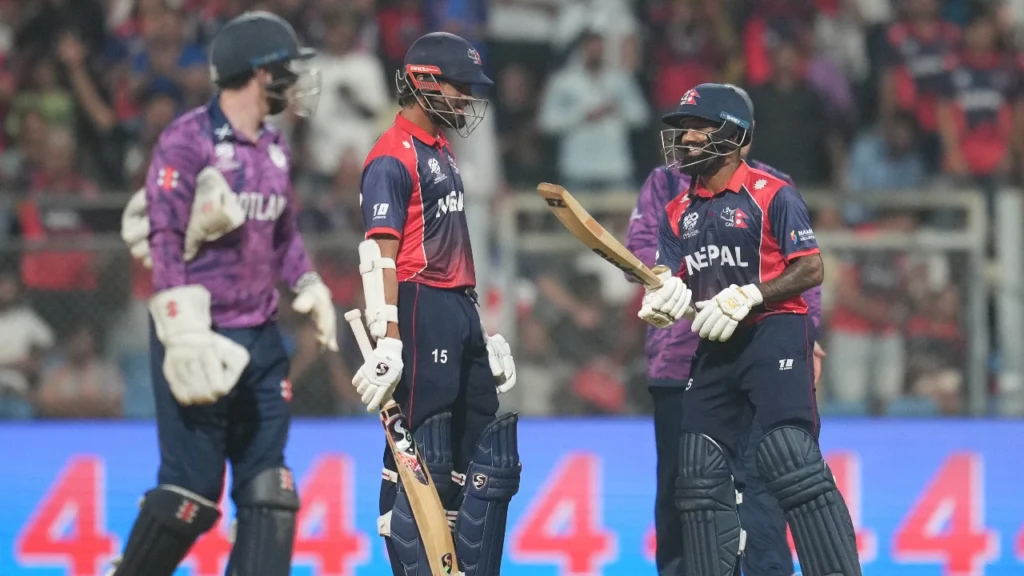
The iconic Wankhede Stadium in Mumbai, alive with a sea of Nepali flags and passionate chants, witnessed a landmark moment in associate cricket on February 17, 2026, as Nepal chased down 171 to defeat Scotland by seven wickets with four balls remaining in the 33rd match of the ICC Men’s T20 World Cup 2026. This Group C clash, often dubbed “the loudest game” of the tournament due to the fervent support for Nepal, saw Scotland post a competitive 170/7 after opting to bat, only for Dipendra Singh Airee’s explosive unbeaten 50 off 23 balls to anchor a high-octane chase. Sompal Kami’s inspired 3/25 with the ball set the tone, while Airee’s fireworks—featuring towering sixes and precise boundaries—ended Nepal’s 12-year wait for a T20 World Cup win since 2014, sending their fans into ecstasy and marking a significant milestone for the Himalayan nation.
The 2026 edition, co-hosted by India and Sri Lanka, expanded to 20 teams with four groups of five in the initial stage, advancing the top two to Super Eights. Group C included full members like England (seeded favorites), Scotland (consistent performers), and associates Nepal (riding momentum from regional qualifiers), alongside others. Nepal entered the match winless but with fighting spirit—close calls against stronger sides had built confidence. Scotland, led by Richie Berrington, needed a win to boost their qualification hopes but faced a fired-up Nepali unit on a neutral venue that felt like home for Nepal’s diaspora supporters.
Wankhede’s pitch, typically flat and batsman-friendly with short boundaries, offered early seam movement under lights before dew aided chases. Scotland won the toss and elected to bat, aiming to set a defendable total. Nepal, captained by Rohit Paudel, included experienced campaigner Sompal Kami and all-rounder Airee in prime form.
Scotland’s innings began solidly. Openers George Munsey (quick start) and Michael Jones provided a brisk platform, reaching 50 in the powerplay. Munsey fell caught at mid-off off Karan KC’s seam, but Jones anchored brilliantly—his 71 off 45 balls (eight fours, three sixes) featured elegant drives and powerful pulls over midwicket. At 132/1 in the 15th over, Scotland eyed 180-plus. But Nepal’s bowlers struck back. Sompal Kami, the veteran pacer and sole survivor from Nepal’s 2014 squad, delivered a masterclass—3/25 in four overs, including two in the death with yorkers and slower balls. He dismissed Jones (caught at long-on attempting acceleration), Matthew Cross (bowled), and others in a spell that swung momentum.
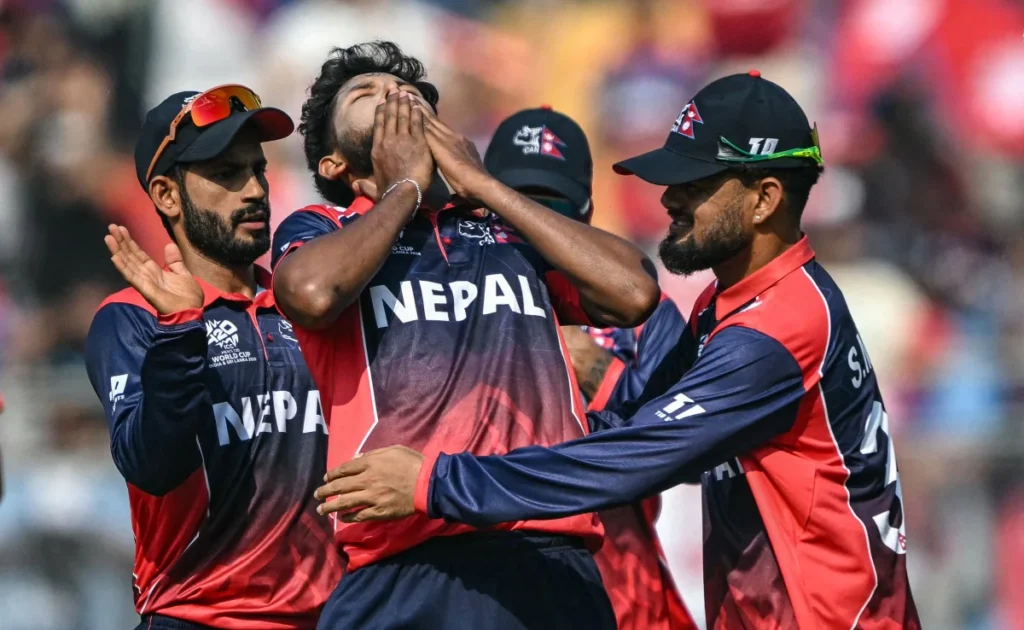
Michael Leask (quick cameo) and Chris Greaves added late impetus, but Nepal’s variations—Kushal Malla’s spin and Airee’s medium pace—restricted them to 170/7. Kami’s figures were his best in World Cups, earning praise for his experience.
Post-innings, Jones said: “We got a good start, but Nepal’s bowlers pulled it back brilliantly in the middle and death. 170 felt par on this wicket—now we back our bowling.” Kami reflected: “This was emotional—12 years waiting for a win. The plan was to take early wickets and vary pace. The crowd gave us energy.”
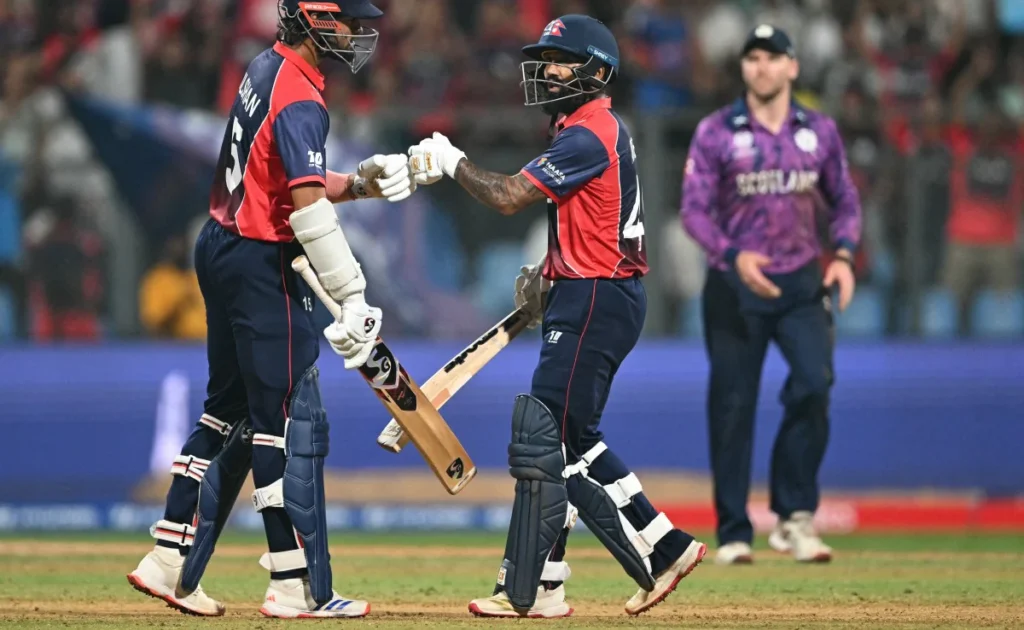
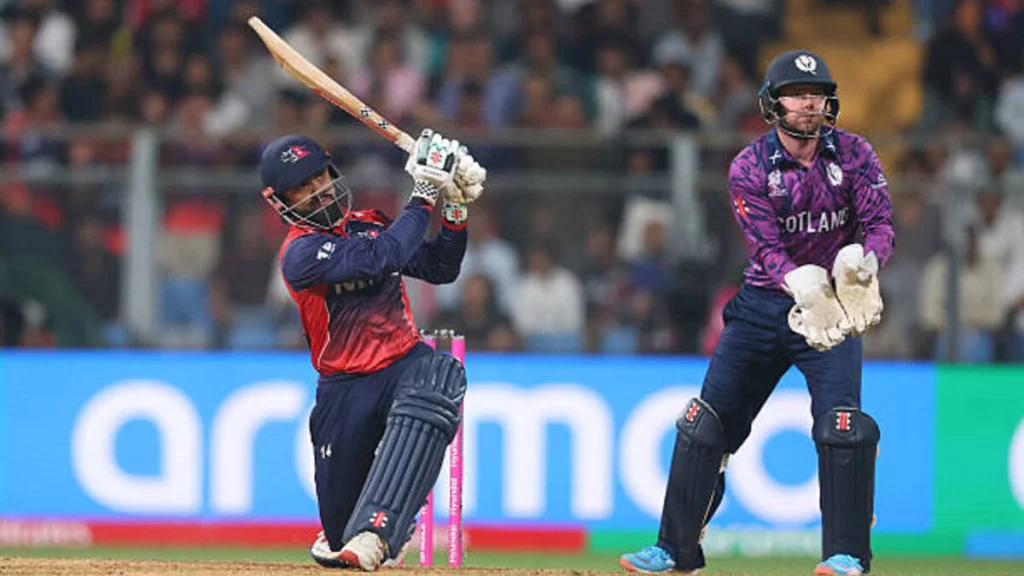
Nepal’s chase started aggressively. Openers Kushal Bhurtel (quick 28) and Aasif Sheikh built momentum, but Brad Wheal struck—Bhurtel caught behind off a lifter. At 45/2 after powerplay following Aasif’s dismissal, pressure mounted. Enter Dipendra Singh Airee at No. 3. The all-rounder played a blinder: 50 off 23 balls (four fours, five sixes), blending brute power with smart placement. Airee targeted spinners Mark Watt and Leask—massive sixes over midwicket and straight drives cleared the ropes. His fifty came with a single off Wheal, punching gloves with Gulsan Jha.
Aasif Sheikh’s early wicket and Rohit Paudel’s brief stay left Nepal needing 80 off the last 10 overs. Airee and Jha (24* off 17) added 90+ in quick time, with Airee launching sixes off Currie and Wheal. The equation—10 off the final over—was sealed with a boundary off Wheal in the 19.2 over. Nepal finished 171/3, chasing with composure.
Airee, Player of the Match, said: “This win means everything—to the fans, to Nepal cricket. I just backed my game—short boundaries helped, but intent was key. Sompal bhai set it up with the ball.” Paudel added: “Historic—first win in 12 years. The crowd was incredible; it felt like home.”
Key stats: Airee’s 50 off 23 was Nepal’s fastest World Cup fifty. Sompal’s 3/25 marked his best figures. Scotland’s collapse from 132/1 to 170/7 highlighted Nepal’s death bowling. The seven-wicket margin with four balls remaining showcased Nepal’s finishing prowess.
The result had emotional weight: Nepal’s third T20 World Cup win ever (previous in 2014), ending a long drought and inspiring associates. Scotland exited with mixed feelings—strong batting but bowling lapses cost them. Nepal finished their group campaign positively, boosting morale despite not qualifying for Super Eights (England and another advanced).
This Mumbai thriller encapsulated T20’s magic—underdogs rising, individual brilliance (Airee’s blitz, Sompal’s spell), and passionate support. Nepal’s victory echoed their growth: disciplined bowling, fearless batting, and belief. As the tournament progressed to Super Eights (England vs Sri Lanka next), this match stood as a beacon for associate nations—proving they can compete and win on the biggest stage.
For Scotland, lessons in pressure situations; for Nepal, a celebration of progress. In a World Cup full of surprises, Nepal’s chase etched their name in history—the day the Himalayas roared in Mumbai.