

Pakistan Clinch Thriller in Lahore as Chase Masterclass Seals 3rd ODI Victory
In a captivating display of cricket under the lights at the Gaddafi Stadium in Lahore, Pakistan delivered a clinical performance to defeat Australia by four wickets with 49 balls to spare in the third One Day International of the 2026 tour. The victory not only leveled the series but also showcased the home side’s resilience and depth in a high-pressure chase, turning what could have been a straightforward Australian defense into a memorable night for the passionate Pakistani crowd.

The match, played on a warm Thursday evening with the floodlights illuminating the famous venue, lived up to the billing of an Australia-Pakistan showdown. These two teams have a rich history of intense battles, from the desert sands of Sharjah to the bouncy tracks of Australia, and this encounter in Lahore added another chapter filled with momentum shifts, individual brilliance, and tactical acumen. Pakistan’s win was built on a disciplined bowling effort that restricted the visitors to a competitive but gettable total, followed by a composed batting display led by their middle order.
Australia won the toss and elected to bat first, a decision that seemed logical given the dew factor often plays a role in night matches here. Their innings started cautiously against a fired-up Pakistani pace attack. Shaheen Afridi, leading the hosts’ bowling from the front, struck early by removing the dangerous Travis Head for just 12 runs, caught behind in the third over. This set the tone for a powerplay where Pakistan’s seamers operated with discipline, mixing short balls with fuller deliveries to keep the Australian openers under check.
David Warner, in what might be one of his final tours, looked determined to make a statement. He stroked some elegant boundaries, reaching his half-century in 48 balls. However, the introduction of spin in the form of Usama Mir proved decisive. Mir, spinning the ball sharply on a surface that offered just enough grip, dismissed Warner for 67, caught at mid-wicket by a diving Babar Azam. From there, Australia struggled to build substantial partnerships. Steve Smith, usually a pillar in these conditions, found the going tough and departed for 38 after being trapped lbw by Haris Rauf’s clever slower ball.
The middle order for Australia showed glimpses of fight. Josh Inglis and Marcus Stoinis added 72 runs for the fifth wicket, with Stoinis playing some aggressive shots that brought the crowd to life. But Pakistan’s fielding was electric. A stunning run-out effected by Mohammad Rizwan and Shadab Khan broke the momentum just as Australia threatened to accelerate. The lower order contributed useful cameos, but no one could truly dominate. Australia were eventually bowled out for 278 in 48.3 overs. It was a total that looked defendable but left room for Pakistan’s explosive batters to exploit.
Shaheen Afridi was the standout performer with the ball, finishing with figures of 4 for 42 in his ten overs. His ability to swing the new ball and then vary his pace in the death overs was crucial. Haris Rauf picked up three wickets, including the vital scalps of Glenn Maxwell and Adam Zampa, while Usama Mir and Shadab Khan shared the remaining spoils. Pakistan’s bowling unit operated as a cohesive unit, adapting to the conditions perfectly and ensuring Australia never got away with a massive score.
As the innings break approached, the atmosphere in the stadium was electric. Fans waved flags, chanted slogans, and anticipated a strong response from their team. Pakistan’s chase began under some pressure after the early loss of Fakhar Zaman, who edged a delivery from Mitchell Starc in the second over. Imam-ul-Haq joined Babar Azam at the crease, and the pair steadied the ship with a watchful 45-run partnership. Babar, the cornerstone of Pakistan’s batting, looked in sublime touch, driving through the covers with authority and rotating the strike intelligently.
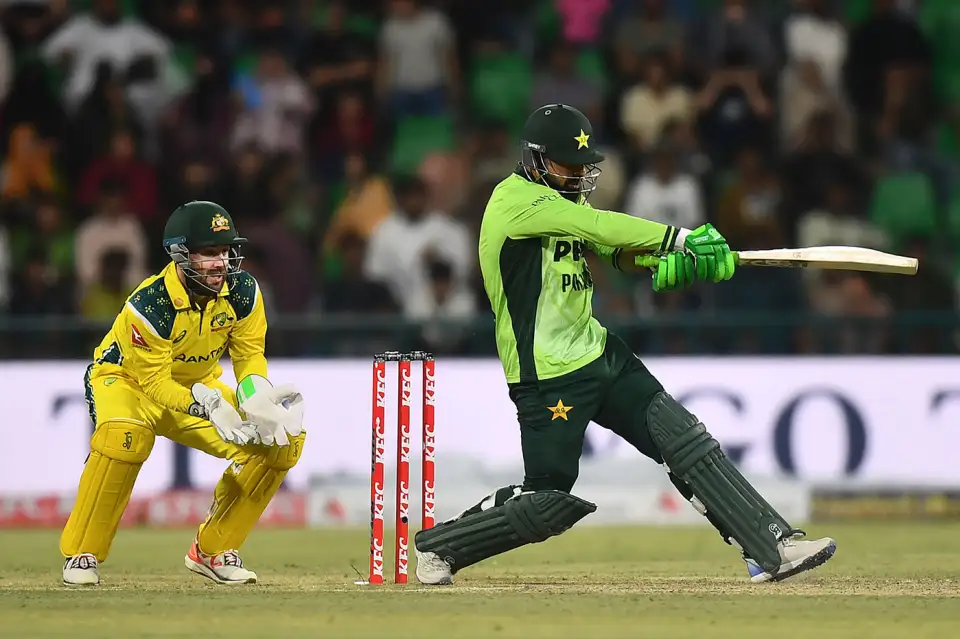
However, Australia struck back when Josh Hazlewood removed Imam for 32. This brought Mohammad Rizwan to the middle, and what followed was a masterclass in ODI batting. Rizwan, known for his finishing abilities, combined with Babar to put on 98 runs for the third wicket. Babar reached his century in 112 balls, a knock full of grace and timing that included 11 boundaries and two sixes. The crowd erupted when he raised his bat, acknowledging the support that has carried him through thick and thin in recent years.
The turning point came after Babar’s dismissal for 112, caught brilliantly by a leaping Mitchell Marsh at cover off the bowling of Adam Zampa. At that stage, Pakistan needed around 110 runs with five wickets in hand and plenty of overs remaining. It was here that the depth of Pakistan’s batting lineup shone through. Saud Shakeel and Iftikhar Ahmed played with freedom, rotating strike and punishing anything loose. Shakeel, in particular, displayed maturity beyond his years, nudging singles and finding gaps with precision.
Australia’s bowlers fought hard. Pat Cummins led from the front with economical spells, while Mitchell Starc and Josh Hazlewood probed for wickets. Glenn Maxwell was brought into the attack to break partnerships, and his off-spin did account for Iftikhar Ahmed, who fell for a brisk 41. But the required run rate never climbed beyond seven runs per over, thanks to the solid foundation laid earlier.
With the game entering its final phase, the young all-rounder Salman Ali Agha joined Saud Shakeel. The pair added 65 crucial runs, with Agha playing some innovative shots, including a reverse sweep off Zampa that sailed over the boundary. Shakeel remained not out on 78, anchoring the chase beautifully. When the winning runs were scored off a leg bye in the 42nd over, the stadium exploded in celebration. Pakistan had reached 279 for 6, sealing the win with 49 balls to spare.
This result was not just about the numbers. It highlighted Pakistan’s evolution as a white-ball side. Under the leadership of Babar Azam, who also captained the side in this match, they have blended aggression with pragmatism. The bowling attack, spearheaded by Shaheen and Haris, provides the variety needed to succeed across different conditions. On the batting front, the reliance on top-order stability followed by middle-order firepower worked to perfection tonight.
For Australia, the loss will sting but offers valuable lessons. Their batting lacked the big partnerships that usually define their success in ODIs. While Warner and Smith showed intent, the collapse after the top four was concerning. Bowling-wise, they created chances but failed to capitalize fully on the breakthroughs. Pat Cummins will likely reflect on the need for better death bowling options, as the pacers leaked runs when Pakistan accelerated.
Post-match, Babar Azam was understandably elated. In a brief chat with the media, he said the team focused on executing their plans and staying calm during the chase. He praised Rizwan’s energy and Shakeel’s composure. “The crowd here in Lahore always gives us that extra push. Winning at home feels special, and we are looking forward to the remaining matches,” Babar noted.
Australian captain Pat Cummins acknowledged the better performance from Pakistan on the day. “We posted a decent score but Pakistan chased it really well. Credit to their bowlers for keeping us under 300 and then their batters for the clinical finish. We will regroup and come back stronger,” he remarked.
The man of the match award went to Babar Azam for his century and overall contribution. His 112 off 118 balls not only stabilized the innings but also inspired the team to believe in the chase. Shaheen Afridi’s bowling effort was a close contender, underscoring the all-round team effort.
This victory comes at a crucial time for Pakistan cricket. After some inconsistent results in recent bilateral series, this win against a strong Australian side boosts morale ahead of bigger tournaments. The series now stands at 2-1 in favor of Australia, assuming they won the first two, but with this result, Pakistan have shown they can compete fiercely on their home soil. Lahore’s pitch offered good batting conditions initially but assisted the spinners later, a factor both teams navigated differently.
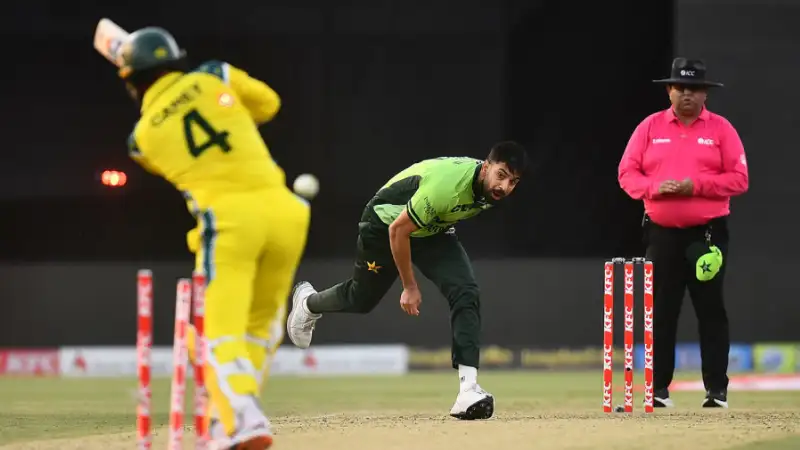
Looking deeper into the statistics, Pakistan’s win percentage in ODIs at Gaddafi Stadium remains impressive. They have now won several chases in recent years here, proving their adaptability. Australia’s tour so far has been a mixed bag, with strong individual performances but occasional lapses in execution. Players like Maxwell and Stoinis will need to step up in the upcoming games to turn the tide.
The crowd played a massive role too. Estimates suggest over 30,000 fans packed the stands, creating an intimidating environment for the visitors. Chants of “Pakistan Zindabad” echoed throughout the night, especially during key moments like Babar’s century and the final overs. Cricket in Pakistan is more than a sport; it is a passion that unites millions, and nights like these remind everyone why.
As the teams prepare for the fourth ODI, expectations will be high. Australia will look to bounce back and secure the series, while Pakistan will aim to build on this momentum and level things further. The rivalry between these two nations has produced some of the greatest moments in cricket history, including World Cup epics and dramatic bilateral contests. This 2026 tour is shaping up to be another memorable one.
Beyond the immediate result, this match highlighted several emerging trends in ODI cricket. The importance of spin options in the middle overs, the value of all-rounders who can contribute with both bat and ball, and the mental toughness required in successful run chases were all on display. Coaches from both sides will be poring over the data, analyzing ball-tracking numbers and player tracking to fine-tune strategies.
For young fans watching, the performances of players like Saud Shakeel and Salman Ali Agha serve as inspiration. They represent the next generation stepping up under pressure. In Pakistan’s setup, the blend of experienced campaigners like Babar, Rizwan, and Shaheen with these talents creates a balanced squad capable of challenging any opponent.
Australia’s squad depth was tested, and while they have quality players throughout, the execution on this particular night fell short. Their fast bowling unit remains world-class, but the batting needs consistency. Warner’s experience will be vital in the remaining fixtures, and his leadership in the dressing room could prove invaluable.
Reflecting on the broader tour context, this series is part of a packed international calendar. Both teams are preparing for future World Cups and Champions Trophies, making every game a stepping stone. Pakistan’s home advantage in Lahore, with its lively pitch and vocal support, often tilts matches in their favor, and they capitalized on it fully.
The technical aspects of the game also deserve mention. Pakistan’s ground fielding was sharp, with several saves preventing boundaries. Their direct hits on run-outs added pressure. Australia matched them in energy but were let down by a couple of missed opportunities in the field. Umpiring decisions were mostly spot on, with the DRS used judiciously by both captains.
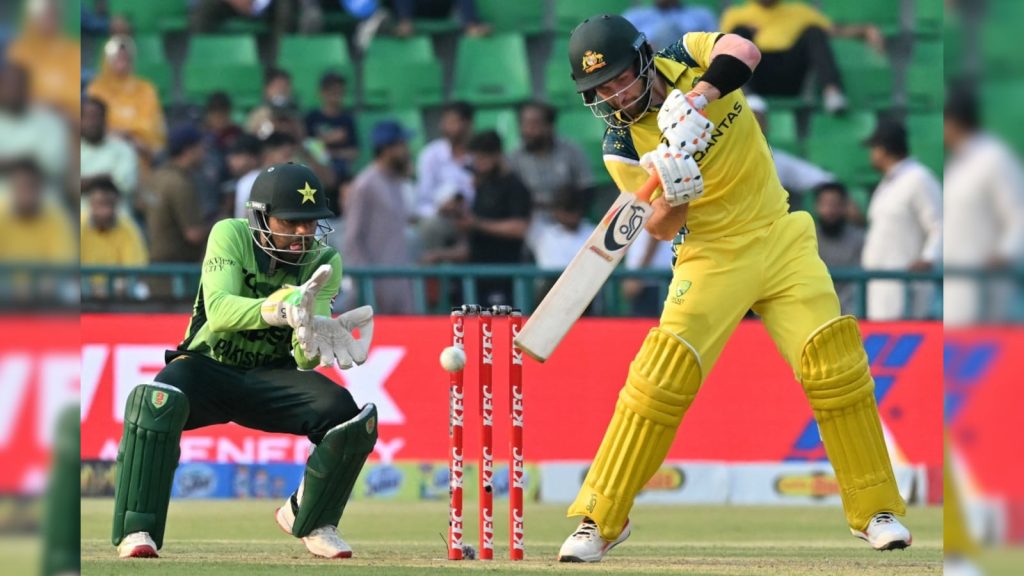
In the end, it was Pakistan’s superior adaptability and execution that secured the win. The 49 balls remaining tell the story of a chase that was always in control after the initial setbacks. This result will do wonders for Pakistan’s confidence and put Australia on notice for the rest of the tour.
As the night drew to a close in Lahore, fireworks lit up the sky, mirroring the excitement on the field. Fans left the stadium buzzing, reliving every boundary and wicket. For the players, it was another hard-fought battle in a storied rivalry that continues to captivate audiences worldwide.
Pakistan’s journey in this series is far from over, but this victory in the third ODI will be remembered as a benchmark performance. It demonstrated character, skill, and the never-say-die spirit that defines their cricket. Australia, ever the tough competitors, will undoubtedly come back firing. The stage is set for more thrilling encounters ahead.
