

Australia Crush Pakistan by 41 Runs in Lahore Thriller
Australia sealed a commanding 41-run victory over Pakistan in the second One Day International under the lights at Gaddafi Stadium in Lahore on Tuesday, strengthening their grip on the series. The visitors, led by a disciplined bowling effort and a solid batting display, defended a competitive total of 312 for eight to hand the hosts their second successive defeat in the ongoing tour. With the series now standing at 2-0 in Australia’s favor, the green and gold brigade have set a formidable benchmark early on, reminding everyone why they remain one of the most feared white-ball sides in world cricket.
The atmosphere in Lahore was electric as always, with a packed crowd braving the warm evening to witness what promised to be a high-octiding clash between two traditional rivals. Pakistan, playing at home, came into this match desperate to bounce back after losing the opener in Multan by a narrow margin. Australia, on the other hand, looked confident and well-prepared, their squad blending experience with youthful energy. Captain Mitchell Marsh won the toss and elected to bat first, a decision that initially raised eyebrows given the dew factor often favoring chasers in night games here, but it proved to be a masterstroke as the Australian top order laid a strong foundation.
Opening the innings for Australia were Travis Head and Josh Inglis. Head, the explosive left-hander, wasted no time in asserting his authority, dispatching the first ball from Shaheen Shah Afridi for a boundary. The duo added 68 runs in quick time before Inglis fell to a sharp delivery from Naseem Shah, caught behind for 32. Head continued his onslaught, reaching his half-century off just 48 balls, but Pakistan’s spinners, led by the experienced Shadab Khan, managed to slow things down in the middle overs. Head eventually departed for 78, holing out to long-on, leaving the middle order to consolidate.
Steve Smith, ever the reliable anchor, joined forces with Marsh at number three. The pair stitched together a crucial 112-run partnership that shifted the momentum firmly in Australia’s favor. Smith, known for his unorthodox yet effective technique, played with characteristic patience, rotating the strike expertly while punishing anything loose. Marsh, aggressive as usual, found the boundaries with ease, particularly against the pace of Haris Rauf. Their stand was a masterclass in building an innings on a pitch that offered some assistance to spinners later on.
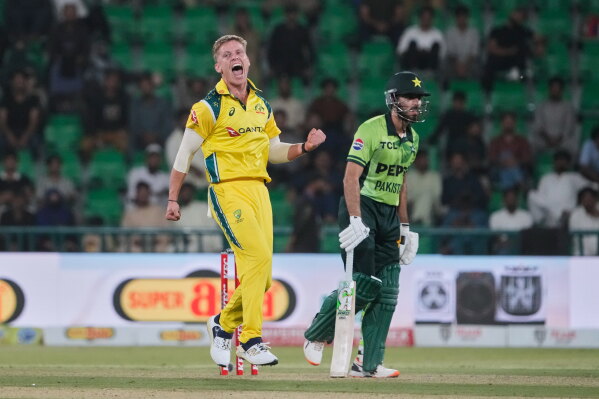
As the death overs approached, Australia accelerated. Glenn Maxwell, coming in at five, provided the much-needed fireworks, smashing 45 off 28 balls including three sixes. His innings, though short, injected vital momentum. Lower down, Marcus Stoinis and Adam Zampa contributed handy cameos, ensuring the total crossed the 300-mark. Pakistan’s bowling was a mixed bag. Shaheen Afridi picked up three wickets but leaked runs at an economy of over six. Naseem Shah was impressive with figures of two for 52, while Shadab Khan claimed two scalps for 48 runs. The fielding from Pakistan was below par, with a couple of dropped catches proving costly, especially the one that reprieved Smith early in his innings.
Chasing 313, Pakistan started cautiously. Imam-ul-Haq and Abdullah Shafique opened the batting, adding 45 runs before Shafique was dismissed by a fiery spell from Mitchell Starc. Imam looked solid, reaching 40 before falling to a brilliant catch by Head in the deep. The pressure mounted when Babar Azam and Mohammad Rizwan came together. Babar, the talisman of Pakistan batting, played one of his trademark elegant innings, scoring 82 off 95 balls. He found boundaries through covers and mid-wicket with precision, keeping the required run rate under control for a while.
However, Australia’s bowling attack was relentless. Pat Cummins, leading from the front as vice-captain in Marsh’s absence due to a minor niggle, bowled with pace and accuracy. His spell of three for 42 was the highlight, including the crucial wicket of Babar, who was trapped lbw attempting a sweep. Josh Hazlewood complemented Cummins beautifully, maintaining tight lines and picking up two wickets. Adam Zampa, the leg-spinner, was the pick of the bowlers with figures of three for 55, his googlies and flighted deliveries troubling the Pakistani middle order.
The turning point came around the 35th over when Pakistan needed 128 runs off the last 15 overs with six wickets in hand. Rizwan, who had grafted his way to 55, fell to a stunning yorker from Starc. From there, the lower order crumbled under pressure. Iftikhar Ahmed and Salman Ali Agha tried to accelerate but found the Australian fielders in superb positions. Shadab Khan provided some resistance with a quick 28, but it was not enough. Pakistan were eventually bowled out for 271 in 48.2 overs, falling 41 runs short.
This victory was built on Australia’s superior all-round performance. Their batting depth allowed them to post a challenging total despite losing early momentum, while the bowlers executed their plans to perfection on a surface that became slower as the game progressed. Pakistan, conversely, will look back at this match with regret over their fielding lapses and inability to build substantial partnerships in the chase. Babar Azam’s dismissal was particularly pivotal, as he was the only batsman who seemed capable of anchoring the innings against quality pace bowling.
Post-match, Mitchell Marsh was understandably pleased. In the presentation ceremony, he highlighted the team’s bowling effort as the key. “The boys showed great character. Batting first was a bit of a gamble, but the way Steve and Maxy played allowed us to set a total we could defend. Pat and the pace unit were outstanding,” Marsh said. He also praised the crowd for creating a vibrant atmosphere, acknowledging the passionate support for both sides.
Pakistan captain Babar Azam, despite the loss, remained optimistic. “We fought hard but Australia were clinical today. Credit to them for executing their plans better. We need to improve our death bowling and batting under pressure. The series is still alive, and we will come back stronger in the next game,” he remarked. Player of the Match was awarded to Steve Smith for his composed 87 off 102 balls, which laid the platform for Australia’s total. Smith, in his interview, credited the support staff for helping him adapt to the conditions quickly.
Looking at the broader picture, this result underscores Australia’s dominance in bilateral ODI series away from home. They have now won their last four ODIs against Pakistan, a streak that highlights their tactical edge. For Pakistan, the home conditions that usually favor them seemed to offer less assistance than expected, with the dew not playing as big a role as anticipated. The pitch offered turn and variable bounce, which Australia’s spinners and experienced pacers exploited better.
Delving deeper into the batting performances, Travis Head’s aggressive start set the tone. His ability to take on the new ball against quality seamers like Shaheen and Naseem is what makes him such a dangerous prospect at the top. Josh Inglis, though dismissed relatively early, showed promise with some crisp drives. Steve Smith’s innings was a study in concentration. Facing spin from Shadab and Abrar Ahmed, he used his feet well and worked the ball into gaps. His partnership with Marsh was not just about runs but about controlling the tempo of the game, preventing Pakistan from building any rhythm.
Glenn Maxwell’s contribution cannot be overlooked. In limited overs cricket, his ability to clear the ropes consistently changes the equation. Even though he did not bat for long, the pressure he created forced Pakistan to alter their field placements, opening up spaces for others. Marcus Stoinis and the lower order ensured there were no late collapses, a common issue in previous tours.
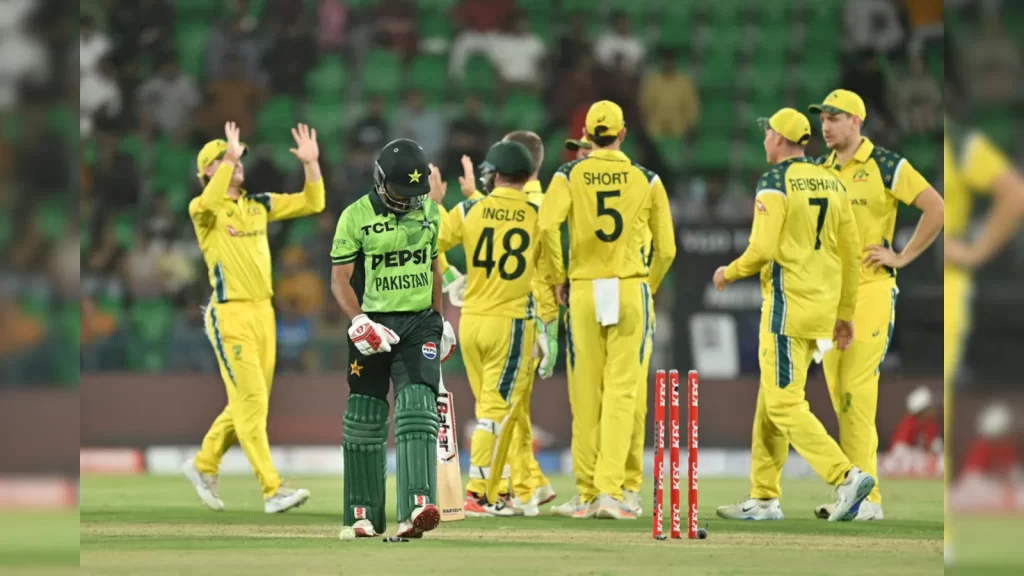
On the bowling front, Pat Cummins’ leadership with the ball was exemplary. His variations in length and ability to bowl yorkers at will dismantled the Pakistani lower middle order. Mitchell Starc, though expensive at times, provided the breakthroughs when needed, his left-arm angle proving tricky for the right-handers. Josh Hazlewood’s economy was impressive, conceding less than five runs per over in his full quota. Adam Zampa’s three wickets included key scalps of Iftikhar and Salman, breaking crucial partnerships.
Pakistan’s batting had moments of brilliance but lacked consistency. Imam-ul-Haq’s start was promising, but he could not convert it into a big score. Babar Azam looked in sublime touch during his stay, but his lbw dismissal came at a time when Pakistan needed him the most. Mohammad Rizwan battled bravely, but the asking rate climbed steadily. The middle order, often a strength for Pakistan, failed to fire collectively. Shaheen Afridi, despite his bowling heroics, could not contribute much with the bat, highlighting the depth issues in the lower order.
Fielding was another area where Pakistan lagged. Dropped chances and sloppy ground fielding added at least 20-30 extra runs to Australia’s total. In contrast, Australia were sharp, with standout efforts from Head, Maxwell, and substitute fielder Matt Short. Such margins often decide close encounters, and this match was no exception even though the final margin was 41 runs.
As the series moves forward, Australia will look to wrap it up with a win in the third ODI, potentially clinching the series. Their bench strength is impressive, with players like Cameron Green and Sean Abbott waiting for opportunities. Pakistan, under pressure, might consider changes to their playing XI. Bringing in fresh legs in the pace department or tweaking the batting order could be options. The experience of players like Fakhar Zaman, if included, might add firepower to the top order.
This match also highlighted the evolution of cricket strategies in subcontinental conditions. Australia have adapted well over the years, learning from past tours where spin and slower pitches troubled them. Their use of data analytics for bowler plans and field settings was evident. Pakistan, while talented, seemed reactive rather than proactive in their adjustments during the game.
Fans and analysts alike will remember this encounter for the high-quality cricket on display. From Head’s fireworks to Smith’s stability, from Cummins’ precision to Babar’s elegance, it had all the ingredients of a classic ODI. The 41-run margin does not fully reflect how competitive the game was until the final 10 overs, where Australia’s experience in closing out matches shone through.
In the context of international cricket calendar, this tour holds significance for both teams as they prepare for upcoming World Cup cycles. Australia, as defending champions in some formats, are fine-tuning their combinations. Pakistan are rebuilding aspects of their game to regain their status as a top contender. Victories like this boost confidence and provide valuable lessons.
Reflecting on individual contributions, Travis Head’s 78 set a platform that many teams dream of. Steve Smith’s 87 not only earned him the Player of the Match but also reaffirmed his status as one of the modern greats. His ability to perform across conditions is remarkable. Pat Cummins, with both captaincy and bowling contributions, continues to be the heartbeat of this Australian side.
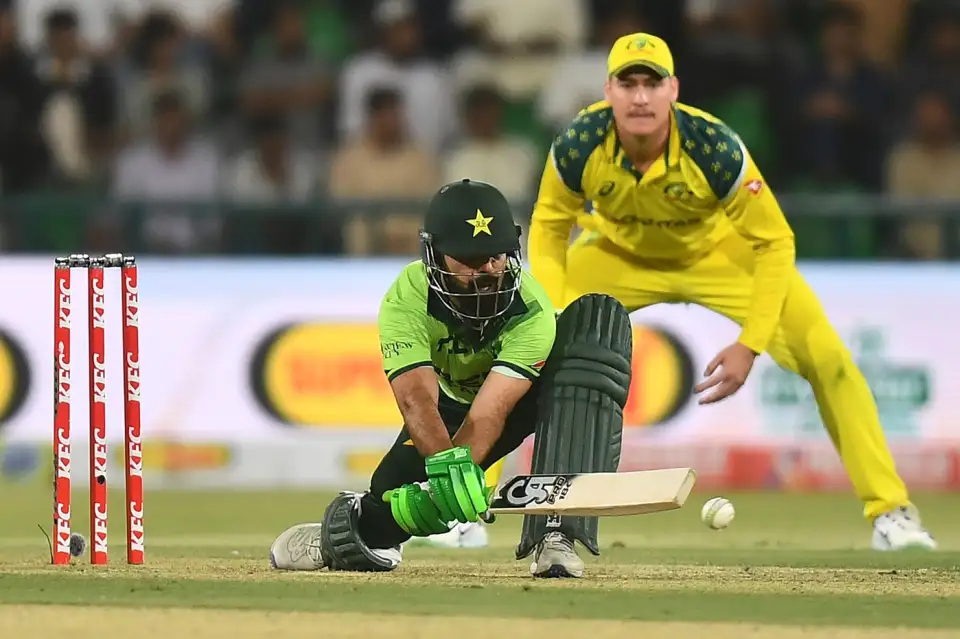
For Pakistan, lessons from this loss include better death-over execution and improved fielding standards. Babar Azam remains their cornerstone, but he needs consistent support from the rest of the batting lineup. The bowlers showed glimpses of quality but were let down by inconsistent support.
As the sun set over Gaddafi Stadium and the floodlights took over, the Australian team celebrated their win with high-fives and team huddles. The crowd, though disappointed, applauded both teams for an entertaining contest. Cricket in Pakistan always brings out the best in fans, with their unwavering support even in defeat.
Looking ahead, the third and final ODI in this series promises more excitement. Australia will aim to maintain their unbeaten run, while Pakistan will fight to restore pride on home soil. Whatever the outcome, this tour is proving to be a fascinating battle of skills, strategies, and mental toughness.
In summary, Australia’s 41-run triumph in the second ODI was a comprehensive display of white-ball cricket excellence. They outbatted, outbowled, and outfielded their opponents on a tricky Lahore pitch. With key players stepping up at crucial junctures, they have positioned themselves strongly for series victory. Pakistan have the talent and the home advantage to turn things around, but they must address their shortcomings quickly. The rivalry between these two nations continues to thrill audiences worldwide, and this match added another memorable chapter to it. The cricketing world eagerly awaits the next installment in what has become a compelling series.
