
Swan Song: A Melodic Meditation on Loss, Memory, and Tiny Clockwork Wonders
Swan Song: A Melodic Meditation on Loss, Memory, and Tiny Clockwork Wonders
I’ll be honest: I wasn’t expecting to cry over a puzzle game about a little swan in a music box. But here we are, two days after Swan Song dropped on Steam on June 4, 2026, and I’m still thinking about it. Developed and published by the small Belgian studio Business Goose Studios, this cozy indie title blends inventive musical puzzling with a quietly devastating story of family, grief, and the things we leave behind. At around 4-6 hours long depending on how much you linger, it’s not a massive epic, but it punches way above its weight in emotional resonance. If you’re in the mood for something that feels like a warm hug followed by a gentle gut-punch, this might be your next favorite indie.
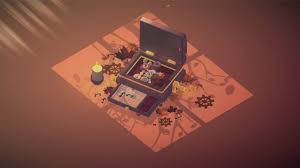
Let’s start at the beginning. You boot up the game and find yourself peering into an old, ornate music box. It’s filled with personal artifacts—faded photographs, crumpled letters, medicine bottles, cassette tapes. This box is the “swan song” of its creator, a final masterpiece crafted in tribute to his family. As you solve puzzles, fragments of his story unfold. It’s a narrative delivered with remarkable restraint: no lengthy cutscenes, no heavy-handed exposition. Just quiet discoveries that hit harder because they feel intimate, like rummaging through someone’s attic and realizing you’re intruding on their most private pain.
The core gameplay loop is deceptively simple yet deeply satisfying. Each level is a self-contained music box mechanism. You’re given a grid-like score sheet with colored rows corresponding to different platforms, lifts, rotating sections, and other clockwork gadgets inside the box. You place musical notes of varying shapes and durations onto the sheet. Hit the key, and the melody plays. The tiny swan figurine waddles forward in sync with the music, and your composition activates the mechanisms in sequence to create a safe path. Get it wrong, and the poor bird tumbles into the void as the box slams shut with a satisfying thunk. No big penalties—just rewind and tweak.
Early puzzles are tutorial-soft. Place one note to raise a platform, watch the swan cross safely. But Business Goose Studios knows how to escalate. Soon you’re juggling multiple note types: single activations, doubles, tied notes that hold mechanisms longer. Hazards appear—a clock hand that sweeps across the board, fragile tiles that shatter after one use, and my personal favorite (and nemesis), the little moustachioed hunter with his cork gun who patrols and shoots if you don’t time your path perfectly. Later chapters layer these elements masterfully. One puzzle might require you to rotate sections of the board mid-melody while dodging the hunter and ensuring the swan doesn’t step on a breaking tile at the wrong beat.

What makes the puzzles sing—pun absolutely intended—is how they turn abstract problem-solving into performance. There’s genuine joy in nailing a solution, hearing the full melody unfold exactly as intended, and watching the swan glide triumphantly to the exit. The game never resets your notes on failure, which keeps the flow meditative rather than frustrating. I found myself settling in with a cup of tea, experimenting like a miniature composer, rewinding and refining. It’s the kind of gameplay that rewards patience and observation over raw speed or dexterity. No musical knowledge required either—the colors and shapes make it accessible, though the increasing complexity will challenge even seasoned puzzlers toward the end.
That said, repetition is the game’s quiet Achilles’ heel. By the later chapters, the core loop—observe, compose, test, adjust—starts to feel familiar. New mechanics keep things fresh, but some puzzles lean on variations of ideas you’ve already mastered. I never got truly stuck, and the forgiving design means you can brute-force through trial and error if needed, but momentum can dip in the back half. It’s not a flaw that ruins the experience, but in a game that prizes contemplation, the line between relaxing and slightly tedious can blur. A built-in hint system might have helped casual players without spoiling the “aha!” moments.
Visually, Swan Song is an absolute delight. The warm low-poly aesthetic gives everything a handcrafted, tactile feel—like a real wooden music box brought to life. Gears grind, platforms slide with mechanical precision, and the little swan has surprising expressiveness in its waddle. Backgrounds evolve beautifully with the story: cozy family scenes give way to darker, rain-streaked windows and shadowed rooms as tragedy unfolds. It’s cohesive and specific, avoiding the generic minimalism that plagues many indies. Every element screams care and attention from a small team that clearly poured their hearts into it.
The audio is another standout. Composer Jamal Green delivers a cozy yet melancholic soundtrack with 11 tracks that perfectly underscore the mood. Gentle piano, soft strings, and music box chimes weave through the levels. When your composition plays successfully, it blends seamlessly with the ambient score. Voice acting for the story fragments is understated and effective—intimate recordings that feel like eavesdropping on real memories. The sound of the box mechanisms, the swan’s footsteps, the satisfying click of the key—all add to the immersive, almost ASMR-like quality.
Now, the story. This is where Swan Song elevates itself from “nice puzzle game” to something more memorable. It deals with terminal illness, loss, regret, and the messy process of grieving and remembering. The father’s perspective is front and center: his love for his daughter, the slow unraveling of family life, the desperate crafting of this music box as a legacy. It never veers into melodrama. Instead, it trusts you to piece things together from objects and audio logs. A bottle of pills here, a travel souvenir there, a changing family photo. The swan itself becomes a poignant metaphor—fragile, guided by melody through mechanical peril, much like life itself.
I won’t spoil specifics, but there were moments that genuinely choked me up. One late-game sequence where the puzzles’ rhythm mirrors the emotional weight of the unfolding memory is particularly powerful. It’s not a revolutionary narrative—themes of family and grief are well-trodden in indies—but the execution feels personal and empathetic. Business Goose Studios handles heavy subject matter with grace, never exploiting it for cheap tears. The content warning in the Steam page is spot-on; if you’re sensitive to stories of illness and death, approach with care. But for many, it might feel cathartic.
At $7.99 (currently on a 20% launch discount), Swan Song offers excellent value. There are 9 chapters, over 100 puzzles, secret levels to hunt, and promises of free post-launch updates including a level editor and Steam Workshop support. Controller and Steam Deck improvements are coming, and a Nintendo Switch version is in the works. It already boasts a perfect 100% positive rating from early reviews on Steam, with critics praising its heart and craft.
Comparisons are inevitable. Fans of Unpacking will appreciate the narrative-through-objects approach, while puzzle enthusiasts might see echoes of The Witness or Baba Is You in the mechanical logic, though Swan Song is far gentler. It sits comfortably in the “cozy but meaningful” space alongside games like A Short Hike or Spiritfarer, without the management layers.
Is it perfect? No. The repetition in the back half and occasionally surface-level story integration hold it back from masterpiece territory. Some puzzles could use more permutations or branching solutions for replayability. But these are minor quibbles in a game that succeeds so beautifully at what it sets out to do: invite you to slow down, listen, and reflect.
Playing Swan Song felt like winding up a personal heirloom. It’s small, quiet, and heartbreaking in the best way. It doesn’t overstay its welcome, knows exactly what kind of experience it wants to deliver, and executes with charm and sincerity. In an era of live-service behemoths and endless sequels, a humble indie like this reminds you why we play games—to feel something real, even if it’s wrapped in clockwork and melody.
If you’re looking for a palate cleanser after bigger titles, or simply something to play on a rainy afternoon that lingers long after the credits, Swan Song is worth every note. Business Goose Studios has crafted something special here—a true swan song in its own right. I can’t wait to see what they do next, and I’ll definitely be diving back in when that level editor drops. Highly recommended.
