

Moonsigil Atlas: A Stellar Twist on Deckbuilding That Actually Feels New
It’s rare for a game to drop and immediately feel like it belongs in that special category of “why hasn’t anyone done this before?” But here we are, barely a week after Moonsigil Atlas launched on May 28, 2026, and I’m still thinking about it. Developed by the small team at Snake Tower Games and published by Twin Sails Interactive, this roguelike deckbuilder isn’t just another Slay the Spire clone with prettier art. It takes the familiar card-slinging formula, strips out the energy system entirely, and replaces it with something that feels like Tetris had a cosmic baby with tactical puzzle games. At $19.99, it’s a steal for what it delivers, even if it left me equal parts exhilarated and occasionally frustrated.
I first heard about it through the usual indie channels—a game jam prototype that somehow evolved into a full release. Originally called something like Fallowtide during Ludum Dare, the core idea stuck: what if placing cards wasn’t just about mana costs or action points, but about literal physical space on a board? That pitch sold me instantly. As someone who’s sunk hundreds of hours into Slay the Spire, Balatro, and even some of the more experimental deckbuilders, I was ready for something fresh. And boy, did it deliver.
The Setup: Sigils, Moons, and Cosmic Nightmares
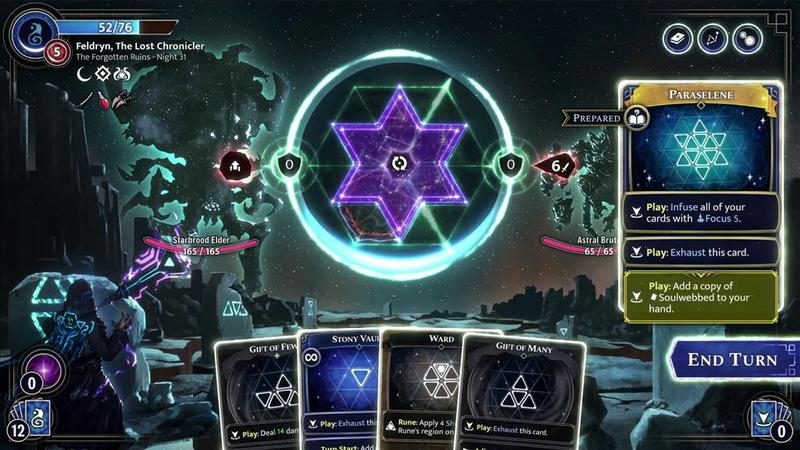
Moonsigil Atlas throws you into a beautifully rendered, ethereal space setting. You’re a Sigilwright, wielding magical cards called sigils to battle astral entities and titanic horrors threatening the cosmos. The narrative is light but atmospheric—more vibe than deep lore. Think wandering the surface of a mystical moon, piecing together ancient runes while fending off nightmares born from the stars themselves. It’s not trying to be The Outer Wilds with its storytelling, but the cosmic dread and sense of isolation work perfectly as a backdrop for the gameplay loops.
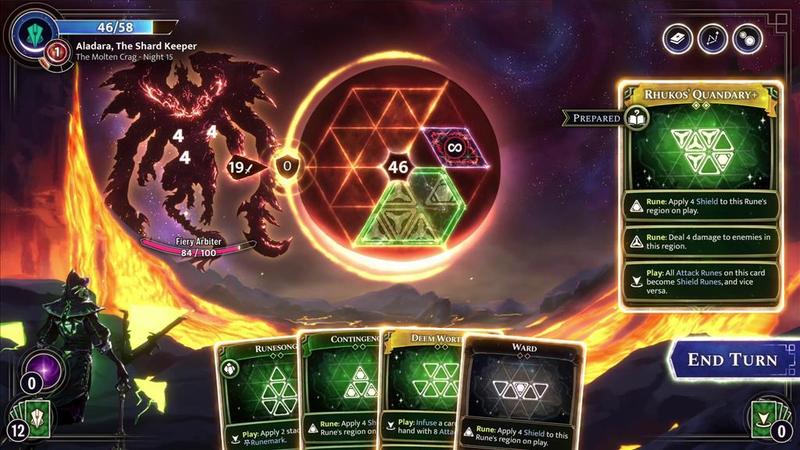
You start with one character, Feldryn, a scholarly type whose deck revolves around multiplication, card draw, and persistent effects. As you gain Mastery (the roguelike progression system), you unlock two more: Aladara, the board-filling rune specialist with powerful one-shot exhaust cards, and Tark-thul, the aggressive burner who thrives on risk-reward ash mechanics. Each feels distinct enough that switching between them refreshes the experience. I’ve put about 18 hours in so far, and I’m still discovering synergies across them.
The structure is classic roguelike: randomized maps with nodes for combat, shops, upgrades, events, and those dreaded boss fights against Astral Titans. Three acts, escalating difficulty, and plenty of unlockables. Runs last anywhere from 30 minutes to a couple hours depending on how deep you go and how greedy you get with rewards. It’s approachable for newcomers but has serious depth for veterans.
Core Gameplay: Space Is the New Mana
This is where Moonsigil Atlas shines brightest—and where it completely reinvents the wheel. Forget energy. There are no action points limiting you. Instead, every sigil is a polyomino-shaped tile (think Tetris pieces but with magical flair) that you place on a hexagonal grid representing the moon’s surface during combat.
You draw five cards per turn (your deck reshuffles when empty, so no worrying about running out permanently). Then you rotate, position, and play as many as physically fit. Adjacency matters. Overlaps can trigger effects. Persistent sigils stay on the board, creating ongoing zones of power or hazard. Enemies don’t just smack you—they drop hostile sigils that clog your space, ghost cards that weaken placements, or shift the board itself.
Combat becomes this beautiful tactical puzzle every single turn. Do you drop that big damage dealer now, even if it blocks future flexible plays? Or do you build a defensive wall with Shield Runes to survive the incoming multi-hit attack? Positioning Shield Runes correctly to cover glowing attack zones feels incredibly satisfying when it works—and panic-inducing when you miscalculate by one tile.
The game gives you tools to manipulate shapes too. Random map nodes let you chip away single tiles from sigils, swap shapes between cards, or inscribe runes that add keywords like “Attack,” “Shield,” or wilder modifiers. There’s a fully modular upgrade system where you can reshape, enhance, and customize almost everything. With 250+ cards and tens of thousands of combinations, no two decks feel the same.
I love how it encourages creativity. One run I went all-in on a “multiplication” build with Feldryn, duplicating a core sigil until I had infinite draw and damage looping. Another time with Aladara, I covered the entire board in layered runes for a slow-burn dominance. Tark-thul rewards you for playing risky, burning through ash remnants for explosive turns. It’s not just “bigger numbers win”—spatial awareness and foresight are king.
The Titans and the Challenge Curve
Early enemies are forgiving tutorials in space management. But the real tests come against the Astral Titans. The first one summons mini-moons that buff itself and restrict your board. The second shatters parts of the moon when enraged, dynamically changing available space mid-fight. I haven’t beaten the third yet, but from community chatter and my own failed attempts, it sounds brutal in the best way.
This is where some balance gripes creep in. The game can feel punishing if your deck doesn’t click with the run’s offerings. Large sigils are tempting but can clog everything if you can’t trim them. I found myself restarting runs more than I’d like because a bad early node left me with awkward shapes. The grind for Mastery unlocks helps long-term, but short-term it stings. That said, the “Astral Dust” and Gem system—skipping rewards for currency that upgrades your meta-progression—feels fair and rewarding.
Difficulty is adjustable in subtle ways through artifacts and boons, but it never feels like easy mode ruins the challenge. Bosses demand adaptation, not just power. One memorable fight had me frantically rotating a massive sigil while the Titan warped the grid—pure adrenaline.
Presentation: Ethereal and Immersive
Visually, Moonsigil Atlas is a treat. The moon surface battles have this dreamy, glowing aesthetic with careful use of color to distinguish card types and effects. Sigils themselves have intricate rune designs that pop during placement animations. Particle effects for big combos are satisfying without being overwhelming. It runs buttery smooth even on modest hardware (I tested on a mid-range laptop), with native Linux and Steam Deck support.
Sound design elevates everything. Cosmic ambient tracks swell during tense placements, with sharp, satisfying audio cues for successful synergies or blocked attacks. Voice work is minimal but atmospheric. It’s the kind of game you can sink into with headphones on a late night, feeling transported.
The UI is clean and intuitive after the first few runs. Rotating cards and previewing placements is seamless. Tooltips are helpful without spoiling experimentation. Accessibility options seem solid for a small team release.
Strengths and a Few Rough Edges
The Good:
- Revolutionary core mechanic that makes every combat feel unique and puzzle-like.
- Excellent character variety and deckbuilding depth.
- High replayability thanks to randomization, unlocks, and synergies.
- Beautiful art and sound that perfectly match the theme.
- Great value at the price point, especially with the launch discount.
- Strong Steam reception so far (Very Positive, around 82%).
The Not-So-Good:
- Balance can feel swingy; some runs snowball too hard or fizzle early.
- Tile-trimming opportunities feel a bit stingy for larger sigils.
- Bosses are tough (which is good), but the learning curve might frustrate casual players.
- No console release yet—PC exclusive for now, though it screams for controller support on bigger screens.
- Minor bugs reported in community discussions (selection issues on Deck, occasional UI hiccups), but nothing game-breaking in my playtime.
It’s not perfect, but its innovations outweigh the flaws by a mile. Compared to other recent deckbuilders, it stands out for actually evolving the genre rather than iterating safely.
Who Should Play It?
If you love roguelike deckbuilders but are tired of the same energy systems and linear card plays, Moonsigil Atlas is essential. Puzzle fans who enjoy spatial reasoning will eat this up. Even if you’re new to the genre, the tutorialization is gentle enough to ease you in, though expect some trial-and-error deaths.
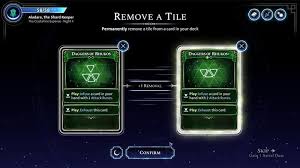
It’s the kind of game that rewards curiosity. Experiment with wild builds. Chase impossible combos. The joy is in discovery—turning a humble single-tile sigil into a run-winning engine through clever modifications.
Final Thoughts
Moonsigil Atlas launched quietly but has been making waves in indie circles for good reason. In a year full of big AAA titles, this little space-faring deckbuilder reminds us why we love games: pure mechanical joy wrapped in an evocative package. It’s innovative without being inaccessible, challenging without being unfair (mostly), and deeply satisfying when those puzzle pieces click into place for a massive combo.
I’ve already sunk more time into it than I expected for a new release, and I’m nowhere near “done.” With patches likely incoming and potential future content, it has legs. Snake Tower Games nailed their debut. If you’re on the fence, grab the demo on Steam—it’s a great taste of what the full game offers.
Score: 8.5/10 – A shining new star in the roguelike deckbuilding constellation. Highly recommended.
