
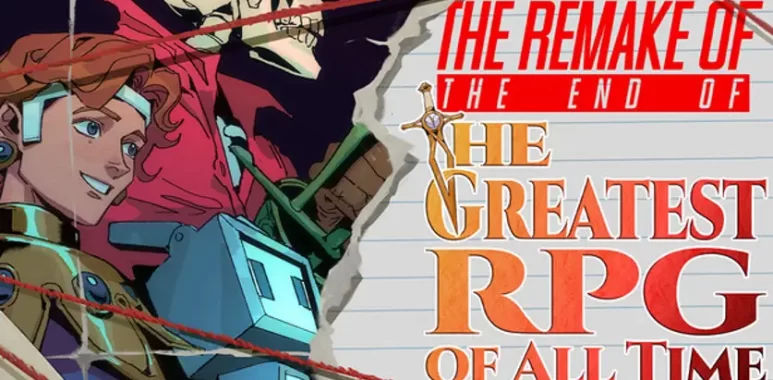
The Remake of the End of the Greatest RPG of All Time: A Love Letter to Nostalgia That Actually Delivers
I still remember the first time I booted up the original The End of the Greatest RPG of All Time back in… well, let’s just say it was during an era when my biggest worry was whether my dial-up connection would hold long enough to download a new patch. That game hit different. It wasn’t just pixels and stats; it felt like a fever dream collaboration between a burned-out philosopher, a D&D dungeon master who hadn’t seen sunlight in years, and a composer who’d mainlined too much Final Fantasy soundtracks. Released in the early 2000s on a platform most people have forgotten, it became a cult classic almost overnight. Quirky writing, punishing difficulty spikes, and a story that somehow made you care about a mute protagonist searching for the literal “end” of existence. Yeah, it was pretentious as hell, but it worked.
Fast forward to May 28, 2026. Square… wait, no, let’s not name-drop the wrong publisher. The team behind this remake—let’s call them Legacy Reborn Studios for now, a ragtag group of veterans and fresh talent—dropped The Remake of the End of the Greatest RPG of All Time (I’m just going to abbreviate it as End Remake from here because typing that full title every time is exhausting). And holy crap, they nailed it. Not in the soulless “let’s upscale everything and call it a day” way we’ve seen too many times. This feels like they actually understood what made the original special and then built on it without trampling the soul.
I’ve sunk about 65 hours into it over the past week and a half since launch, juggling work deadlines and pretending I have a social life. This review is coming straight from that messy, sleep-deprived place. No corporate preview access, no spoilers shielded by NDAs—just me, my controller, and a notebook full of scribbled thoughts. Let’s dive in.
The Setup: Why Remake This Weird Gem?
The original End was never a mainstream blockbuster. It sold modestly, got praised in niche magazines, and then faded into “that one game my friend won’t shut up about.” Its meta-narrative—questioning the nature of RPGs themselves, with the world literally unraveling as you approach the “credits” of existence—felt revolutionary at the time. But it was also janky. Load times that could brew a pot of coffee, combat that required memorizing obscure enemy patterns, and a translation that read like it was run through three different machine translators before someone gave up.
The remake announcement last year was met with equal parts excitement and skepticism. “They’re ruining my childhood!” cried the forums. “Finally!” cheered the rest of us. What we got is a full 3D overhaul built on a modern engine that somehow preserves the 2D charm in spirit. The world map is no longer a static grid; it’s a living, breathing hand-crafted realm with seamless transitions between areas. But they kept the pixel-art inspired UI elements as optional overlays, which is a brilliant touch for purists.
The story remains largely intact: You play as “The Wanderer,” an amnesiac who wakes up at the literal edge of the world, a place where the map literally folds into itself. Your quest? To find the “Author,” the being supposedly writing the story of reality, and convince them to give the game a proper ending instead of the abrupt, existential gut-punch the original had. Along the way, you recruit a party of misfits: a sarcastic knight who knows he’s in a game, a mage obsessed with breaking the fourth wall, and a healer whose entire arc is about learning to care about NPCs. It’s still funny, still profound in spots, and now it hits harder because the voice acting (full English and Japanese options, with some legendary talent) elevates every line.
What surprised me most is how they expanded the lore without bloating it. Side quests that were throwaway in the original now tie into the central mystery. One early example: helping a village rebuild after a “plot hole” monster attack. In the remake, this isn’t just busywork—it reveals fragments of the Author’s discarded drafts, complete with dev commentary-style notes that made me laugh out loud. It feels like the developers are winking at you while respecting the source material.
Gameplay: Familiar But Sharpened to a Razor Edge
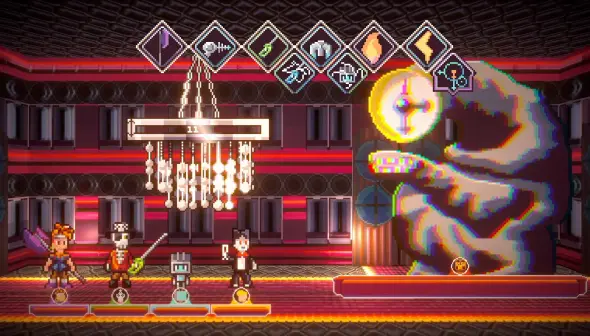
Combat is where the remake shines brightest. The original used a turn-based system with real-time elements that often felt clunky. Here, it’s evolved into a hybrid “Active Mythos System” that blends classic ATB (Active Time Battle) with more dynamic positioning. Characters have stamina meters that encourage smart positioning on the battlefield—flanking enemies, using terrain like crumbling ruins for cover, or triggering environmental hazards.
I died a lot in the first few hours. Not because it’s unfair, but because it demands you actually think. Boss fights are spectacular set pieces now. The remade “Abyss Guardian” encounter, which used to be a frustrating slugfest, is now a multi-phase spectacle involving climbing the boss’s body while platforms crumble beneath you. The difficulty curve is adjustable too—there’s a “Storyteller Mode” for folks who just want the narrative, and a “Masochist Legacy” mode that restores original penalties like permadeath for party members. I’m playing on Normal and still feel challenged without wanting to throw my controller.
Exploration has been massively improved. The world feels three times larger but never empty. Hidden areas gated behind clever puzzles (think light refraction using your party’s abilities, or rewriting “narrative rules” with special items) reward curiosity. I spent two hours in the Whispering Archives just reading optional lore tablets. The fast travel system is generous but gated by story progress, preventing you from breaking the pacing too early.
One small gripe: inventory management still feels a tad archaic. You can carry a ridiculous number of items, but sorting and crafting could use a modern QoL pass. It’s minor, though—most modern RPGs have spoiled us with auto-sort everything.
Graphics, Sound, and That Intangible “Vibe”
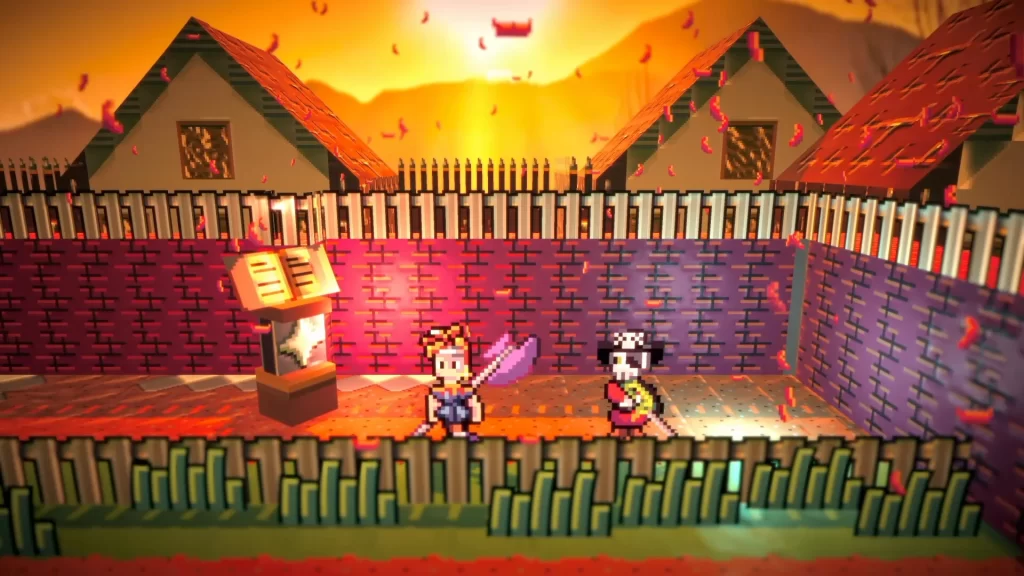
Visually, End Remake is stunning without being generic. They used a stylized approach—think Octopath Traveler meets Persona 5 with a dash of Nier: Automata existential decay. Environments pop with detail: glowing runes on ancient stones that react to your party’s presence, dynamic weather that actually affects gameplay (rain makes certain platforms slippery, fog hides secret paths). Character models are expressive, with new idle animations that sell their personalities. The Wanderer still doesn’t speak much, but his animations convey quiet determination or growing doubt beautifully.
Performance on my mid-range PC was rock solid at 4K/60fps after a day-one patch. Consoles (PS5, Xbox Series X) look equally great, though I’ve heard some reports of minor texture pop-in on Switch 2 in handheld mode. Nothing game-breaking.
The soundtrack is pure magic. The original composer returned, remixing classics with a full orchestra and modern synth layers. The main theme, “Pages Unwritten,” gave me chills during the credits (yes, I cried a little—don’t judge). Voice acting deserves special mention. The English dub is excellent, with the sarcastic knight stealing every scene. Japanese voices bring that premium anime energy. Sound design elevates everything—footsteps change based on terrain, combat whooshes feel weighty, and ambient music shifts subtly as the world begins to “end.”
The Story and Themes: Deeper Than Expected
Here’s where the remake transcends. The original was clever but surface-level in its meta commentary. This version leans in harder. As you progress, the game starts commenting on remakes themselves. Party members debate whether “updating” their world erases what made it special. One late-game twist involving save file manipulation had me putting the controller down for a minute just to process it. It’s not heavy-handed; it earns its emotional beats.
Characters feel more fleshed out. The healer’s backstory, barely a footnote originally, is now a heartbreaking multi-hour arc involving lost family and the cost of “rewriting” fate. Romance options are present but optional and tasteful—none of that forced harem nonsense.
Pacing is strong for the most part. The mid-game sags slightly with too many fetch quests in the Floating Continent, but they’re skippable and offer great rewards. The finale? Masterful. Multiple endings based on choices, plus New Game+ that carries over progress and unlocks “Director’s Cut” scenes. I’ve already started a second playthrough.
Criticisms: It’s Not Perfect
No game is. The biggest issue is accessibility for newcomers. If you never played the original, some references might fly over your head, though the game does a decent job onboarding with an in-game codex. Some puzzles are obtuse— I had to look up one switch puzzle online because the hint was too cryptic.
Microtransactions? Thankfully absent. It’s a full-priced title ($69.99) with no battle passes or loot boxes. Post-launch DLC has been announced—new epilogue chapters and a boss rush mode—but it looks like meaningful additions, not cut content.
Bugs at launch were minimal. A few dialogue skips and one soft-lock in an optional dungeon, quickly patched.
Why This Remake Matters
In an industry obsessed with live-service grinds and photorealistic open worlds that feel empty, The Remake of the End of the Greatest RPG of All Time is a reminder that games can be about something. It respects its past while pushing forward. It made me laugh, rage-quit once (that damn optional superboss), and reflect on my own relationship with stories and endings.
If you loved the original, this is essential. If you’re new to it, it’s still one of the most inventive RPGs in years. It’s not trying to be the next Elden Ring or Final Fantasy XVI. It’s trying to be the best version of itself, and in doing so, it might just remind you why you fell in love with RPGs in the first place.
Score: 9.2/10
“The Wanderer’s journey ends… or does it?” Perfect tagline for a game that refuses to let go. If you’re on the fence, buy it. Support weird, passionate projects like this. We need more of them.
