
The Night the Wolves Met in Newark: How Sean Strickland Stole the Middleweight Crown from Khamzat Chimaev at UFC 328
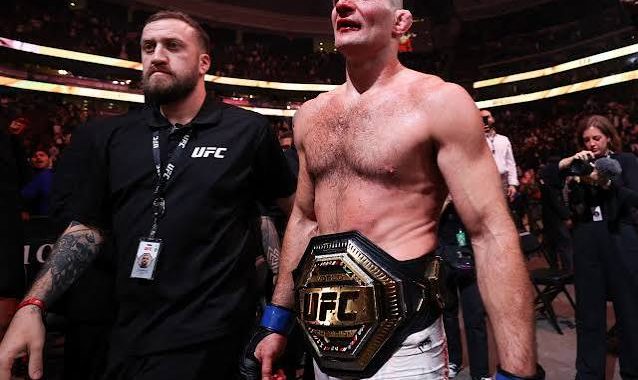
There are fights that feel manufactured for television, and then there are the ones that feel like they were always going to happen. Khamzat Chimaev versus Sean Strickland belonged in the second category. By the time they finally stepped into the Octagon at the Prudential Center in Newark on the night of May 9, 2026, the air was already thick with months of insults, threats, cultural jabs, and the kind of personal animosity that makes promoters smile and security teams nervous. What followed was not the one-sided masterclass many expected. It was a grinding, bloody, five-round war of attrition that ended with the unlikeliest of outcomes: Sean Strickland reclaiming the UFC middleweight title by split decision, handing the previously undefeated “Borz” the first loss of his professional career.
This is the story of how it all unfolded—the buildup that nearly boiled over, the tactical chess match that surprised almost everyone, the key moments that swung the judges’ scorecards, and the strange respect that emerged once the final bell rang.
The Long Road to May
Khamzat Chimaev had finally claimed the middleweight throne in August 2025 at UFC 319, dismantling Dricus du Plessis in a performance that looked like something out of a highlight reel. Control time stacked up. Takedowns piled on. Strikes from top position kept coming until the judges’ cards were a formality. For a fighter who had spent years dealing with visa issues, COVID delays, and the frustration of being the most talked-about prospect who couldn’t stay active, the belt felt like destiny finally arriving. Chimaev entered the Strickland fight 15-0, riding a wave of aura that made him look nearly untouchable. The betting odds reflected it—Chimaev was a heavy favorite, somewhere in the -500 to -600 range depending on the book.
Sean Strickland, meanwhile, had already lived the champion’s life once. He shocked the world by taking the belt from Israel Adesanya at UFC 293 in 2023 with a performance built on volume, pressure, and an unkillable chin. He lost it in his first defense to du Plessis, failed in the rematch, then climbed back through the ranks with wins over names like Paulo Costa and Anthony Hernandez. By early 2026, after stopping Hernandez, the case for another title shot was strong enough that the UFC made it happen. Strickland was 30-7 heading in, a known commodity with a style that frustrates more athletic opponents: constant jab, high output, excellent cardio, and a stubborn refusal to stay on the bottom for long.
The personal layer made it combustible. Strickland’s trash talk went beyond the usual fighter bravado. Comments about Chimaev’s Chechen background, references that crossed into racist territory, threats involving firearms—it got ugly enough that the UFC increased security during fight week. Chimaev responded in kind, promising to take Strickland’s head off. There was a faceoff incident where Chimaev attempted a kick. The press conference energy was toxic. Yet when the night finally arrived, both men touched gloves. Twice. The cage had extra security personnel inside before the fight started. Referee Herb Dean was the only official left in there with them once the action began.
Newark’s Prudential Center has hosted plenty of big nights. This one felt different. The crowd was loud, partisan in pockets, and ready for blood.
Styles Make Fights—And This One Looked Lopsided on Paper
On paper, the stylistic clash favored Chimaev heavily. His wrestling is relentless. He averages high takedown numbers and turns control time into attrition. Once he gets an opponent on the mat, the pressure rarely lets up. His striking is functional and powerful, especially the overhand rights and body work that set up the shots. Strickland’s path to victory, according to most analysts, required keeping the fight standing, stuffing the early takedowns, and dragging Chimaev into the later rounds where the former champion’s volume and durability have historically shone.
Strickland’s jab is one of the best tools in the division—straight, consistent, and used to control distance and accumulate damage over time. He doesn’t chase knockouts the way some do; he wins by making opponents miserable for 25 minutes. His takedown defense is solid if not elite, and he has never been submitted in his professional career. The question was whether that defensive wrestling and cardio could survive the first ten minutes against a fresher, more explosive Chimaev.
Pre-fight analysis leaned hard toward the champion. Chimaev had looked like a different animal against du Plessis. Strickland had the underdog aura from the Adesanya fight, but this felt like a step up in physicality and pace. Still, anyone who had watched Strickland long enough knew he thrives when the fight becomes a war of wills rather than a technical clinic. The longer it stayed competitive, the more dangerous he became.
Round by Round: How the Fight Actually Played Out
The opening seconds delivered exactly what the odds predicted. Chimaev shot almost immediately and put Strickland on his back within the first 15 seconds. What followed was pure “Borz” pressure—dragging, scrambling, hunting the back, working toward a choke. Strickland stayed calm, defended the neck, scrambled when he could, and even briefly reversed into better position before Chimaev slammed him down again. The round ended with Chimaev still attached like a backpack. It was a clear 10-9 for the champion, and for a moment it looked like the finish might come early.
Round two flipped the script. Strickland came out behind the jab, landing the one-two early. When Chimaev shot, Strickland sprawled and ended up on top. That was the first real shock of the night. The challenger spent time in Chimaev’s guard, landing short punches, forcing the champion to work from his back—an unfamiliar position for the usually dominant grappler. Chimaev looked tired already. The crowd reacted. Strickland took the round on most scorecards. Suddenly the fight was even.
The third round became a pure striking battle. Chimaev largely abandoned the wrestling early and chose to trade. Strickland’s jab found a home repeatedly. Combinations followed. Blood appeared under Strickland’s nose, but the volume belonged to the challenger. Chimaev landed the occasional heavier shot, yet the cleaner, more consistent work came from the man in the blue gloves. Another round for Strickland. The momentum had shifted hard.
Round four saw Chimaev regain some control. He mixed body work and overhand rights more effectively. A big right hand landed clean. He backed Strickland toward the fence and, with about a minute left, secured another takedown. Control to the bell. That evened the scorecards on most official tallies. Two rounds apiece heading into the fifth.
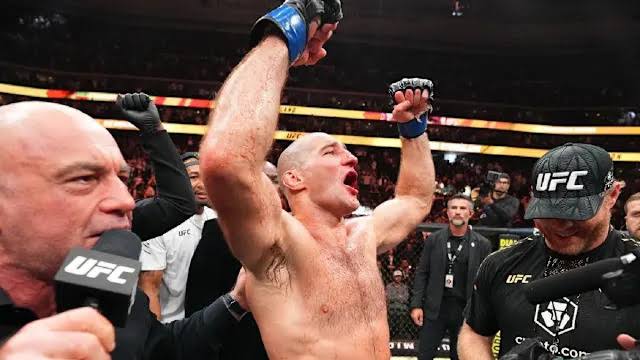
The final round decided everything. Chimaev scored an early takedown again, but Strickland wall-walked and scrambled back to his feet quickly. From there the challenger returned to the jab and the combinations. Chimaev chased more takedowns—official stats later showed six successful ones in the round alone—but the control time was brief and the damage minimal. Strickland outlanded him in significant strikes and looked the fresher man in the final two minutes. When the horn sounded, both men raised their arms. The embrace that followed looked genuine.
The Numbers and the Cards
Official UFC stats told a clear story on the feet. Strickland landed 123 significant strikes to Chimaev’s 98. The head-strike differential was even more lopsided—118 to 52. Chimaev dominated the grappling column with nine of 13 takedowns and over seven minutes of control time to Strickland’s three. Yet the control rarely produced damage or near-finishes after the first round. Under the unified rules, effective striking and aggression often outweigh pure positional control when the damage isn’t there.
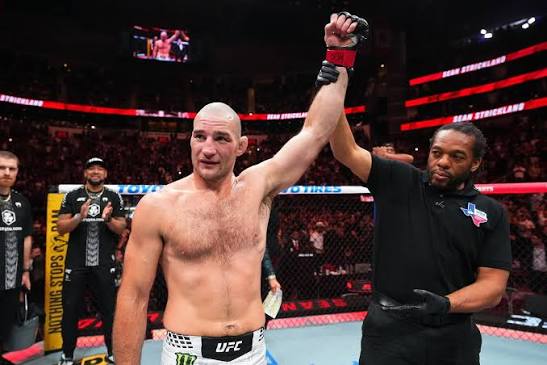
The judges reflected the closeness. Eric Colon and Sal D’Amato both scored it 48-47 for Strickland (rounds 2, 3, and 5). Sue Sanidad had it 48-47 for Chimaev (rounds 1, 4, and 5). Split decision. Strickland was the new—and two-time—middleweight champion. Chimaev’s record fell to 15-1. Strickland moved to 31-7.
Media scores were almost evenly split, which only underscored how razor-thin the fight had been. Some felt Chimaev’s early dominance and late takedowns should have carried more weight. Others pointed to the striking volume and the fact that Strickland repeatedly denied prolonged control after the opening frame.
Top Highlights That Defined the Night
Several moments will live in the highlight packages for years.
The immediate takedown in round one set the tone and briefly made the finish look inevitable. Chimaev’s persistent back-taking attempts and the near-choke late in that round showed why so many had him as a heavy favorite.
Strickland’s reversal and top control in round two was the emotional turning point. Hearing the crowd react as the undefeated champion found himself on the bottom for the first real extended period of the fight changed the atmosphere inside the arena.
The pure boxing exchanges in round three, with Strickland’s jab snapping Chimaev’s head back repeatedly while blood started to flow, proved the challenger could win the fight on the feet if the wrestling was neutralized.
Chimaev’s big right hand and subsequent takedown in round four reminded everyone the champion still had weapons and the will to use them.
The final-round scramble sequences—Chimaev hitting takedowns only to watch Strickland pop back up and resume jabbing—showed the challenger’s durability and the champion’s fading gas tank.
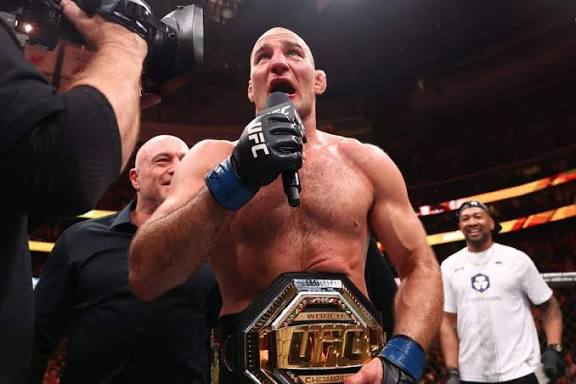
And then the post-fight moment that may have surprised people more than the decision itself: Chimaev wrapping the belt around Strickland’s waist, the kiss on the cheek, the mutual respect after months of venom. Strickland, for his part, immediately apologized for the pre-fight rhetoric. “I went too hard,” he said. “I’ll admit it.” He also gave full credit to Chimaev’s toughness: “That motherfucker would not go back. I’m hitting him with everything and he just keeps coming forward. Crazy.”
What It All Means
For Strickland, this was validation of the underdog path he has walked since the Adesanya fight. He becomes only the second man (after Adesanya himself) to hold the UFC middleweight title twice. At 35, he remains a high-volume technician with elite cardio and an ability to make highly athletic opponents fight his fight. The broken nose he suspected afterward was a small price for the belt.
For Chimaev, the loss stings in the way first losses always do for fighters who have never tasted it. The conditioning questions that surfaced after the first round will be dissected for months. Some will argue the weight cut or the long layoff between big fights played a role. Others will simply say Strickland solved the puzzle that few others had. In the immediate aftermath, Dana White mentioned Chimaev had talked about moving up to light heavyweight. Later comments from Chimaev and his team made clear he wants the rematch more than anything. “Accept the fight, don’t run,” he would later post. The obsession is real.
The middleweight division, already one of the deepest and most competitive in the UFC, suddenly looks wide open again. Contenders who had been waiting their turn now see a champion who has proven vulnerable in five-round wars and a former champion hungry to reclaim what he lost. Whether the immediate rematch happens or Strickland defends against someone else first remains a question for the matchmakers. What is certain is that the rivalry did not end in Newark. It simply changed temperature.
UFC 328 will be remembered as the night the aura cracked. Khamzat Chimaev walked in undefeated and left with a loss. Sean Strickland walked in as the loud, polarizing underdog and left as champion for the second time. The fight itself was not the most technical masterpiece the division has produced, nor the most violent finish. It was something better for the sport’s long memory: a genuine five-round contest between two men who disliked each other intensely and still managed to produce a result that felt earned on both sides of the scorecards.
In the end, the jab beat the wrestling more often than the wrestling beat the jab. Volume outscored control when the damage wasn’t there. And a fighter many had written off after consecutive title losses proved once again that he belongs at the top of the mountain. The wolves met in Newark. Only one of them left with the belt. The other is already howling for the next meeting.