
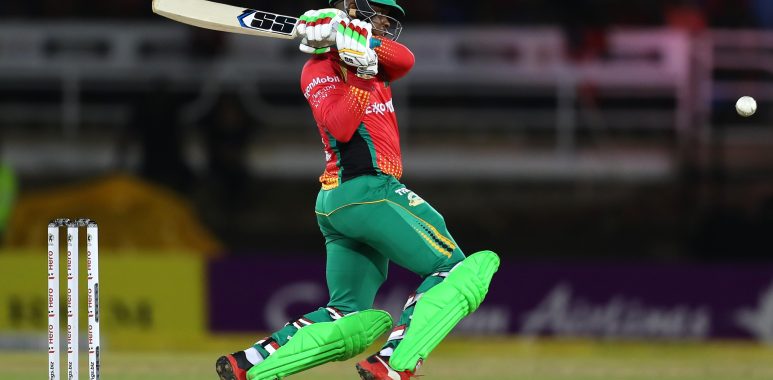
Guyana Amazon Warriors Cruise Past St Lucia Kings by Seven Wickets in CPL 2026
Guyana Amazon Warriors produced another composed performance in the Caribbean Premier League 2026, defeating St Lucia Kings by seven wickets with 11 balls remaining in the 11th match of the tournament at the Daren Sammy National Cricket Stadium in Gros Islet.
After restricting the Kings to 151 for seven from their 20 overs, the Warriors chased down the target with ease, reaching 157 for three in just 18.1 overs. Mavendra Dindyal provided the foundation with a patient half-century before Shimron Hetmyer and Quentin Sampson supplied the late fireworks to finish the contest in emphatic fashion.
Dwaine Pretorius was the architect of Guyana’s victory with an excellent spell of three wickets for 29 runs. His disciplined bowling prevented St Lucia from building the sort of total that could have placed pressure on the Warriors during the chase. Shamar Joseph also played an important role with two wickets for 25 runs.
The result continued Guyana’s impressive start to the CPL season and left St Lucia Kings searching for answers after another difficult outing.
Kings Struggle to Build Momentum
St Lucia Kings were asked to bat first, and their innings never quite found the sustained momentum required to post a commanding total.
The surface at Gros Islet offered enough assistance to the bowlers to make stroke-making difficult at times. The ball did not always come onto the bat at the same pace, forcing the Kings’ batters to work hard for their boundaries.
Guyana’s bowlers understood those conditions quickly.
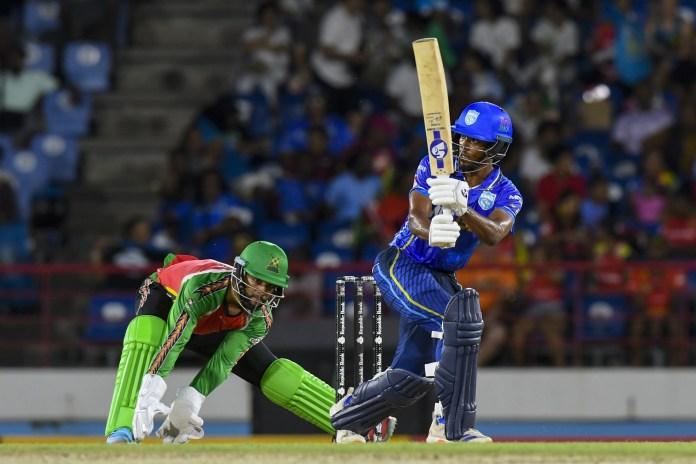
Rather than allowing St Lucia’s batters to settle into a rhythm, the Warriors consistently attacked the stumps and varied their pace. Pretorius was particularly effective, using his experience to find the awkward lengths that made it difficult for the Kings to free their arms.
St Lucia’s innings therefore became a series of small partnerships rather than one sustained assault.
Charith Asalanka emerged as the Kings’ leading scorer, making 35 from 28 balls. His innings contained moments of authority, but he never had enough support to turn his contribution into the platform for a much bigger total.
Darren Nedd also tried to stabilize the innings, but Guyana’s bowling attack repeatedly interrupted St Lucia whenever the batting side appeared ready to accelerate.
The Kings eventually finished on 151 for seven.
On a surface where batting was not entirely straightforward, 151 was respectable. But against a Guyana side that had already demonstrated considerable confidence in the chase, it was unlikely to be enough unless St Lucia could produce early wickets.
Pretorius Leads the Bowling Attack
The standout performance of the first innings came from Dwaine Pretorius.
The experienced South African seamer delivered four controlled overs and finished with figures of three for 29. His spell was a mixture of intelligent variations, hard lengths and well-timed changes of pace.
Pretorius did not simply wait for mistakes from the St Lucia batters. He created uncertainty.
Whenever a Kings batter looked ready to attack, Pretorius changed the angle or length and forced them to reconsider their options. That approach proved particularly valuable on a pitch where timing the ball cleanly was not always easy.
Shamar Joseph provided excellent support at the other end, claiming two wickets for 25 runs.
Together, Pretorius and Joseph accounted for five of St Lucia’s seven wickets.
Maheesh Theekshana was the Kings’ best bowler later in the match, but Guyana’s seamers had already done the most important work. By limiting St Lucia to 151, they gave their batting lineup a manageable target.
Khary Pierre also played his part with a tidy spell, conceding only 21 runs from his four overs.
The overall bowling effort was a good example of Guyana’s growing control in T20 cricket. They did not need every bowler to take wickets. Instead, they focused on preventing St Lucia from producing the huge overs that can transform a T20 innings.
That strategy worked.
Asalanka Tries to Rescue St Lucia
For much of the innings, St Lucia needed someone to take responsibility for the scoring.
Asalanka eventually became that player.
His 35 from 28 balls was not a spectacular innings, but it was important in the context of the Kings’ struggles. He looked to attack whenever the opportunity appeared while also trying to ensure that the innings did not collapse completely.
A partnership with Nedd offered St Lucia a chance to recover.
The pair helped move the score forward after Guyana had made regular breakthroughs, taking the Kings from 76 for four to 121 before the partnership was broken.
That was arguably the most important phase of the innings.
Had St Lucia been able to maintain that partnership for another few overs, the final total could have been considerably higher. Instead, Guyana remained patient and eventually found the breakthrough they needed.
Romario Shepherd dismissed Nedd, and Pretorius soon returned to remove Asalanka.
The Kings were left with too little time and too few established batters to produce a late explosion.
Matthew Forde briefly gave the innings some energy, striking two sixes in a quick contribution of 14 from seven balls. But Shamar Joseph removed him, while Pretorius continued his excellent night by completing another key dismissal.
St Lucia eventually reached 151 for seven.
The total gave Guyana a target of 152, but the Warriors knew they still needed to bat intelligently.
Dindyal Provides the Perfect Platform
Guyana’s chase began positively, with Mavendra Dindyal taking responsibility at the top of the order.
Dindyal’s innings was not based on reckless hitting. Instead, he played the situation intelligently, rotating the strike and waiting for scoring opportunities.
His half-century proved crucial.
In a chase of 152 on a slightly unpredictable surface, an opener does not necessarily need to score at an extraordinary strike rate. The priority is to stay in control of the innings, keep wickets in hand and make sure the required rate does not become overwhelming.
Dindyal did exactly that.
He reached 50 and gave Guyana the platform they needed.
His dismissal, coming immediately after he reached the landmark, briefly offered St Lucia hope. Maheesh Theekshana produced the breakthrough and removed Dindyal with Guyana on 107.
The chase then appeared to have a small opening for St Lucia.
The Kings sensed an opportunity.
Theekshana struck again to dismiss Shai Hope, who made 17 from 17 balls. With Guyana three wickets down and still needing 33 runs from 22 deliveries, St Lucia had created the only significant period of pressure during the chase.
But Guyana’s middle order responded immediately.

Hetmyer Changes the Game
Shimron Hetmyer walked into the middle with the chase entering its most important stage.
The equation was hardly intimidating, but St Lucia had just taken two wickets and needed to keep the scoring rate under control.
Hetmyer had other plans.
He began finding the boundary with remarkable efficiency and quickly changed the mood of the chase.
His unbeaten 25 came from just 11 balls. He struck four fours and one six, finishing with a remarkable strike rate of 227.27.
It was the kind of innings that T20 cricket is built around.
There was no need for Hetmyer to spend several overs rebuilding. Guyana already had the foundation. What they needed was someone capable of converting a comfortable position into a decisive victory.
Hetmyer did exactly that.
Quentin Sampson provided an even more explosive contribution.
Sampson scored an unbeaten 13 from only four deliveries, hitting two sixes. His brief stay at the crease demonstrated the batting depth available to Guyana and made it almost impossible for St Lucia to regain control.
Suddenly, the target that had briefly looked competitive was disappearing at extraordinary speed.
The Final Blow
The decisive moment came in the 19th over.
Guyana needed only a handful of runs, and Hetmyer finished the job in style.
He launched the ball over the leg side for six, taking the Warriors to 157 for three after 18.1 overs.
The victory was complete.
Seven wickets remained in hand, and Guyana had 11 deliveries unused.
The final margin tells the story of the chase better than almost any individual statistic.
This was not a last-over scramble.
It was not a victory produced by fortune or a series of desperate boundaries.
Guyana controlled the chase for most of the evening, absorbed the brief pressure created by Theekshana and then finished the match with authority.
A Complete Guyana Performance
What made the victory particularly impressive was that it was not dependent on a single player.
Pretorius controlled the first innings.
Joseph provided important breakthroughs.
Pierre kept the scoring under control.
Dindyal supplied the foundation in the chase.
Hetmyer and Sampson delivered the explosive finish.
That balance is precisely what makes a T20 side dangerous.
Guyana did not need one batter to score 80 or one bowler to take five wickets. Instead, different players contributed at different moments, allowing the team to remain composed throughout the match.
That is also why the result feels significant for the Warriors’ campaign.
They now have evidence that they can win in different ways. They can absorb pressure with the ball, build carefully with the bat and then accelerate when the situation demands it.
The victory also strengthened the impression that Guyana are one of the teams capable of challenging deep into the tournament.
St Lucia’s Batting Remains a Concern
For St Lucia Kings, however, the defeat raises questions about their batting.
Their bowling attack did create an opening during the chase. Theekshana’s two wickets gave them a realistic chance when Guyana were 119 for three.
The problem was that the Kings had not scored enough runs to make those wickets truly decisive.
A total of 151 meant that Guyana could afford to take their time.
Had St Lucia reached something closer to 165 or 170, the same bowling performance could have produced a completely different finish.
Instead, the Warriors always had enough room for one or two batters to attack.
The Kings’ middle order needs to find a way to turn promising partnerships into substantial contributions. Asalanka’s 35 was useful, but it was not enough to carry the innings.
The late overs also offered fewer runs than St Lucia would have wanted.
In T20 cricket, the final five overs are often where an ordinary score becomes a competitive one. St Lucia were unable to produce that acceleration consistently.
Pretorius Deserved the Player of the Match Award
Pretorius was the obvious choice for Player of the Match.
His three wickets for 29 runs were the foundation of Guyana’s victory.
More importantly, his wickets came at moments when St Lucia were attempting to build momentum.
That is what separates an effective bowling spell from a merely economical one.
Pretorius did not simply contain runs. He broke partnerships.
Every time the Kings began to look settled, Guyana found a way to disrupt them.
His performance was especially valuable because St Lucia were playing at their home venue, where familiarity with the conditions might normally have given the Kings an advantage.
Instead, the visiting attack adapted better.
What the Result Means for Guyana
Guyana Amazon Warriors came into the match with confidence, and the victory only strengthened it.
Their chase was their second consecutive successful pursuit to begin their campaign, underlining the calmness of their batting unit.
The team also showed that it does not panic when wickets fall.
When Theekshana dismissed Dindyal and Hope, Guyana still had enough batting power to finish the match quickly.
That depth is one of the most valuable assets in a T20 tournament.
There will inevitably be matches when the top order fails. Guyana’s performance in Gros Islet suggested they have the resources to survive those moments.
They also received an excellent contribution from a player like Hetmyer, whose ability to score rapidly can change matches in a matter of minutes.
A Night That Belonged to the Warriors

By the time Hetmyer struck the winning six, there was little doubt about which team had played the better cricket.
St Lucia had moments.
Their bowlers found wickets during the chase, and their middle order showed enough resilience to push the first innings beyond 150.
But Guyana were better in the crucial phases.
Their bowlers prevented St Lucia from accelerating.
Their batters avoided unnecessary risks while building the chase.
And when the game entered its final stage, their finishers attacked without hesitation.
The result was a seven-wicket victory with 11 balls remaining.
The scorecard read 151 for seven against 157 for three, but the numbers only partly capture the difference between the teams.
Guyana looked more assured, more adaptable and more ruthless when opportunities appeared.
For St Lucia Kings, the defeat will be frustrating because the game was not completely beyond them. A slightly larger total or a stronger response after Theekshana’s wickets could have changed the ending.
Instead, the Warriors walked away with another convincing victory.
Final Score
St Lucia Kings: 151 for 7 in 20 overs
Guyana Amazon Warriors: 157 for 3 in 18.1 overs
Result: Guyana Amazon Warriors won by 7 wickets with 11 balls remaining
Player of the Match: Dwaine Pretorius, 3 for 29
Top scorer for St Lucia Kings: Charith Asalanka, 35
Top scorer for Guyana Amazon Warriors: Mavendra Dindyal, 50
Best late contribution: Shimron Hetmyer, 25 not out from 11 balls
Guyana’s victory was ultimately built on discipline. Pretorius and the bowling attack kept St Lucia within reach, Dindyal ensured the chase had a stable foundation, and Hetmyer and Sampson turned a potentially tense finish into a one-sided conclusion.
For a team hoping to make a serious impact in CPL 2026, it was exactly the kind of performance Guyana Amazon Warriors will want to repeat.
