

Pakistan Women Open Asia Cup Campaign with Controlled Victory Over Thailand in Dubai
Dubai International Cricket Stadium played host to the fifth match of Group A in the Women’s Asia Cup on the evening of 1 September 2026, and Pakistan Women walked away with a solid 35-run win over Thailand Women. The night match under the Dubai lights produced a contest that was never truly close once the Pakistan bowlers settled into their work, yet it still offered plenty of talking points about batting caution, spin dominance, and the fine margins that decide these short-format games in Asian conditions.
Pakistan won the toss and chose to bat first on a surface that looked dry and a touch slow from the outset. Captain Fatima Sana later explained that her side expected the pitch to become even more difficult as the night wore on, so the decision to set a total rather than chase made sense on paper. What followed was a mixed innings that never quite exploded but never completely collapsed either. Pakistan finished on 119 for 9 from their full 20 overs. It was not a score that would have thrilled the coaching staff in isolation, yet it proved more than enough once the spinners took the new ball in the second innings.
The early overs of the Pakistan innings were messy. Shawaal Zulfiqar managed only a single before she was caught off Thipatcha Putthawong. Gull Feroza followed immediately, also dismissed by the same bowler, and the scoreboard read a shaky 6 for 2. Ayesha Zafar tried to inject some urgency with a few clean strokes but was caught for 9, leaving the innings at 23 for 3. At that stage Thailand’s seam and spin combination looked well on top, and the home crowd of mostly neutral observers began to sense an upset might be brewing.
Then Muneeba Ali took charge. The wicketkeeper-batter has long been known for her ability to play long, composed innings in the middle order, and she produced exactly that kind of performance here. She arrived at the crease with the score under pressure and simply refused to panic. Working the ball into the gaps, rotating the strike, and punishing anything loose with clean drives and cuts, she built the innings almost single-handedly for long stretches. Her partnership with Sadaf Shamas proved the most valuable of the night. The pair added 54 runs for the fourth wicket, taking the total past 70 and giving Pakistan something to defend. Sadaf contributed a brisk 20 from 20 balls that included three boundaries before she was caught off Suleeporn Laomi.
Muneeba continued past the fifty mark, reaching her landmark from 45 deliveries. She finished with 54 from 52 balls, an innings full of soft hands and smart placement rather than raw power. There were only four boundaries in the knock, a statistic that spoke volumes about the nature of the surface. By the time she was stumped off Laomi in the seventeenth over, the score had moved to 90 for 6. The lower order then scrambled a few more useful runs. Tuba Hassan struck a couple of late blows, and the total crawled to 119 for 9. Thailand’s bowlers shared the wickets evenly. Putthawong finished with three for 18, while Laomi claimed three for 14 in a tidy spell that mixed flight and subtle changes of pace. Phannita Maya picked up two wickets of her own. The Thai attack had every reason to feel satisfied with their work, yet the total of 119 still felt defendable on a pitch that was already showing signs of helping the slower bowlers.

Thailand’s chase began with the same sense of caution that had marked Pakistan’s innings. Natthakan Chantham and Phannita Maya opened, but the latter lasted only five balls before Sadia Iqbal bowled her for 4. Two balls later Nannapat Koncharoenkai, the wicketkeeper, was caught behind off the same bowler for a duck. At 6 for 2 Thailand were already under pressure, and the required rate began to climb. Chantham tried to hold one end while captain Naruemol Chaiwai attempted to rebuild, but the Pakistan spinners settled into a relentless rhythm.
Sadia Iqbal was outstanding. Bowling with control and subtle variations, she finished with figures of three for 11 from her four overs. Nashra Sandhu was even more economical, conceding just six runs from her four overs while claiming the important wicket of Chantham for 14. Tuba Hassan then entered the attack and immediately made an impact, removing Chaiwai for 17 and later stumping Aphisara Suwanchonrathi for 13. The middle order never found any fluency. Chanida Sutthiruang offered the only real resistance with a determined 25 from 24 balls that included two boundaries, but she was running out of partners. By the time she was caught off Sadia Iqbal on the final ball of the innings, Thailand had limped to 84 for 8. The required rate had long since become impossible, and the deficit of 35 runs told its own story.
The difference between the two sides was most visible in the quality and discipline of the spin bowling. Pakistan’s slow bowlers operated with accuracy, rarely offering width or length that could be attacked. Thailand’s batters, by contrast, struggled to rotate the strike and found themselves trapped on a surface that offered little pace. Fielding was not always perfect. Pakistan dropped a few chances that could have ended the contest even earlier, yet the overall control remained with the side defending the total.
For Pakistan this was an important first step in the tournament. Coming into the competition with expectations of a deep run, they needed to start with a win against a side that had already shown they could compete. Thailand had beaten Hong Kong earlier in the group and possessed a well-drilled bowling unit, but their batting depth was exposed under pressure. The result effectively ended Thailand’s hopes of progressing from the group. With two losses from three matches and a negative net run rate, their campaign was over before the halfway stage of the group phase.
Muneeba Ali was named player of the match for her composed half-century. In the post-match interviews she spoke about the need to value her wicket and build an innings rather than looking for early boundaries. Fatima Sana praised the bowling unit for executing the plans and noted that the pitch had played exactly as expected once the ball got older. Thailand captain Naruemol Chaiwai acknowledged that her side had not managed to handle the spin as well as they would have liked and pointed to the early wickets as the moment the chase slipped away.
The wider context of the Women’s Asia Cup added extra weight to the result. India had already posted dominant wins in the group, and Sri Lanka were looking strong in the other half of the draw. Pakistan knew they would face sterner tests ahead, including a meeting with India later in the group stage. A solid start against Thailand, even if the batting performance left room for improvement, gave them two valuable points and a boost in confidence.
Looking at the numbers more closely, the match highlighted several familiar themes in women’s T20 cricket across Asia. Spin continues to dominate on these slower surfaces, and sides that can bat with patience while still finding ways to accelerate at the right moments hold a clear advantage. Pakistan’s total of 119 was only one run above the average first-innings score recorded at the venue in recent women’s T20 internationals, yet the quality of their bowling made it look larger. Thailand’s inability to form partnerships of any length after the powerplay sealed their fate.
Putthawong’s three wickets also carried a personal milestone. With those dismissals she moved past Deepti Sharma to become the leading wicket-taker in women’s T20 internationals, reaching 173 scalps. It was a quiet landmark on a night when the focus remained on the team result, but it underlined the consistency she has shown over several years at the top level of the game for Thailand.
As the players left the field the temperature was still high, a reminder of the challenging conditions that Dubai can present even after sunset. Both sides will now turn their attention to the remaining fixtures. Pakistan have matches against stronger opposition still to come, while Thailand will look to finish the group with pride and perhaps collect a consolation win if the opportunity arises. For one night, though, the story belonged to Muneeba Ali’s calm batting and the disciplined work of Pakistan’s spinners.
The 35-run margin felt comfortable in the end, yet the path to that margin was built on small, steady contributions rather than one explosive performance. That is often the way of successful T20 sides on difficult pitches. They absorb pressure early, find a way to post a competitive total, and then trust their bowling attack to do the rest. Pakistan followed that template almost perfectly on this occasion. Thailand pushed hard in patches but could not sustain the challenge required to overhaul the target.
In the larger picture of the tournament the result keeps Pakistan firmly in the hunt for a semi-final place. Group A remains competitive, with India already looking the strongest side on paper, yet two points on the board and a positive net run rate give the Pakistan camp breathing space. The coaching staff will no doubt spend the coming days analysing the batting collapse at the start of the innings and looking for ways to add more intent without sacrificing control. For the bowlers the feedback will be almost entirely positive. They executed their plans, maintained pressure, and never allowed Thailand a genuine platform.
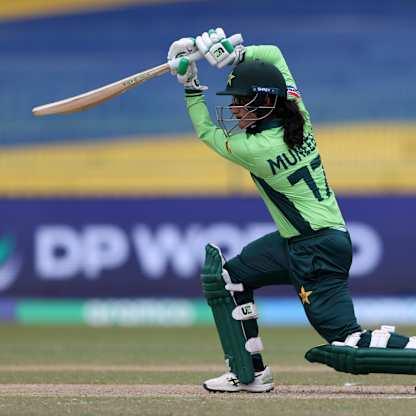
Night matches at the Dubai International Cricket Stadium have a particular atmosphere. The floodlights create sharp shadows, the outfield is quick, and the crowd noise rises and falls with every boundary or wicket. On this occasion the noise was largely appreciative of the skill on display rather than partisan. Both teams received polite applause for their efforts, and the presentation ceremony was brief and businesslike. Muneeba collected her award, the captains shook hands, and the focus shifted already to the next fixtures on the schedule.
Cricket at this level is a constant process of adjustment. Surfaces change, opposition tactics evolve, and players must adapt within the space of a few days. Pakistan showed they can adapt when required. Their batting was not fluent, yet it was resilient enough. Their bowling was accurate and intelligent. Those two qualities, combined with a sensible decision at the toss, produced a first win of the Asia Cup campaign and sent a message that they intend to be competitive throughout the tournament.
Thailand, for their part, can take some encouragement from the bowling performance. Restricting a full-strength Pakistan side to 119 was a solid effort, and individual milestones such as Putthawong’s record will stay with the players long after the tournament ends. The batting, however, remains a work in progress against high-quality spin. Until that area improves, results against the stronger Asian sides will continue to be hard to come by.
As the tournament moves forward the memories of this particular match will fade into the broader narrative of the 2026 Women’s Asia Cup. Yet for those who watched it unfold under the Dubai lights, it offered a clear illustration of how spin and patience can still decide contests even in the shortest format of the game. Pakistan left the ground with two points and a sense of satisfaction. Thailand left with lessons and the knowledge that their campaign had effectively ended. The scoreboard simply read Pakistan Women 119 for 9, Thailand Women 84 for 8, Pakistan won by 35 runs. Behind those numbers sat a night of careful cricket, composed batting, and disciplined bowling that set the tone for Pakistan’s progress in the competition.
