
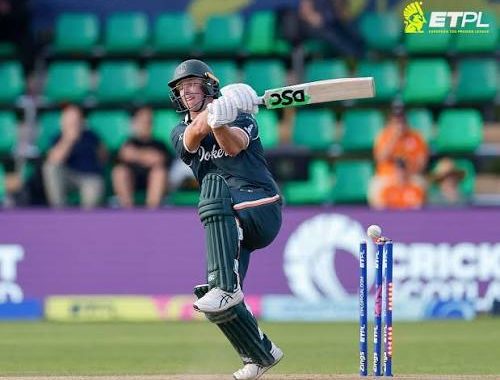
Amsterdam Flames and Edinburgh Castle Rockers Share Points After Rain Forces Abandonment in The Hague
The European T20 Premier League delivered another dose of frustration on a damp Friday evening in The Hague as the fourth match of the season between Amsterdam Flames and Edinburgh Castle Rockers was abandoned without a ball being bowled. The toss had already been completed when the umpires finally called it off, leaving both sets of players, officials and a sparse but hopeful crowd with nothing to show for their trouble beyond a shared sense of disappointment.
It had been one of those days that tease and then betray. Morning forecasts had spoken of scattered showers clearing by the afternoon, the kind of optimistic meteorological language that cricket followers in northern Europe have learned to treat with caution. By early afternoon the sky over Sportpark Westvliet hung heavy and grey, the wind off the North Sea carrying a chill that cut through even the late August air. Groundstaff worked diligently through the lunch period, covering the square and outfield with an efficiency born of long practice, yet the rain that arrived around three o’clock was persistent rather than torrential. It fell in a steady, soaking drizzle that refused to ease.
Captaincy duties fell to Amsterdam Flames skipper Lucas van Dijk and his Edinburgh counterpart Rory MacLeod. The two men walked out together shortly after the scheduled toss time, both wearing jackets against the wind, and conferred briefly with the umpires. Van Dijk won the toss and, in the circumstances, the decision was almost academic. He elected to bowl first should play become possible, a choice that reflected both the conditions and the Flames’ preference for chasing in this format. MacLeod nodded, shook hands, and the captains returned to their dressing rooms. At that point hope still flickered. The covers remained in place, the super soppers stood ready, and league officials spoke of a possible delayed start around five o’clock.
That hope lasted barely forty minutes. A heavier band of rain moved in from the west, turning the outfield into a patchwork of shallow pools. The umpires inspected at 4.45pm and again at 5.15pm. By the second inspection the verdict was clear. With the forecast offering no meaningful improvement and the light already beginning to fade under the thick cloud cover, the match was abandoned. No result. Points shared. Another entry in the growing list of weather-affected fixtures that have marked this early phase of the European T20 Premier League.
For those who had made the journey the sense of anticlimax was acute. A modest crowd of a few hundred had gathered, many of them Dutch families with children in Flames replica shirts, alongside a small but vocal contingent of Scottish supporters who had travelled from Edinburgh and beyond. They had endured the drizzle with the stoicism common to cricket watchers in this part of the world, nursing hot drinks and swapping predictions. When the abandonment was confirmed over the public address system there was little booing, only a collective sigh and the slow gathering of bags and umbrellas. Children who had been promised their first sight of T20 cricket left with ice cream instead. It was not the evening anyone had planned.
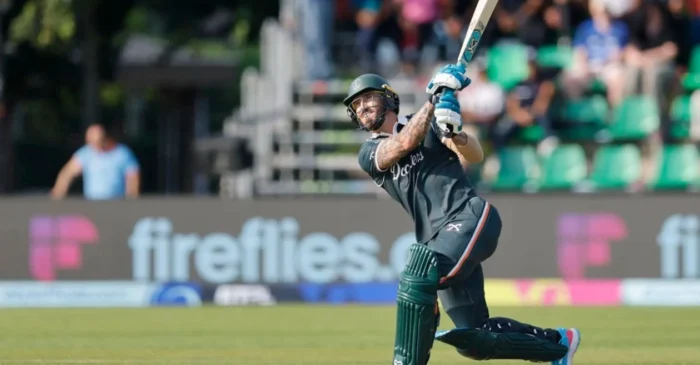
The result, or rather the lack of one, leaves both sides with a single point from the fixture. In a competition where every match carries weight, the shared point feels like a missed opportunity rather than a fair outcome. Amsterdam Flames entered the contest with two wins from three completed matches and sat near the top of the early table. Edinburgh Castle Rockers had mixed results, one victory and one narrow defeat, and had been looking to build momentum on the road. A full contest would have clarified the picture. Instead both teams must wait for their next assignment to make a clearer statement.
The European T20 Premier League was launched with ambition. Organisers spoke of bringing high quality short form cricket to cities across the continent, of developing local talent alongside overseas professionals, and of creating a calendar that could sit comfortably alongside the international season. The early weeks have shown both the promise and the practical challenges. Crowds have been encouraging in several venues. Broadcast interest has been solid. Yet the weather, particularly in the more northerly venues, has already intervened more than once. This is the second match in The Hague to be affected, and the third overall to finish without a result. League officials will be studying the contingency plans and the scheduling with renewed attention.
Amsterdam Flames have built their side around a core of Dutch internationals supplemented by experienced overseas players. Van Dijk himself is a composed leader who has guided the national side through several campaigns. In the middle order they possess the hard hitting talents of Max O’Dowd and the emerging power of young batter Tess de Vries, while the bowling attack relies on the accurate seam of Vivian Kingma and the clever variations of spin all rounder Pieter Seelaar. The squad had prepared thoroughly for this fixture, with training sessions earlier in the week focusing on wet weather techniques and the particular demands of the Sportpark Westvliet surface. That preparation now sits unused.
Edinburgh Castle Rockers arrived with their own strengths. MacLeod’s side mixes Scottish grit with a handful of high profile overseas recruits. Opening batter George Munsey remains one of the most destructive players in European domestic cricket, capable of changing a game in a handful of overs. The middle order is bolstered by the experience of Calum MacLeod, while the bowling unit features the left arm pace of Brad Wheal and the off spin of Mark Watt. They had spoken before the match of the need to adapt quickly to continental conditions and of treating every fixture as a chance to climb the table. The abandonment denies them that chance for another few days.
Both captains spoke briefly to the media afterwards. Van Dijk was measured. “We came here ready to play. The toss went our way and we felt we had a good plan for the conditions. Unfortunately the weather had other ideas. These things happen in cricket, especially in this part of the world. We take the point and move on. The focus now is on the next match and making sure we are ready when the weather allows us to play.” MacLeod echoed the sentiment while adding a note of frustration. “It’s disappointing for the players and for the supporters who came out. We trained well and felt we had a chance to put in a strong performance. Sharing the points is better than nothing, but we would have preferred a proper contest. We’ll regroup and look forward to the next one.”
The umpires, both experienced international officials, faced an unenviable task. Decisions on abandonment are never taken lightly, particularly when a crowd is present and television schedules are waiting. The criteria are clear enough: player safety, the state of the pitch and outfield, and the realistic prospect of a meaningful contest within the remaining time. On this occasion the combination of standing water, a deteriorating forecast and fading light left little room for debate. The decision was announced promptly once the second inspection confirmed the worst.
Beyond the immediate disappointment there are wider questions for the league. Scheduling matches in late August across northern Europe always carries risk. The climate does not always cooperate with the demands of a professional T20 competition. Some observers have suggested that contingency venues or reserve days might be considered in future seasons, though the logistics and costs of such arrangements are considerable. Others point to the need for improved drainage at certain grounds, an investment that several clubs have already begun to explore. For now the league must simply accept that weather will remain a factor and plan accordingly.
The players themselves will move on quickly. Professional athletes develop a certain resilience to these interruptions. Training continues, recovery sessions are adjusted, and attention shifts to the next fixture on the calendar. For Amsterdam Flames that next assignment comes soon enough, another home game that will offer a chance to convert the shared point into something more substantial. Edinburgh Castle Rockers face a short journey to their next venue, where they will hope the skies are kinder.
For the supporters the evening ends with a different kind of memory. Cricket in the rain has a long history, from the famous washouts of English summers to the more recent experiences of franchise leagues around the world. The images are familiar: covers on the square, players watching from the pavilion balcony, officials huddled in conversation, and eventually the slow dispersal of the crowd. In The Hague on this particular Friday the script was followed almost exactly. The difference is that this is a new competition still finding its identity, and every abandoned match feels like a small setback in the effort to build momentum and loyalty.
Yet there is also a certain romance in the persistence. The fact that people still turn up, still hope, still sit through the drizzle waiting for the covers to come off, says something about the place of cricket in these communities. The European T20 Premier League may be young, but it is already attracting an audience that understands the game’s peculiar relationship with the weather. They know that not every match will be completed. They know that some evenings will end with an announcement rather than a boundary. And they keep coming anyway.
As the last of the spectators left Sportpark Westvliet the groundstaff began the long process of uncovering and drying what they could. The pitch, protected throughout, remained in good condition. The outfield would need time and sun. By the following morning the rain had eased and a pale light was filtering through the clouds. It was the kind of day that might have allowed a match to be played. Instead it served only as a reminder of what might have been.
In the broader context of the season the shared point will soon be absorbed into the table. Other results will shift the standings. New narratives will emerge. Yet for those present on the night the memory will linger a little longer. They will remember the toss that happened and the match that did not. They will remember the captains shaking hands in the drizzle and the umpires shaking their heads at the second inspection. They will remember the children with their ice creams and the Scottish accents mixing with Dutch in the stands. And they will hope that the next time these two sides meet the weather allows the cricket to take centre stage.
The European T20 Premier League continues. The next fixtures are already on the horizon. Amsterdam Flames and Edinburgh Castle Rockers will both be back in action soon enough, carrying with them the single point earned on a rain spoiled evening in The Hague. For now the story of the fourth match is a short one. Toss completed. Match abandoned. No result. In cricket, sometimes that is all there is to say. The rest is left to the imagination and to the hope that the next time the covers come off for good.
