
Pakistan Seal Emphatic Victory in First ODI Against Australia in Rawalpindi
Pakistan Seal Emphatic Victory in First ODI Against Australia in Rawalpindi
Pakistan got their campaign off to a flying start in the Australia tour of Pakistan, defeating the visitors by five wickets with 45 balls remaining in the opening One Day International under the lights at Rawalpindi Cricket Stadium on Saturday, 30 May 2026. Chasing a target of 201, the home team showed composure and depth in their batting lineup to wrap up the game comfortably, setting a strong tone for the three-match series.
The Rawalpindi crowd turned up in massive numbers, painting the stadium green and creating an unforgettable atmosphere that clearly energized the Pakistani players. Day-night matches in Pakistan often come down to how teams handle the dew and the transition between innings, and on this occasion, conditions favored the side batting second as the ball became harder to grip for the bowlers.
Pakistan captain Shaheen Shah Afridi had no hesitation in choosing to bowl first after winning the toss. His decision proved masterful as the home pacers and spinners combined effectively to restrict Australia to 200 all out in 44.1 overs. Australia, missing some key personnel but still boasting a strong lineup, could not build momentum against a disciplined Pakistani attack.
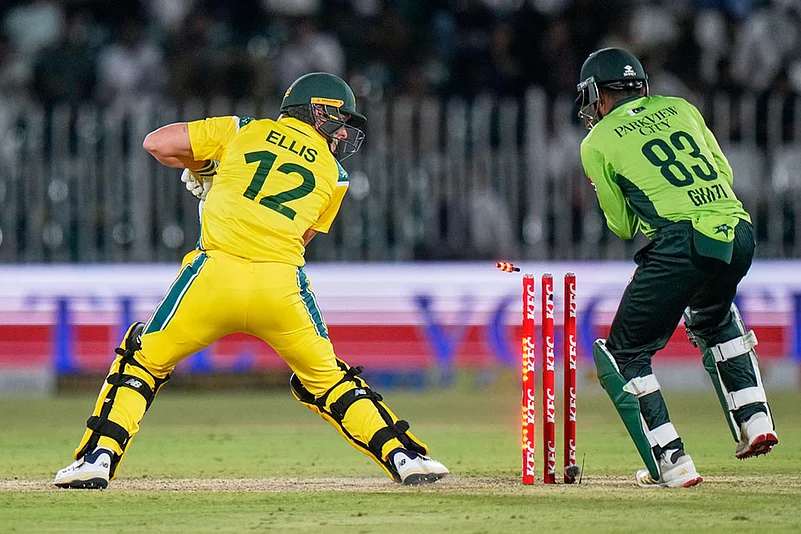
The Australian innings began cautiously. Openers Matt Short and Jake Fraser-McGurk tried to take the initiative, but Shaheen Afridi struck early, inducing an edge from Short that was safely pouched behind the stumps. Naseem Shah, bowling with good rhythm and pace, accounted for Fraser-McGurk shortly afterward, leaving Australia at 35 for two inside the first powerplay.
What followed was a series of mini collapses. Mitchell Marsh played some elegant shots in his 45-run knock, but he could not find a reliable partner. The middle order struggled particularly against the spin of young Arafat Minhas, who made an unforgettable debut. The left-arm spinner varied his flight and pace beautifully, claiming five wickets for just 32 runs in his full quota of 10 overs. His performance dismantled the Australian batting, earning him well-deserved Player of the Match honors.
Josh Inglis fought hard at the top, scoring a valiant 62 off 78 balls. He tried to hold the innings together, rotating the strike and finding boundaries when possible. However, once he departed, the lower order could not accelerate sufficiently. Shadab Khan and Abrar Ahmed provided excellent support to the pacers, picking up important wickets in the middle phase and keeping the run rate in check. By the time Australia reached 150, they had lost seven wickets, and the innings wrapped up with Australia falling short of a competitive total.

Pakistan’s fielding was electric throughout. Sharp catches in the slips and outfield, along with a couple of quick run-outs, added to the pressure on the visiting batsmen. Shaheen Afridi himself claimed two wickets, while Naseem Shah took two more, showcasing the depth in Pakistan’s bowling resources.
When Pakistan began their chase, the target of 201 appeared gettable but required careful application against a quality Australian bowling attack featuring Pat Cummins, Josh Hazlewood, and the wily Adam Zampa. Fakhar Zaman and Saim Ayub opened the innings with positive intent. Fakhar played some trademark aggressive strokes, racing to 38 before falling to a clever delivery from Zampa.
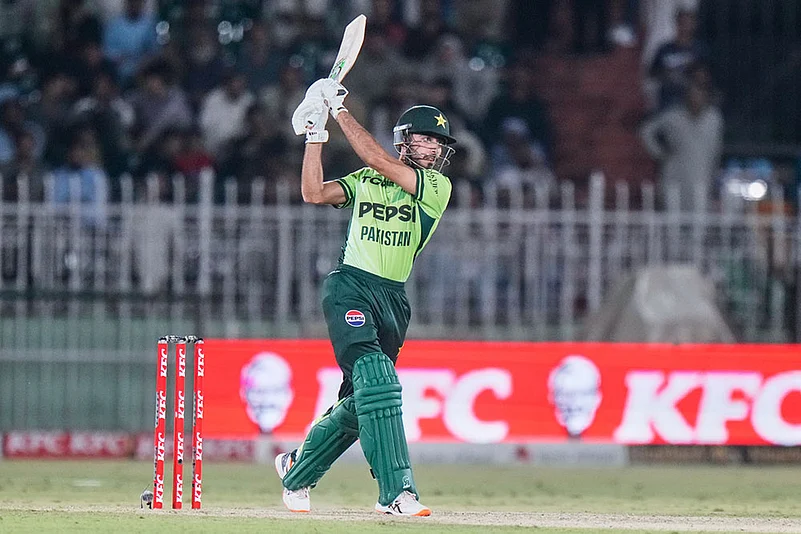
Saim Ayub continued to look solid, contributing 42 runs and ensuring the scoring rate stayed healthy. The innings truly stabilized when Babar Azam walked in. The former captain, eager to regain his best form, played a mature and controlled knock of 72 off 85 balls. His placement was exquisite, finding gaps with precision and building partnerships effectively.
Mohammad Rizwan joined Babar at the crease and added 45 crucial runs. Their stand of over 80 runs eased the pressure and kept Pakistan well ahead of the required run rate. Australia tried everything, with Cummins bowling with pace and aggression, and Zampa troubling the batters with his variations. Yet the dew factor made it tough for the Australian bowlers to maintain control in the latter stages.
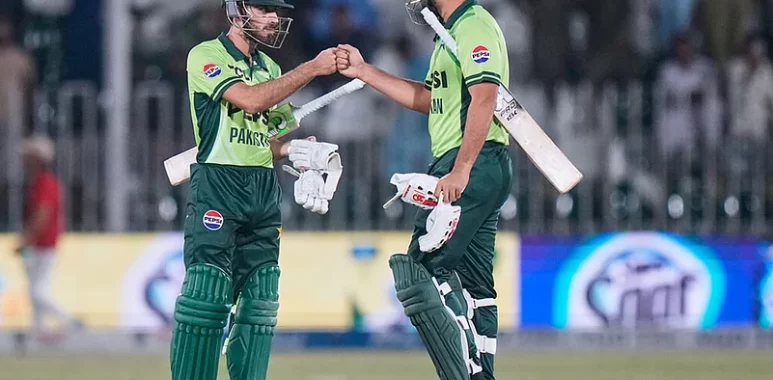
Arafat Minhas, coming in lower down the order, played a sensible cameo of 18 off 17 balls, including a couple of decisive boundaries that brought the target within touching distance. The winning moment came in the 43rd over when a crisp drive sealed the five-wicket victory, sending the Rawalpindi crowd into rapturous celebrations.
This result holds deeper significance for Pakistan cricket. After some mixed results in recent bilateral series, this clinical performance highlights the team’s growing confidence in home conditions. Pakistan have traditionally enjoyed strong support at venues like Rawalpindi, and this match reinforced their status as formidable opponents on home soil.
For Australia, the defeat points to areas requiring urgent attention. Their middle order looked vulnerable against spin, and adapting to subcontinental pitches remains a challenge. Josh Inglis’s effort was commendable, but the team will need bigger contributions from their top-order batsmen in the upcoming matches. Pat Cummins led from the front with the ball but could not inspire a comeback in the field.
Tactically, Pakistan executed their plans perfectly. Bowling first allowed them to exploit early conditions, while their spinners dominated the middle overs. The batting approach was balanced, blending caution with aggression at the right moments. Australia may consider adjustments to their combination, perhaps bringing in additional spin options or tweaking the batting order for the second ODI.
The broader context of this tour adds excitement. Following a competitive T20I series earlier, the ODI contests allow both teams to experiment with strategies ahead of major international events. The 2027 Cricket World Cup looms large, making every bilateral series an important stepping stone.
Player-wise, Arafat Minhas stole the show with his all-round brilliance. At just 20 years old, his composure and skill suggest he could become a mainstay in Pakistan’s white-ball setup. Babar Azam’s innings was a timely reminder of his class and importance to the team. For Australia, Inglis and Cummins emerged with credit, but the rest of the unit will be disappointed with their showing.
The crowd’s contribution was immense. Chants of Pakistan zindabad echoed around the stadium, creating an intimidating environment that has unsettled many visiting teams in the past. Australian players have spoken before about the unique challenge of playing in front of such passionate supporters, and this match was no different.
As the series progresses to Lahore for the second ODI, Pakistan will look to build on this momentum and push for a series lead. Australia, known for their fighting spirit, will be determined to level the scores and demonstrate their quality. The pitches in Lahore tend to offer more assistance to batters, promising high-scoring encounters.
Beyond the scoreboard, this match showcased the evolution of ODI cricket. Balanced attacks, smart tactical decisions, and the ability to adapt to conditions are becoming increasingly vital. Pakistan’s victory was built on teamwork, with every department contributing meaningfully.
In the post-match presentation, Shaheen Afridi expressed satisfaction with his team’s performance. He highlighted the bowling unit’s discipline and the batsmen’s execution under pressure. He also thanked the fans for their incredible support. Josh Inglis, accepting defeat gracefully, acknowledged Pakistan’s superior play on the day and vowed to come back stronger.
This first ODI will be remembered for several reasons: Arafat Minhas’s dream debut, Pakistan’s clinical chase, and the electric atmosphere in Rawalpindi. Cricket fans across Pakistan and beyond will eagerly await the next chapter in this fascinating series.
Expanding on the key moments, the early breakthroughs by Shaheen and Naseem set a tone of dominance. Australia never fully recovered from those initial setbacks. The spin trio of Arafat, Shadab, and Abrar then took control, slowing the game down and forcing errors from the batsmen.
In the chase, the partnership between Babar Azam and Mohammad Rizwan was the cornerstone. They rotated strike intelligently, punished loose deliveries, and ensured no unnecessary risks were taken. When Rizwan departed, the lower order including Iftikhar Ahmed and the debutant Minhas finished the job professionally.
Fielding highlights included a stunning one-handed catch by Shadab Khan and quick work from the keepers on both sides. Such moments often swing the momentum in tight contests, though this game ultimately had a comfortable finish for the hosts.
Looking ahead, Pakistan’s squad depth looks impressive. With players like Salman Ali Agha and others waiting in the wings, the team has options. Australia will rely on their experience and big-match performers to turn things around.
The statistical breakdown further illustrates Pakistan’s superiority. They bowled Australia out for under 210, a rare achievement in recent ODIs at this venue, and chased with plenty of overs to spare. The economy rates of the Pakistani bowlers stayed under five runs per over for most parts, reflecting excellent control.
This win boosts Pakistan’s confidence immensely. Home series victories against strong teams like Australia have historically lifted the entire nation’s spirit. For the players, it validates months of hard work and preparation.
As night fell fully over Rawalpindi, the fireworks and celebrations continued long after the match. This was more than just a cricket result. It was a statement of intent from Pakistan as they aim to dominate the white-ball format in the coming years.
The second ODI promises more thrills. Both teams will analyze this game closely, making adjustments where necessary. Fans can expect another intense battle, with Pakistan eyeing a series-clinching opportunity and Australia searching for redemption.
In conclusion, Pakistan’s five-wicket triumph in the first ODI was a comprehensive display of skill, strategy, and team unity. Led by standout performances from Arafat Minhas and Babar Azam, the hosts outplayed Australia in all departments. As the series unfolds, this opening victory will be remembered as the foundation for what could be a memorable campaign for the green shirts.
