
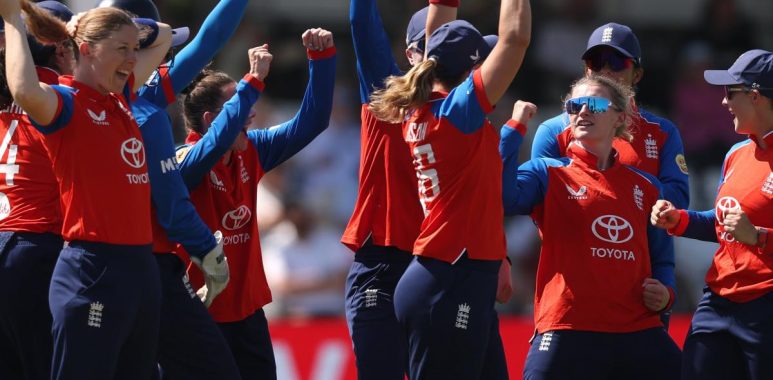
England Women Seal Series Victory with Commanding Chase at Hove
Hove buzzed with excitement on a bright Monday evening as England Women clinched the deciding third T20I against New Zealand Women by seven wickets, with a comfortable 37 balls to spare. The victory not only wrapped up the series 2-1 but also provided a timely boost for the hosts ahead of bigger challenges on the horizon. Under the lights at the County Ground, England showcased their depth, composure, and clinical finishing, turning what could have been a tense decider into a statement performance.
The match had all the ingredients of a classic T20 showdown: early drama with the bat, some spirited bowling from the visitors, and then a controlled pursuit that highlighted why England remain one of the top teams in the world. A crowd of several thousand turned up to enjoy the coastal charm of Hove, and they were treated to an evening of high-quality cricket that flowed at a brisk pace.
New Zealand won the toss and elected to bat first, a decision that seemed logical given the conditions. The pitch at Hove often offers something for the seamers early on before easing out, and with the series level at 1-1, the White Ferns wanted to set a challenging total. Sophie Devine, their experienced captain and one of the most dangerous batters in the game, led from the front. But England’s opening bowlers had other ideas.

Lauren Bell and Linsey Smith set the tone immediately. Bell, with her tall frame and ability to extract bounce, troubled the New Zealand top order right from the start. The first wicket fell in the third over when Suzie Bates, usually so reliable, edged one to the slips for a low score. Devine tried to counter-attack, smashing a couple of boundaries, but the pressure from accurate lines kept her in check. By the end of the powerplay, New Zealand were struggling at 38 for three, with key batters back in the pavilion.
Amelia Kerr and Brooke Halliday attempted to rebuild, rotating the strike cleverly and picking off the occasional loose delivery. Kerr, known for her all-round abilities, played a sensible knock, but England’s fielding was sharp. A brilliant direct hit from Alice Capsey ran out Halliday, breaking the budding partnership. From there, the innings lost momentum. Maddy Green and Georgia Plimmer tried to accelerate, but Charlie Dean and Sophie Ecclestone, the spin duo, choked the scoring rate in the middle overs.
New Zealand’s lower order managed some late fireworks, particularly from Lea Tahuhu and Jess Kerr, who swung the bat freely. Yet the total never quite looked imposing. When the final wicket fell in the 19th over, New Zealand had posted 128 for nine. It was a total that was competitive but certainly chaseable on a ground with short boundaries on one side.
England’s bowlers deserved immense credit. Bell finished with impressive figures, Smith provided control, and Ecclestone’s variations were as effective as ever. The fielding unit backed them up superbly, with minimal extras conceded and several sharp catches taken. This was a complete bowling and fielding display that set up the chase perfectly.
Chasing 129, England needed a solid start, and they got exactly that. Danni Wyatt-Hodge and Maia Bouchier opened the batting with intent. Wyatt-Hodge, despite recent personal commitments keeping her away from some matches, looked in fine touch, punishing anything short or wide. Bouchier complemented her perfectly, playing with freedom and rotating the strike. The pair put on a brisk 45-run opening stand before Bouchier fell to a good delivery from Rosemary Mair.
That brought Alice Capsey to the crease. What followed was a masterclass in T20 batting from the young all-rounder. Capsey has been in excellent form throughout the series, and here she took her game to another level. She attacked from the outset, using her feet against the spinners and driving powerfully through the covers. Her timing was impeccable, and she found the boundaries with regularity.
Heather Knight joined Capsey after Wyatt-Hodge’s dismissal, and the experienced skipper played the anchor role to perfection. While Capsey went after the bowlers, Knight ensured the required rate never climbed out of control. Together they added over 50 runs in quick time, with Knight’s placement and Capsey’s power making it look effortless. New Zealand tried everything – changing bowlers, using slower balls, and tightening the field – but the momentum was firmly with England.
The crowd erupted when Capsey reached her fifty, and she continued to press on. A couple of towering sixes over mid-wicket brought the target within touching distance. Knight fell late in the piece, but by then the game was all but won. Capsey remained unbeaten on 74 off just 42 balls, a knock that included several elegant boundaries and showed maturity beyond her years. Freya Kemp and Amy Jones finished the job with ease, sealing the victory in the 14th over.
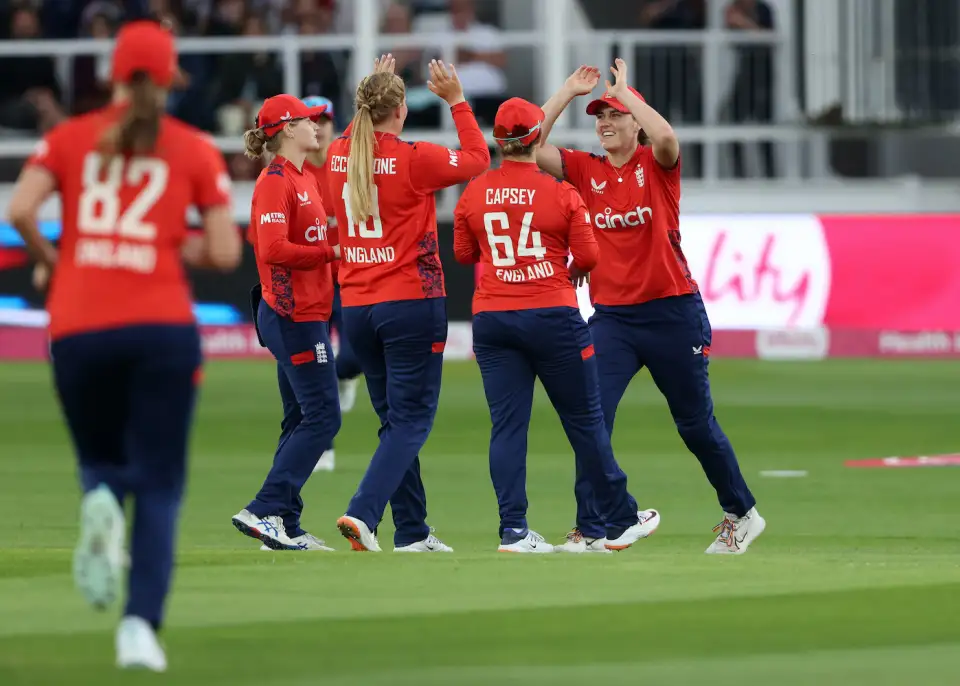
This performance was about more than just the result. It highlighted the strength in depth within the England squad. With Nat Sciver-Brunt unavailable due to injury, others stepped up magnificently. Capsey’s emergence as a match-winner, the consistency of the spinners, and the pace attack’s ability to restrict batters on a good surface all point to a team heading in the right direction.
For New Zealand, there were positives to take despite the defeat. Sophie Devine’s fighting spirit and the efforts of their bowlers, particularly Bree Illing and Amelia Kerr, showed they can compete at this level. However, their batting collapses at crucial moments have been a recurring theme in the series. The White Ferns will need to address their top-order fragility if they are to challenge the best teams consistently. Devine’s leadership remains a cornerstone, but the supporting cast needs to deliver more runs.
The series as a whole was a fascinating contest. England took the first T20I convincingly, New Zealand bounced back in the second with a narrow victory thanks to a strong batting display, and the decider belonged firmly to the hosts. Across the three matches, players like Linsey Smith and Alice Capsey shone brightly for England, while Sophie Devine and Maddy Green were the standout performers for the visitors.
Hove provided the perfect setting for this decider. The ground, nestled near the sea, offers a relaxed yet vibrant atmosphere for white-ball cricket. Fans enjoyed picnics on the grass banks, local food stalls, and the electric energy as the chase unfolded. The floodlights illuminated the action beautifully, and the conditions were ideal for an entertaining game. Sussex Cricket and the ECB should be praised for hosting another high-quality international fixture.
Looking ahead, this win gives England momentum as they prepare for the ICC Women’s T20 World Cup later in the year on home soil. The squad has a nice blend of youth and experience. Young talents like Tilly Corteen-Coleman and Issy Wong are pushing for places, while veterans such as Heather Knight and Sophie Ecclestone provide stability and know-how. The depth allows for tactical flexibility, which will be crucial in a global tournament.
New Zealand, too, have their eyes on the World Cup. As defending champions in some formats historically, they possess the talent to go far. Players like Amelia Kerr, who contributes with both bat and ball, and the explosive Devine are assets any team would envy. Their challenge will be consistency and converting promising positions into match-winning totals.
Individual performances in this match deserve special mention. Alice Capsey’s unbeaten 74 was the highlight, earning her player of the match. Her ability to dominate without taking unnecessary risks is a sign of a maturing cricketer. Lauren Bell’s early breakthroughs set the foundation, and Linsey Smith’s economical spell in the middle overs was vital. For New Zealand, Jess Kerr’s late hitting and some tight overs from Kerr and Mair kept them in the hunt longer than the scoreline suggests.
Tactically, England’s captain for the T20 series, Charlie Dean in some matches or Knight’s influence, showed smart thinking. They varied their bowling plans effectively and adapted to the conditions. New Zealand’s decision to bat first was understandable, but perhaps on reflection, chasing under lights might have been preferable given England’s strong batting lineup.
The broader context of women’s cricket in England is one of growth. Crowds are increasing, investment in the domestic game through the Hundred and regional setups is paying dividends, and the national team is reaping the rewards. Matches like this one at Hove help inspire the next generation of girls to pick up a bat and ball. The atmosphere was family-friendly, inclusive, and full of joy – exactly what the sport needs.
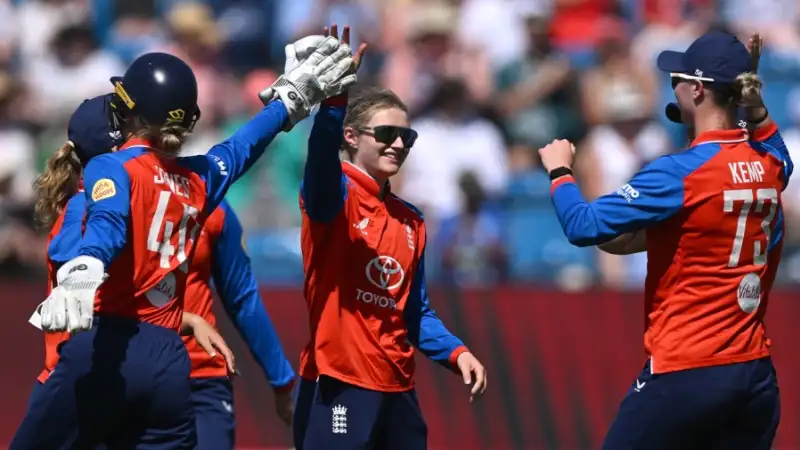
As the players shook hands and the England team celebrated on the field, there was a sense of satisfaction but also focus on what lies ahead. This series victory is a stepping stone. For the fans heading home along the south coast, it was another memorable night of international cricket.
In summary, England Women’s seven-wicket triumph in the third T20I at Hove was a display of professionalism and firepower. They outplayed New Zealand in all departments when it mattered most. Alice Capsey’s stellar batting, combined with a disciplined bowling effort, ensured the series trophy stayed at home. As both teams now turn their attention to future fixtures and the upcoming World Cup, this encounter will be remembered as a fine example of T20 cricket at its best – fast, skillful, and thoroughly entertaining.
The final score read New Zealand Women 128 for 9 in 20 overs, England Women 129 for 3 in 13.5 overs. A convincing win that underlines England’s status as contenders for global honors. The summer of women’s cricket continues to deliver, and nights like this at Hove remind us why we love the game so much.
