

Australia Clinch Series Victory with Commanding Win in Sydney Ashes Finale
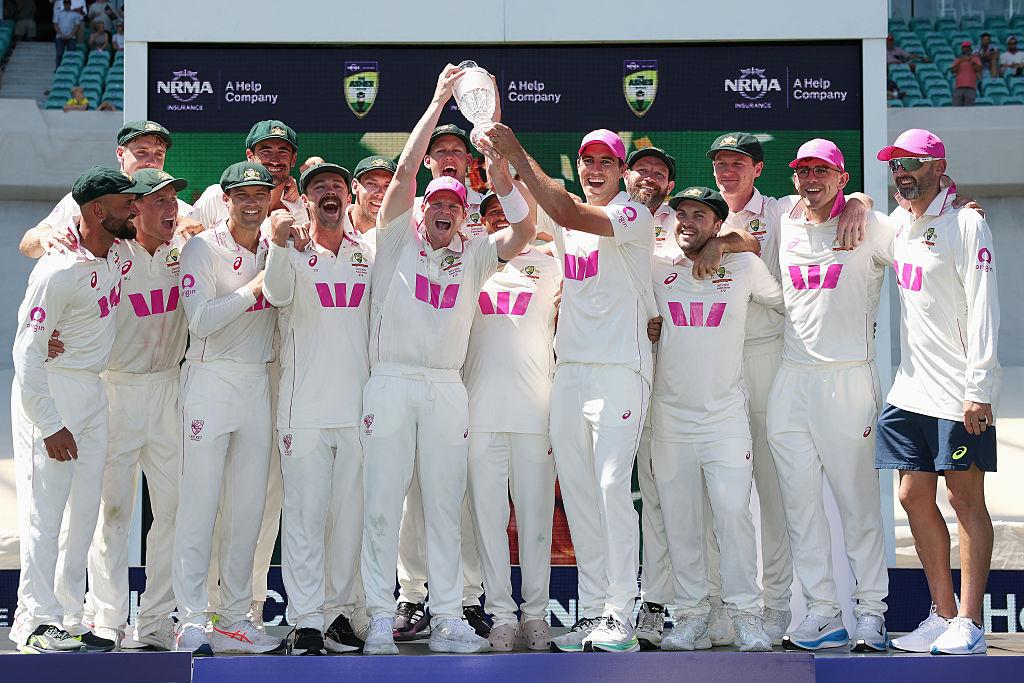
The Sydney Cricket Ground, bathed in the golden summer light of early January, witnessed yet another chapter in the storied rivalry between Australia and England as the hosts sealed a five-wicket victory in the fifth Test of the 2025-26 Ashes series. With this result, Australia not only wrapped up the series 4-1 but also reminded the cricketing world of their enduring dominance on home soil. The match, played from January 4 to 8, 2026, delivered high drama, individual brilliance, and moments of tension that kept a packed crowd of over 40,000 on the edge of their seats each day.
From the moment the coin landed in favor of England captain Ben Stokes, who elected to bat first on a pitch offering early assistance to the seamers, expectations were high for a contest befitting the oldest rivalry in the sport. Yet Australia, led by the ever-reliable Pat Cummins, responded with the kind of disciplined cricket that has defined their recent success. The victory was built on a massive first-innings total and a clinical chase, showcasing depth in batting and bowling that England simply could not match over the course of the series.
Day one belonged to England’s top order, but it was far from a straightforward session. The tourists reached 384 in their first innings, a competitive score that owed much to centuries from Joe Root and a fighting contribution lower down. Root, the evergreen maestro, compiled a patient 160, his 38th Test ton, navigating the swinging conditions with typical class. He found good support from Harry Brook and others, but the English innings was punctuated by regular breakthroughs from the Australian pace attack. Michael Neser, in particular, was outstanding, claiming four wickets for 60 runs in a spell that highlighted his value as a reliable workhorse in the absence of some retired greats.
The SCG crowd, a mix of green and gold and the occasional England supporter waving their flags, roared with approval as Australia began their reply late on the first day. Travis Head wasted no time in asserting his authority, playing with the aggression that has made him a fan favorite. By the close, Australia were well placed, setting the stage for what would become a record-breaking performance.
As play resumed on day two, the sun beat down on a pitch that had flattened out considerably. Head continued his onslaught, reaching 163 off just 166 balls in one of the most entertaining innings of the summer. His partnership with Steven Smith, who made 129, propelled Australia to a formidable 567. Smith’s knock was a masterclass in accumulation, rotating the strike and punishing anything loose. Beau Webster chipped in with a handy 42 not out, ensuring the tail wagged effectively. England’s bowlers, led by Josh Tongue with three wickets, toiled under the heat but lacked the penetration needed to stem the flow of runs.
This massive total put England under immense pressure. The psychological advantage swung heavily toward the home side. Cummins rotated his bowlers cleverly, using the short ball to unsettle the English batsmen while maintaining tight lines. By the end of day three, Australia had established a lead of over 180 runs, and the match seemed to be slipping away from the visitors.
England showed resilience in their second innings, reaching 342 all out on day four. Jacob Bethell emerged as the hero for the tourists, scoring a maiden Test century of 154 that spanned 265 deliveries. His innings was gritty and determined, full of drives and cuts that kept England in the contest longer than many anticipated. Support came from Root again and some lower-order resistance, but the damage from the first innings deficit proved too great. Australia’s bowlers, particularly the pace quartet, shared the wickets evenly, with Cummins and Neser once more leading the way.
Heading into the final day, Australia needed just 160 runs to secure victory and the series. The chase was not without its nervous moments, especially when England took a couple of early wickets to reduce the hosts to 40 for three. Stokes, ever the fighter, tossed the ball around and tried to manufacture pressure with aggressive fields. For a brief period, the possibility of a dramatic collapse loomed, but calmer heads prevailed.
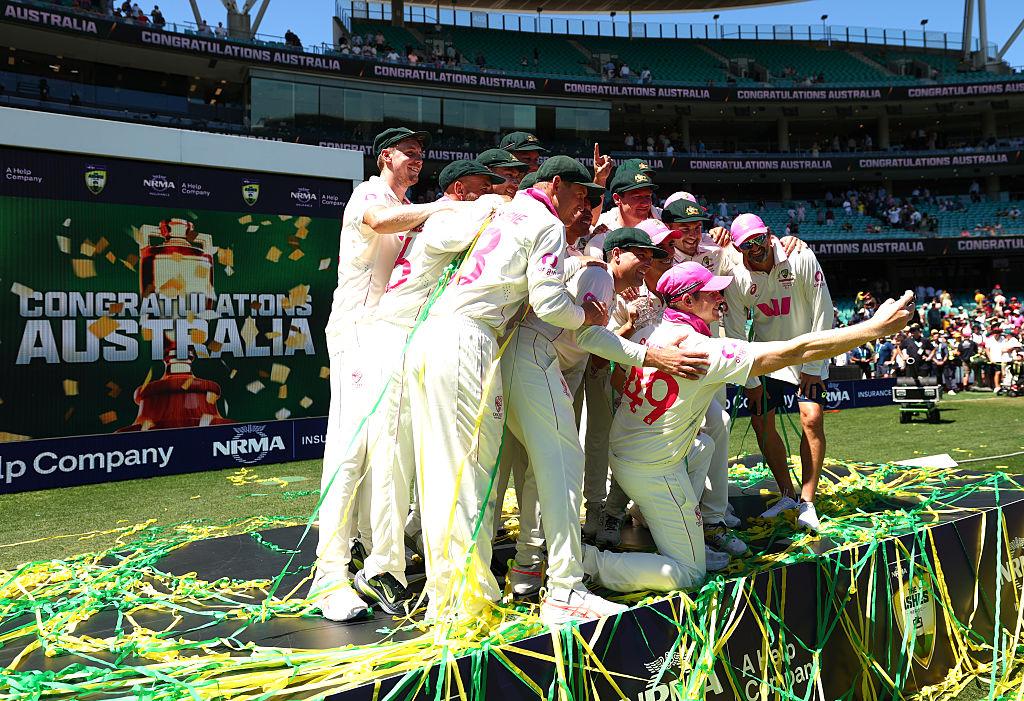
Usman Khawaja, in what was reported as potentially his farewell Test appearance, steadied the ship with a composed 45. He received excellent support from Marnus Labuschagne and others, who rotated the strike and played sensible cricket. The winning runs came in the 32nd over, with Australia reaching 161 for five. The celebrations were immediate and heartfelt, with players embracing on the field as the SCG erupted in applause. Khawaja’s emotional lap of honor, waving to the crowd, provided a touching end to what has been a memorable summer for him.
This victory was not just about the numbers, though they tell a compelling story. Australia’s first-innings total of 567 was built on partnerships and application. Head’s century earned him player of the match honors, a deserved recognition for an innings that shifted the momentum decisively. Across the series, Australia’s bowling attack, spearheaded by Cummins and Mitchell Starc, proved too potent for an England side that relied heavily on individual brilliance rather than collective strength.
Looking back at the broader context of the 2025-26 Ashes, Australia’s 4-1 triumph reflects their superior preparation and execution. They retained the urn early in the series with convincing wins in the opening Tests, but England fought back in patches, notably securing one victory that prevented a whitewash. The tourists’ Bazball approach, characterized by aggressive batting and unconventional tactics, provided entertainment but ultimately fell short against Australia’s more traditional strengths in patience and seam bowling.
The SCG has a rich history of hosting Ashes drama. From the bodyline series to modern epics, this venue has seen it all. This Test added to that legacy with its blend of attacking cricket and tactical nous. The crowd attendance was phenomenal, with record numbers turning out across the five days, underscoring the enduring popularity of Test cricket in Australia despite competing entertainment options.
For England, the series highlighted areas for improvement. While players like Root and Bethell showed promise, the middle order struggled for consistency, and the bowling lacked variety at times. Stokes’ leadership was inspirational as always, but questions remain about the long-term sustainability of their high-risk style in the longest format. The captain himself acknowledged post-match that Australia were the better team overall, praising their depth and home advantage.
Australian coach Andrew McDonald was beaming in the post-match press conference. He highlighted the team’s unity and the contributions from all 11 players across the series. Cummins, in his typical understated manner, credited the bowlers for setting up the wins and the batsmen for capitalizing on them. There were special mentions for the retiring or departing players who had given so much to the baggy green.
As the sun set on the SCG, fireworks lit up the sky in a fitting tribute to the conclusion of another unforgettable Ashes summer. For Australian fans, it was a time of celebration and reflection on a job well done. For English supporters, there was disappointment but also pride in the fight shown, with eyes already turning toward the next home series.
This fifth Test encapsulated everything that makes the Ashes special: rivalry, resilience, and raw sporting drama. Australia’s five-wicket win was comprehensive yet hard-fought, a testament to their status as the premier Test side in their own backyard. Travis Head’s explosive batting, Joe Root’s elegant accumulation, and the collective effort from both teams ensured that cricket fans around the globe were treated to a spectacle worthy of the occasion.
Delving deeper into the tactical nuances, Cummins’ decision to bowl first after winning the toss on day one, no, wait, England won the toss and batted, but Australia’s response was perfect. The use of the DRS system played a crucial role, with several tight calls going Australia’s way, though both teams benefited from the technology. The pitch, prepared by the SCG curators, offered something for everyone initially before becoming a true batting surface, which favored the side that posted the bigger first-innings score.
Individual stories added layers to the narrative. Head’s form throughout the series has been exceptional, silencing any critics who questioned his consistency in longer formats. His ability to play both aggressively and with control makes him a nightmare for opposition captains. Similarly, Smith’s return to form with another big score reaffirmed his place as one of the modern greats. For England, Bethell’s century was a bright spot, suggesting a promising future if he can build on this foundation.
Off the field, the atmosphere was electric. The traditional New Year’s Test timing, even though it started slightly later in January this year, drew families, tourists, and die-hard fans alike. The pink ball Test elements in previous years had set a precedent, but this time the red ball provided classic Test cricket visuals under clear skies. Ground announcements, fan chants, and the iconic Hill banter created an environment that players on both sides described as unforgettable.
In terms of statistics, Australia’s total of 567 was their highest in the series, and the target of 160 was chased down with relative ease once the early jitters subsided. The match aggregate of runs exceeded 1,400, indicating high-scoring entertainment. Wickets fell at regular intervals, preventing any team from completely dominating without challenge.
As the players walked off the field, handshakes and backslaps exchanged, one could not help but feel the weight of history. The Ashes urn, though small and symbolic, represents centuries of competition. Australia’s retention and series win add another line to their proud record. For the players, it means trophies, accolades, and memories that will last a lifetime. For the fans, it fuels the passion that keeps this rivalry alive.
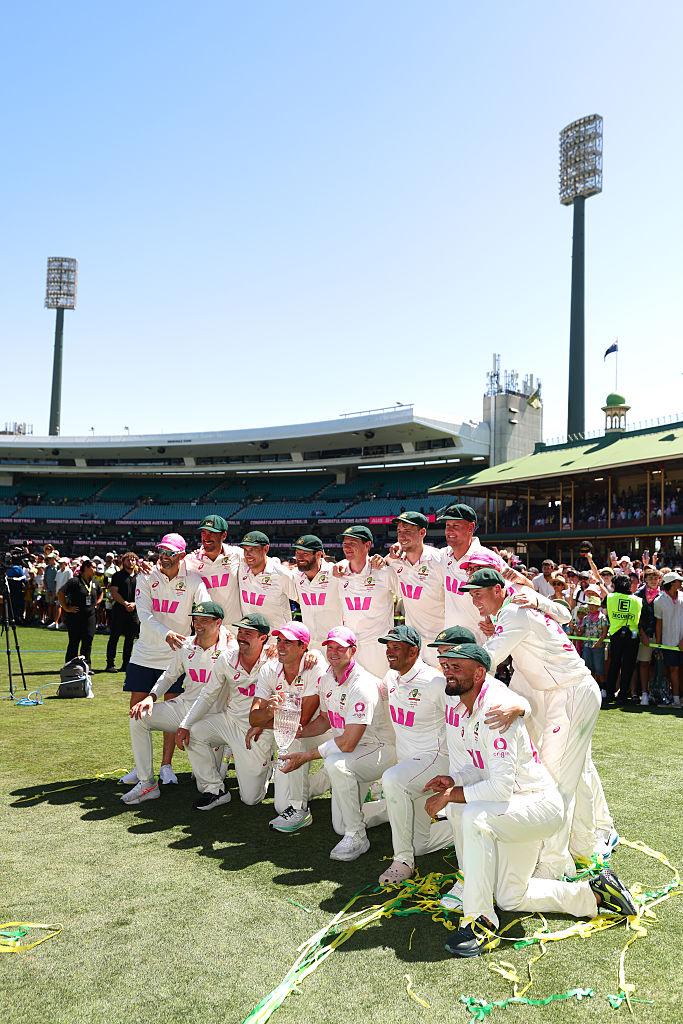
Reflecting on the broader implications, this series outcome will influence selection and strategy for both nations heading into future campaigns. Australia will look to maintain their momentum in upcoming tours, while England will regroup and analyze what went wrong in key moments. Cricket administrators will take note of the packed stadiums, proving that Test cricket still holds a special place when the contest is fierce.
In conclusion, the fifth Test at Sydney will be remembered as a fitting climax to a hard-fought Ashes series. Australia’s victory by five wickets was deserved, built on superior batting depth and bowling accuracy. As the crowd dispersed into the Sydney night, singing team songs and reliving highlights, the consensus was clear: this was cricket at its finest. The 2025-26 Ashes may be over, but the memories, and the anticipation for the next encounter, will endure for years to come.
