
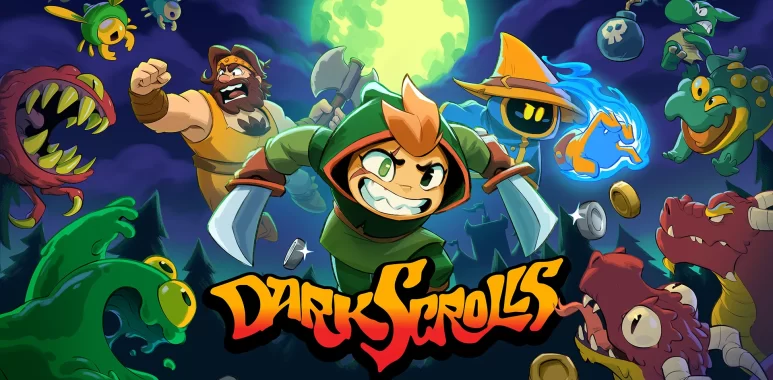
Dark Scrolls: A Chaotic Retro Romp That Feels Like Ghosts ‘n Goblins on Steroids (But With Better Friends)
Published: June 26, 2026
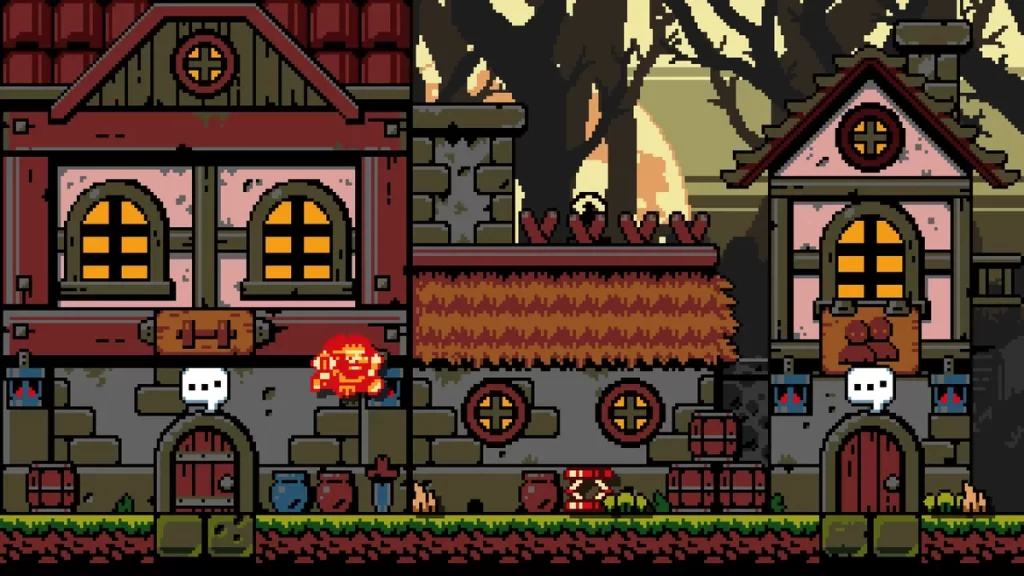
Four days ago, on June 22, 2026, Devolver Digital and doinksoft dropped Dark Scrolls on PC and Nintendo Switch for a very reasonable $9.99. If you’ve been following doinksoft since Gato Roboto or Gunbrella, you know what to expect: quirky pixel art, tight (sometimes infuriating) mechanics, and a whole lot of charm packed into a small package. This time they’ve gone full dungeon-scroller roguelite with auto-scrolling levels, shmup chaos, and a roster of weird heroes that includes everything from axe-slinging barbarians to a saxophone-playing rat. Yeah, you read that right.
I booted it up on my Switch the night it launched, controller in hand, snacks ready, fully expecting a quick hour or two of nostalgic fun before bed. I didn’t put it down until 3 a.m. That’s the kind of pull this game has when it clicks. But does it hold up beyond those initial adrenaline-fueled runs? Let’s dive in deep—because at 2500 words, we’re not skimming the surface.
The Setup: Minimalist Fantasy With Maximum Attitude
The story in Dark Scrolls is… well, it’s there if you squint. There’s a short, wordless cutscene at the start showing three heroes teaming up with a mysterious fourth adventurer to take down a three-headed beast. Betrayal ensues, dark powers corrupt, and suddenly you’re chasing a legendary “Dark Scroll” through procedurally stitched dungeons. The game even pokes fun at its own vagueness with placeholder text like “quest to [INSERT GOAL HERE]” in the official description. It’s pure doinksoft: self-aware, low on lore, high on letting the gameplay do the talking.
No sprawling narrative here, no voice acting, no deep character backstories. If you’re the type who needs rich world-building like in a FromSoftware title or even a modern indie like Hades, you might feel a bit adrift. But that’s kind of the point. This is an arcade-style throwback first and foremost. The “plot” exists to justify throwing you into endless runs filled with spikes, fireballs, burrowing zombies, and giant spiders that spawn more enemies than you can reasonably handle. It’s less Dark Souls and more Ghosts ‘n Goblins meets Sonic on a caffeine binge, with roguelite DNA sprinkled on top.
Core Gameplay: Auto-Scroll Mayhem Done Right (Mostly)
The big hook—and the thing that will either hook you or make you rage-quit—is the auto-scrolling. The screen constantly pushes forward. Stand still too long and you’ll get crushed against the right edge or fall into a pit. This creates incredible tension. Every jump, attack, and dodge has weight because hesitation equals death. Levels are stitched together from hand-crafted rooms but arranged procedurally, so no two runs feel identical. You’ll encounter branching paths, secret rooms, bonus challenges, and escalating enemy waves.
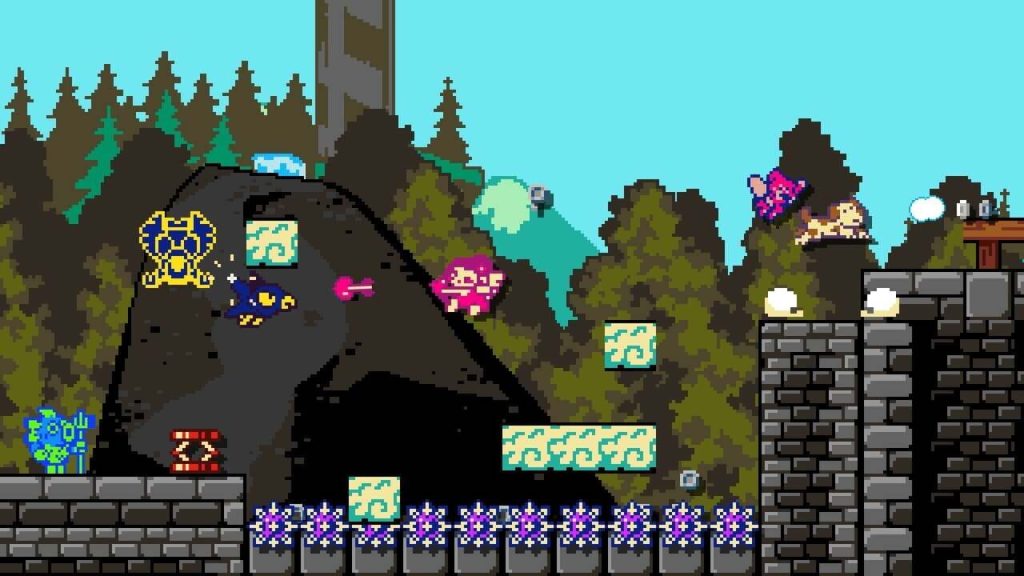
Combat mixes melee, projectiles, and light platforming. Your basic attack depends on the character—axes for Grizz the barbarian, spells for Emerys the mage, daggers for Pigeon the… bird? Later unlocks get wilder: a dog that barks through walls, a rat with a sax that somehow damages enemies, even an alien with a machine gun. Each hero feels distinct not just in stats but in movement and playstyle. Grizz is tanky with a satisfying ground pound. The rogue-types emphasize mobility and precise knife throws. Mages have floatier movement but better crowd control.
As you play, you collect coins to spend at Bruce & Goose’s Shoppe (yes, there’s a silly goose merchant whose honks sound like car horns—pure comedy gold). Perks, weapon upgrades, summoned allies, and elemental powers let you chain ridiculous combos. Stack fire and lightning just right and you’ll clear screens in explosive fashion. “Arcade Alchemy” is the term they use, and it fits. Successful runs build momentum where you feel unstoppable… until the game reminds you that you’re not.
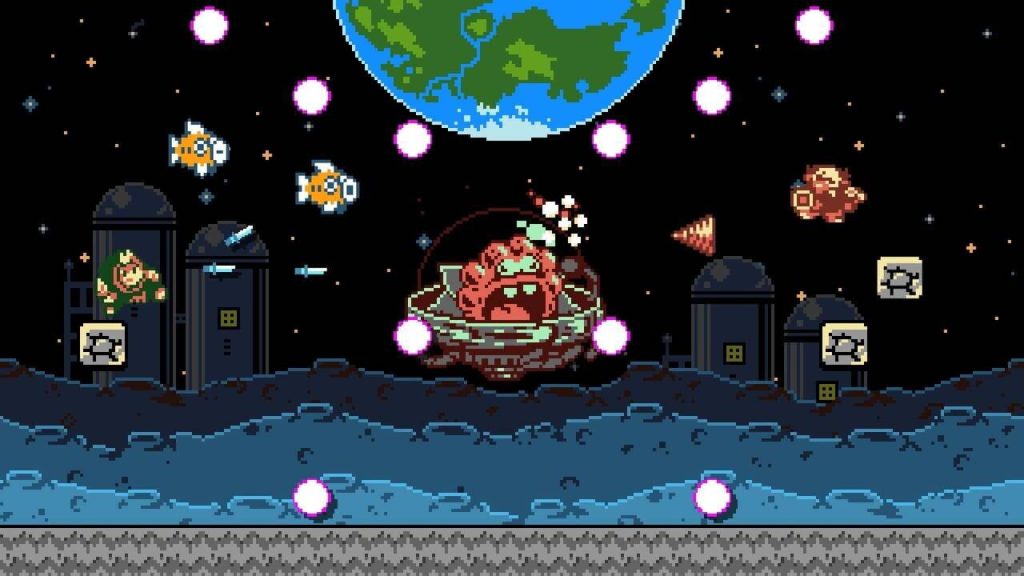
Boss fights are standouts. They pause the auto-scroll, giving you a breather to learn patterns. Some are pattern-recognition puzzles with bullet-hell elements; others are pure endurance tests with adds spawning constantly. The giant spider boss I kept dying to on my first dozen runs had me yelling at the screen, but nailing it felt incredible.
Roguelite progression is solid but not revolutionary. Die and you lose most run-specific upgrades, but permanent unlocks (new characters, trinkets, map expansions) keep you coming back. There are side objectives per character that encourage replayability. Nine heroes total means tons of experimentation. I spent hours just trying to 100% one character’s challenges.
The Good, The Bad, and The Floaty Controls
Let’s talk strengths first because there are plenty.
Pixel Art and Animation: Doinksoft nailed the retro aesthetic. Vibrant colors, expressive sprites, detailed backgrounds that pop on both docked Switch and handheld. Animations are snappy—attacks have great feedback with hit sparks and numbers flying everywhere. Environments vary: haunted forests, crumbling ruins, lava caves. It’s busy, sometimes too busy (more on that later), but it captures that 8/16-bit magic perfectly while feeling modern.
Sound Design and Music: Chiptune soundtrack is bouncy and arcade-perfect. It pumps you up during runs and doesn’t grate even after hours. Sound effects are mostly satisfying—axe chops, spell zaps, enemy death rattles. The goose honks still make me laugh. Voice? None, but the game doesn’t need it.
Co-op Chaos: This is where Dark Scrolls shines brightest. Local or online, 1-2 players. Revive your buddy, combine attacks for screen-clearing specials, and laugh as you bump into each other mid-jump. The game warns that characters can bounce off one another annoyingly, and yeah, it happens. But the shared mayhem is addictive. Playing with a friend turned good runs into legendary ones full of screaming and high-fives. Solo is great for focused practice; co-op is party mode.
Now the criticisms, because no game is flawless, especially at this price point.
Difficulty is… inconsistent. Some runs feel punishingly hard due to bad RNG (enemy spawns right where you land, traps you can’t see coming because of screen clutter). Others feel too easy once you have decent perks. The auto-scroll can punish you unfairly if a platforming section has poor visual clarity. Floaty controls on certain characters lead to missed jumps that feel like the game’s fault, not yours. Multiplayer exacerbates bumping issues.
Repetition sets in faster than I’d like. After 10-15 hours, the core loop—run, die, upgrade, repeat—starts to blur unless you’re chasing specific unlocks. No traditional save system beyond checkpoints between major sections means some frustration. Lack of narrative context makes deaths feel less meaningful long-term.
Visual clutter is a real issue on smaller screens or during chaotic moments. A zombie popping up while dodging a boss projectile and background elements can lead to cheap deaths. Performance is mostly solid (60fps on Switch from what I played), but occasional dips happen in co-op boss fights.
How It Stacks Up
Dark Scrolls sits comfortably in the crowded roguelite/platformer space but doesn’t dominate it. It has Hades-lite progression without the storytelling depth. The auto-scroll reminds me of old Sonic or Super Ghouls ‘n Ghosts but with modern roguelike structure. Compared to doinksoft’s own catalog, it’s more ambitious than Gato Roboto but less focused than Gunbrella. At $10 (and often bundled with their previous games), it’s an easy recommend for fans of the genre.
If you loved Dead Cells or Spelunky but wanted more fantasy flavor and co-op, this scratches that itch. Pure arcade fans will appreciate the pick-up-and-play nature. Story lovers? Look elsewhere.
Final Verdict: Worth the Scroll?
After dozens of runs, multiple characters unlocked, and evenings lost to “just one more try,” I’m landing at a solid 7.5/10. Dark Scrolls is charming, chaotic fun that delivers exactly what it promises: fast-paced retro action with roguelite hooks and silly personality. It won’t redefine the genre or linger in your memory like all-time greats, but for the price and the short-burst appeal, it’s a winner. Especially with a friend.
The auto-scroll gimmick works more often than it frustrates. The character variety keeps things fresh longer than expected. And that damn goose? Instant classic.
If you’re on the fence, grab it on sale or during a Devolver bundle. It’s the kind of game that rewards skill, patience, and a willingness to laugh at your own repeated deaths. In a year full of massive AAA releases, Dark Scrolls is a refreshing reminder that sometimes the best experiences come in small, pixelated packages full of heart (and spikes).
Now if you’ll excuse me, I have a rat with a saxophone to master. The Dark Scroll isn’t going to collect itself.
