
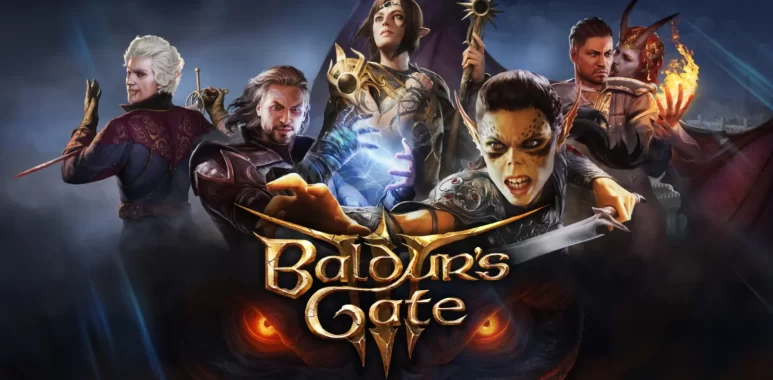
Baldur’s Gate 3: The RPG That Reminded Us Why We Love Games
I still remember the exact moment I booted up Baldur’s Gate 3 on its full release day, August 3, 2023. I was in my apartment in Mumbai, the monsoon rain hammering against the window, a cup of cutting chai going cold on my desk. I’d sunk dozens of hours into the early access versions, but nothing prepared me for the final product. Three years later, in 2026, it still feels like a watershed moment in gaming. Larian Studios didn’t just make a good CRPG—they crafted something that feels alive, responsive, and deeply personal in ways most triple-A titles only dream about.
This isn’t hyperbole. Baldur’s Gate 3 swept the 2023 awards season like a Mind Flayer invasion, becoming the first game to win Game of the Year at all five major ceremonies: The Game Awards, BAFTAs, DICE, Golden Joysticks, and GDC. It sold over 20 million copies by late 2025, turning a Belgian indie studio into an industry giant and proving that deep, complex RPGs could be massive commercial hits. But numbers and trophies don’t capture the magic. This game wormed its way into my brain and refused to leave. Let’s dive deep.

From Early Access Roots to Full Release Glory
Larian Studios, led by the passionate Swen Vincke, had been building toward this for years. Fans of their Divinity: Original Sin series knew they excelled at tactical combat and player freedom, but adapting the Baldur’s Gate legacy—rooted in the classic Infinity Engine games from BioWare back in the late ’90s and early 2000s—was a different beast. Wizards of the Coast (owners of Dungeons & Dragons) gave them the keys after being impressed by Divinity: Original Sin 2. Development took about six years, with a lengthy early access period starting in 2020 that let players shape the game.
That early access was crucial. Larian listened. Bugs got fixed, story branches expanded, and the scope ballooned. By launch, Act 1 alone felt like a full game. The full release delivered three massive acts, countless endings, and a level of reactivity that still blows my mind. I remember reloading a save in early access just to see what happened if I yeeted a certain NPC off a cliff. In the final game, the consequences rippled through the entire campaign.
Character Creation: Your Story, Your Rules
One of the first things that hits you is the character creator. It’s not just sliders for your nose length (though those are there). You choose race, class, subclass, background, and even detailed cosmetic options including genitalia and body types that feel inclusive without being performative. Playing as a custom Tav (or one of the Origin characters like the brooding Astarion or fierce Lae’zel) makes the world react to you.
I started my first playthrough as a half-elf bard named Arjun, inspired by my own roots—charismatic, a bit sarcastic, good with words but terrible in a straight fight. The game let me lean into that. Dialogue options reflected my high Charisma, and I talked my way out of fights that would have wiped a less silver-tongued party. Later runs as a Dark Urge (a special Origin with a murderous backstory) showed how flexible and dark the systems could get. The evil playthroughs aren’t just “haha I’m bad now”—they have real weight and branching consequences.
Combat: Tactical Brilliance That Rewards Creativity
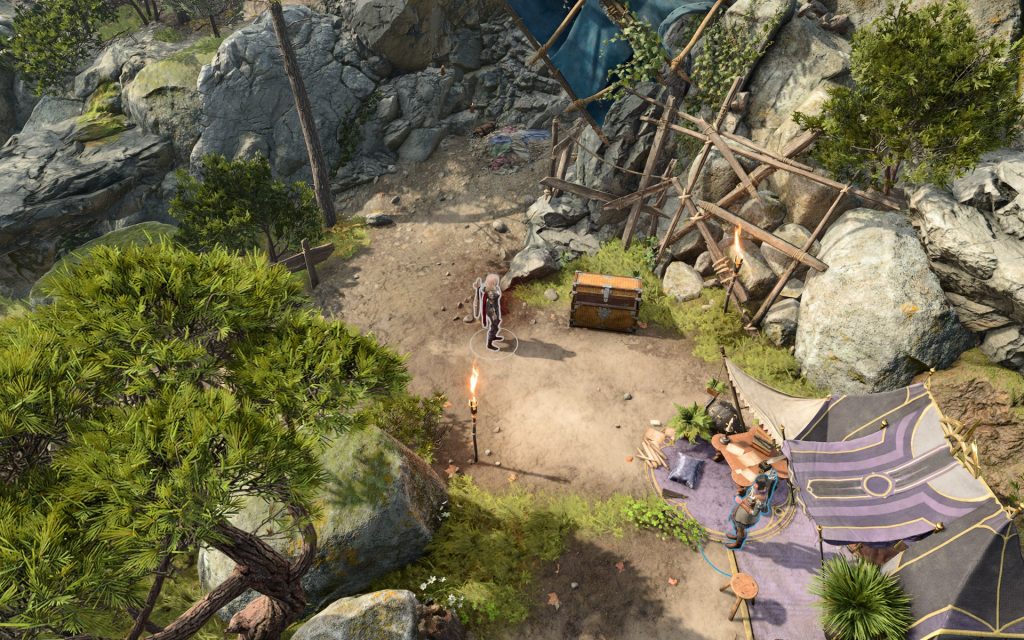
If there’s one area where BG3 shines brightest, it’s the turn-based combat built on D&D 5th Edition rules. It’s crunchy, deep, and incredibly satisfying. Every surface interacts—fire spreads, water conducts lightning, grease makes enemies slip. Elevation matters. Line of sight is king. I can’t count the times I used the environment in ridiculous ways: shoving enemies off ledges, creating explosive barrels chains, or using spells like Thaumaturgy to distract guards before raining hell from above.
Encounters feel handcrafted. Early game goblins raiding a village? You can ally with them, sneak around, or go loud. Boss fights like the ones against Raphael (that gloriously campy devil with Andrew Wincott’s perfect voice work) or the Netherbrain demand strategy, not just button-mashing. The dice rolls add tension—nothing beats the rush of landing a clutch Critical Hit when the odds are against you.
Multiplayer co-op elevates it further. Playing with friends, assigning roles, and role-playing our party was pure joy. One friend kept trying to romance every NPC possible while another focused purely on loot goblin behavior. The game handles four-player splits seamlessly, with everyone able to make story choices (with voting in some cases). It’s chaotic and wonderful.
The World and Exploration: Nautiloid to Baldur’s Gate
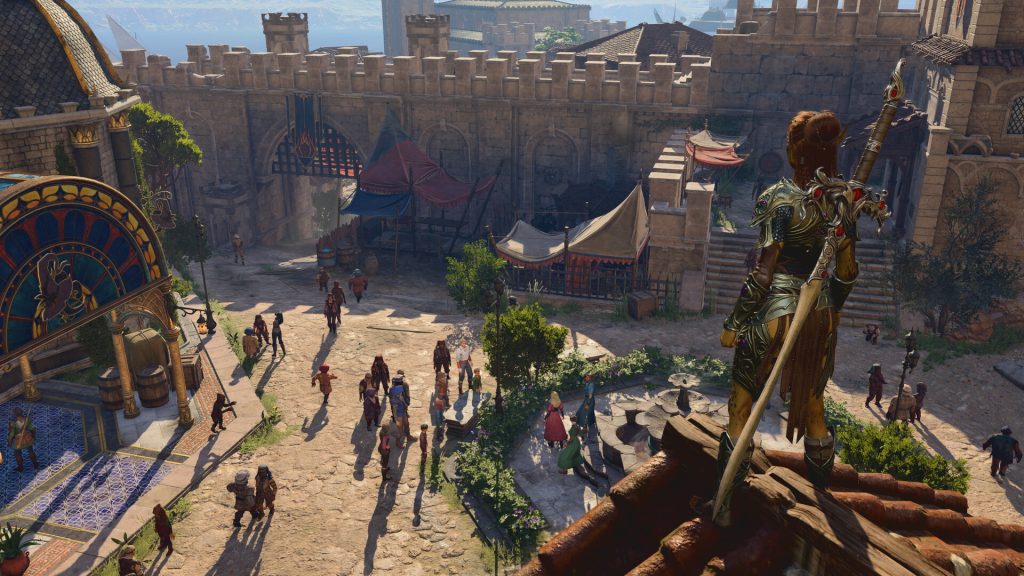
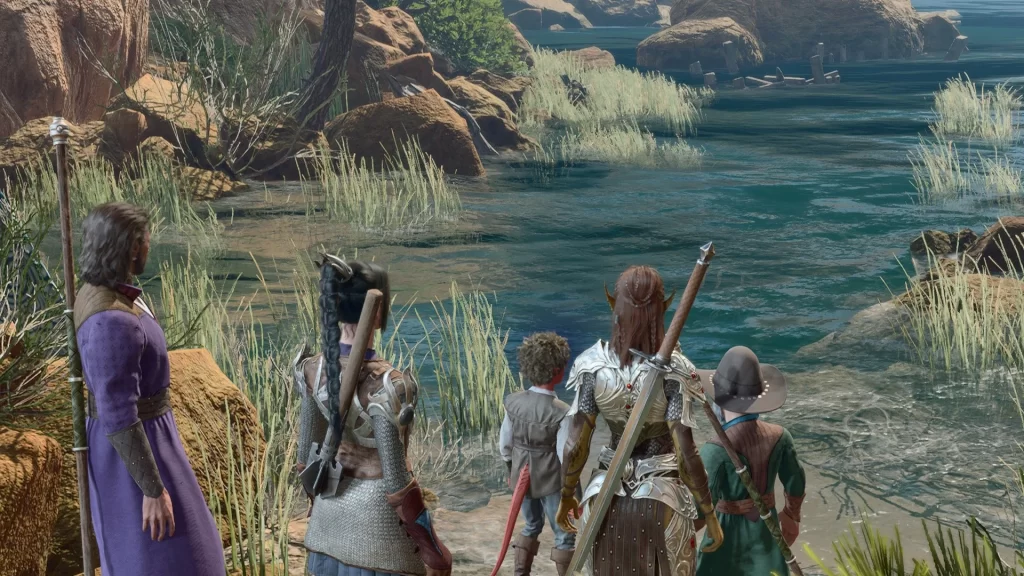
The setting is the Forgotten Realms, but Larian makes it their own. Act 1’s wilderness around the crashed Nautiloid is dense with secrets—hidden caves, cursed ruins, talking animals. The Underdark is a highlight: bioluminescent, dangerous, full of Myconids and Duergar intrigue. Act 2 shifts to the Shadow-Cursed Lands, a moody, oppressive zone that nails atmospheric dread. Then Act 3 drops you into the sprawling city of Baldur’s Gate itself, packed with quests, politics, and side stories that could fill their own game.
Exploration rewards curiosity. Almost every container can be interacted with, and many have purpose. Jump mechanics (a simple addition that changes everything) let you reach hidden areas. I spent hours just… looking around. The verticality in areas like the Shadow-Cursed Lands or the city’s sewers adds layers to navigation and combat.
Story and Writing: Choices That Matter
The core plot—mind flayer tadpoles in your brain, racing against ceremorphosis while dealing with cults, gods, and personal demons—is classic high fantasy with modern twists. But it’s the writing that elevates it. The narrative branches wildly based on your actions. Romance a companion and their personal quest intertwines with the main story. Side with the Absolute? The game changes.
Themes of agency, identity, power, and found family run deep. The Absolute cult’s brainwashing mirrors real-world manipulation. Characters grapple with trauma, faith, and redemption in ways that feel earned. Shadowheart’s arc with Shar and Selûne, Astarion’s vampiric struggles, Gale’s hubris with the goddess Mystra—each one could carry a novel.
I won’t spoil specifics, but certain moments—like a quiet campfire scene after a brutal fight or a desperate plea in the final act—hit me emotionally harder than most movies. The voice acting is phenomenal across the board. Neil Newbon as Astarion delivers one of the best performances in gaming, mixing charm, vulnerability, and menace.
Companions: The Heart of the Game
The companions are BG3‘s secret weapon. They’re not just quest-givers; they’re fully realized people with schedules, opinions, and growth.
- Shadowheart: The mysterious cleric with memory issues. Her romance is tender and complex, full of quiet moments and big revelations.
- Astarion: The flamboyant vampire spawn. Snarky, traumatized, deeply compelling. His arc is a standout for exploring abuse and autonomy.
- Karlach: The tiefling barbarian with an infernal engine heart. Her boundless energy and tragic story make her instantly lovable. Fixing her engine (temporarily) for a proper date in the city is peak wholesome.
- Gale: The wizard with a bomb in his chest. Intellectual, romantic, a bit pompous—his boat scene romance is legendary.
- Lae’zel: The githyanki warrior. Starts abrasive but grows into a loyal friend (or lover). Her cultural awakening is powerful.
- Others like Wyll, Halsin, and Minthara add even more variety. Minthara’s evil route especially shows how committed Larian was to player freedom.
The approval system isn’t binary. Banter between companions evolves based on your choices. I laughed at their arguments, teared up at reconciliations, and felt genuine stakes when the story forced tough calls.
Romance and Maturity: No Fades to Black Here
BG3 doesn’t shy away from sex and intimacy. Scenes are explicit but tasteful, serving character development rather than titillation. Consent is emphasized. You can have polyamorous situations or messy breakups. It’s mature without being exploitative. In a post-launch patch, they even improved some animations based on feedback. It feels like Larian trusts players to handle adult content in an adult way.
Technical Side and Criticisms
Is it perfect? No. Act 3, while ambitious, can feel cluttered with quests and has more bugs than the earlier acts (though patches improved this massively). Performance on lower-end PCs could stutter during big fights. The inventory management is notoriously fiddly—sorting magical items becomes a chore late-game.
Some players criticized the length or the way certain story threads resolve (or don’t). The evil path, while viable, sometimes lacks the depth of the heroic one. And the ending slides, while extensive, left some wanting more epilogues (modders have helped here).
But these feel like minor quibbles against the sheer ambition. On PS5 and Xbox, it runs solidly, and the split-screen co-op is a nice touch.
Cultural Impact and Legacy
Baldur’s Gate 3 didn’t just succeed—it shifted conversations. It proved that “crunchy” RPGs with 100+ hours of content could sell like hotcakes. It boosted D&D’s popularity further. It inspired other developers to prioritize player agency and reactivity. In an era of live-service fatigue and scaled-back single-player experiences, here was a game that said: “Take your time. This world is yours.”
Its influence lingers. Mod support on PC is robust, with everything from new classes to full overhauls. Player counts on Steam remain healthy years later, with peaks during sales.
For me personally, it rekindled a love for single-player RPGs. I played it solo, in co-op, as good Tav, evil Durge, as every class I could. Each run revealed new layers. The Dark Urge origin especially—playing a murderous psychopath trying to resist or embrace the urge—produced some of my most memorable gaming stories.
Final Verdict
Baldur’s Gate 3 is more than a game. It’s a triumph of collaborative storytelling between developers and players. Larian poured their soul into it, and it shows in every meticulous detail, every heartfelt voice line, every explosive barrel you can creatively misuse.
If you’re even remotely into fantasy, role-playing, or games that respect your intelligence and time, this is essential. It set a new bar for the genre—one that many will chase but few will reach. In a world of algorithmic slop and safe corporate products, Baldur’s Gate 3 feels handmade, passionate, and gloriously human.
I can’t wait to see what Larian does next, but for now, I’m loading up another playthrough. The tadpole calls.
