
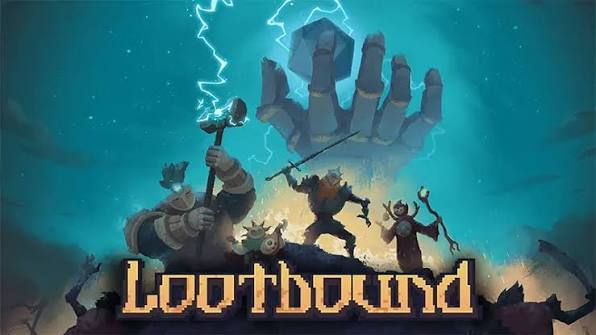
Lootbound Review: Packing Your Bags for Glory (or an Early Death)
I’ve spent the better part of the last week staring at grids. Not spreadsheets, not maps in the traditional sense—actual inventory grids full of weirdly shaped swords, helmets, potions, and cursed trinkets that look like they were designed by someone who lost a bet with a Tetris board. That’s Lootbound in a nutshell. Developed by the Moldovan studio ArtDock and published by Dreland Enterprises, this tactical roguelite dropped on Steam (and Xbox) right in the middle of August, and it’s the kind of game that quietly sinks its claws into you while you’re still trying to decide if you actually like it.
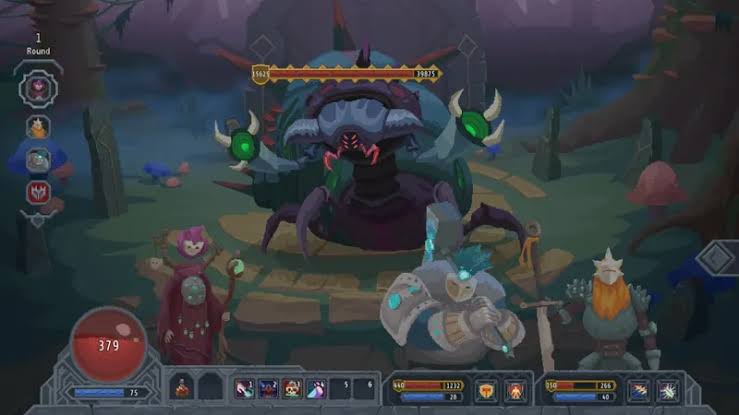
I went in mostly cold. I’d seen the demo floating around earlier in the year and the trailer with that dark, oppressive pixel-art look that screams “Blasphemous had a baby with a tabletop dungeon crawl.” Dark fantasy, turn-based combat, party building, D&D-flavored dice rolls. On paper it sounded like every other mid-tier indie trying to carve out space in an overcrowded genre. Then I started moving items around, and something clicked.
The Hook That Actually Lands
Every run begins the same way: you pick one of four heroes—Warrior, Witch, Paladin, or Bard—and step into a branching map alone. Companions show up later as you push forward, and you have to kit them out too. The map is classic roguelite node stuff: combat, events, shops, rest points, with occasional risk-reward choices that involve rolling a D20 or similar. Fail the roll and you might walk away empty-handed or worse. Succeed and you get the good stuff. It’s familiar, almost comfortingly so.
What isn’t familiar is the inventory.
Items don’t have fixed slots. They’re polyomino pieces—L-shapes, T-shapes, long rectangles, awkward diagonals—and you rotate and place them wherever they’ll fit in your shared grid. The real magic is the aura system. Certain pieces radiate bonuses to adjacent cells. A plain grey sword sitting next to three different auras suddenly hits harder than the shiny legendary you couldn’t fit properly. Placement is the build. Move a shield one square left and your whole damage profile shifts. It’s the kind of spatial puzzle that makes you lose track of time in the best way. I caught myself rearranging the same inventory for ten minutes straight after a particularly juicy drop, completely ignoring the fact that the next fight was waiting.
That loop is the heart of the game. Loot drops, you open the grid, you fiddle, you curse when something won’t fit the way you want, you finally lock it in, and then you walk into the next room feeling just a little more dangerous. It scratches the same itch as those inventory-management games that have been floating around, but tied to actual combat outcomes and permanent-run consequences. A mediocre item placed perfectly often beats a great item shoved into a corner. That single design choice elevates everything around it.
Combat: Satisfying Until It Isn’t
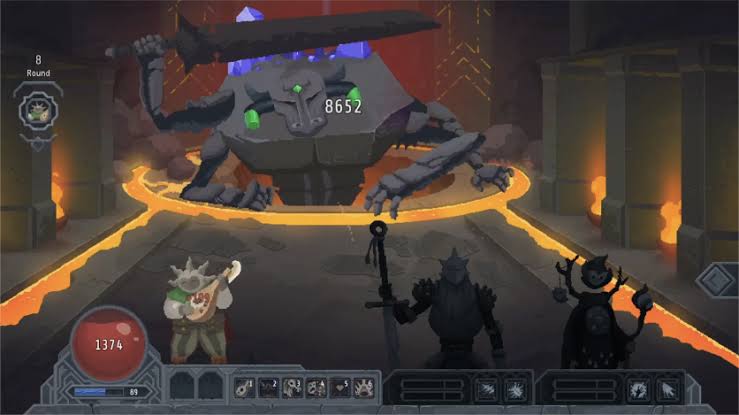
Combat is turn-based and relatively straightforward. You control the main hero directly while companions act on their own AI. There are four damage types—slashing that shreds health, crushing that breaks armor, acid that ignores it, chaos that plays with debuffs—and the usual suite of abilities, buffs, and status effects. Initiative matters. Positioning on the battlefield exists but isn’t hyper-tactical. Most of the time you’re watching numbers fly and deciding which ability to throw when.
When your inventory is humming and the synergies are firing, fights feel good. You set up a Warrior who generates thorns while the Witch layers curses and the Bard keeps everyone topped up, and suddenly a tough encounter melts in a way that feels earned. When the grid is messy or the dice hate you, fights turn into pure math checks. Enemy crits can delete someone. Failed event rolls can leave you underpowered for the next stretch. The game has been patched already (1.1.5 and 1.1.7 arrived quickly after launch) to tone down some of the harsher randomness and rebalance Difficulty II, which helps, but the core complaint remains: combat can feel like two spreadsheets arguing with each other. The inventory is where the real strategy lives; the battlefield is mostly where you cash the checks you wrote earlier.
I don’t mind that as much as some reviewers seem to. There’s a certain purity to it. You’re not micromanaging every companion turn. You’re managing the machine that produces the numbers, then watching it run. For short runs—most of mine clocked in around 40 to 70 minutes—it works. Stretch it further and the shallowness starts to show.
Building Your Own Nightmare
One of the smarter systems is how the final boss works. At the end of each biome you pick one of two boss parts. Those choices shape the Guardian waiting at the end of the run—its appearance, its powers, its resistances. You’re not just climbing a fixed difficulty curve; you’re assembling the thing that will try to kill you. It’s a neat bit of long-term strategy that makes every decision on the map feel weightier. Do I take the safer path with mediocre loot, or gamble on the high-risk node that might give me the exact piece I need for the build and lock in a nastier boss ability?
The four classes feel distinct enough to keep runs fresh. Warrior is the straightforward damage and thorns guy. Witch leans into curses and debuffs. Paladin is the armored wall. Bard is the support engine that somehow still finds ways to deal damage. Companions fill gaps, but their AI can occasionally make baffling choices—something the studio has been tweaking. Meta-progression exists in the form of crystals spent on permanent unlocks: new items, better dice options, character power-ups. It’s light, which is fine for a game this size, but it does mean the early hours can feel a little grindy until the pool of available gear opens up.
Atmosphere and Presentation
Visually, Lootbound punches above its weight. The pixel art is rich and gloomy without being muddy. Environments carry a consistent sense of dread—crumbling ruins, twisted forests, whatever the third biome is called—that never lets up. Character designs are expressive enough that you start caring about the little guys even if the story barely gives them personalities. UI is clean once you learn where everything lives, though comparing stats across screens can still feel fiddly, and not being able to check your full inventory during certain event choices is an ongoing annoyance.
Sound design is serviceable. The music does the job without ever becoming memorable. I kept waiting for that bombastic theme from the trailer to show up more often and it mostly didn’t. Not a deal-breaker, just a missed opportunity.
Performance is excellent. It runs butter-smooth on mid-range hardware and is an absolute dream on Steam Deck. Full controller support is there, though the analog stick can feel a little imprecise when you’re trying to rotate pieces in the grid. Mouse is still king for inventory Tetris.
The Rough Edges
Story is almost nonexistent. You’re a treasure hunter trying to escape with the loot. That’s it. Characters have a few lines, events have flavor text, but nobody is writing home about the narrative. If you need a deep campaign with memorable NPCs and branching dialogue, look elsewhere. This is a systems game first and last.
RNG can still be a bastard even after the patches. Three low rolls in a row on important events can tank an otherwise strong run. Early game can feel slow until you unlock enough options to start cooking real builds. Information is sometimes withheld in ways that feel mean rather than mysterious—enemy stats aren’t always clear, and certain event decisions force you to choose blind.
None of these are fatal. The game is cheap (launch price hovered around $15 with a solid discount in the first couple weeks), runs are short, and the core loop is strong enough that most of the friction melts away once you’re deep in a good inventory puzzle. Steam reviews have settled into Very Positive territory, and the Metacritic critic average sits around 76, which feels about right.
Who This Is For
If you love fiddling with inventory grids, theory-crafting builds, and short, punchy roguelite runs, Lootbound is going to click hard. Fans of Slay the Spire’s decision density, Darkest Dungeon’s oppressive tone, or any of the recent inventory-management experiments will find a lot to like. It’s especially good if you play in bursts—one or two runs after work, then put it down until the next night.
If you want deep tactical combat where every turn is a puzzle, rich storytelling, or a game that feels like it has hundreds of hours of content, this isn’t it. The combat is the weakest link, and the content volume is closer to a polished indie than a sprawling mid-budget title.
I’ve put something like 25–30 hours in across both PC and Deck. I’ve beaten it with every class, experimented with absurd aura chains, rage-quit after a particularly cruel dice sequence, and then immediately started another run because “just one more try at that Witch curse build.” That’s the mark of a game that works. It doesn’t reinvent the wheel. It just takes a few existing wheels, bolts them together in a slightly different configuration, and discovers that the resulting vehicle is weirdly fun to drive.
ArtDock has already shown they’re listening—patches arrived fast, balance adjustments landed, and the community feedback loop seems healthy. There’s room to grow here: more classes, more biomes, deeper companion AI, maybe some actual narrative seasoning. For a 1.0 launch from a small studio, though, this is a strong showing.
Lootbound isn’t the best roguelite of 2026. It’s not even trying to be. It’s a clever, focused little game that understands the quiet joy of rearranging your backpack until everything fits just right, then walking into a fight knowing those carefully placed auras are about to make someone regret existing. Sometimes that’s enough.
Score: 7.5 / 10
Worth picking up on sale, definitely worth the demo if you’re on the fence. Just clear some space on your mental hard drive—you’re going to spend a lot of time staring at grids.
