
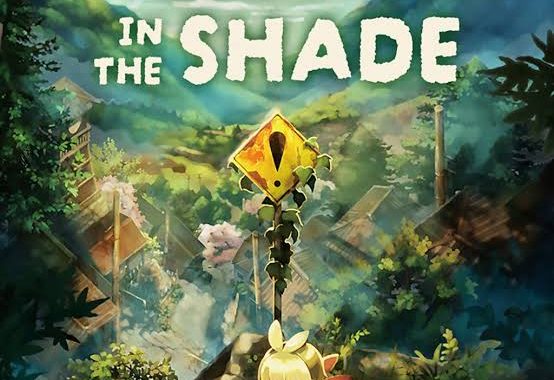
Village in the Shade Review: Where the Cozy Days Meet the Quiet Dread of Night
There’s something almost unfair about how Village in the Shade works on you. You boot it up expecting another farming sim—plant some turnips, chat with the neighbors, maybe decorate a little house in the mountains—and for the first stretch it delivers exactly that. The fields are soft and inviting. The days stretch out under a gentle sun. The villagers wave as you pass. Then the light starts to fade, the rules you were told not to break start whispering in the back of your head, and suddenly the same dirt paths you walked that afternoon feel different. The game never has to raise its voice. It just lets the shade creep in.
Released on October 27, 2026 for PlayStation 5, Nintendo Switch, Nintendo Switch 2, and PC, Village in the Shade comes from Nippon Ichi Software—the same team behind the Yomawari series—and is published in the West by NIS America. It launched earlier in Japan as Honogurashi no Niwa and already moved more than a quarter of a million copies there before the English release. That success makes sense once you spend time with it. This is not “Stardew Valley with jump scares” slapped on as a marketing line. It is a proper farming simulation that happens to understand Japanese folk horror at a molecular level, and it uses that understanding to make the ordinary routines of rural life feel both comforting and quietly dangerous.
You arrive in Kagatsu, a small mountain village, after what seems like a fatal fall. You have no memories. The villagers do not recognize you, yet they take you in with the careful politeness of people who have seen strange things before. There is a code. Do not speak to strangers. Do not leave the village. Do not go out after dark. The game makes these rules clear early, and then it trusts you to decide what to do with them. That trust is the foundation of everything that follows.
The Everyday Rhythm That Hooks You
During the day, Village in the Shade is one of the more satisfying farming sims of the last few years. The loop is familiar but carefully tuned. You till soil, plant seeds, water, weed, and harvest. You raise livestock. You fish in the streams that run through the hills. You hunt a little. You gather materials and slowly turn a rundown house and overgrown garden into something that feels like yours. The quality-of-life features are thoughtful—tools that improve over time, a notebook that lets you jot down recipes and requirements so you are not constantly running back and forth, and a sense that the game respects your time without ever rushing you.
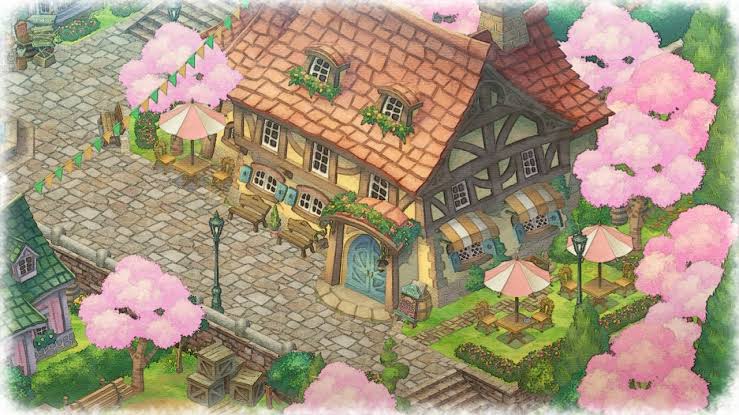
The visual style does a lot of heavy lifting here. The world is hand-painted in a way that sits somewhere between soft watercolor and careful illustration. Characters are chibi-proportioned, which keeps the tone approachable, while the environments lean closer to something almost photoreal in their attention to light, moss, and weathered wood. Seasons matter. Spring brings cherry blossoms that carpet the paths. Summer festivals fill the village with lanterns and noise. Autumn turns the maples red. Winter settles a quiet hush over everything. The game never feels like it is just cycling through the same assets with a color filter. Each season changes how the village feels under your feet.
Social systems are deeper than they first appear. The villagers of Kagatsu have their own schedules, preferences, and quiet burdens. Gifting, conversation, and shared work build relationships that actually feel like they matter. There are festivals—matsuri in summer, cherry-blossom viewing in spring—that give the community a pulse. You can pet the local cats. You can stand by the brook and just listen. The game is content to let you exist in the space without constantly demanding the next objective. That patience is rare and valuable.
About five hours in, new systems open up. An abandoned quarry becomes available, offering procedurally generated floors where you can scavenge for ore and materials in a way that recalls the mines of Stardew Valley but with its own atmosphere. The farming side expands. New crops, new animals, new ways to improve your land. None of it feels like padding. It feels like the village is slowly trusting you with more of its secrets and its responsibilities.
The Rules, and What Happens When You Test Them
Then there is the other half of the game.
If you choose the default mode—Village in the Shade rather than the alternative Sunshine Mode—the rules are not just flavor text. Break them and the night changes. The same paths you walked in daylight become places where things watch you. Japanese folklore is the language here, not Western horror tropes. You will encounter yokai and spirits that feel pulled from the same tradition that produced Yomawari. The scares are rarely loud. They are atmospheric, patient, and rooted in the idea that the community’s survival has always required certain sacrifices and certain silences.
The brilliance of the design is that the horror and the farming do not fight each other. They feed each other. The better you get at the daily routines, the more the village seems to accept you, and the more you start to notice the small cracks in that acceptance. Conversations take on new weight. Certain villagers’ behaviors begin to make a different kind of sense. The game is interested in the cost of maintaining a closed community, the way tradition can protect and also trap, and the quiet rage that can build under a surface of politeness. It does this without heavy-handed lectures. It just lets you live inside the tension.
Sunshine Mode exists for players who want pure comfort. In that mode the rules cannot be broken, the supernatural elements stay away, and you are free to farm, fish, hunt, and socialize without the undercurrent of dread. It is a smart inclusion. Not everyone wants the horror, and the farming systems are strong enough to stand on their own. Still, the full experience is the one that lingers. Playing with the rules intact turns every decision about whether to stay out a little later into a small act of risk. The game never forces you into the dark. It simply makes the dark interesting enough that eventually you go looking.
Atmosphere, Sound, and the Weight of Place
The audio design is excellent. Daytime tracks are warm and understated, full of soft strings and the ambient sounds of rural life—water, wind in the trees, distant festival drums when the season calls for them. Night music shifts without becoming bombastic. It thins out. Spaces open up. The silence between notes starts to feel intentional. When something is wrong, you often feel it in the absence of sound before you see anything.
The top-down perspective is beautiful but occasionally imperfect. The angle that makes the hand-painted world look so rich can make precise movement during denser farming tasks a little fiddly. Controls are generally responsive, yet there are moments when the camera and the geometry of the fields do not quite cooperate. Saving only when you sleep can also create long stretches where you are reluctant to quit, which is a minor but real annoyance if your play sessions are limited. These are the kinds of issues that never sink the game, but they are noticeable once the honeymoon period ends.
The story itself is a slow burn in the best sense. It trusts you to pay attention. Certain revelations feel inevitable once you understand the internal logic of Kagatsu, yet the journey to those moments is still gripping. Characters are given room to be complicated. No one is simply the kindly elder or the suspicious outsider. The village’s isolation is both its protection and its problem, and the game explores that tension with more seriousness than most life sims attempt. By the time the larger shape of the narrative comes into view, the hours spent watering crops and chatting by the stream have given the emotional stakes real weight.
Longevity and the Shape of the Experience
A full playthrough can easily stretch past sixty or seventy hours if you engage with the side content, the relationships, and the deeper systems. The main story has its own pace—sometimes a little too leisurely between major beats—but the world is dense enough that the waiting rarely feels empty. There is always another crop to try, another festival to prepare for, another quiet conversation that might shift your understanding of someone. Post-launch plans include free updates (a protagonist birthday event in year two, additional furniture and quality-of-life improvements) and a larger paid DLC scheduled for spring 2027 that promises new scenarios, systems, and maps. The foundation is strong enough that extra content feels like a natural extension rather than a necessity.
Price sits at the higher end for the genre at $49.99, and some players will feel that. The game earns it through density of systems, the dual-mode design, and the sheer amount of carefully observed rural Japanese life it packs in. Whether that value holds for every player depends on how much of the horror side they want and how patient they are with the deliberate pacing. For those who click with it, the price feels fair.
Final Thoughts
Village in the Shade succeeds because it refuses to treat its two halves as gimmicks. The farming is genuinely good—addictive, seasonal, and grounded in a specific place. The horror is genuinely thoughtful—rooted in folklore, atmosphere, and the social dynamics of a closed community rather than cheap shocks. Together they create something that feels new without abandoning the pleasures of either genre.
It is a game about belonging and the cost of belonging. About the comfort of routine and the way routine can hide things that should not stay hidden. About the difference between following the rules because they protect you and following them because the alternative is too frightening to consider. You can ignore all of that and simply grow the best turnips in Kagatsu under the sun. The game will let you. But the version that stays with you is the one where you step outside after dark, just once, and discover that the village has been waiting for you to do exactly that.
In a year crowded with farming sims and a steady stream of horror titles, Village in the Shade carves out its own quiet, unsettling space. It is beautiful. It is patient. And once the shade starts to lengthen across those carefully tended fields, it is surprisingly hard to look away.
Score: 9/10
