
Everything is Crab: The Animal Evolution Roguelite Review — Evolution Has Never Been This Weird
There are roguelites that hook players with precision combat. There are survival games obsessed with realism. Then there are games that throw every biological rule into a blender, attach six extra legs to it, and ask you to survive an ecosystem where everything is desperately trying to become a crab.
Everything is Crab: The Animal Evolution Roguelite is one of the strangest indie releases of 2026, and also one of the most memorable. Developed by Odd Dreams Digital and published by Secret Mode, the game launched on May 8, 2026, and immediately started attracting attention thanks to its bizarre concept, charming pixel art, and “Spore meets Vampire Survivors” energy.
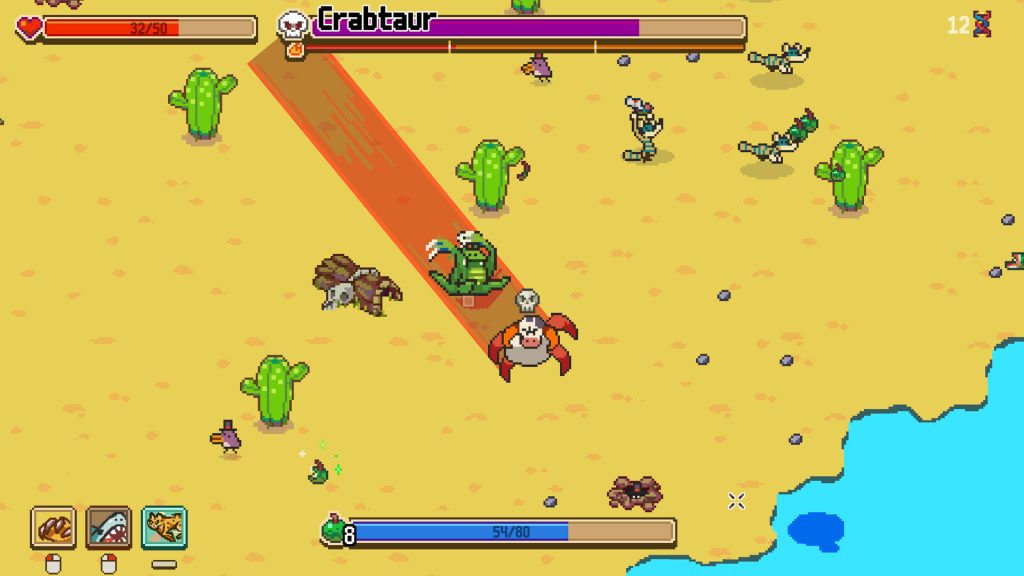
At first glance, it looks ridiculous. You start as a tiny blob-like creature wandering through dangerous environments while evolving random animal traits. One run might turn you into a venomous rabbit with bat wings and scorpion tails. Another might create a lumbering herbivore covered in fur, pincers, and glowing mushrooms. The longer you survive, the more chaotic your creature becomes.
But underneath the absurdity is a surprisingly thoughtful roguelite that understands what makes experimentation fun.
Everything is Crab isn’t trying to be realistic evolution. It’s trying to turn evolution itself into a sandbox of risk, creativity, and survival. Most importantly, it succeeds far more often than it fails.
A Concept That Sounds Like a Joke
The game’s central premise revolves around carcinisation — the real-world evolutionary phenomenon where different species independently evolve crab-like traits. The developers take this scientific curiosity and build an entire roguelite around resisting the inevitable march toward crab-dom.
That premise alone would probably be enough to generate curiosity online, but what makes the game work is how seriously it commits to the idea.
The ecosystem isn’t just background decoration. Every creature in the world is trying to survive according to its own needs. Predators hunt prey. Herbivores graze. Smaller creatures flee from danger. Territorial monsters guard resources. The result is a living environment that often feels more dynamic than many larger survival games.
Sometimes you enter an area and watch two enemy species fighting each other before you even engage. Other times you scavenge leftovers from dead animals because direct combat would get you killed instantly. Early on, the game teaches an important lesson: survival matters more than domination.
That philosophy gives Everything is Crab its identity.
Unlike many action roguelites where the only goal is maximizing damage numbers, this game encourages adaptation. Running away is valid. Building a defensive creature is valid. Becoming a scavenger that avoids combat entirely is valid.
One of the smartest design choices here is that the game rarely pressures players into a single “correct” build path.
Evolution Feels Meaningful
The best part of Everything is Crab is easily the evolution system.
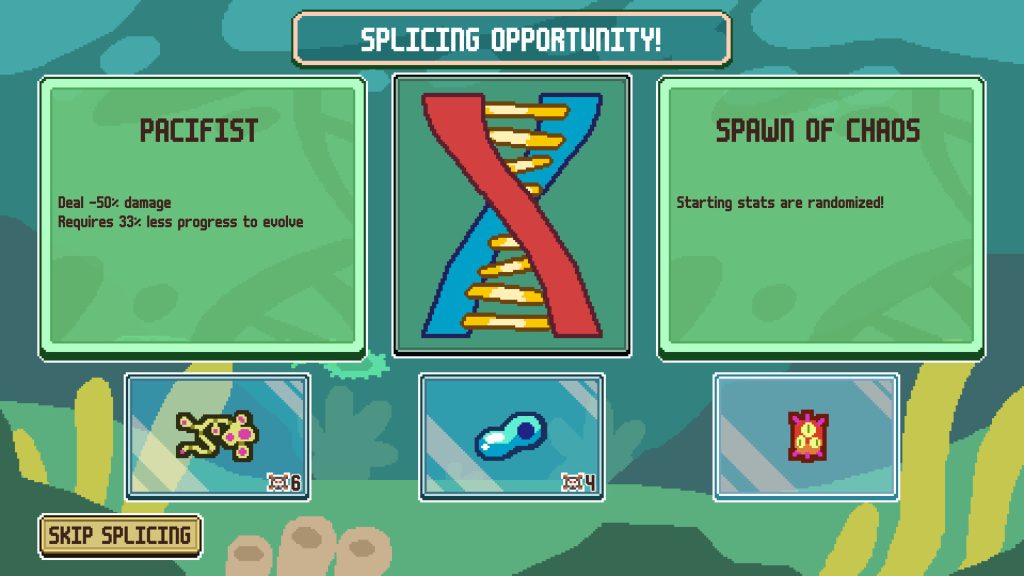
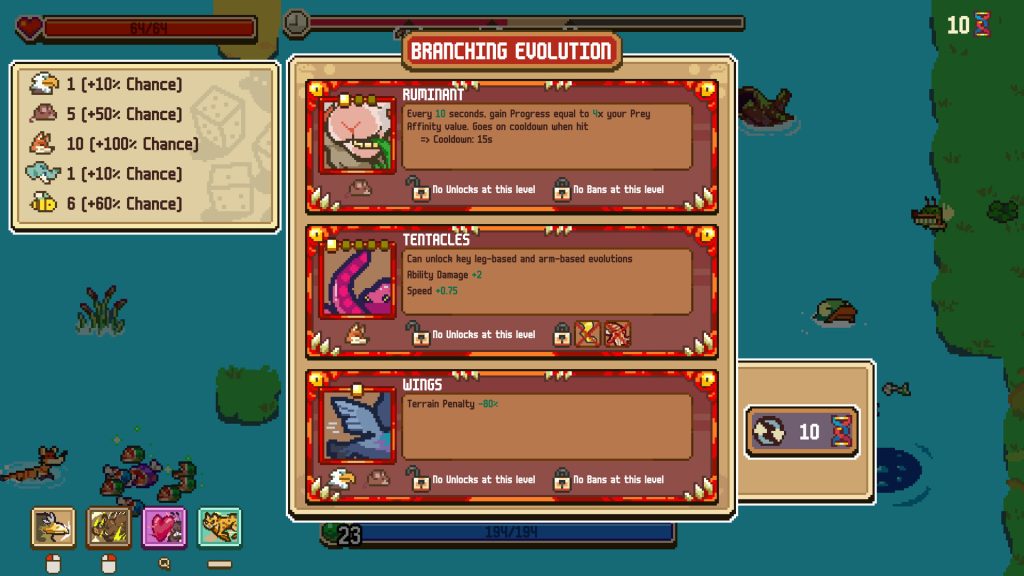
The game features more than 125 evolutions and specializations that can dramatically alter both gameplay and appearance.
Many roguelites offer passive upgrades that slightly tweak stats. Everything is Crab goes much further. Evolutions fundamentally change how your creature functions.
You might gain:
- Wings for mobility
- Horns for charge attacks
- Tentacles for crowd control
- Venom effects
- Fur for climate resistance
- Extra limbs for movement speed
- Symbiotic abilities
- Defensive shells
- Predator instincts
- Herd mechanics
And because the game visually reflects most of these changes, your creature gradually becomes a horrifying biological experiment.
That visual feedback matters more than people realize.
In many roguelites, builds feel abstract because upgrades exist mostly in menus. Here, every choice physically transforms your character. You can literally see your playstyle evolving in real time.
The game constantly delivers moments where you stop moving just to look at the monstrosity you’ve accidentally created.
That sense of ownership becomes addictive.
Even failed runs feel entertaining because you’re always curious about what bizarre creature you might become next.
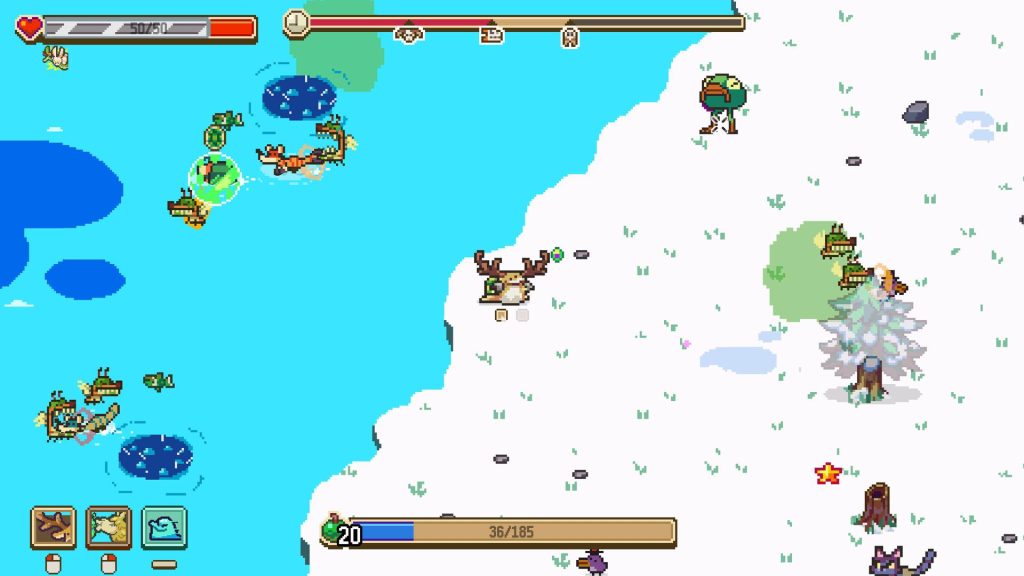
Spore Comparisons Are Absolutely Earned
Almost every discussion about Everything is Crab mentions Spore, and honestly, the comparison is unavoidable.
The creature evolution phase from Spore clearly inspired this game. Multiple previews and community discussions have highlighted that influence as one of the game’s biggest strengths.
For many players, Everything is Crab taps into nostalgia for the experimental chaos that made Spore memorable back in 2008.
But this isn’t simply “Spore as a roguelite.”
Spore focused more on creativity and progression through stages of civilization. Everything is Crab is much more survival-focused and mechanically dense. It borrows the fantasy of creating strange organisms while layering modern roguelite systems on top.
The result feels surprisingly fresh.
There’s also a strange joy in watching a creature evolve in directions that make absolutely no biological sense. One minute you’re a harmless rodent. Thirty minutes later you resemble a prehistoric nightmare assembled by committee.
The game understands that evolution can be funny.
That humor becomes one of its greatest strengths.
Combat Is Messy — Sometimes in Good Ways
Combat in Everything is Crab is intentionally awkward.
That sounds negative, but it often works in the game’s favor.
Your creature isn’t a polished action hero. It’s an unstable pile of evolutionary compromises. Movement changes depending on your mutations. Attacks vary wildly based on your build. Some creatures feel agile and deadly. Others feel heavy and clumsy.
This unpredictability gives encounters personality.
Instead of mastering one perfect combat system, players constantly adapt to whatever bizarre anatomy they’ve constructed.
That said, combat is also where the game occasionally stumbles.
Certain builds feel dramatically stronger than others. Melee combat can become chaotic when enemy density increases. Dodging sometimes lacks precision, especially when your creature becomes physically enormous. Some late-game fights feel visually cluttered due to the sheer number of mutations and effects happening simultaneously.
Several previews and player impressions have also pointed out that combat occasionally feels stiff compared to the creativity of the evolution systems.
Still, the game usually compensates with creativity and unpredictability.
Even when combat gets messy, it remains entertaining because no two encounters unfold the same way.
The Ecosystem Is More Important Than You Think
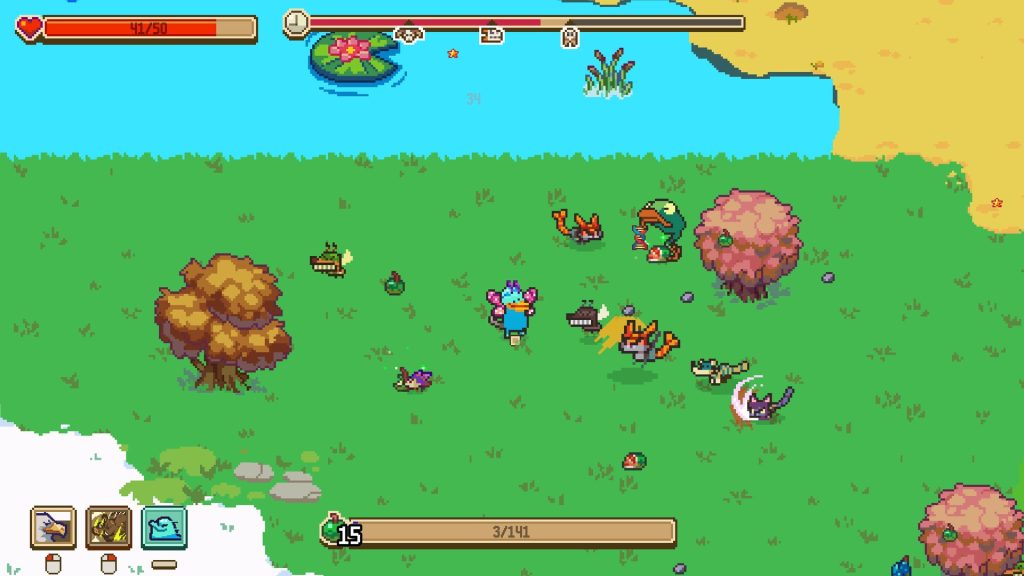
One of the game’s smartest design decisions is making the ecosystem itself part of the challenge.
Biomes feature different climates, creatures, environmental hazards, and food sources.
You’re not simply progressing through levels. You’re adapting to environments.
Certain builds thrive in deserts but struggle in colder regions. Some creatures become apex predators. Others function better as scavengers or evasive survivalists. Environmental conditions force players to rethink strategies rather than repeating identical runs.
This creates a rare feeling in roguelites: genuine ecological pressure.
The world doesn’t revolve around the player.
Sometimes the smartest decision is avoiding fights entirely while stronger predators wipe each other out nearby. Other times you exploit environmental advantages to survive impossible situations.
The ecosystem gives the game an emergent quality that many roguelites lack.
Unexpected moments happen constantly.
You might accidentally lure a boss into another predator’s territory. You might survive a deadly encounter because another species intervenes. You might find yourself scavenging resources after a massive battle between AI-controlled creatures.
Those moments make the world feel alive.
Replayability Is Both the Game’s Strength and Weakness
Everything is Crab is extremely replayable — but only if you enjoy experimentation for its own sake.
That distinction matters.
The game offers huge variety through builds, mutations, and ecosystems. Every run creates different combinations of abilities and creature designs. Community discussions repeatedly praise the addictive nature of discovering new mutations and playstyles.
However, some players have argued that the core loop reveals most of its structure relatively early.
And honestly, that criticism is fair.
The first few hours deliver the strongest sense of discovery. Once you understand the progression systems, future runs rely heavily on enjoying the process of experimentation itself rather than uncovering radically new mechanics.
For some players, that’s enough.
For others, the game may eventually feel repetitive.
Personally, I found the sheer unpredictability of builds strong enough to keep runs interesting. The joy comes from seeing what absurd evolutionary path emerges naturally.
But if you need constant narrative progression or major structural surprises, Everything is Crab may lose momentum after extended play sessions.
Presentation Carries a Lot of Charm
Visually, the game sits somewhere between adorable and cursed.
The pixel art style works perfectly because it allows creatures to become increasingly ridiculous without losing readability. Tiny animation details give personality to even the strangest mutations.
Watching your creature awkwardly scuttle around with mismatched limbs never stops being funny.
The art direction also avoids becoming overly grotesque. Despite the biological chaos, the game maintains a playful tone that keeps experimentation enjoyable rather than disturbing.
Sound design deserves credit too.
Creature noises, environmental ambience, and combat feedback all help sell the illusion of a living ecosystem. The soundtrack leans atmospheric rather than overpowering, which fits the survival-focused gameplay well.
There’s a strange tranquility to wandering through dangerous environments while slowly mutating into something unrecognizable.
Difficulty Can Be Brutal
Everything is Crab does not always explain itself clearly.
Early runs can feel overwhelming because the game throws players into ecosystems where almost everything can kill them. Understanding which mutations synergize effectively takes time. Some evolutionary paths become dead ends. Certain bosses appear capable of instantly ending promising runs.
But the difficulty usually feels intentional rather than unfair.
The game wants players to learn through adaptation.
Death becomes part of the evolutionary process. Failed runs teach lessons about positioning, ecosystem awareness, and build management.
There’s also a satisfying sense of progression as players gradually understand how to manipulate the ecosystem to their advantage.
The game’s meta-progression system adds long-term unlocks, genetics, challenge scenarios, and additional customization options.
That said, meta-progression is one area where the game could improve.
Some unlocks feel slower than expected, and progression occasionally lacks the excitement found in genre leaders like Hades or Dead Cells.
You unlock useful tools over time, but the pacing sometimes feels uneven.
Steam Deck Performance and Technical Issues
Performance is mostly solid, though not flawless.
Community discussions around launch praised the game’s portability and generally smooth experience on handheld systems.
However, some players reported frame drops and stuttering during movement, especially on Steam Deck. The developers acknowledged those issues publicly and indicated they were investigating optimizations.
On PC, performance is generally stable unless runs become visually overwhelming with large numbers of mutations and enemies.
Thankfully, the game’s art style helps minimize technical frustrations. Even when performance dips slightly, readability usually remains intact.
Given the game’s relatively small scope and active developer communication, it feels likely that ongoing updates will continue improving stability and balancing.
What Makes It Special
The indie roguelite space is incredibly crowded right now.
Every month brings another deckbuilder, another survivor-like, another pixel-art action game promising infinite replayability.
Most disappear almost immediately.
Everything is Crab stands out because it has a genuine identity.
You can describe it in one sentence and instantly understand why people are curious about it:
“It’s a roguelite where evolution keeps turning everything into crabs.”
That concept alone creates memorable moments, but the developers back it up with meaningful systems, creative build variety, and a genuinely dynamic ecosystem.
The game also understands something many roguelites forget: experimentation should be entertaining even when you lose.
Some of my favorite runs ended in total disaster.
One creature became an impossibly slow armored tank that couldn’t escape predators. Another evolved into a hyper-aggressive predator that starved because it moved too quickly to manage resources efficiently. Yet another accidentally became a bizarre support organism that survived primarily through passive healing and scavenging.
Those failures became stories.
That’s the mark of a good roguelite.
Final Verdict
Everything is Crab: The Animal Evolution Roguelite is messy, weird, creative, and consistently entertaining.
It doesn’t have the polished combat depth of the genre’s biggest names, and its progression systems occasionally struggle to maintain momentum over very long play sessions. But almost every flaw is counterbalanced by originality.
The evolution mechanics are fantastic. The ecosystem feels alive. The build variety creates endless absurdity. Most importantly, the game constantly encourages curiosity.
You never quite know what kind of creature you’ll become.
In a genre overflowing with safe ideas and familiar systems, Everything is Crab feels refreshingly unpredictable.
It captures the joy of experimentation better than most modern roguelites, wrapping scientific absurdity and survival mechanics into something genuinely memorable.
And honestly?
Any game that lets you evolve into a venomous winged rabbit-cow-scorpion while fighting the unstoppable force of crab evolution deserves attention.
It may not become the defining roguelite of 2026, but it absolutely earns its place among the year’s most original indie games.
