
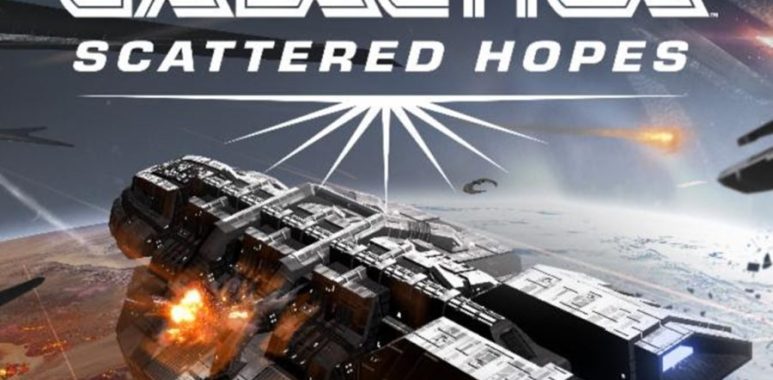
Battlestar Galactica: Scattered Hopes Review — Humanity’s Last Breath in Deep Space
When a franchise like Battlestar Galactica gets adapted into a strategy roguelite, there’s always a risk that the soul of the source material gets lost somewhere between menus, cooldown timers, and procedural events. The television series wasn’t just about ships and explosions. It was about exhaustion. Fear. Leadership under impossible pressure. It was about surviving one more jump when everyone around you was already mentally broken.
That’s what makes Battlestar Galactica: Scattered Hopes such a fascinating surprise.
Released on May 11, 2026 by Dotemu and developed by Alt Shift, the game doesn’t try to recreate cinematic hero moments from the show. Instead, it focuses on the quiet desperation that made Battlestar Galactica memorable in the first place. This is not a power fantasy. You are not the chosen savior of humanity. Most of the time, you barely feel competent enough to keep your fleet alive for another ten minutes.
And honestly, that’s exactly why it works.
Inspired heavily by games like FTL: Faster Than Light and drawing structural DNA from Alt Shift’s earlier title Crying Suns, Scattered Hopes blends fleet management, roguelite progression, real-time tactical combat, and branching narrative decisions into a tense survival experience. The result is a game that often feels oppressive, occasionally frustrating, but consistently compelling.
It’s also one of the most emotionally authentic adaptations the Battlestar Galactica universe has received in gaming form.
A Universe Built on Panic
The setup will feel instantly familiar to fans of the show. The Twelve Colonies are gone. The Cylons have devastated humanity. Your fragmented fleet is fleeing annihilation while trying to reconnect with the Battlestar Galactica itself.
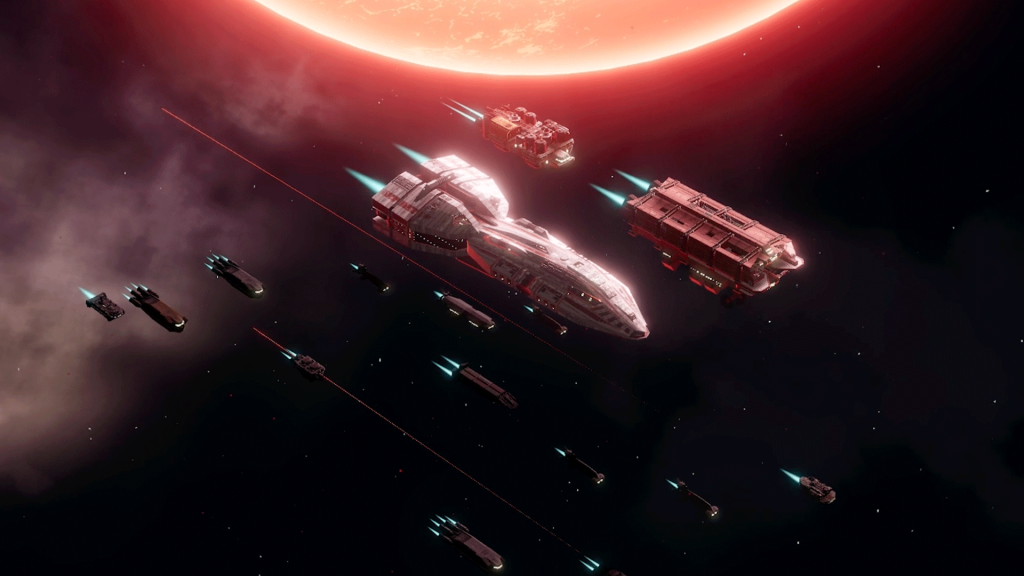
But instead of placing you directly in command of Galactica, the game gives you control of a smaller survivor fleet led by a Gunstar-class vessel. That design decision turns out to be incredibly smart because it allows the developers to tell stories that feel personal rather than legendary.
You are not Admiral Adama. You’re one more exhausted commander trying to stop civilization from collapsing in on itself.
Every jump between sectors feels dangerous. Supplies run low constantly. Your crew members argue. Civilians panic. Ships break down. Political factions emerge within the fleet. Sometimes you’ll spend more time handling food shortages, mutinies, and internal sabotage than actually fighting Cylons.
The atmosphere is relentless.
And the game understands something many modern strategy games forget: tension is more important than spectacle.
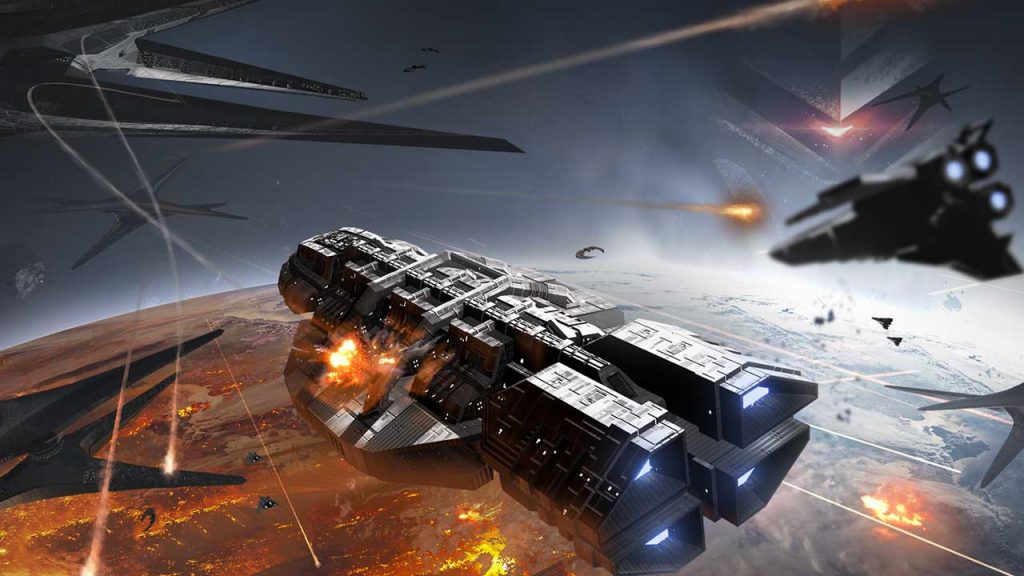
Scattered Hopes rarely overwhelms players with giant cinematic battles or flashy visual effects. Instead, it creates stress through accumulation. One small problem becomes three. Three become ten. Suddenly oxygen systems fail during a Cylon assault while half your fighters are damaged and someone onboard might secretly be a Cylon infiltrator.
The game excels at creating domino-effect disasters.
Even during quieter moments, there’s this constant feeling that everything is barely holding together. Fans of the “33” episode from the television series will immediately recognize the energy the developers were chasing here.
Gameplay That Thrives on Desperation
At its core, Scattered Hopes is divided into two primary gameplay loops.
The first is fleet management.
The second is tactical combat.
The fleet management layer is where the game shines brightest. You’ll spend much of your time assigning personnel, resolving crises, scavenging for resources, upgrading systems, and making difficult moral decisions. Nearly every choice comes with consequences.
Do you use limited supplies to repair civilian infrastructure or strengthen combat readiness?
Do you risk stopping for survivors knowing the Cylons are closing in?
Do you punish dissent harshly to maintain order, or tolerate instability to preserve morale?
The writing surrounding these decisions is surprisingly strong. While the procedural nature of the roguelite structure means events eventually repeat, many scenarios still manage to feel tense and personal.
One moment in particular stood out during my playthrough. A civilian transport requested emergency medical support after a disease outbreak. Helping them would consume resources desperately needed elsewhere. Ignoring them would likely result in mass deaths. I chose to assist, only to trigger a chain reaction that weakened fleet defenses before a major Cylon encounter.
I survived the battle.
Barely.
But half the fleet didn’t.
That’s the kind of storytelling Scattered Hopes does best. Not heroic triumphs — tragic compromises.
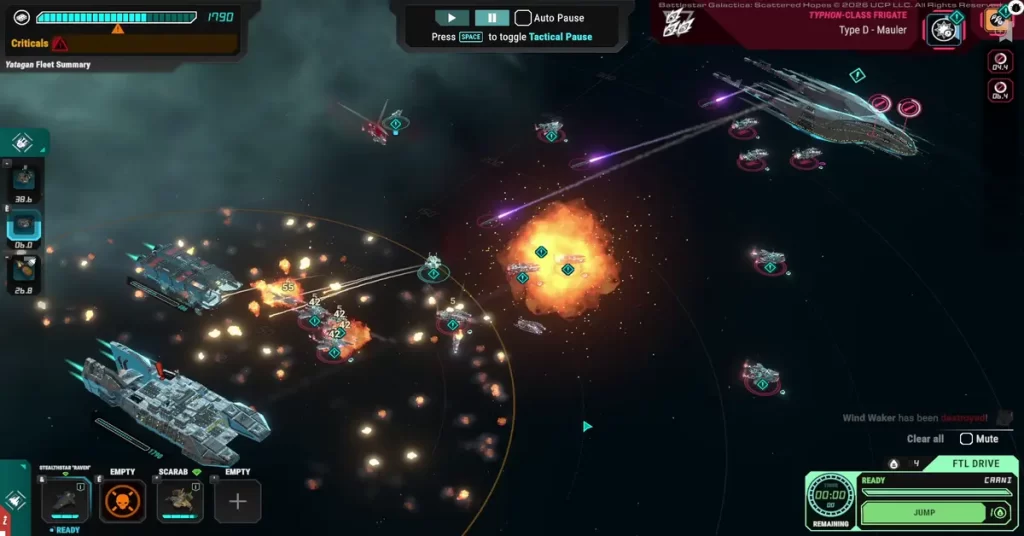
Combat, meanwhile, exists somewhere between RTS mechanics and tactical pause strategy. Battles unfold in real time, but players can pause to issue commands, reposition squadrons, and prioritize threats.
The pacing feels slower than traditional RTS games, but intentionally so. Combat is less about domination and more about survival.
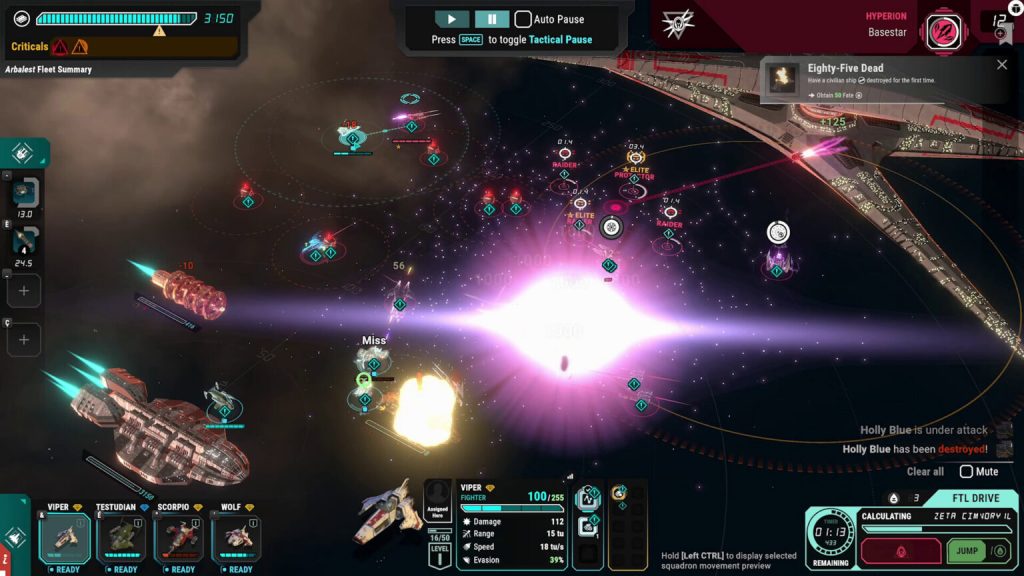
You are almost never trying to wipe out enemy fleets completely. Your goal is to endure long enough to jump away safely. That distinction fundamentally changes the emotional texture of combat encounters.
Retreat is not failure here.
Retreat is survival.
And survival is victory.
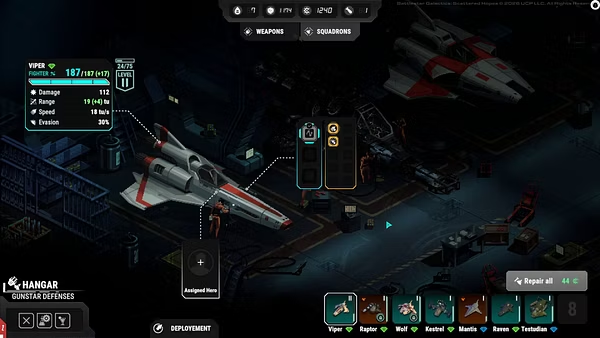
The fighter squadron mechanics are particularly satisfying. Deploying Vipers to intercept incoming missiles while protecting vulnerable civilian ships captures the chaotic defensive warfare Battlestar Galactica fans expect. There’s genuine satisfaction in successfully holding formation under overwhelming pressure.
That said, combat won’t work for everyone.
Some players may find the battles too simplistic compared to more hardcore tactical strategy games. Others may dislike the slightly clunky interface or the occasionally awkward ship responsiveness during intense encounters. Community discussions around the demo and launch version repeatedly highlighted these concerns.
Still, even when combat mechanics stumble slightly, the surrounding tension usually compensates for it.
The Roguelite Structure Makes Sense Here
One of the smartest things about Scattered Hopes is how naturally the roguelite structure fits the Battlestar Galactica universe.
Most roguelites rely on repetition because repetition creates mastery. But in this game, repetition also reinforces narrative themes.
Humanity keeps running.
Humanity keeps failing.
Humanity keeps trying again anyway.
Every run tells a slightly different version of collapse. Different crises emerge. Different survivors join your fleet. Different betrayals occur. Different sacrifices become necessary.
The procedural storytelling system isn’t flawless, but it creates enough variation to keep multiple runs engaging. Unlockable squadrons, weapons, ship upgrades, and commanders provide long-term progression without undermining the game’s oppressive tone.
Importantly, Scattered Hopes understands that replayability isn’t just about quantity of content.
It’s about emotional unpredictability.
The best runs are the ones where players narrowly escape impossible situations through desperate improvisation. Those moments become personal stories unique to each playthrough.
And because the game is constantly balancing external threats against internal political tensions, no two disasters feel exactly alike.
Sometimes Cylons destroy you.
Sometimes paranoia destroys you first.
Atmosphere Over Graphics
Visually, Scattered Hopes lands somewhere between minimalist indie strategy game and stylized sci-fi graphic novel.
The presentation isn’t cutting-edge. If you’re expecting AAA production values, you’ll probably leave disappointed. Ship models are functional rather than spectacular. Some UI elements feel overly utilitarian. Character portraits occasionally lack emotional detail.
But the art direction generally succeeds because it supports the game’s tone.
Everything feels cold.
Exhausted.
Militarized.
There’s a lived-in ugliness to the fleet that fits Battlestar Galactica perfectly. Ships look damaged. Menus feel industrial. Space itself seems hostile rather than beautiful.
The sound design deserves special praise.
Warning alarms, radio chatter, distant explosions, and melancholic music combine to create an atmosphere of permanent anxiety. During larger battles, the game’s audio work becomes genuinely immersive.
The soundtrack especially understands restraint. Rather than overwhelming scenes with epic orchestral bombast, it often leans into quieter ambient tension.
That choice helps maintain emotional authenticity.
Because again — this game is not about glory.
It’s about endurance.
Writing That Understands Battlestar Galactica
Licensed games often fail because they imitate surface-level aesthetics without understanding why people loved the original material.
Scattered Hopes avoids that trap.
The writers clearly understand that Battlestar Galactica was never really about spaceships. It was about moral collapse under pressure.
The game constantly forces players into ethically uncomfortable situations. There are rarely clean solutions. Every decision sacrifices something.
Even the hidden Cylon paranoia mechanics feel appropriately stressful. Suspicion spreads through the fleet during certain events. Crew trust deteriorates. Political factions manipulate crises for influence.
Sometimes the real danger isn’t the enemy outside your fleet.
It’s the fear growing inside it.
That thematic consistency carries the entire experience.
There are flaws, certainly. Some dialogue events become repetitive after multiple runs. Certain side characters feel underdeveloped. A few narrative choices telegraph outcomes too clearly.
But overall, the writing successfully captures the fatalistic spirit of the television series better than many fans expected.
And perhaps most impressively, the game remains engaging even for players unfamiliar with Battlestar Galactica lore.
That’s difficult to achieve with licensed adaptations.
Difficulty That Borders on Cruel
Scattered Hopes is not an easy game.
In fact, parts of it feel brutally unforgiving.
Resources disappear quickly. Mistakes compound rapidly. Randomized crises can spiral into catastrophic losses before players fully understand what went wrong.
For some players, that harshness will become the game’s biggest selling point.
For others, it may become a dealbreaker.
The early progression especially feels punishing because players initially lack access to stronger upgrades and fleet options. Several reviews noted that the onboarding process could be rough for newcomers unfamiliar with roguelites or tactical survival games.
Still, the difficulty generally feels purposeful rather than arbitrary.
The game wants players to feel exhausted.
It wants every successful jump to feel earned.
And when systems align properly, that pressure creates extraordinary moments of emergent storytelling.
One late-game encounter had my fleet running critically low on fuel while a hidden Cylon operative sabotaged repairs during a massive assault. Fighters were dropping from the sky. Civilian morale collapsed. Half my ships were burning.
I survived with one damaged carrier and almost no remaining supplies.
I immediately started another run afterward.
That’s the strange magic of Scattered Hopes.
Failure rarely feels meaningless.
Community Reception and Early Response
Early reactions to the game have been interestingly divided.
Many critics praised the atmosphere, strategic tension, and thematic faithfulness to the source material. PC Gamer called it “the best FTL-like since, well, FTL,” highlighting its emotional pressure and tactical depth.
Others were more mixed, criticizing clunky UI systems, limited combat complexity, or repetitive event structures after extended playtime.
Steam user reviews currently sit in “Mostly Positive” territory, suggesting the game has found a strong audience despite some rough edges.
Interestingly, longtime Battlestar Galactica fans appear especially split.
Some love the adaptation’s emotional authenticity.
Others still prefer older strategy titles like Battlestar Galactica Deadlock, which offered more traditional tactical warfare systems. Reddit discussions surrounding the launch reflected both excitement and skepticism from the fanbase.
But even many critical players acknowledged the game’s ambition.
And honestly, ambition matters.
Scattered Hopes may not be perfect, but it absolutely has a creative identity.
That alone makes it more memorable than many safer licensed games.
Final Verdict
Battlestar Galactica: Scattered Hopes is stressful, bleak, occasionally messy, and sometimes outright cruel.
It’s also one of the most emotionally engaging strategy roguelites released in recent years.
What makes the game special isn’t mechanical perfection. It’s emotional consistency. Every system reinforces the same central theme: humanity surviving by inches against impossible odds.
The game understands fear.
It understands exhaustion.
It understands sacrifice.
Most importantly, it understands Battlestar Galactica.
Not just the ships and aesthetics — the philosophy underneath it all.
Yes, the UI can feel awkward. Yes, combat occasionally lacks tactical depth. Yes, event repetition eventually becomes noticeable after many hours.
But none of those flaws erase the tension this game creates when your battered fleet barely escapes destruction with seconds remaining before another jump.
Few strategy games capture desperation this effectively.
Fewer licensed games capture their source material this authentically.
Scattered Hopes may never become a mainstream blockbuster, but it absolutely deserves attention from fans of tactical roguelites, survival strategy games, and science fiction storytelling.
It’s a game about losing slowly.
About sacrificing pieces of yourself to survive another day.
About holding civilization together with duct tape, fading hope, and stubborn determination.
In other words, it’s Battlestar Galactica.
