
Schrodinger’s Cat Burglar: The Purr-fect Quantum Heist That’ll Split Your Brain (and Your Sides)
Schrodinger’s Cat Burglar: The Purr-fect Quantum Heist That’ll Split Your Brain (and Your Sides)
By Allwyn, May 29, 2026
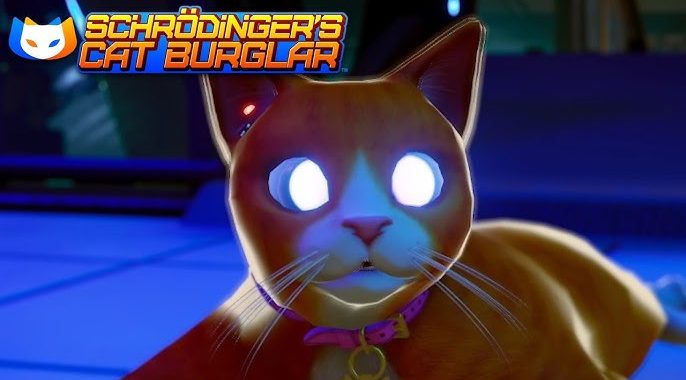
Listen, I’m not usually one to jump on a brand-new release the week it drops, especially an indie puzzle game from a tiny Aussie studio. But when I saw the trailer for Schrodinger’s Cat Burglar—this fluffy orange tabby named Mittens phasing in and out of existence like a bad Wi-Fi signal while dodging robot vacuum cleaners—I was hooked. Released on May 21, 2026, by Abandoned Sheep, the game has been making the rounds on Steam with “Very Positive” reviews piling up fast. After sinking about 12 hours into it over the last week (yes, I neglected my actual cat for this), I can safely say it’s one of the most charming, brain-tickling experiences I’ve had in a while. It’s not perfect, but damn if it doesn’t make quantum physics feel like Saturday morning cartoons.
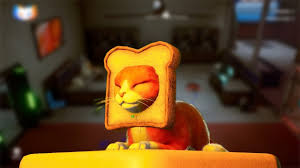
Let’s start with the setup, because the premise is half the fun. You play as Mittens, self-proclaimed world’s greatest cat burglar (though her résumé mostly involves knocking vases off shelves and stealing socks). During what should’ve been a simple heist at a shady research lab, Mittens knocks over the wrong beaker and gets zapped with quantum weirdness. Now she can split into two versions of herself at will—existing in superposition until observed. It’s basically Portal meets Stray, but with actual quantum rules baked in, not just portal guns. The story unfolds through witty dialogue, environmental storytelling, and these adorable little comic-strip style cutscenes that had me chuckling out loud more times than I care to admit.
Mittens isn’t alone in her adventures. There’s Susan, her long-suffering human partner-in-crime (or at least the one who opens the windows for her). Their dynamic is pure gold—Mittens is the chaotic gremlin, Susan is the exasperated straight man. The writing is packed with cat puns, physics jokes, and surprisingly heartfelt moments about friendship and doing the right thing even when you’re a tiny criminal with nine lives. It never takes itself too seriously, which is exactly what you want from a game where the hero’s superpower is basically “being in two places until someone looks.”
Gameplay: Split Decisions and Quantum Chaos
The heart of Schrodinger’s Cat Burglar is the splitting mechanic, and it’s implemented brilliantly. Press a button (or just think about it after the tutorial), and Mittens divides into two controllable cats. One on the left stick, one on the right if you’re playing solo, or hand one off to a friend in local co-op or Remote Play Together. It feels intuitive almost immediately, which is no small feat for a game about quantum entanglement.
But here’s where it gets clever: the game leans hard into Heisenberg’s Uncertainty Principle. When no one’s “observing” your cats (security cameras, guard robots, or even certain puzzle elements), they exist in superposition—you can treat either version as real. Walk one cat through a laser grid that’s “theoretically” turned off because the other cat is distracting the guard? It works. Get spotted, though, and the wave function collapses. Suddenly both cats have to obey reality, which usually means frantic scrambling and a lot of “oh no oh no” moments.
Early puzzles are gentle introductions—use one Mittens to press a button while the other sneaks through a vent. Then it layers on. You’re moving boxes that only exist in one state, rerouting power by having one cat stand on a pressure plate while the other carries a battery across a theoretical gap, even some light platforming where timing your splits avoids falling debris. There are moments where I sat staring at the screen for five minutes, muttering “this can’t work… wait, but theoretically…” before it clicks and you feel like a genius. That dopamine hit is real.
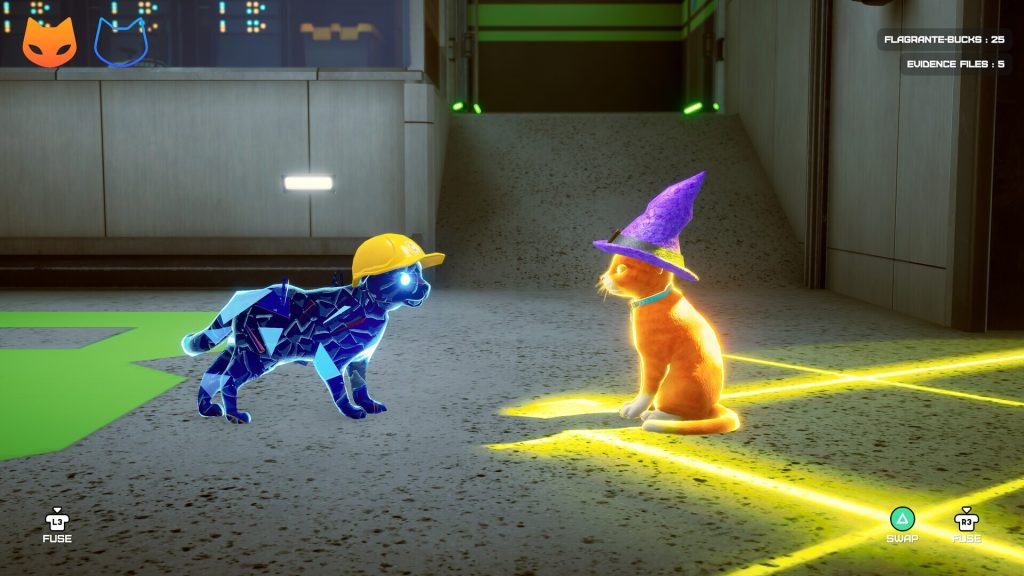
The levels are structured like a heist movie set in a sprawling, slightly deranged research facility. You start in the labs, move through storage areas, a weird quantum garden, and eventually into more chaotic zones where the experiments have clearly gone off the rails. Each area introduces new gadgets and complications: laser grids, moving platforms, pesky pest control drones that chase you if you’re observed, and these hilarious “observation orbs” that force collapse if they spot you.
I particularly loved the co-op elements. My partner and I played a few sessions locally, and it turned into this beautiful mix of teamwork and playful sabotage. One of us would control the “real” Mittens while the other handled the decoy, leading to plenty of “Dude, stop licking the laser!” arguments. The game handles drop-in/drop-out seamlessly, which is rare and appreciated. Even solo, it never felt overwhelming—there’s a helpful hint system that gives gentle nudges without spoiling the solution.
That said, not everything is flawless. Around the 8-9 hour mark, some repetition creeps in. The game throws a lot of variations at you, but a few late-game puzzles start feeling like remixes of earlier ones rather than fresh ideas. The final act introduces a new mechanic that feels a bit rushed, like the developers had one more big idea but not quite enough time to fully integrate it. It doesn’t ruin the experience, but it does make the back half feel slightly less inspired than the delightful opening hours. One review I glanced at called it “creative and charming but held back by pacing,” and I can’t argue much with that.
Presentation: Whiskers, Neon, and a Groovy Soundtrack
Visually, Schrodinger’s Cat Burglar is an absolute treat. The art style is colorful, cartoonish, and full of personality. Mittens has these big expressive eyes and little animations—tail swishing when she’s thinking, that classic cat loaf position when waiting—that make her instantly lovable. The environments pop with neon accents against sterile lab whites, then shift into more organic, overgrown sections that feel alive. Particle effects for the quantum splits are smooth and satisfying, with this little ripple in reality that looks premium for an indie title.
Performance on my mid-range PC was rock solid at 1440p/60fps, with no noticeable hiccups even when both cats were tearing around causing chaos. Loading times are quick, and the game autosaves frequently so you never lose much progress after a failed puzzle.
The sound design deserves special praise. Every meow, every little paw pat, every frustrated beep from a malfunctioning robot feels perfectly placed. The soundtrack is a groovy, upbeat electronic mix with jazz influences that keeps things light and fun without ever becoming annoying. Voice acting is limited but well done—mostly Susan’s exasperated lines and some robot barks that had me laughing. The writing shines through in the environmental details too: sticky notes with passive-aggressive lab tech complaints, vending machines that dispense “theoretical tuna,” little touches that make the world feel lived-in.
Who Is This For?
If you love puzzle games that respect your intelligence but don’t gatekeep with impossible difficulty, this is a must-play. Fans of Portal, The Witness, or even Baba Is You will find a lot to love here, especially with the cat flavoring. It’s family-friendly too—no gore, minimal frustration, and plenty of laughs. My non-gamer partner enjoyed the co-op sessions way more than expected.
At around $20 on Steam (with a demo available), it’s well-priced for the 10-15 hours of content. There are collectibles if you want to hunt for 100%—little quantum yarn balls and stolen artifacts that unlock funny lore bits.
Final Thoughts
Schrodinger’s Cat Burglar isn’t trying to reinvent the wheel; it’s taking a beloved puzzle formula and giving it a fresh quantum coat of paint with one of the most endearing protagonists in recent memory. Yes, it stumbles a bit toward the end with some repetition, and hardcore puzzle enthusiasts might solve some sections faster than they’d like. But the sheer joy of splitting into two cats, pulling off impossible heists through clever observation tricks, and just existing in this silly, heartfelt world more than makes up for it.
Abandoned Sheep, a small Brisbane studio, has delivered a debut that feels confident and full of personality. In a year full of big AAA releases, this little indie gem quietly stole my attention (and probably a few virtual fish). If you’re looking for something clever, cute, and genuinely fun that’ll have you explaining quantum mechanics to your friends over drinks, give Mittens a chance. She might just collapse your wave function of boredom into pure delight.
Score: 8.5/10 – “Purr-fectly entertaining quantum chaos. Just don’t blame me when you start seeing double.”
